By the autumn of 1863, the territory of Colorado had existed for only three years. It was a vast, sparsely settled land of mining camps, ranches, and freight roads stretching a hundred miles between way stations, home to perhaps thirty thousand white settlers scattered across an area twice the size of New England. In the shadows of those roads lived the Ute, Cheyenne, and Arapaho peoples, and in the southern valleys, Spanish-descended families whose ancestors had come from Chihuahua when the land still belonged to Mexico. Some had been born under the Mexican flag and woke up one day as Americans, whether they wanted it or not.
The war that cost Mexico half its territory had ended in 1848 with the Treaty of Guadalupe Hidalgo, which promised that Mexican families now inside American borders would keep their land, their language, and their faith. That was the promise. What actually happened was different. Anglo courts tended to favor Anglo claimants, old Spanish land grants became worthless in Denver courthouses, and families that had grazed the same valley for four generations found themselves told, in a language many of them could not read, that their boundaries had changed.
Two of those families were the Espinosa brothers. Pedro Ignacio Espinosa and his wife María Gertrudis Chávez lived in the small village of El Rito, about thirty-five miles west of Taos, then still in New Mexico Territory. They had two daughters and three sons. The eldest, Felipe Nerio, was born in 1828.
His younger brother José Vivían followed three years later. Felipe, by the accounts of the few who knew him and lived to tell of it, was a serious, pious man given to visions. He read the Bible by candlelight in the evenings. He remembered every grievance his family had ever suffered.
By his thirty-fifth winter, he had come to believe that God had given him a task no other man could do. Whether that task was madness or vengeance or both intertwined like the strands of a rope remains a question historians still argue over. What they agree on is what he did. In the third week of March 1863, a fifty-eight-year-old man named William Franklin Bruce left his cabin south of Canyon City to ride up toward Hardscrabble Creek and check his sawmill.
It was a Sunday. He never came home. His horses came back. His wagon came back.
But Bruce was found two days later beside his sawmill, shot through the heart, his pistol still holstered. Two days after that, an elderly prospector named Henry Harkins, known to everyone in the county as Uncle Henry, was working alone at his small cabin on Little Fountain Creek, hanging a blanket over the door and chinking the gaps in his log walls against the spring rains. What happened to Uncle Henry that evening was beyond what any of the neighbors could speak of. When the coroner came from Colorado City, he requested the report be sealed, and it was.
One of the sawmill workers who helped bury him reportedly never worked another day in that country. He left, walked south, and was never heard from again. By the end of that week, rumors spread to every farm from Fairplay to the Sangre de Cristo Mountains. Two men on horseback, two dark-skinned men with dark hats and rifles, who did not steal much, who did not seem to want anything except to kill.
This was what unsettled people most. A cattle thief or a bandit leaving a body behind now and then, people knew how to handle. Every rancher in the territory had a general idea how to deal with that. You called your neighbors.
You rode out. You settled it. But the Espinosa brothers were not cattle thieves. They were something the frontier did not yet have a word for.
They killed for the sake of killing. They killed according to their own schedule, because a voice or a memory or a wound that had never healed commanded them to. The ordinary tools of frontier justice did not work on men like that. The killings continued.
A rancher in South Park shot dead from his horse. Two prospectors near Fairplay found together, two bodies in an empty clearing. Another man near Alma, killed on his own doorstep. A traveler on the Yute Pass road.
A miner at Red Hill. The pattern was always the same: no warning, no demands, no mercy, then nothing. The killers vanished. Days would pass, or a week.
Then forty miles away, on a road that had been quiet for months, another body would appear. The effect on the territory was profound. A settler in southern Colorado in the spring of 1863 was not, in ordinary circumstances, safe. There were bears.
There were Ute people who were not happy that half of Colorado had been sold out from under them. There were bandits and sudden storms that could kill a man on the wrong side of a pass. Life was hard and dangerous, and everyone who came there had accepted those specific risks. That was the frontier bargain.
But this was different. A rancher could deal with a mountain lion; he knew what it did and how it hunted. The Espinosa brothers were not a solvable problem. They came in silence and left in silence.
They did not want your horse or your money. When they came, they wanted only one thing, and if you happened to be alone on the road, working outside your cabin, or riding out to check your sheep in the dawn light, they wanted that thing from you. Newspapers of the era were filled with desperate writing. Editorials in Denver and Pueblo demanded the army do something.
Letters to Governor Evans from ranchers begged for troops. Mining camps posted rewards, starting at two hundred dollars, then five hundred, then a thousand, then more. Preachers adjusted their Sunday sermons to address it. Wives sent their husbands to Denver to buy better rifles.
Freight companies doubled their rates for lone drivers on the roads north of Fort Garland. The territory quietly reorganized itself around the fact that two men were hiding in the mountains and no one knew where. One letter from Canyon City that April said simply: “We do not sleep. ”
How many men did they kill?
Felipe himself later claimed, in a letter he dared to send directly to the territorial governor, that the number was thirty-two. Some historians think he was boasting. Some think it was an undercount. The documented, confirmed killings are fewer, perhaps a dozen, perhaps fifteen.
But in Colorado in 1863, a man could vanish on a mountain road and not be missed for six months, and when he was finally missed, no one had the time or money to go looking. Some of the Espinosa victims may still be out there under the pines without a gravestone. By late April, Canyon City had posted armed men on its main road. Miners in California Gulch, the area that would later become Leadville, stopped traveling alone.
A group of them, angry and tired of waiting for the army to act, formed a posse and chose a quiet, sober mining man named John McCannon to lead them. His wife was afraid to go to the creek for water. That was reason enough. McCannon’s posse rode out in the first week of May.
They found a track of two men and two horses and followed it for three days through rough country north of Canyon City along Four Mile Creek. On the morning of May 9, they came out of the pines and saw two horses grazing. Behind them, in a small hollow, a man was tending them. It was José Vivían Espinosa.
The posse did not call out. They did not ask his name. They opened fire. Vivían was hit twice.
He fired two shots of his own and hit no one, then fell onto the grass. The other Espinosa, Felipe, was in the brush on the hillside, and by the time the posse finished with Vivían and looked up, he was gone, having crawled through the oak brush without his horse, without his boots, without food, carrying only a rifle and a pistol. The posse searched Vivían’s body and found in his pocket, carefully folded, a sheet of paper. On it, in fine handwriting, was a record, a list of names and dates.
At the top, in Spanish, was a line that has been translated many ways but comes to something like this: six hundred Anglos, a hundred for each of my people killed in the Mexican War. Six hundred. They had reached nearly thirty, and Felipe had escaped barefoot into the mountains. The story went quiet for a time.
Through the hot summer of 1863, in the small village of San Rafael, an older brother returned to the home where his family still lived. He did not stay long. He did not want to be seen. But before he vanished into the mountains again, he did one thing that has puzzled every writer who has told this story.
Felipe Espinosa returned to the place where his brother had died. He found the grave. He opened it. From the body, he took a keepsake, something small he could carry with him.
Then he went looking for a companion and found a young nephew from another branch of the family, a boy named José. Records differ on the boy’s exact age, but he was young enough that the rifle was heavy in his hands, and old enough to obey. By the beginning of October, the two were back on the freight roads north of the San Luis Valley, and the killing had begun again. On October 10, 1863, the Espinosas ambushed a wagon on the road west of the pass.
There were two men in the wagon, a driver and a passenger. This time they were alert. They saw the riders. They saw the rifles.
They jumped from the wagon and ran for the timber, and by the mercy of that land, they survived. They walked, filthy and nearly out of their wits, all the way to Fort Garland. Fort Garland stood, and still stands, in the northeastern corner of the San Luis Valley beneath Blanca Peak. It had been built five years earlier, in 1858, by an army detachment whose scouts and builders included a man named Tom Tobin.
He had helped choose the site. He had helped make the adobe bricks from the clay. He knew every inch of the surrounding country. The fort’s commander that autumn was a lieutenant colonel named Samuel F.
Tappan, a serious, cautious New England abolitionist and former journalist who had no interest in frontier gunfire theatrics. What he wanted was a concrete result. When the wagon driver and passenger staggered into the fort with their story, Tappan understood that the army had failed for seven months to catch these two men because it did not know how. He sent for Tobin.
Tobin was living in the valley on a small farm, married to a woman named Pascuala Bernal, with children and a life built from the barren earth. He was no longer young. At forty, in the terms of 1863, he had reached the age of stability. But when the rider came from Fort Garland to the farm and told him Colonel Tappan wanted to see him, Tobin saddled his horse.
To understand why Tappan sent for him, you have to understand who Tobin was by then. He was born in St. Louis, Missouri, on May 1, 1823, son of an Irish immigrant father and a mother who was, by most accounts, of Delaware Indian descent. When his older half-brother Charles headed west to trap beaver, he took the fourteen-year-old Tom with him.
Tobin worked at Bent’s Fort on the Arkansas River, learned Spanish from the traders, and enough Cheyenne and Ute to get by. He worked in a distillery at Arroyo Hondo, a few miles north of Taos, running barrels to buyers across northern New Mexico. On the morning of January 19, 1847, when Tobin was twenty-three, he was working at the distillery when the Taos Revolt began. A group of about five hundred people from Taos, furious at the American occupation, had killed the American governor of the new territory, killed the sheriff, and then, a few miles north, attacked Simeon Turley’s mill, where Tobin and about eight other men were.
The fight at the mill lasted through the day and into the night. It was, by all surviving accounts, terrible. Turley himself did not survive. Most of the men in the mill did not survive.
Only two of the ten who defended it came out alive. Tom Tobin was one of them. He escaped in the darkness over a back route across the rooftops, then ran and walked and crawled more than seventy miles to Santa Fe through country full of people who wanted him dead. He reached it.
He alerted the army, and that information helped the army put down the revolt within weeks. He was twenty-three years old. By the time Colonel Tappan sat him down at Fort Garland sixteen years later, Tom Tobin had seen enough of what people could do to one another that nothing the Espinosas did would shock him. He was, by every account, a small, bowlegged man with sun-darkened skin, half Irish and half Delaware on his mother’s side.
He rarely spoke. When he did, he tended to say exactly the number of words required and then stop. He carried a Hawken front-loading rifle he had cleaned so many times that he knew the sound of the ramrod better than his own voice. He arrived at Fort Garland on October 11.
Tappan explained the situation, the wagon attack, the descriptions, the pattern. He told Tobin that Governor Evans in Denver had offered a reward of $2,500 for Felipe Espinosa, dead or alive. In 1863, that was a fortune. It could buy a good farm, a small herd of cattle, a future.
Tobin listened and said nothing for a long time. Then, according to the accounts passed down by his descendants and the Fort Garland records, he asked for one thing. He asked to go alone. Tappan refused.
He insisted, for reasons of army policy and common sense, that Tobin take a detachment with him. He offered Lieutenant Horace W. Baldwin of Company C, First Colorado Cavalry, with fifteen soldiers, plus a civilian named Loring Jenks who knew some of the country, and a young man from the valley named Juan Montoya. Tobin sighed, looked out the window at the mountains, and agreed, but he made clear that once they took up a trail, the soldiers would hang back and he would do the tracking alone.
Tappan agreed. On the morning of the twelfth, the group left Fort Garland. Tracking a man in that country is deceptive work. October in southern Colorado is a deceptive month.
The days can be warm enough to sweat under a wool coat; the nights cold enough to freeze the water in a canteen. The falling leaves and the wind erase the record of what has passed. But Tobin went north out of the fort, slowly, watching the road and the ground on both sides. He was not looking for hoofprints.
Any fool could find a hoofprint. He was looking for the things that do not belong to a horse: a rock rolled out of place, a branch bent low across a game trail at the height of a rider, a patch of grass grazed at midnight instead of daylight, which meant a horse tied up rather than loose. On the first day, west of the pass now known as La Veta, he found what he was looking for: two riders heading northwest, cautious but not cautious enough. He told Baldwin to keep the soldiers at a distance.
Tobin rode a hundred yards ahead. Sometimes he dismounted and walked. Sometimes he knelt and laid his hand flat on a spot of ground and stayed there so long the soldiers behind thought he had fallen asleep. For two days he followed that track.
The trail climbed higher. It doubled back once, the sign of a man who knows he is being followed and is trying to get behind his pursuer. Tobin was not fooled. He passed the turning point and picked up the trail on the other side.
On the third night, they camped in a pine grove. Tobin would not let anyone build a fire. The soldiers ate cold biscuits and jerky and cursed him under their breath. Tobin sat with his back against a tree and watched the sky.
He slept no more than an hour. An hour before dawn, he woke them to move again. At sunrise on October 15, the fourth day of the chase, Tobin was combing a low ridge above a valley thick with cottonwoods and willows along the water. He had advanced half a mile ahead of the soldiers, walking on foot, when he stopped and looked at the sky.
Magpies, circling slowly, four birds, maybe five. Then he saw, higher than a wisp of hair in the pale morning air, a column of smoke rising from among the cottonwoods. He sat where he was and watched for a long time, wanting to be certain. The smoke strengthened and thinned and strengthened again, and he watched a man come out from the trees briefly and go back in.
Then he knew. He returned to the soldiers, told Baldwin to keep the men waiting in position in silent readiness in the timber on the ridge, took his Hawken, checked his powder, examined his flint, and started down through the willows. Frost, if you have ever walked through a grove of frost-covered cottonwoods, cracks under your boots like tearing paper. Tobin moved from tree to tree, walking bent over, placing his weight on the outside edge of his boot, then the ball, then the heel, the way a man who has spent his life not being heard walks.
He was less than fifty yards from the camp now, close enough to see two men, a fire, a carcass, some small game hanging from a low branch. The older man, who must have been Felipe, was crouched by the fire cutting meat with a knife. The younger one, his nephew, was at the water’s edge doing something with a picket rope. Their horses were tied nearby.
Their rifles leaned against a tree. Tobin moved another five yards. He drew the Hawken to his cheek, took a slow breath, and under his right foot in the frost, stepped on a dry branch. The branch cracked, and in the morning air the sound was as clear as a gunshot.
Felipe Espinosa raised his head suddenly. What happened in the next thirty seconds is disputed in detail because the only man who survived it was Tom Tobin, and Tom Tobin was not a man to waste words. What is not disputed is the outcome. Felipe lunged for his rifle.
Tobin fired. Felipe was hit hard in the side and fell backward into the campfire. According to some accounts, as he fell, he shouted for his nephew to run. According to others, he cried out something else, a curse or a prayer.
The nephew, at the water, heard the shot, saw his uncle fall, and did what a young man in that position might do. He ran. Tobin was already reloading. A Hawken in the hands of a man who had spent thirty years using one can be reloaded in twenty seconds: powder, patch, ball, ramrod, cap.
He rose on one knee. The nephew was running toward the valley. Tobin fired again. That was the end of it.
He walked to the fire. Felipe was still alive, but not for long. According to what Tobin himself told his grandson years later, there was a brief moment when the two men exchanged looks, the tracker and the man he had tracked, and Felipe said something. What he said, if he said anything, has come down through the generations in different versions.
Some say he cursed the American government. Some say he asked for a priest. Some say he only groaned. Tom Tobin, for the rest of his life, refused to say what he heard.
What he did next is the part of the story retold in every book about the Old West that has touched on the subject. Governor Evans had offered a reward for the Espinosas, dead or alive. In 1863 on the frontier, dead meant you had to bring proof that no one could deny. A tin star, a wanted poster, the word of one man, none of it was enough.
The governor wanted to see it with his own eyes. So Tobin did what any man of that time and place would have done. He wrapped what he had to bring in a piece of canvas, tied it to his saddle, gathered the horses, and rode. He rode for two days until he reached Fort Garland.
The story of his return on the evening of October 17 has been told in a hundred bars and printed in a hundred books. He rode into the fort quietly. He did not announce himself. He walked into Colonel Tappan’s office, and Tappan looked up from his desk and said, “Tobin, how did it go?
” And Tobin, tired and dusty from two days on the road, a man with no love of speeches, shrugged and said, “All right. ” Then, without another word, he untied the bundle he was carrying and opened it on the office floor, and Tappan saw the proof he needed. After that, according to the men who were present, the room fell silent, and no one wanted to break it. The reward was never paid in full.
Tobin was promised $2,500. He eventually received something close to $1,500. Reasons were offered. There are always reasons.
The territory claimed poverty. Papers got lost somewhere in Denver. The army said it was not their responsibility. The result was the same.
The man who did what no patrol or cavalry detachment had been able to do in seven months of trying, the man who rode out alone toward the cottonwoods and ended the killings, was cheated out of a large part of what he had been promised. The governor gave him a coat, a fine coat styled after the one Kit Carson wore. The army gave him a Henry rifle, a beautiful weapon with sixteen shots in the magazine, the top of the line for its time. Tobin accepted the coat.
He took the rifle. And by the accounts of those who knew him, he never once complained out loud about the money. He went home. He lived forty-one more years.
He did not turn into a showman. He did not take his story on the road for pay, as some of his contemporaries did. He went home to Pascuala, worked his farm, raised his children, and watched over the decades as the country around him changed into something he no longer fully recognized. The railroad reached the San Luis Valley in the 1870s.
The buffalo herds were gone by the 1880s. Barbed wire arrived on freight wagons. Colorado became a state in 1876. Kit Carson had been dead for eight years by then.
Tobin’s daughter Pascualita married one of Carson’s sons, a young man named Billy, in 1878. The marriage did not go well. Years later, Tobin learned that his son-in-law had been mistreating his daughter. Tobin, then in his sixties, went to confront him.
The confrontation became more than words. Billy Carson knocked the old man down and shot him in the side. Tobin survived, but he never fully recovered. He outlived Billy Carson by a long time, and outlived a large part of the country he had helped build.
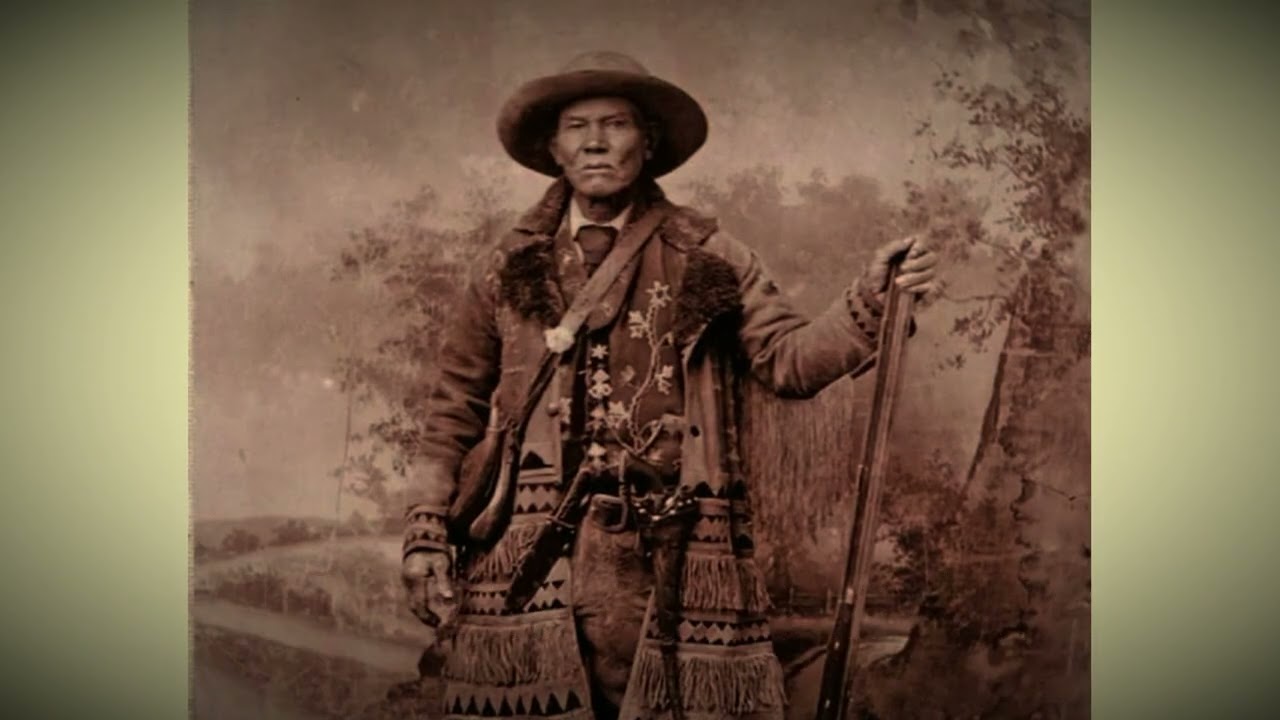
There is a photograph of him taken in the 1890s. He is old, his hair iron-gray, his eyes deep-set, wearing a simple jacket, with nothing in his face to suggest he had done anything worth remembering. He looks like a man who had spent his life at honest work and expected no thanks for it. That, according to those who knew him, was exactly who he was.
On May 1, 1900, his seventy-seventh birthday, he sat with his grandson, a young man named Kit Carson III, and told him from beginning to end the story of the autumn of 1863. He told him about the magpies. He told him about the frost and the cottonwoods. He told him about the branch.
He told him, according to what the grandson later recorded, that he had not slept well for a long time afterward, that the sound of that branch breaking under his boot had haunted his dreams for years, and that he sometimes thought about the young nephew, that boy at the water’s edge, and the circumstances or bad luck that placed that particular boy on that particular creek on that particular morning. He said he did not regret ending the killings, but he did not celebrate them either. He said it was a job that had to be done, and he was the man who could do it, so he did it. That was all.
Four years after that conversation, on May 15, 1904, Tom Tobin died at Fort Garland, in the country he had known all his adult life. He was eighty-one. He was buried in a small cemetery outside the town of Blanca in Costilla County, Colorado. His grave is not an impressive thing.
A stone with his name and dates, and not much more. Wildflowers grow there in summer. In winter, the wind blows down from the Sangre de Cristo Mountains and makes a sound in the grass. The Espinosa brothers, in a strange way, are still with us too.
For the settlers of 1863, they were simply monsters, a name used to frighten neighbors into keeping their doors barred. For later historians, especially those who read the letter Felipe sent to Governor Evans, they became something more complicated: two men whose family was broken by a war they did not choose, whose land was taken by courts that did not speak their language, whose grievance was real, but whose response to that grievance was so far beyond any known justice that no amount of context can make it a cause. The men they killed were ordinary individuals: sawmill workers, cattlemen, miners, freight drivers, men who came to Colorado to find gold and found only work. They had done nothing to the Espinosa brothers personally.
They were killed for what they represented, for the color of their skin, for the language they spoke, for the war their fathers had fought a generation earlier. The country that produced them had done some of the same things to its own people. There is no simple lesson here. The Espinosa brothers were not right.
The country that wronged them was not right either. Tom Tobin did what was asked of him, more effectively than anyone else could have done, and the killing stopped, and other men and their wives and neighbors were able to live the rest of the decade in a slightly less fearful country. That is a good outcome. But it is not a simple one.
When the posse killed Vivían Espinosa in May and found the paper with the number 600 on it, they folded it and kept it. It exists somewhere in the archives. On it, in Felipe’s fine handwriting, was a record, a list of names and dates, the men he had killed and the men he intended to kill. Historians who have studied it say the writing is not the scrawl of a madman.
It is the writing of a man who kept meticulous records. A man sat in a candlelit corner of a cabin and wrote names in a neat list, as another man might write a shopping list. There is a kind of grievance that, once it possesses a man, is no longer about the wound that caused it. It becomes about the account.
And the account has no end. In the autumn of 1863, at the southern edge of Colorado Territory, on a cold morning in a grove of cottonwoods above a small creek, the thing that finally stopped that account was a forty-year-old bowlegged man with a front-loading rifle and a piece of canvas in his saddlebag. His name was Tom Tobin. He did not want the job.
But he accepted it because he was the only man who could do it. He did it in three days. He was cheated out of most of his money. He went home and lived quietly for forty-one more years.
He did not want to become a legend. And he never really did. There is no statue of him in a public square. Most Americans today would not know who he was.
Sometimes the best men in a story are the ones who leave the least trace in it. Sometimes the country built on what they did forgets their names. Sometimes all that is left of a life like that is a headstone in a small cemetery outside a small town, and the wind in the grass, and a story written down by a grandson who was afraid it would be lost.