In the Tres Ríos neighborhood of Culiacán, on the evening of August 4, 2026, a 24-year-old TikTok creator known online as César was filming a harmless challenge with two friends outside a KFC. Dressed as food delivery drivers, they were goofing for a live audience of hundreds of thousands. The stream was running when a motorcycle passed by. Gastélum noticed it and said on camera that it scared him.
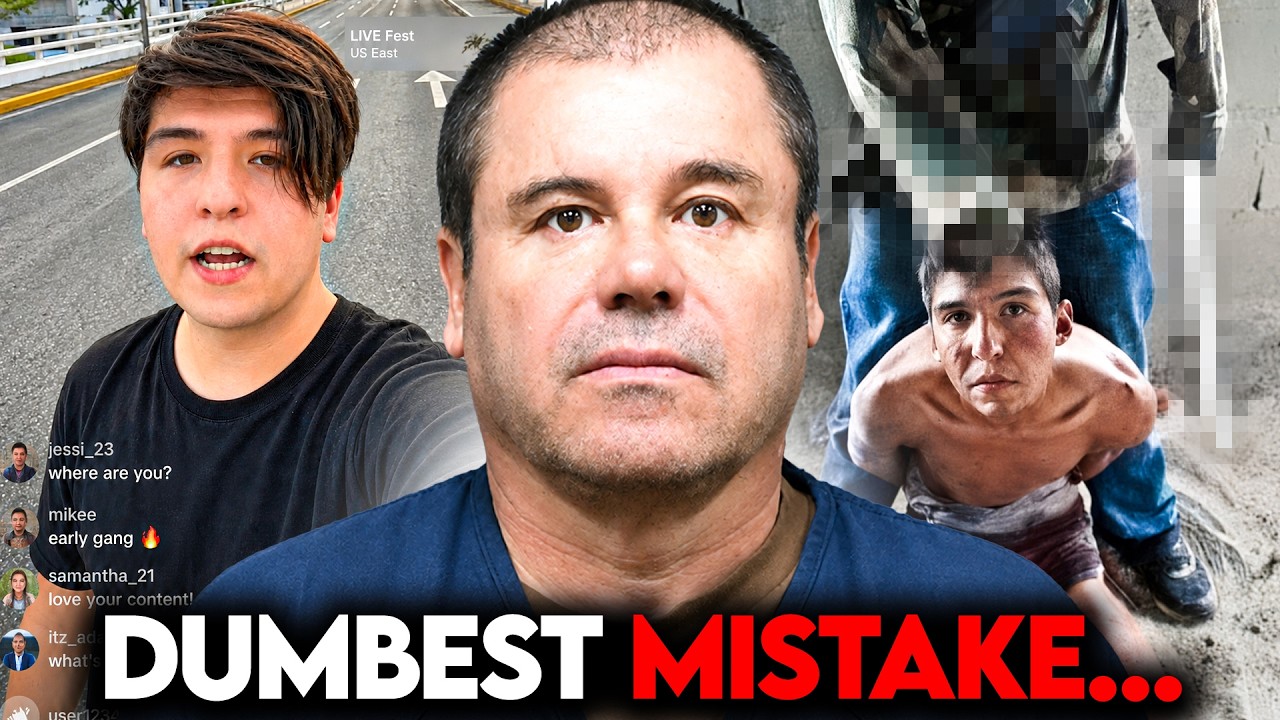
The motorcycle circled back. This time, the passenger stepped off, drew a pistol, and shot him in the head at point-blank range. His audience watched it happen in real time. The following morning, candles marked the spot where he died, and his name spread across Latin America, the United States, and Europe within hours.
Mexico’s federal security cabinet announced that investigators were looking into whether the killing was related to posts Gastélum had published on social media, some of which allegedly referenced a faction of a criminal group. Federal authorities were working alongside Sinaloa state officials. The attack had taken place in the heart of a city that had become the center of a brutal internal conflict within the wider Sinaloa cartel landscape, a conflict between the Los Chapitos faction associated with the sons of Joaquín “El Chapo” Guzmán and the La Mayiza faction associated with Ismael “El Mayo” Zambada. That rupture had followed the dramatic surrender of El Mayo to U.
S. authorities in July 2024, and the violence it unleashed had already consumed hundreds of lives. What made Gastélum’s case especially striking was not only that he was killed, but that the attack unfolded in front of his own audience and became part of a permanent digital record. Something as ordinary as a food delivery driver challenge had become the last thing he ever filmed.
The case that had first signaled this pattern internationally came more than a year earlier. Valeriia Márquez was 23, a beauty and lifestyle creator with more than 113,000 TikTok followers and a salon called Blossom The Beauty Lounge in Zapopan, on the outskirts of Guadalajara. On May 13, 2025, she was inside her salon doing what she regularly did, going live on TikTok. Hours before the attack, two men had arrived claiming they had an expensive gift that needed to be delivered to her personally.
She was not there at the time, and they left. When she began her live stream later that evening, she mentioned on camera that she was worried about why those men had appeared. She said aloud, in words to that effect, that maybe they were going to kill her. Her concern was visible.
Then the men came back. A voice off camera addressed her by name. She answered yes. Seconds later, a masked gunman entered the salon, shot her once in the chest and once in the head, and fled on a motorbike with an accomplice.
Prosecutors said she died instantly. Her audience, watching a beauty session, had witnessed her final moments without any warning. President Claudia Sheinbaum extended condolences and said her administration was working with local prosecutors to track down the killer. Jalisco state prosecutors investigated under femicide protocols.
The Jalisco New Generation Cartel, known as CJNG, maintained firm control over much of the state, and Jalisco ranked among Mexico’s most violent states, with thousands of people having disappeared there since 2018. On the same day Márquez was killed, a former congressman was shot dead just two kilometers away. More than a year later, the investigation brought a different kind of clarity. In late July 2026, Mexican authorities arrested Ramiel Alvarez Ayala, known as LR1, described in reporting as a major figure associated with CJNG.
The alleged connection investigators established was that Márquez had been romantically involved with Francisco, the son of LR1. According to investigators cited in public reporting, Francisco had allegedly threatened Márquez before seeking his father’s involvement in the escalating situation. The allegation would ultimately be tested through the legal process, but it changed the public understanding of her case. What had looked like a cartel attack on a beauty influencer turned out, in the investigative narrative, to involve a personal relationship that her online audience had no way of knowing about.
Rafael Lozano Rosales, known online as El Penalito, represented a different profile. He described himself as a businessman, farmer, marathon runner, and world traveler, and his content was built around luxury vehicles, designer clothing, high-end shopping, and global travel. He was shot on June 4, 2024, outside a car dealership in Culiacán. According to the CNN media database, he was the first of nine prominent local influencers killed in Sinaloa since then, in some sense the opening chapter of the pattern that culminated in Gastélum’s death.
In Culiacán in 2024, being visibly wealthy and publicly prominent was enough to attract the kind of scrutiny that could translate into violence. The exact circumstances and motivation behind his killing were never publicly established with the same degree of investigative detail as the Márquez case. Other names filled out the list. Gael Castro was the brother of Marcos Castro, known online as Marquito’s Toys, one of the most prominent regional YouTubers in Mexico, with a channel approaching five million subscribers built around luxury cars and extravagant lifestyle content.
Marcos had consistently denied any criminal connections, but his visibility made him a subject of intense speculation. Gael Castro was killed in Ensenada, Baja California, in March 2025, shot more than fifteen times in the stomach and chest outside a luxury hotel, dying in front of members of his family. A suspect was later linked to the case through judicial proceedings, but whether the killing was related to his brother’s online profile or to something else entirely was never definitively established. Juan Carlos López, known as El Chilango, was a local comedic personality in Sinaloa who combined comedy with regional cultural aesthetics.
He was among a series of creators targeted there in the period following September 2024. José Miguel Vivanco García, known as El Asper; Leonardo Ispiur, known as El Gordo Peruchi; and Agustín Paul Duarte, known as El Pinky, were also among the nine documented deaths. According to reporting by El País and CNN, several of these victims were not killed in public or during live streams. They were abducted directly from their homes or workplaces, and their bodies were later abandoned in public spaces, many showing signs of torture before death.
These were not drive-by shootings. They were targeted operations with deliberate intent, and the public nature of how the bodies were found suggested that the violence was meant to communicate something beyond the individual killing. Three additional names completed the documented list: Alberto P. , known as El Tata; Víctor Manuel, known as El Brasileño; and Herardo Moya, known as El Jerry.
Each was part of the regional content ecosystem in Culiacán, and each became a name on a list that kept growing across two years. What tied the cases together was not a single organization, motive, or type of content. It was visibility. Each of these people had built some kind of public platform in a region where criminal organizations pay close attention to who has influence, who has relationships, and what those people are saying.
In several cases, that visibility became a factor in their deaths. The phrase “messed with the cartel and found out” is internet language, not investigative language. It implies that the victims did something that deserved a consequence, which is a morally dishonest framing. Some may have posted content interpreted as partisan within a factional conflict, as authorities alleged in Gastélum’s case.
Some may have been killed because of private relationships that intersected with criminal organizations, as the Márquez investigation suggested. Some may have been killed for reasons that remain unknown. The phrase treats murder as the logical outcome of bad choices when the reality is far messier and far more human. The live streams transformed both Gastélum’s and Márquez’s deaths from local tragedies into international incidents.
An audience watching a food delivery challenge or a beauty session is not prepared for what those live streams became. Viewers had no time to process what they were watching before it was already over. The footage spread across platforms within hours, and the algorithm did not distinguish between content that entertains and content that documents violence. Platforms have policies against graphic content, but enforcement is inconsistent, and by the time a clip is removed, it may already be hosted in dozens of other locations.
The pattern of killings also changed the behavior of other creators in the region. Some became more cautious about what they posted. Some stopped creating content entirely. Some relocated.
The violence functioned as a form of social pressure on anyone with public visibility, making the cost of online fame more explicit than it had ever been. The documented pattern of at least twenty targeted attacks against influencers in Sinaloa since 2024, with at least fourteen people killed, is real. But the explanations for individual cases are much less uniform than an internet summary would suggest. These were not people who went to war with criminal organizations and lost.
They were people who existed in a specific environment where visibility, relationships, aesthetics, and proximity became risk factors they may not have fully understood. Social media fame exists inside real-world environments, and the audience you build online cannot protect you from the people who have decided that your public profile is a problem.