In ancient Rome, the state could execute a traitor in an afternoon. That was easy. What Rome spent eight centuries perfecting was something stranger and, in Roman eyes, far more terrifying: a way to end a person’s existence that execution alone could never reach.
A punishment that continued even after the heart stopped beating.
The most famous man to suffer this fate was, on the morning of his death, the second most powerful man in the empire. By nightfall, there was no record that he had ever existed.
To understand what Rome was doing in that sealed stone chamber, you must understand what Rome believed it was protecting. The full punishment for treason sought to destroy seven things at once: the body, the family, the property, the legal identity, the public reputation, the right to a proper burial, and the right to be remembered as a Roman at all. Death only addressed the first.
Rome built its instruments of destruction slowly, over hundreds of years. There was no single executioner in a black robe, no single dungeon, no single law. Instead, there were procedures.
Some dated back to the age of kings. Others were invented by panicked emperors. They accumulated until a man could be killed, his children killed, his house demolished, his name chiseled from stone, and his ancestors declared a political plague.
At the heart of it all stood men like Tiberius, who ruled an empire from an island he refused to leave. Nero, who inherited a conspiracy and turned it into a purge. Domitian, anxious on a throne he reached by accident, who judged the chastity of women to be a threat to Rome itself.
These were not cartoon tyrants. They were cautious men. The cruelty was designed with precision and carried out by other Romans: senators who had embraced the condemned man a week earlier, Praetorian guards who did not always know which side paid them, and informers called delatores, ordinary Romans allowed to keep a share of any property they successfully accused a man of forfeiting.
The system paid people to accuse their neighbors. The accusers were not strangers or monsters. They were your dinner guests.
That is the world you need to summon for everything that follows. A world where killing was the beginning of punishment, not the end. A world where a chisel in the right hands was a more decisive weapon than a sword.
The earliest laws of Rome were not written for philosophers. They were written for farmers who had just expelled a king and feared another one rising. The Twelve Tables, the foundational law of the early Republic, carved around 450 BC, treated communication with an enemy of Rome as a capital crime.
There was no debate about intent, no graded sentence, no appeal for mitigating circumstances. The charge was called perduellio, hostility toward the state. Two commissioners called duumviri perduellionis handled the trial.
The punishment was not an ordinary execution. The condemned man was beaten, then hanged from a tree the Romans called the "unlucky tree." The phrase mattered.
It conveyed ritual pollution. This was not just death. It was purification.
There was a second ancient punishment, a geographical one. Traitors could be thrown from a cliff on the Capitoline Hill called the Tarpeian Rock. The city turned its own geography into a means of execution.
The condemned fell before the Forum where he once spoke, before the temples where he once made offerings. The fall itself was the message. You belonged to this city.
Now the city has spat you out.
But Rome’s most distinctive early punishment was colder than the tree or the rock. It was a formula. Four words in Latin, read aloud by a judge: aquae et ignis interdictio, the prohibition of water and fire.
It sounded almost poetic. In reality, it was total annihilation. The condemned man was forbidden from receiving anything within Roman territory that defined human settlement: fresh water and the hearth flame.
No one could legally sell him food. No one could legally give him shelter. Any Roman who killed him was innocent.
Think about what this did. The man sentenced to interdiction was not placed in a cell. He walked out of the city.
He was physically alive. He had hands. He had a face.
He had a name his wife still remembered. But for the Roman legal system, he was already dead. His property was confiscated.
His marriage was dissolved. His children lost their inheritance. If he was a senator in the morning, by evening he could not legally enter a Roman market to buy an apple.
This was Rome’s great innovation: the discovery that you could kill a man while his heart was still beating.
By the autumn of 31 AD, no one had seen Emperor Tiberius in Rome for years. He was 68 years old. He had withdrawn to a villa on a cliff on the island of Capri, ruling the greatest empire the Mediterranean had ever seen through letters, messengers, and the services of one man.
That man was Lucius Aelius Sejanus, commander of the Praetorian Guard. He was about 48 years old. His father had held the same post before him.
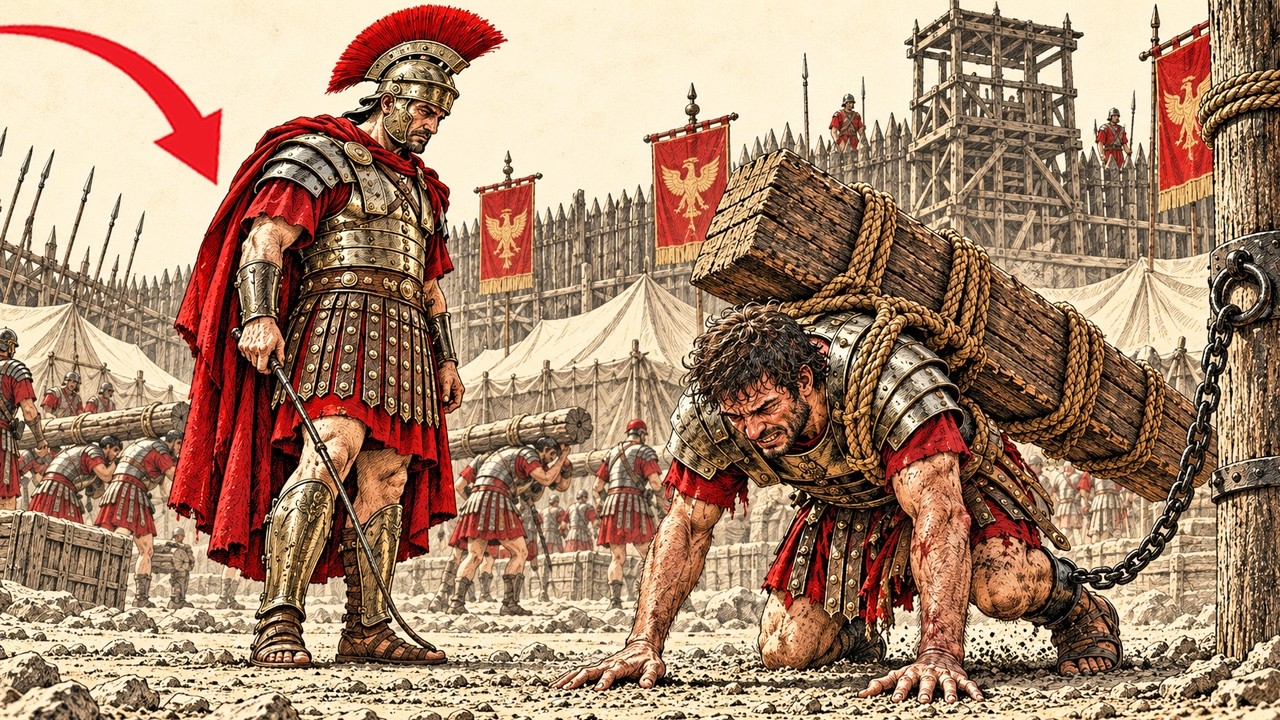
Sejanus had gathered the scattered Praetorian units and concentrated them in a single camp inside Rome. He had become indispensable. By every visible measure, he was the second most powerful man in the empire.
And Tiberius had decided to destroy him.
The problem was mechanical. Sejanus controlled the Guard. A public arrest order might ignite a civil war inside the capital.
A dismissal order might alert him. A trial would require evidence that might implicate the emperor himself, who had relied on this man for a decade. From his island, Tiberius pondered the equation.
A man who could not be fought, could not be warned, and could not be publicly accused.
So Tiberius wrote a letter. It was not short. It was so long and so deliberately ambiguous that no one hearing it read aloud would know from one sentence to the next whether it praised Sejanus or condemned him.
He sealed it and sent it to Rome. In a few hundred words of Latin, he had engineered the most refined political assassination in Roman history.
To understand the fall of Sejanus, you must understand the weapon in Tiberius’s hand. It was a law, not the ancient perduellio, but something newer and more flexible: a law called maiestas. The word originally meant greatness or dignity, specifically the dignity of the Roman people, their magistrates, and their state.
In the Republic, the law was used sparingly. Then Augustus became emperor, and the meaning of maiestas quietly changed. The greatness of Rome and the greatness of the emperor gradually became one thing.
Under Tiberius, that quiet shift became explicit. Insulting the emperor’s dignity was treason. A rumor about his health was treason.
Damaging a statue of him was treason. A will that failed to mention his name was treason. The law expanded to reach anywhere a Roman might speak, write, or dream.
It was enforced through an instrument the Republic never built: the delatores, professional informers. The critical detail was this: a successful informer had the right to a share of the condemned man’s property. If you accused a wealthy senator and he was convicted, you walked out of the case rich.
The system essentially placed a bounty on the head of every Roman who owned a large estate. Tacitus, who wrote about this period with the suppressed fury of a man who watched his own class live through it, said that informing became a profession. A system where the man who dined at your table tonight could stand in the Senate tomorrow, accuse you of speaking against the emperor three years ago, and legally own your villa by sunset.
Before returning to Sejanus, there is an earlier case that shows how dangerous Rome’s ancient treason laws could be, even in the Republic, and how forgotten laws could be pulled from legal drawers and used again. The year was 63 BC. The accused was a man named Gaius Rabirius, an elderly senator in his seventies.
The alleged crime had happened 37 years earlier. In 100 BC, the Senate had declared Lucius Appuleius Saturninus, a tribune of the plebs who championed land grants for veterans and bread for the poor, a public enemy. Saturninus took refuge on the Capitoline.
He surrendered. He was imprisoned in the Senate house. Then, before any trial, a mob killed him.
Thirty-seven years later, Rabirius was accused of being one of the killers. The prosecution did not charge ordinary murder. They revived the charge of perduellio.
They demanded the formation of the commission, the production of the unlucky tree, and that a Roman senator be flogged and hanged from a cursed tree in the consulship of Cicero.
Cicero defended him. His speech survives. Its argument is not primarily about Rabirius’s innocence.
Its argument is that the Republic cannot survive if its oldest and most savage procedures can be revived for political theater. The trial was interrupted. A priest reported an ill omen.
The assembly was dismissed, and Rabirius was never executed. But the point had been made. The weapon still existed.
It was only sleeping.
Now back to the autumn of 31 AD. Sejanus did not know he would die that month. He did not know the letter was coming.
Statues of him had been erected across Rome and Italy. Senators raced to be seen with him. His birthday was publicly celebrated.
What Sejanus did not know was that Tiberius had been receiving a series of letters from Antonia, mother of the future emperor Claudius, warning that Sejanus was conspiring against the imperial family. Tiberius did not confront Sejanus. He did not warn him.
He waited and planned.
In October of 31 AD, Sejanus was summoned to a Senate meeting in the Temple of Apollo on the Palatine Hill. A man named Macro, Tiberius’s new confidant carrying instructions from Capri, told him that the letter to be delivered that day would announce his honor, perhaps tribunician power, the formal authority shared by the heir to the throne. Macro personally accompanied Sejanus into the chamber, left him there, then quietly left the building.

Outside, he began replacing the Praetorian guards on duty with his own men.
The seal was broken. The reading began. Every man in that chamber, including Sejanus himself, believed at the first words that they were witnessing a promotion.
The letter was long. That is the first fact on which the ancient sources agree. It was a rambling, exhausting document, perhaps taking hours to read, beginning with a discussion of state affairs that had nothing to do with Sejanus.
Weather, borders, the emperor’s health. Senators sitting near Sejanus whispered congratulations. Then the letter mentioned Sejanus favorably.
Praised his service in general terms. Then it drifted off again. Then it returned to Sejanus with a complaint, a small, detailed complaint.
Then back to administrative matters. Then a sentence that was not quite an accusation but no longer praise. Then another, sharper.
Then another, more direct.
By the middle of the letter, Sejanus was being described in terms that could, with a slight shift in phrasing, be read as condemnation. Tacitus tells us that the emperor’s letter was crafted so that no listener, not Sejanus, not his allies, not his enemies, could perceive at any moment whether it was leading toward reward or ruin. When the final paragraph came, demanding Sejanus’s arrest, the chamber that had applauded him at the start had already shifted its posture toward him in a hundred small ways.
Senators had moved. They had stopped whispering. They began watching the men who were watching Sejanus.
There was no resistance at the moment of arrest. No one remained beside him to resist it. He was led out of the room in daylight.
The crowds outside, which had gathered hours earlier to cheer his glory, saw him led under guard, not by his loyal Praetorians but by Macro’s replacements. Within hours, the Senate condemned him. By nightfall, he was dead.
The sources differ on the method, but it was likely strangulation inside the Tullianum, the small stone prison below the Capitoline where Rome kept men between condemnation and their end.
Then came the next phase. Sejanus’s body was dragged from the Tullianum down the Gemonian stairs, the stairs of mourning, into the Forum. Crowds had already gathered, the same crowds that had gathered that morning to cheer his honor.
Official heralds told them that the man they had come to celebrate was in fact an enemy of the state. So they did what Roman crowds did when given permission to hate. They mutilated the corpse.
The sources describe how they tore at it, kicked it, pulled at its clothing. The man who had been the second most powerful person in the Mediterranean world that morning was, by evening, having his corpse dragged by a rope through the city he had effectively ruled hours earlier. Then they threw his body into the Tiber.
This was not disposal. This was punishment. Roman law and religion required a proper burial, the performance of rites, the gathering of ashes, the speaking of the dead man’s name aloud by his family.
To be thrown into the river without burial meant deprivation of all of it. Sejanus would have no funeral. His family would receive no urn of ashes.
His name would never be spoken at the family altar on remembrance days.
And across the city, the next stage of his punishment began. His statues fell, dozens of them. Men with hammers moved from statue to statue.
They did not just remove the images. They smashed them. They started with the faces first.
The Roman architecture of erasure did not stop at the condemned man. It extended backward through time and through the family. In the year 65 AD, Emperor Nero had just uncovered a conspiracy, the Pisonian conspiracy, named after its central figure, Gaius Calpurnius Piso.
The response was a purge. One of the men caught in it was Gaius Cassius Longinus, one of the most distinguished jurists of his age. He was wealthy, senatorial, and carried in his family the name of an ancestor the Julio-Claudian emperors never forgave: Gaius Cassius Longinus, one of the men who killed Julius Caesar more than a century earlier.
Tacitus tells us precisely why Cassius was condemned. Not for leading a conspiracy, the evidence of his actual involvement was weak. He was condemned partly because he kept, among the wax images of his ancestors that lined the atrium of every noble Roman house, the image of the old Cassius, the assassin, the republican.
In Rome under Nero, that image became political evidence. A face in wax, five generations old, became a weapon against a living man. Cassius was initially exiled.
Later, the order came for his death. He opened his veins, the aristocratic method that allowed a Roman to preserve some dignity and, practically, sometimes preserve part of his family’s property from full imperial confiscation.
Another victim of the same purge was Lucius Junius Silanus Torquatus. He was in his twenties. His only crime was his blood.
He was of Julio-Claudian descent, a descendant of Augustus himself. In a dynasty that decided proximity to the throne was itself a form of treason, his existence was his conviction. The order came for his death.

And so it was done.
The pattern of killing the man, erasing the family, and smashing the statues was applied not only to those who had done something but to those who might do something simply by being born. In the hours after Sejanus’s death, Roman authorities arrested his children. The sources describe their fate without hesitation.
His son was killed. His daughter, a young girl barely past childhood according to one account, was also executed. But Roman custom held that a virgin could not be executed by the state.
Therefore, before her execution, she was violated by the executioner. The chamber that had applauded Sejanus in the morning and condemned him in the afternoon had, by evening, extended the sentence to a child. Tacitus records this with the disciplined horror of a man who refuses to let it be forgotten.
The property was confiscated. His possessions, furniture, slaves, and coinage passed to the emperor or were sold at state auctions. The informers who helped build the case received their share.
Then came the destruction of legal identity and reputation. The Senate issued decrees ordering Sejanus’s name struck from public records, from inscriptions, from calendars that recorded his birth date, and from the fasti, the official lists that preserved the names of Roman magistrates year after year. His consulship, which he had shared with Tiberius, had to be removed from the documents without damaging the record of the emperor’s own reign.
On surviving stones, you can still see the scars. A rough patch of masonry where a name once was. A deliberate scrape.
Sometimes a replacement inscription carved into the gap, oddly placed, pretending the original name was never there.
This treatment repeated 174 years later, in 205 AD, when another Praetorian prefect fell. Gaius Fulvius Plautianus, a man from the North African provinces who rose to the highest ranks of imperial service under Septimius Severus, was accused of conspiring against the imperial family. He was killed.
His property was confiscated. His inscriptions were altered. Fragments of his statues survive in museums today with their faces deliberately disfigured, the same chisel work, the same project, the same seven-step erasure applied two centuries after Sejanus.
The procedure had become institutionalized.
So what was actually inside that sealed chamber under the Colline Gate? Now you know. A bed, a lamp, bread, water, oil, milk.
A legal fiction so elaborate that Roman priests could stand above the sealed earth and claim, in complete seriousness, that they had not killed the woman beneath it. She was forbidden a cup of water or a hearth flame, but both were provided inside the chamber so the state would not have to speak the word. Then silence.
Earth on top. A small mound that Plutarch could still see when he wrote a generation later. The lamp burned until the air ran out, or the oil ran out, or something else ran out.
How do you punish a man who is already dead? The answer is this. Destroy his body before anyone can mourn it.
Destroy his family so no one remains to remember him kindly. Seize his property so his descendants cannot build on it. Strike his name from the records of his magistracy.
Tear down his statues and smash their faces. Issue decrees forbidding his descendants from using his name. Order that no one speak well of him in public.
The modern term for this ancient cruelty is damnatio memoriae, condemnation of memory. But the Romans did not know it by that name. They simply did it, chisel stroke after chisel stroke, shattered statue after shattered statue, erased line after erased line.
The news of these events traveled through Rome in the specific, visible way the Roman state had learned to make its violence travel. There were no newspapers. There was the Forum.
There was the physical fact of a statue standing one morning and gone the next, in a square Romans passed on their way to buy fish. There was the fact of a name chiseled from a stone still standing in a public colonnade. The emptiness in the stone was the news.
The message of the empire to anyone who might imagine themselves safe at the top of its pyramid was this: there is no safety. There is only the emperor’s attention for a time. And when that attention turns away, everything else turns away with it.
The practices described here did not end with Rome. They passed in modified forms into the Middle Ages and the early modern period: attainder in English law, the destruction of heraldry, posthumous trials of condemned men, the public ritual desecration of corpses. The Roman innovation, that a political system could extend its reach past death and into memory itself, proved one of Rome’s most enduring ideas.
Governments still try to do it. Modern attempts to erase a disgraced leader’s name from textbooks, topple statues, and remove faces from photographs are late descendants of a procedure that was already ancient when Sejanus’s name was being chiseled from marble.
And here is the detail most people get wrong. Damnatio memoriae did not actually erase memory. It did the opposite.
The hammer marks on a statue tell you, two thousand years later, that someone powerful enough to deserve destruction once stood there. The void left by the chisel in an inscription where a name should be is itself a record, a signature left by the state. Archaeologists working in Rome, Pompeii, and provincial cities use these scars to identify condemned figures.
The attempt to remove someone became the clearest evidence that the person existed and mattered. Sejanus’s name disappeared from the stones, but every one of those scars tells us he was there. The empire did not erase him.
It carved him deeper.
Return to the chamber under the Colline Gate. The bed, the lamp, the bread, the image. That small, careful legal fiction performed above the sealed stone.
The Roman state did not kill that woman. The Roman state built her a room. That was the specific genius and the specific cruelty of what Rome designed.
Not to end a life, but to dismantle it piece by piece long after breathing stopped. That is why, for a Roman, the cruelest punishment was not the one that ended in death. It was the one that never ended.