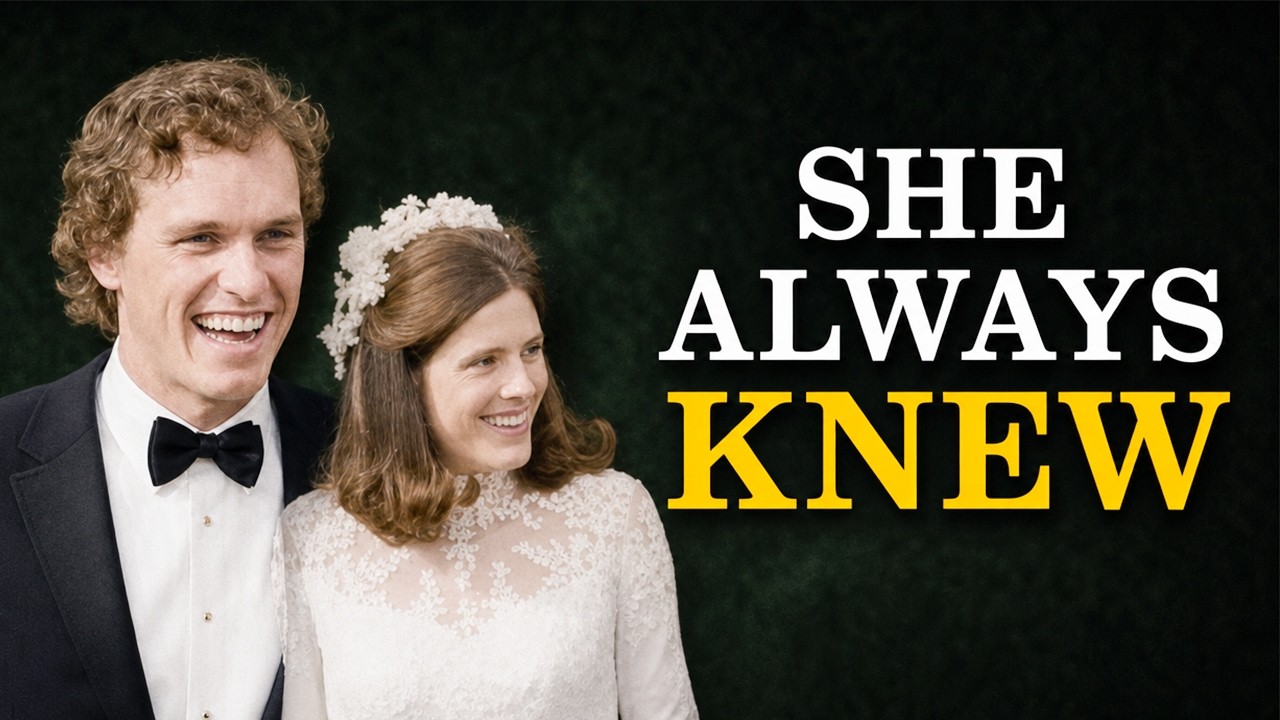
On February 3, 1979, in a church in Gladwyne, Pennsylvania, a Catholic priest and an Episcopal priest shared an altar. The bride was not Catholic. The groom was Robert Kennedy’s oldest son.
America filed the photograph under fairy tale.
Fourteen years later, the groom asked a church court to rule that the wedding had produced nothing at all. Sheila Rauch Kennedy opened the letter from the Archdiocese of Boston and vomited. He had already remarried.
The grounds claimed one of them had not been capable of consenting. He had called her a nobody in Boston.
That nobody took the case to Rome.
Sheila Brewster Rauch was born in 1949 into old Philadelphia money. Her father ran the Philadelphia Saving Fund Society and collected civic honors. Her parents stayed married for roughly 60 years.
She described her upbringing as WASP: you do not wear your feelings on your sleeve, and you do not take public what is private. She called herself one of the frozen people.
That temperament would be mistaken for passivity for the next two decades.
She met Joe Kennedy in 1970. She was 21, a senior in college. He was 18, two years past the night his father was shot in Los Angeles.
She did not meet a congressman. She met a teenager handed the job of being the oldest son in a family that had just lost its second national martyr.
The courtship ran nine years. It was not serene. In August 1973, on Nantucket, Joe was driving a Jeep that flipped.
A young woman riding with him, Pamela Kelly, was left paralyzed. He was charged over the driving and fined. He was 20.
She dated him for six more years.
She has never said the crash was a warning she ignored. But it established the world she was choosing to enter: a family where catastrophe was routine, where the press arrived before the ambulance did.
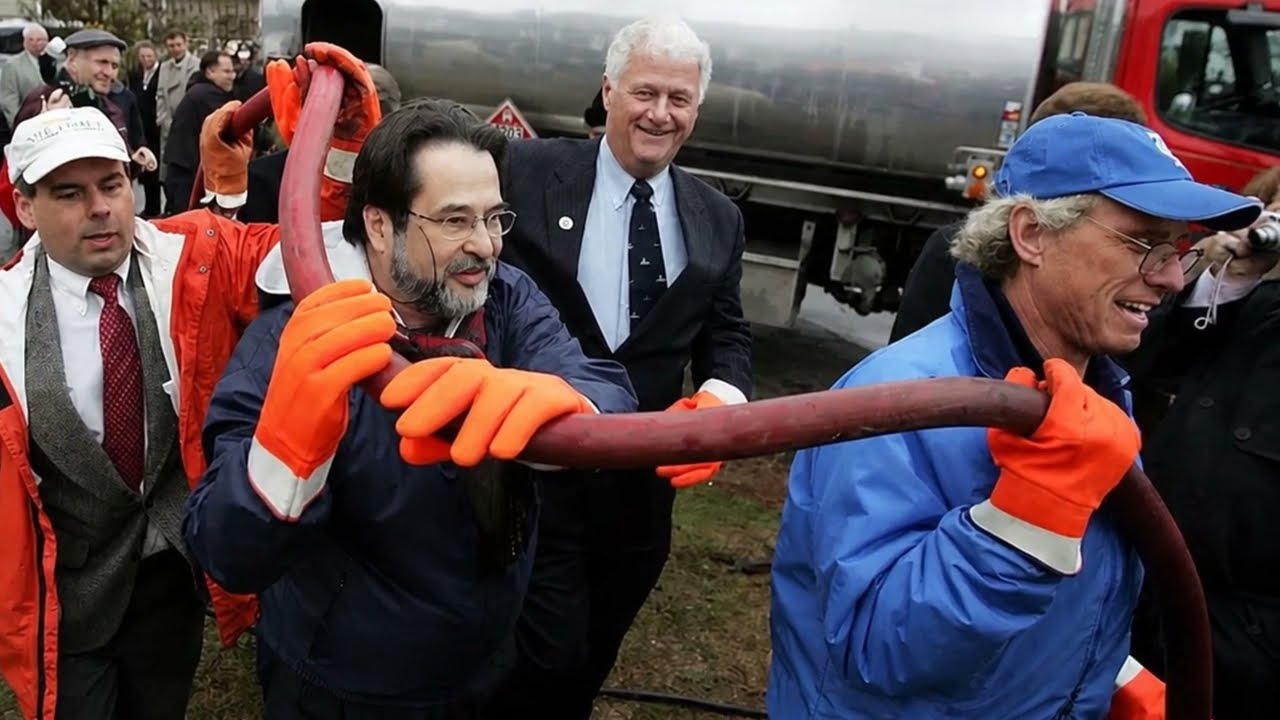
In 1979, he founded Citizens Energy Corporation to sell discounted heating oil to low-income families. That was real, and it worked for decades. She married a difficult, charismatic, damaged young man she had known for nearly a decade.
The wedding set the terms. It was held in a Catholic church under Catholic rules. The Episcopalian bride accepted the authority of the Roman Catholic Church over the validity of her own marriage.
She said so herself decades later without self-pity.
The twins arrived on October 4, 1980: Joseph Patrick III and Matthew Rauch. They were baptized Catholic, with godparents drawn from both churches. She had honored every religious condition the Kennedys asked for.
Which meant that when the annulment petition came, it was not just her marriage being voided. It was the sanctified status of two boys raised inside somebody else’s church at somebody else’s request.
For the first years, by her own account, the marriage worked. She insisted on this later, telling the Associated Press in 2007 that the marriage had been very strong in the beginning, that she had been happy, and that the unraveling does not retroactively delete what came before.
The unraveling had a date. In 1986, Joe Kennedy ran for the 8th Congressional District of Massachusetts, Tip O’Neill’s seat and before that, his Uncle Jack’s. He won.
In January 1987, he went to Washington.
That changed the household. He came home from Washington and opened the refrigerator and there would be two cream sodas instead of three. Or the wrong tea.
English breakfast when he wanted Irish breakfast. That was the scandal, and it landed harder than any tabloid allegation. A man spent his weeks being deferred to by people who wanted things from him, arriving home to a woman who was not going to defer to him about beverages.
Her phrase for what he was getting everywhere else was fawning. “I wasn’t prepared to fawn,” she said. “I could never make the adjustment from what it had been like before.”
She knew the template for political wives: the quiet sufferer. But the Kennedy women of the previous era had cooks and nannies and staff. She had a station wagon and a deadline.
She was expected to be modern enough to do everything herself and old-fashioned enough to be submissive about it.
He called himself the family pitbull.
She wrote that by the end of the marriage, she had become afraid of him. When an interviewer asked directly, “Did he hit you?” she paused and answered, “No.”
“Not directly violent to her. He has a temper,” she said, “and he’s the first to admit it.”
That was her testimony, unprompted and against her own interest as an author selling a book. She kept declining the more sensational version of her own story.
She filed for divorce. Her explanation was one sentence: “Living a charade had become too hurtful for everyone.” They separated around 1989.
The divorce came through in 1991 on grounds of irreconcilable differences.
There was no prenuptial agreement. She did not ask for a penny of alimony. She moved out, borrowed money from her parents, and bought a ramshackle house in Cambridge, which she fixed up herself while taking freelance city planning work.
She stayed in Massachusetts specifically so their father could see the boys.
She kept quiet. She listed that as a service rendered to a man with political ambitions. She understood exactly what her silence was worth in Boston, and she handed it over for nothing.
Two years passed like that. In 1993, Joe married Beth Kelly, who had worked on his congressional staff as a secretary and scheduler. Sheila’s response on the record was remarkably fair.
She said she was a little surprised. Then she said he could have done a lot worse. That Beth took good care of him and took good care of the boys.
What turned her was not the remarriage. It was an interview Joe gave. He said publicly that he was waiting for the annulment to come through so he could marry Beth in the church.
He announced to the press that a proceeding was underway to declare that his first marriage had never existed. He announced it as a scheduling matter. The civil ceremony had already happened.
He was waiting for the ruling to be married correctly.
The calculation was that she would sign. She was not Catholic. She filed for divorce herself.
She walked away without alimony. She had been silent for two years. In Boston, she was a nobody.
The nobody wrote to Time magazine. That was the first shot in 1993. Her argument never changed: if the marriage were deemed never to have existed in the eyes of the church, then their children would have been neither conceived in nor born to a sanctified union.
She argued the status of two 12-year-old boys who had been baptized Catholic at their father’s family’s request.
Her friends were startled. It was completely out of character. She agreed.
She was naturally shy and adept at staying quiet. Opening that letter from the tribunal was the day she decided she was through being stomped on.
The process turned out to be the real story. The tribunal did not treat her testimony about her own marriage as central evidence. Nobody at the Archdiocese of Boston told her she had the right to appeal to Rome.
She found that out from people outside the Archdiocese.
Then the letters started arriving. Hundreds of them, from women all over the country. One came from an Irish woman who had emigrated in the early 70s.
Twenty-six years of marriage, three children, a three-year courtship, two adults in their 30s at the altar. Annulled. Same grounds: lack of due discretion.
By the mid-90s, the American Catholic Church was granting annulments by the tens of thousands a year. A volume with no real precedent and no equivalent anywhere else in the world.
In October 1996, the tribunal of the Archdiocese of Boston ruled. She lost. And the reasoning contained a strange detail.
The petition had been filed on grounds of lack of due discretion of judgment. Everyone who read it understood the accusation as pointing across the table at her.
The tribunal delivered the annulment by finding that the person lacking due discretion was Joe.
The Archdiocese of Boston, asked to erase a marriage on behalf of a sitting congressman, concluded that the congressman had not been competent to consent to it. After a nine-year courtship. A man who had run a nonprofit energy company for 17 years and won six elections to the United States House of Representatives.
He got what he wanted. He just had to be declared the one who had not known what he was doing.
Through 1996 and into 1997, Joe Kennedy was the overwhelming favorite to be the next governor of Massachusetts. In early 1997, Pantheon published Shattered Faith: A Woman’s Struggle to Stop the Catholic Church from Annulling Her Marriage.
Anyone expecting a Kennedy tell-all was disappointed. There was no catalog of infidelities. No gothic account of the family compound.
Instead, a woman methodically explaining a bureaucratic process, quoting her ex-husband accurately enough that he never seriously challenged the quotes, and printing the letters of other women it had happened to.
That same season, the Boston Globe put his brother Michael on the front page over allegations of a relationship with the family’s teenage babysitter. Michael’s wife filed for divorce. Their cousin John F.
Kennedy Jr. used his own magazine to call Joe and Michael poster boys for bad behavior.
In the same week the Michael story broke, Joe called a press conference to get ahead of his ex-wife’s book. He apologized for any of the mistakes he made during the marriage. He explained the annulment as the only way he could take communion with his children and his wife.
His approval numbers collapsed. On August 28, 1997, he announced he would not run for governor. He said a campaign would be about personal and family questions instead of health care and jobs.
That December, Michael died in a skiing accident in Aspen. In 1998, Joe announced he was leaving politics to go back and run Citizens Energy.
There is a photograph from Michael’s wake at Ethel Kennedy’s house, and Sheila Rauch is in it, waiting to go in. She had wrecked his career, and she showed up to the funeral. Both things are true.

She also refused to take the win. Asked in 1997 whether it was fair that her book was destroying his gubernatorial prospects, she said no. She said we should draw a distinction between personal behavior and politics.
She said we build god-like heroes out of celebrities and then tear them apart with equal vigor, and that she found that dangerous.
She appealed to the Roman Rota, the Vatican’s high court. The archdiocese wanted $850 from her to send the appeal to Rome, roughly three times what it had cost her ex-husband to obtain the annulment. She objected on principle and on cash.
The holidays were coming and she did not have an extra $850.
Nobody expected her to win. Rome takes years. The Kennedys had a century of standing in the American church.
In 2005, the Roman Rota reversed the Boston Tribunal. The marriage of Joseph P. Kennedy II and Sheila Brewster Rauch was valid.
It had happened. It counted.
The decision was reached in 2005. Word circulated in Catholic press circles in 2006. Sheila Rauch, the petitioner, the woman who had paid the fee and fought for over a decade, was not officially informed by the Archdiocese of Boston until May 2007.
She learned that her marriage had been restored roughly two years after the ruling.
She said she was very grateful the marriage had been validated. Then she said the thing that had been her position since 1993, unchanged. There was a real marriage.
It was a marriage that failed. And as grown-ups we need to take responsibility for that.
Consider who ended up controlling the historical record. Not the family with the presidential library, the foundations, and the authorized biographers. The surviving account of this marriage is hers because she wrote it first, wrote it carefully, kept it verifiable, and declined to exaggerate a single element of it.
He never published his version. The tribunal’s file is sealed. What is left on the shelf is a book by a city planner from Philadelphia.
The boys she was arguing about grew up. Joseph P. Kennedy III went to Stanford, the Peace Corps, Harvard Law.
In November 2012, he won a seat in Congress. In January 2018, he delivered the Democratic response to the State of the Union.
She is the person who made sure there was never an official document anywhere claiming he was born outside a real marriage.
Look at the Gladwyne photograph again. Two priests at one altar, February 1979. For 18 years, it read as a nice ecumenical gesture.
It was not that. It was a jurisdiction being handed over. She gave the Roman Catholic Church authority over her marriage that day and honored every condition attached.
Her husband spent roughly $280 asking that same church to say none of it had happened. She spent $850 asking it to check. The church he assumed would belong to him ruled for her.
Their marriage was never the love story America believed in. America believed in a photogenic young couple with the world in front of them, and then believed in a clean, adult, amicable divorce. Both of those were performances.
She produced the second one herself, for free, for two years, until he told a reporter he was waiting on some paperwork.
What it actually was is harder and stranger. A real marriage entered by two people who knew each other for nine years, that failed the way marriages fail, and then got dragged into a church court and put on trial for having ever existed at all.
They call them the frozen people. She spent 40 years being underestimated by a family that mistook her restraint for compliance. When they finally pushed, she did not raise her voice once.
She just went and got it in writing.