In early 1982, the American press crowned an eighteen-year-old from Long Island with a title no committee had granted and no institution could revoke. Cornelia Guest was named “Deb of the Year” by Eugenia Sheppard, a fashion columnist whose words carried enough weight to stick for four decades. The young woman had spent most of her childhood in a stable, sang rock songs in a nightclub near Times Square, and posed for a magazine with her hands covering her bare chest. The press called her a “material girl” after running out of gentler epithets.
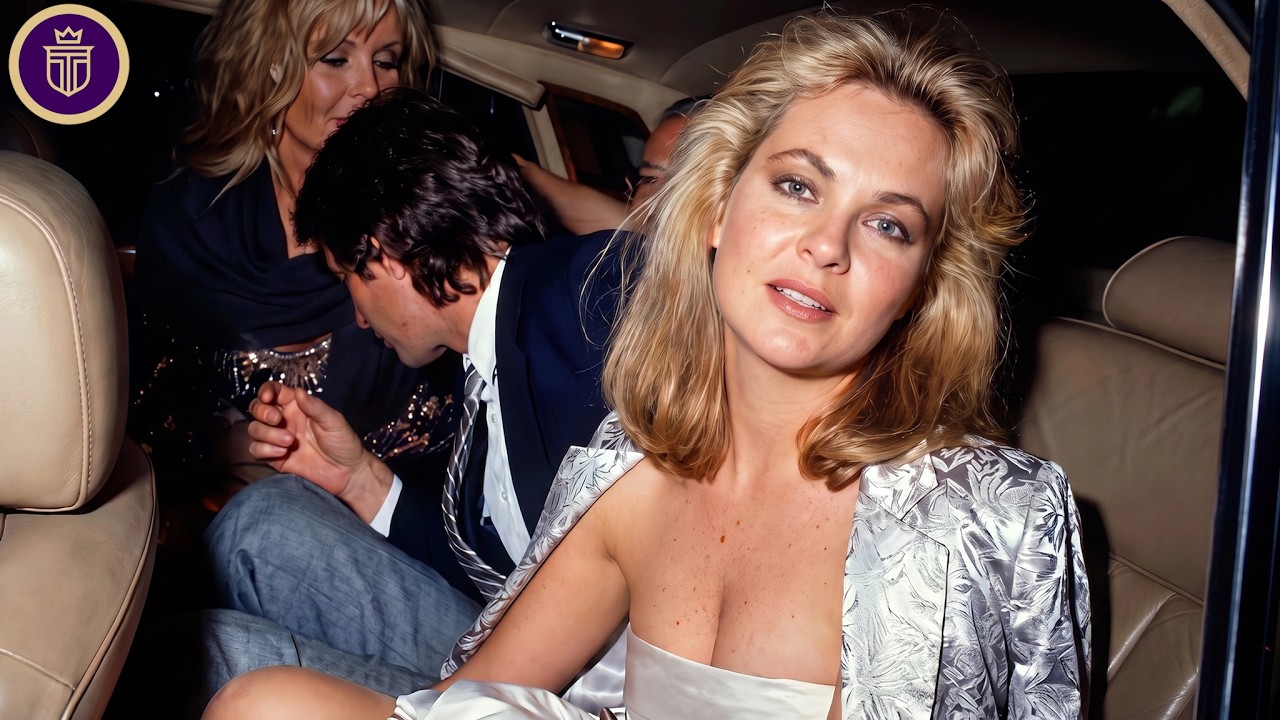
What the gossip columns could not resist was that she openly admitted to wanting fame, something the old social order had long forbidden. Cornelia was born on Thanksgiving Day 1963, six days after President Kennedy was assassinated. Her mother, C. Z.
Guest, had already passed forty, and her father, Winston Frederick Churchill Guest, was a tenth-goal polo player descended from the Spencer-Churchill family. Her godparents were the Duke and Duchess of Windsor, the man who abdicated the British throne and the American divorcée he gave it up for. She curtsied in her own reception room before she learned to read. The fortune behind it all came from Pittsburgh steel, earned by her great-grandfather Henry Phipps Jr.
, a partner of Andrew Carnegie. By the time Cornelia was born, that money had been sitting in trusts for three generations. The wealth began with iron and an accountant from Pittsburgh. Henry Phipps Jr.
grew up beside Andrew Carnegie in the same immigrant neighborhood, and the two became partners in the Union Iron Mills while still young men. When Carnegie Steel was formally organized in the early 1890s, Phipps emerged as its second-largest shareholder. Carnegie delivered speeches about wealth while Phipps kept the books that made those speeches possible. At the turn of the century, when the whole enterprise was sold to J.
P. Morgan’s new United States Steel, Carnegie received the largest share and spent the rest of his life giving it away to libraries. Phipps received $48 million and did something quieter but far more consequential for his descendants. He established the Bessemer Trust for the sole purpose of managing his own assets, ensuring they would pass intact to his children.
While most Gilded Age fortunes collapsed within two generations, Phipps built the machinery of preservation before the money ever reached the second generation. One of his daughters, Amy, married an Englishman named Frederick Guest, son of the first Baron Wimborne and grandson of the 7th Duke of Marlborough, making him a cousin of Winston Churchill. In the 1920s, they bought an estate in Old Westbury, Long Island, where Phipps money had already transformed thousands of acres of former potato fields into country estates. Their son Winston became a lawyer, served as a Marine captain in World War II, and achieved a polo rating of ten goals, the highest the sport awards.
American newspapers of the interwar years celebrated him as an athlete rather than an heir, a courtesy those same papers would refuse his daughter. Cornelia’s mother came from a different direction entirely. Lucy Douglas Cochrane was born in Boston in 1920 to a well-connected banking family. Brought out as a debutante in 1937 during the Depression, she rejected the expected marriage within the same few hundred families.
Instead, she went to New York, appeared in the Ziegfeld Follies, took a studio contract in Hollywood, and traveled to Mexico, where she posed nude for Diego Rivera. The painting hung in a hotel bar in Mexico City where anyone who could afford a drink could study the Boston banker’s daughter. She later married Winston Guest in Cuba in March 1947, at Ernest Hemingway’s house outside Havana, with the writer serving as best man. C.
Z. Guest became one of the most photographed women in America, appearing on the cover of Time magazine in summer 1962 as a symbol of American society itself. She was photographed relentlessly by Cecil Beaton, painted by Salvador Dalí and Andy Warhol, and counted among Truman Capote’s “swans. ” But she was the only swan who kept silent when Capote betrayed the others in his writing.
She taught her daughter the principle in a single sentence: to be a lady, you must be like a tomb. Cornelia remembered the advice well and violated it almost immediately. Her childhood, by all accounts including her own, was a practical agricultural routine conducted in near seclusion. Her mother was not strict but believed firmly in discipline, which meant reporting to the stable every morning at five-thirty to feed the dogs, care for the horses, and clean the stalls.
Competitive riding came first, with winning ribbons collected at Long Island horse shows. Academics went less smoothly. She left Foxcroft School in Virginia at fifteen to spend more time on horseback, completing her diploma through correspondence. That decision left a teenager with a famous name free in Manhattan, several counties away from her mother, who was busy with the garden and the horses.
What protected her in the city was her mother’s social openness. Andy Warhol first appeared in her life when she was four or five, wandering upstairs to sit in her room and talk instead of coming down to dinner with the adults. At fifteen, she went to the Factory alone, and by her own account, that was when they became true friends. Halston met her on the sidewalk while she walked her enormous dog, recognized her face, stopped her, and became what she described as an older brother or uncle.
He put her on his runway and taught her how to walk in a dress. Warhol eventually painted her portrait, the closest thing to a debut certificate downtown New York issued. She has been careful in every interview since to describe these men as people who protected her, not people who launched her. Her formal debut came during the winter of 1981 and 1982 at the International Debutante Ball at the Waldorf-Astoria.
Her private party was held in a tent in the garden at Old Westbury for about 250 guests, where she wore a white and silver dress by Carolina Herrera. The guest list mixed the usual Long Island families with Warhol, designer Fabrice, and boxer Gerry Cooney in a satin jogging suit. Her eighteenth birthday celebration brought together Doris Duke, makeup artist Way Bandy, Cheryl Tiegs, Prince Egon von Fürstenberg, John Bowes Lyon, a cousin of Queen Elizabeth, and Jerry Zipkin, close friend of Nancy Reagan, whose husband had just moved into the White House. For about a year, the ordinary American press treated a private teenager’s social events as national news.
Previous debutantes had used the debut system as a secret marriage market. Cornelia used it as a launching pad. She openly declared her desire to act, something no elite young woman had ever told a journalist before. Her mother told the newspapers her daughter was a star who wanted to become a superstar.
The title that actually stuck came from Eugenia Sheppard’s column: “Deb of the Year. ” No committee voted. No institution approved. A single column created a title that would follow her for forty years.
Then came the night that fixed her in the records forever: she decided to sing. Zenon, a chic nightclub near Times Square run by promoter Howard Stein, hosted a full show announced as a Christmas rock and roll concert, beginning just after midnight and lasting half an hour. About a thousand people paid twelve dollars each to enter. She sang eight songs, including a rock version of “Frosty the Snowman,” and closed with “Satisfaction,” recorded by her friend Mick Jagger before she was born.
She followed it with a solo single for Epic Records, which went nowhere. She never claimed otherwise in the decades that followed. The press coverage turned quickly. She appeared in Life, People, Time, and Women’s Wear Daily, but the tone shifted from admiration to something closer to contempt.
She was described as a material girl, a mere ornament and an excuse for parties of the rich. One magazine ran a photo spread showing her with her hands over her bare chest. The criticism was not about her behavior but about her enthusiasm. The American press preferred heiresses to seem a little trapped.
Critics complained about her showmanship, her self-promotion, the revival of debutante balls generally, and the money spent on them during a recession. Her own account, told at twenty-two when she stopped enjoying it, was measured almost to the point of reticence. She said some wrong moments were caught by photographers, that some of what was written was cheap shots, and that it would take a long time to get over. Then she added that she would do it because she had a very strong will.
Her objections were never about fame itself, which she had sought. They were about the gap between the character in the columns and the person who had been in the barn since dawn. She said she loved going out and riding her horse the next morning, and that she did not have the genes of a bad girl. Years later, a New York newspaper finally found the word the press had needed all along, calling her the first “celebutante,” a society girl who became famous as a celebrity rather than a marriageable daughter.
It was a term later applied to a long series of young women who inherited attention without inheriting anything else, and she preceded them all without a reality show or a camera phone. By the mid-1980s, the International Debutante Ball gave her a second and grander title: “Deb of the Decade” for the 1980s. She was in her early twenties. She immediately used it to write her ending.
With a friend named John Gold, who understood the comedy of the debutante system from the inside, she produced “The Debutante’s Guide to Life,” published in paperback by Ballantine in 1986. It was a humorous field guide to the world she had grown up in, written while standing one step outside it. She told a Chicago paper it was the closing chapter of her life as a debutante, that she had had a wonderful time, and that she now wanted to move on and build her career. She was twenty-two, four years past her debut, already talking like someone liquidating an estate.
She moved to Los Angeles to pursue acting. She got an agent and studied with Sandra Seacat, a serious coach whose student list included some of the most respected actors of the era. The opportunity, when it came, was a role on “Falcon Crest,” then one of the most-watched shows in the country. The producers looked at her, decided she was too young to play the part, and dismissed her on the first day.
Her acting career did not materialize for over two decades. The gossip industry that had made her moved on to other subjects, as it always does. She spent those years reportedly declining the life of a professional guest, though she never announced the refusal. When a magazine writer finally sat with her at Templeton around the turn of the millennium, she was living in the house where she had grown up, with the elephant tusks in the hall and her mother still in residence.
She barely discussed her debutante years. What she was ready to discuss was her mother, whom she called extraordinarily courageous, especially for starting her garden column at a time when society women did not have bylines. She said what she missed most during her years away was her mother’s spirit. The family had produced two working women in successive generations, one famous for parties while the other quietly wrote about roses.
The change began with an illness. Her mother fell ill in the early 2000s, and Cornelia read constantly about nutrition and the industrial treatment of animals. She had been vegetarian on and off for years, dating back to a childhood protest against eating animals she lived among. She committed fully, citing health arguments and what she found in accounts of how farm animals were treated.
On November 8, 2003, C. Z. Guest died at Old Westbury at eighty-three. Her daughter, then thirty-nine, did something that surprised everyone who knew her: she stopped riding horses, the one constant of her entire life.
She inherited Templeton, its contents, its gardens, and its staggering operating costs, living alone in twenty-eight rooms furnished by a Parisian designer for a woman who no longer existed. Friends began asking her to plan their parties. By 2009, she had registered a business under her own name. Cornelia Guest Events catered charitable and social functions, specializing in vegan menus without forcing them on clients.
She would not serve veal or young lamb under any circumstances. She started a cookie company with proceeds going to the ASPCA. When an elderly client objected to a turkey pie on the grounds that it was poor people’s food, Cornelia replied that was precisely why she had been hired, a woman famous for attending parties now cleaned the dishes, deliberately. She launched a fashion brand made entirely without animal leather or hair, and a line of handbags and motorcycle jackets without leather sold at Bloomingdale’s and dozens of other stores.
She joined a campaign against fur, having worn fur herself for much of her earlier life, a change she never tried to hide. A cookbook followed in summer 2012, “Simple Pleasures,” combining seasonal vegan recipes, entertaining advice, and photographs from her own life. All of these businesses were real, small, and entirely her own, built after age forty-five in a family where no one had needed to build anything for four generations. The house had not yet been settled.
Templeton went on the market in 2008 at $20 million, precisely when the American real estate market was collapsing. It did not sell. In 2012, it finally went for $5. 8 million, less than a third of the original asking price.
Three years later, an auction house liquidated the contents, and the house was demolished soon after. The last great social home of her family’s life on Long Island’s Gold Coast ended as a set of building lots. She signed the papers herself and began looking for somewhere less crowded. What she bought in autumn 2015 was a farm spanning hundreds of acres in Ancram, in the Hudson Valley.
She explained that Long Island had become too crowded, meaning crowded with people rather than animals. In 2016, she formalized it as Artemis Farm Rescue, specializing in animals that fall through every other account, specifically horses and miniature donkeys. Miniature donkeys are the least commercially useful animals in the horse world, too small to ride and expensive to keep, which is exactly why they end up on their way to slaughter. Through the organization, according to its records, over one hundred horses have been rescued from slaughter and other inhumane situations, rehabilitated, and found permanent homes.
The woman who stopped riding horses after her mother died returned to horses through the only door she could accept, the door of rescue. In mid-January 2020, she left New York entirely and moved to Dallas. The motive was practical: she needed a place where rescued animals could actually live. Artemis moved south with her, meaning moving a herd of horses and miniature donkeys fifteen hundred miles because their keeper had decided to change residence.
Her farm outside the city now houses half a dozen dogs, two cats, two donkeys, six miniature horses, one full-size horse, chickens, chicks, and a turtle. The single full-size horse among that inventory is quietly the most poignant detail in her entire biography, as it is the only animal on the property a rider could actually use. Her current campaign extends beyond her own fence lines to American wild horse herds and federal helicopter roundups, an issue she discusses without the ambiguity celebrity causes usually carry. Animal advocacy, she says, is one of her passions in the intervals between film and television work.
That last phrase turned out to be the part no one expected, because the acting career that died on the first day of a television series quietly came back to life. In 2017, David Lynch cast her in the revival of “Twin Peaks,” where she played Phyllis Hastings. Since then she has appeared in “American Horror Story. ” In 2024, Paul Schrader cast her as Jessie Chapman in “Oh, Canada,” opposite Richard Gere and Uma Thurman.
The film premiered at Cannes, and she walked the red carpet at sixty in a role she won by audition, not by family name. She says she requires roles that challenge her and allow her to express aspects of her own life, and the joy she describes upon learning she has been accepted for a job sounds entirely genuine. That sentence is the most revealing thing she has ever said in an interview, because employment is not a natural source of joy for a descendant of the Phipps family. She maintains her mother’s rules where she can.
She still writes handwritten thank-you notes and insists her nephews and nieces do the same. She follows her mother’s logic in dress, insisting on the elegance of simplicity, wearing white on the tennis court whether anyone else does or not, and wearing a hat because her mother told her hundreds of times to put one on. She has partially abandoned discretion, however. The woman taught that a lady must be like a tomb now gives long interviews about her upbringing.
She draws a line on only one subject, her private life, on which she has remained fixed for forty years. Marriage and children were never something she wanted. Independence was the goal, and she left it at that. The organized version of this story would have had her renounce society.
The evidence does not support that version. She never disappeared. She still attends Chanel lunches in New York and charity events, and last autumn closed a fashion show for designer Dennis Basso, walking the finale forty years after first meeting him at his first show, which she had attended with her mother. What she actually left behind is a longer list.
She left the role of debutante deliberately and formally, announcing its end in the press at twenty-two. She left Long Island entirely, allowed the room where she grew up to be auctioned and demolished, ending her family’s presence in Old Westbury after about ninety years. She left the furs and leathers and much of her class’s consumption, replacing them with businesses opposed to all three. She left the belief instilled since childhood that she would never have to earn anything, and replaced it with catering invoices, handbag samples, auditions, and veterinary bills for rescues.
What she kept was the part everyone expected her to give up: her mother’s ethics, her mother’s clothes, and her mother’s insistence on being useful. The girl in the white and silver dress under the tent was given a title by one columnist and caricatured by others, both built on the assumption that a name like hers was all a person consisted of. She spent the next four decades proving a more realistic proposition, that the name was only a starting point, and the rest was hard work. Her great-grandfather built the machinery that made his family’s idle life possible.
It was the granddaughter who dismantled the last landmarks of that life. There are no more tusks, no twenty-eight rooms, the garden has been divided, and the small horses now graze in Texas.