In the spring of 1980, two German men and their wives drove a rented car to a farm near Wamego, Kansas. The last time either man had traveled a Kansas dirt road, he had been riding in the back of a county truck, a prisoner of war. At this farm, a small boy named Richard Mertz had once sat in the lap of one of those prisoners. Thirty-five years later, the prisoner had returned to see him.
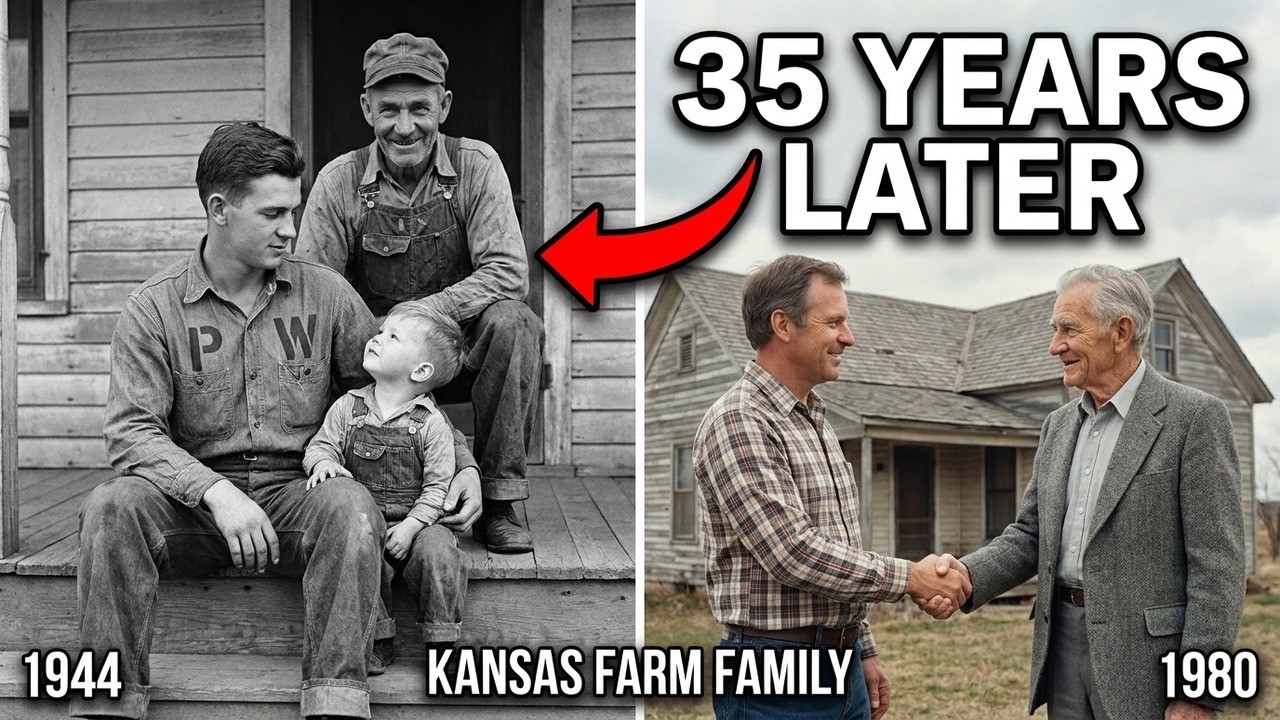
What a handful of Kansas farm families did in 1944 had moved two former enemy soldiers to cross the ocean to see them again. In the spring of 1944, Kansas had planted its wheat and corn, but there were not enough men left to harvest them. The young men were in uniform. Farmers around Eskridge warned that many of them would not plant a crop they could not harvest.
There was one remaining source of labor: the German prisoners of war living in a nearby subcamp, leased to farms on a daily basis. Eskridge did not want them. On April 3, the city council rejected the idea of hosting the camp by a vote of three to two. Two weeks later, a group of farmers appeared before the council and argued in favor of it.
Among them was a farmer named Wayne Stratton. On April 21, the council changed its mind and approved a camp for one hundred German prisoners at Lake Wabunsee, about five miles west of town. The camp had originally been a Depression-era youth camp, with barracks and a mess hall. Farmers would pay forty cents an hour per man and provide lunch.
Frank Bletcher, the state’s farm labor supervisor, had already told the town what kind of food was required. The prisoners were to be given the same food served to the rest of the family and to other workers. They were not to be pampered. Among the prisoners were Klaus Maier and Georg Stanglmaier.
Both were nineteen years old when they surrendered together on May 9, 1943, at Porto Farina in Tunisia, after running out of fuel and ammunition. A ship took them to England, another to New York, and from there trains carried them west. By summer, the camp at Lake Wabunsee was full. Early each morning, trucks left the gate carrying forty men, heading toward Alma, Wamego, and Belvue.
On most days, no guard accompanied them. No one at Lake Wabunsee tried to escape. Klaus Maier went to the farm of Lawrence Mertz near Wamego, where little Richard Mertz sat in his lap. Georg Stanglmaier went to Ralph Stratton in Eskridge.
Stratton was about twenty-one, only two years older than his prisoner. Back at camp, breakfast was lumpy oatmeal. On the farms, it was different. At the Alma camp, Cora Ringle cooked pancakes, eggs, bacon, and fried potatoes for the men before they went out to work.
Another farmer’s wife fed her men again at half past four before the truck returned, and some farmers sent food back to camp with them. According to one prisoner, the camp commander sent a message to the farmers asking them to feed the men extra. By that time, many already were. The army had rules, and the farmers simply ignored some of them.
Farmers were not allowed to buy clothing for the prisoners. Nevertheless, the McKnights bought straw hats for the men to protect them from the sun. The prisoners knew the hats violated the rules, so they did not carry them into camp. They hung them on hooks on the back porch of the McKnight house.
The Warrens were not allowed to give gifts, so they left apples and gloves where the men could easily find them. John Schoalm at the Alma camp introduced his prisoner as “my German boy. ” On the young man’s twenty-first birthday, he asked for the day off. Schoalm told him there was work to be done, but the Schoalm family threw him a surprise birthday party instead.
Penny Clark, a history student at Emporia State University, interviewed these families forty years later. The Americans had often broken the rules about using and treating prisoners of war out of simple kindness toward them. The camp closed on December 1, 1945. The men returned to Fort Riley, and from there began the long journey home.
Some passed through POW camps in France first. Maier’s military medical card shows he was still in American care in January 1946. The Germany they returned to was starving. In the winter of 1946–47, an adult German survived on between one thousand and fifteen hundred calories a day.
Letters began arriving in Wabaunsee County bearing German postmarks, and the Kansas families answered with parcels. Arnold and Cora Ringle sent a former prisoner named Werner Burrow razors, tobacco, cocoa, soap, and clothes for his wedding. At Christmas 1947, they sent coats, a suit, shoes, five pounds of sugar, and five pounds of flour. When Burrow needed tires for his bicycle, the Ringles sent him a page from a Montgomery Ward catalog to mark which tires he wanted.
The tires did not fit perfectly, but he hammered them on and rode anyway. Lawrence Mertz and his wife offered one former prisoner a job on the Mertz farm, saying they would cover his travel expenses back to Kansas. Klaus Maier and Georg Stanglmaier kept writing to the Mertz family and Ralph Stratton, and the replies kept coming. The correspondence continued for decades.
In 1977, a colonel from Fort Riley named Ed Hood was in Göppingen, West Germany, taking part in a NATO exercise called Reforger. The 1st Infantry Division from Fort Riley had set up its forward headquarters in that town. Hood walked into a wine shop. The staff went to fetch the owner from the back room.
The owner was Georg Stanglmaier. When he began to speak, Hood noticed that his English accent sounded like someone from Kansas. Stanglmaier told him he had been a prisoner of war there and introduced him to his friend Klaus Maier. Hood asked Stanglmaier to come back and visit his old camp.
Stanglmaier accepted the invitation and brought Klaus Maier along. In late May 1980, they flew to Chicago with their wives, Margaret and Frieda, rented a car, and drove to Kansas. They told their hometown newspaper they had come to show their wives where they had spent those years and to meet the farm families again. Maier drove to the Mertz farm near Wamego.
The little boy who had sat in his lap was a man now. Richard Mertz was the man they had been writing to all along. Stanglmaier and Maier went to Eskridge to find Ralph Stratton. Stratton was fifty-seven, still a bachelor, living alone on the same farm.
When they left the Stratton house, Stanglmaier and Maier broke down in tears. Stanglmaier thought they had made their old farmer happy, if only for a day. “He was so happy yesterday. They were beautiful days, warm family days.
” They returned to Fort Riley during Big Red One week, in time for the division’s annual parade. A general insisted on meeting them. At the post cemetery, they found the grave of Wilfred Vögele, a prisoner from their camp who never made it home, and photographed his headstone for his family in Germany. Four American journalists came to speak with them.
Klaus Maier told a Wichita newspaper, “We love this state and its people. It has beautiful scenery. Kansas is the best state we have seen yet. ” Maier later said they had lived a good life in Kansas.
The Mertz family and Ralph Stratton had kept answering their letters since the end of the war. When an American colonel asked Stanglmaier to return, the first thing the two men did was drive to those two farms. Four years after that visit, Penny Clark called Ralph Stratton in Eskridge. He told her that a German prisoner had wired his family’s barn with electricity during the war, and the wiring was still in use.
He said he had been looking for years for someone who could do electrical work that well.