On December 17, 1968, at approximately 4:00 a. m. , a loud knock jolted Barbara Jane Mackle and her mother awake in their motel room near Atlanta, Georgia.
A man in a policeman’s cap and a smaller figure in a ski mask claimed that Barbara’s boyfriend, Stuart Woodward, had been in a terrible car accident. When Jane cracked open the door to investigate, armed intruders burst through, wielding a shotgun and chloroform.
Within moments, Jane was subdued and bound, and 20-year-old Barbara, clad only in her red and white checked flannel nightgown, was dragged from the room at gunpoint. Jane worked herself free within minutes and contacted police, but Barbara was already speeding through the night in a Volvo station wagon, heading toward an underground grave prepared specifically for her body.
Barbara was the daughter of Robert F. Mackle, a Florida real estate developer whose Deltona Corporation had transformed Key Biscayne, Marco Island, Port St. Lucie, and Port Charlotte into the landscapes known today.
She was an honors student at Emory University in Atlanta, had made her debut at Miami Beach’s Bath Club in 1966, and was dating Stuart Woodward, a fellow student who would later become her husband. Quiet, shy, and conscientious, she had fallen ill with the Hong Kong flu that was sweeping through campus. Her mother had traveled from their Coral Gables home to drive her back to Florida for Christmas break.
The mastermind behind the kidnapping was Gary Steven Krist, born April 29, 1945, in Aberdeen, Washington, and raised in Pelican, Alaska. His criminal career began early with robberies at age 14. By 1966, while serving time for automobile theft at California’s Deuel Vocational Institution, Krist escaped in dramatic fashion.
He and a cellmate used a hacksaw blade to cut through window bars and attempted to scale security fences under cover of darkness. A tower guard opened fire, killing Krist’s companion, but Krist disappeared into the night.
What made Krist particularly dangerous was his intelligence. At Deuel, he scored 148 on an IQ test, the highest the institution had ever recorded. He later told a court-appointed psychologist, “I am a superior human being.”
But his genius was twisted. Krist was a master manipulator with deep-seated contempt for authority and an inflated sense of his own capabilities.
After escaping, Krist made his way to Florida, where he assumed the alias George D. Deacon and secured employment at the University of Miami’s Institute of Marine Science. His job involved constructing ventilated boxes for marine specimens, skills he would horrifyingly repurpose.
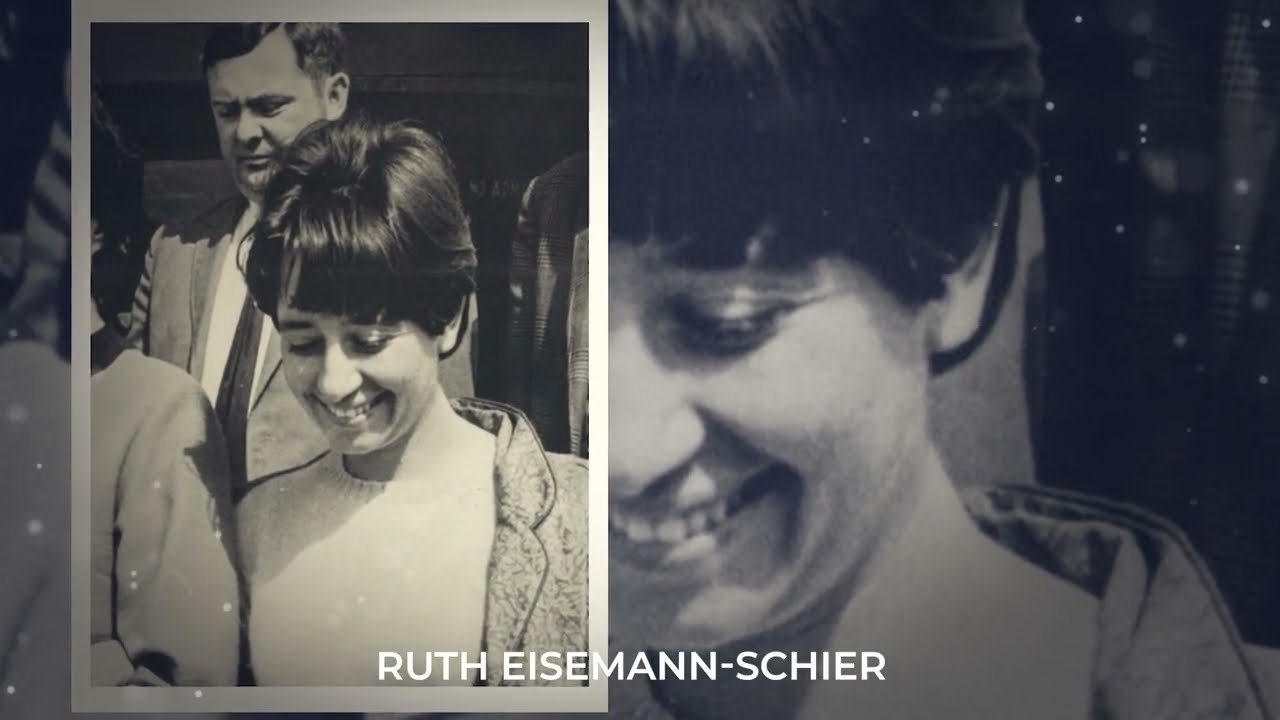
His accomplice was Ruth Eisemann-Schier, born November 8, 1942, in Honduras, the daughter of Austrian Jewish refugees who had fled Nazi persecution. A graduate of Mexico’s National University, she was pursuing graduate studies in marine biology at the University of Miami. In September 1968, during a research cruise to Bermuda, Ruth met Gary Krist.
What drew this educated woman into Krist’s orbit remains one of the case’s enduring mysteries.
According to Krist’s former parole officer, the kidnapper had spent months methodically selecting his victim. He was looking for a rich, tough-minded female, someone who could stand up to the trauma of being buried alive. Barbara Jane Mackle fit that profile.
This was about Krist proving his criminal genius, demonstrating that he could keep someone alive underground while executing the perfect crime.
The container he built was a fiberglass-reinforced plywood capsule approximately 2 feet wide and 8 feet long. The interior chamber was deliberately too short for Barbara’s 5-foot-8 frame to stretch out, a detail she would discover when the kidnappers forced her inside and began shoveling dirt over the lid.
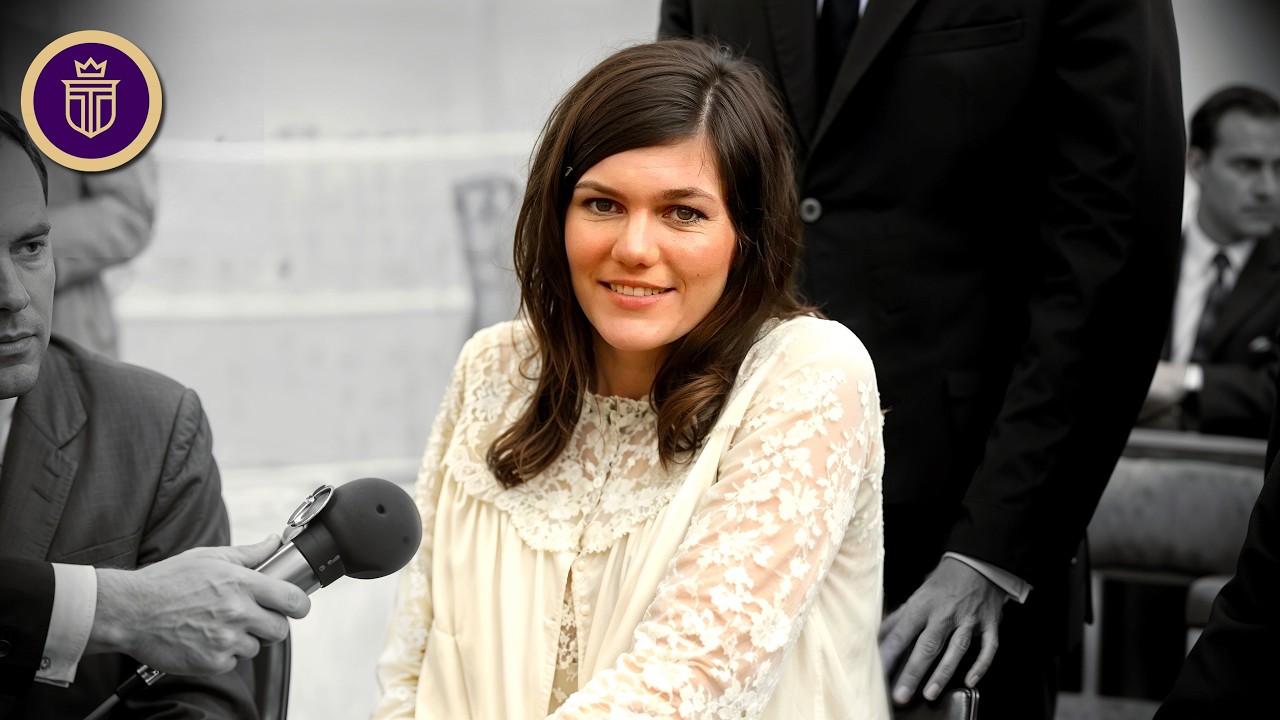
The kidnappers drove Barbara approximately 30 miles north to a remote pine grove off South Berkeley Lake Road in Gwinnett County near Lawrenceville. There, in a pre-dug trench, waited the coffin-like box. Before forcing Barbara inside, the kidnappers photographed her holding a handmade “kidnapped” sign, a Polaroid that would later serve as proof of life.
Despite being drugged and terrified, Barbara was ordered to smile, which she did with a faint, haunting expression.
The box contained two flexible plastic ventilation tubes extending to the surface, a battery-powered lamp, water laced with tranquilizers in a bucket connected to her mouth by a long hose, candy bars, apples, and chewing gum totaling 30,000 calories, two blankets, one already soaked through, and three pages of typewritten instructions. The ransom note Krist had crafted claimed Barbara had enough food, water, and air for 7 days before the batteries powering her life support would expire.
As Krist and Eisemann-Schier shoveled 18 inches of Georgia clay over the box, Barbara screamed. Years later, she recalled, “I screamed and screamed. The sound of the dirt got farther and farther away.
Finally, I couldn’t hear anything above. I screamed for a long time after that.”
When the small Christmas-tree-light-sized bulb failed after just a few hours, Barbara was plunged into absolute blackness. She could not see her hands in front of her face. Cold December air circulated through the ventilation system, chilling her in her thin nightgown.
Moisture coated every surface inside the box, and condensation dripped steadily onto her from the ceiling.

Forced into a fetal position in a space too small to stretch out, she developed severe bruising on both hips. When the hose connecting her mouth to the water bucket slipped out, she had to contort her body in the cramped space to retrieve it, at one point becoming physically stuck for 45 to 60 terrifying seconds. She had been kidnapped while suffering from Hong Kong flu.
Underground, congested, and feverish, every breath was a struggle.
Barbara later said she never doubted she would be rescued, though she never slept during the entire 83-hour ordeal. At times, drowsy from low oxygen when the fan was off, she considered simply turning off the ventilation and ending her suffering. In those endless hours, she fixated on one thought: Christmas morning with her family.
That vision may have saved her sanity and her life.
On the morning of December 17th at 9:10, Robert Mackle received a phone call directing him to a specific location in his Coral Gables yard. There, buried under a rock in the northwest corner, he found the ransom note, a four-page, meticulously detailed typewritten document. The demand was $500,000 in $20 and $50 bills fitting in a standard large suitcase.
The note coldly informed the Mackles that Barbara was buried alive with 7 days of life support.
FBI Director J. Edgar Hoover personally took charge, mobilizing more than 100 agents along with Georgia State and local police. On December 18th, the first ransom delivery was attempted, but Krist had made a critical mistake.
He got the street name wrong in his instructions. As Robert Mackle’s associates searched for the correct location, two Miami police officers, completely unaware of the FBI operation, spotted suspicious activity near an illegally parked Volvo station wagon. When they saw a man carrying a large suitcase walking toward the Volvo, he spotted the police, dropped the suitcase, and ran.
The abandoned Volvo was Krist’s vehicle, and inside FBI agents discovered photographs, chloroform, documents, and the car registration in the name of George D. Deacon. A second ransom delivery on December 19th was successful.
Billy Vessels delivered the $500,000, and Krist and Eisemann-Schier collected the money and split up.
On December 21st, Krist walked into a West Palm Beach boat dealership carrying a brown paper bag stuffed with cash and paid $2,300 in $20 bills for a 16-foot speedboat. The dealer contacted the FBI, and the serial numbers matched the ransom money. Krist’s escape plan was almost comically ill-conceived.
He attempted to navigate to the Gulf of Mexico through Florida’s cross-state canal system, a route requiring passage through four locks, each one requiring him to identify himself and his vessel. At 12:10 on December 22nd, deputies captured Gary Steven Krist on Hog Island, a crocodile and snake-infested strip of Gulf Coast land, with $480,000 of the ransom money in his possession.
But where was Barbara? On December 20th, Krist had made a phone call from a pay phone giving the FBI vague, cryptic directions to her burial location in Gwinnett County. More than 100 agents spread out through remote pine stands, digging frantically.
Barbara, underground in darkness, suddenly heard sounds above and began pounding on the inside of the coffin as hard as she could. The agents heard the muffled thumping and converged on the location, digging with their bare hands until they bled.
At 4:32 on December 20th, 1968, a cheer erupted from the woods. As the trap door lifted, Barbara Jane Mackle looked up at her rescuers and smiled. The FBI agents wept.
“I’m here. I’m here,” Barbara said, as if reassuring herself as much as her rescuers. She apologized for being so heavy.
The agent lifting her out, overcome with emotion, told her she was light as a feather.
She had been buried alive for 83 hours, emerging dirty, dehydrated, and 10 pounds lighter with severe bruising on her hips. FBI Director Hoover personally called Robert Mackle with the news, and Barbara was home for Christmas just as she had visualized. On Christmas morning, President-elect Richard Nixon visited Barbara at the family’s Coral Gables mansion, spending an hour with her and urging her to write a book about her ordeal.
Gary Krist was convicted and sentenced to life imprisonment, but in 1979, after serving only 10 years, he was paroled. Georgia Governor George Busbee then granted Krist a full pardon so he could attend medical school in Mexico. In 2001, Indiana granted Krist a probationary medical license, though patients in West Virginia had accused him of crossing sexual boundaries.
In January 2006, Krist chartered a sailboat to South America and returned with 14 kilograms of cocaine paste worth approximately $1 million and four undocumented immigrants who had each paid $6,000 for passage. He was sentenced to 5 years and 5 months in federal prison.
Ruth Eisemann-Schier became the first woman ever placed on the FBI’s Ten Most Wanted list. She was captured after 79 days when she applied for a nursing job requiring fingerprinting. She served 4 years and was deported to Honduras in 1973.
Barbara married her college boyfriend Stuart Hunt Woodward, had two children, and remained married until his death in 2013, 43 years together. In 1971, she published 83 Hours Till Dawn with Pulitzer Prize-winning reporter Gene Miller. The book inspired two television movies and a CSI episode that Quentin Tarantino directed in 2005.
She later became a counselor, quietly advocating for victims of trauma, building a life that proved the man who called himself a superior human being had been wrong about everything except one thing: Barbara Jane Mackle was indeed tough-minded enough to survive.