In the spring of 1945, with the Third Reich collapsing around them, the commandants of the Nazi concentration camps had little time to conceal the evidence of their crimes. Among the thousands of prisoners liberated from the horror of Bergen-Belsen were survivors who pointed accusing fingers not only at the SS men but at the women who had tormented them. These were the female guards, the Aufseherinnen, who had served in the camps with a brutality that often rivaled their male counterparts. Many of them, when brought before the courts that tried the perpetrators, would sit in the dock and chuckle at one another, as if the proceedings were a joke.
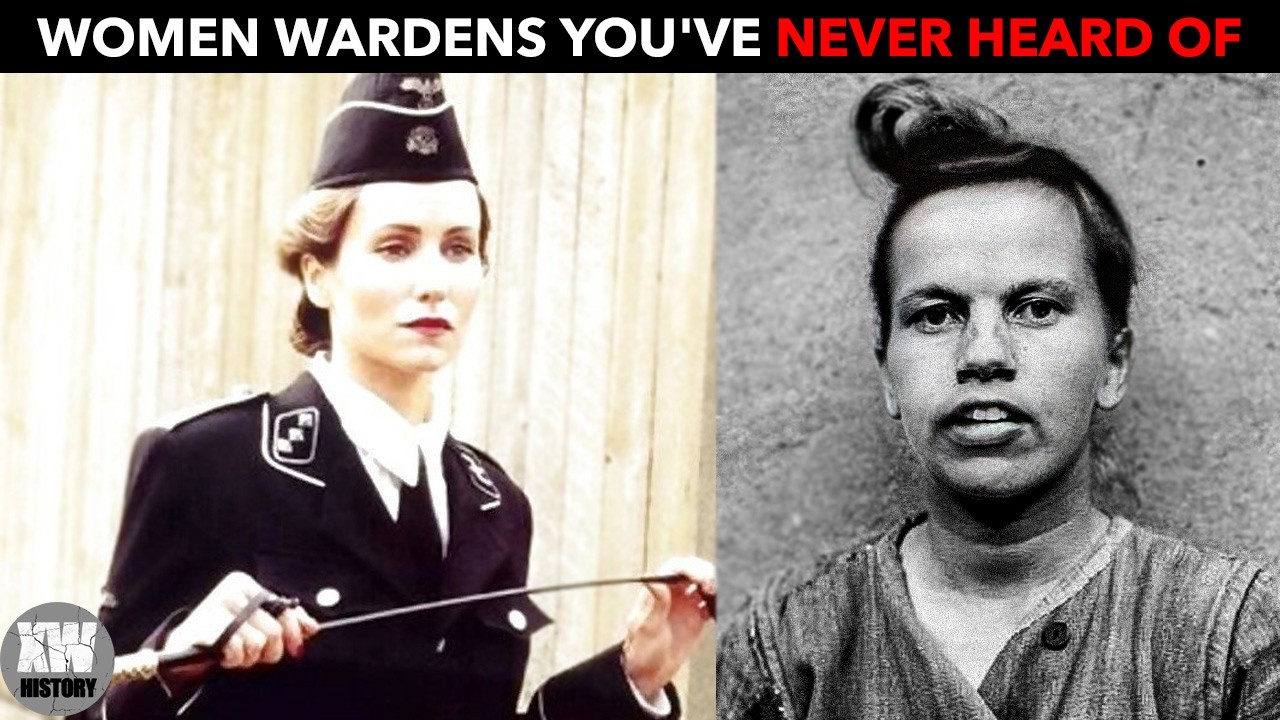
But for the survivors who testified, the memories were anything but. One of the earliest to be brought to justice was Luise Danz. Born in 1917 on a farm in the mountainous region of Thuringia, she was an ordinary German girl who attended public school and eventually found work as a baker in Brandenburg. In 1940, she returned to her home district to work as a postman.
But in 1943, as the Nazi regime’s need for camp personnel grew colossal, the 26-year-old was recruited for service in the concentration camp system. She was first assigned to Ravensbrück, the largest and initially the only major women’s concentration camp in Europe, located in Brandenburg, about 90 kilometers north of Berlin. From there, she was transferred to Majdanek, then to Auschwitz, and finally to the Malkow camp near Lublin. At Malkow, Danz rose to the position of senior warden, and her cruelty became notorious.
Prisoners testified that she would severely beat women who objected to having their winter clothing confiscated, and that she often withheld food from the inmates for days at a time. Those who dared to complain were beaten on their sides with fists or sticks. In April 1945, her cruelty reached its limit when she personally killed a young girl, an act historians have described as a deliberate execution. By then, Danz was accustomed to the suffering around her, but in this instance, she wanted to watch the death agony from its very beginning.
Why she chose a minor inmate from the camp barracks remains unknown. Like many of her colleagues, she was reportedly driven by a desire to humiliate and destroy the young and beautiful women under her charge. Danz was arrested on the first of June 1945, three weeks after the war had ended, in Mecklenburg, near her last place of work. She had tried to blend in with the civilian population in the small community of Lützow, just 10 kilometers from Schwerin, but the town was too small for a stranger to go unnoticed.
Women who knew what she had done in Malkow identified her. She was brought before the Supreme National Tribunal in Poland, where the trial lasted nearly a month. For the totality of her crimes, she was sentenced to life imprisonment. Danz herself became a prisoner until mid-1956, when the 39-year-old was released for health reasons.
Her health, however, was sufficient to allow her to live until 2009. Hildegard Lächert, also known as Hilde, was born in Berlin in March 1920. She trained as a dressmaker, but never finished her studies, as her family urgently needed money. She worked in a factory for a time, but her hot-tempered and picky nature made her ill-suited for such work.
In April 1942, at the age of 22, she began serving in Ravensbrück, and by October she was at Majdanek. In April 1944, she was registered at Auschwitz, and from January to April 1945, she was stationed in the Italian Alps, near Bolzano, where the Nazis had established a death camp. Her cruelty was remembered vividly by survivors. At Ravensbrück, she beat prisoners with anything she could find.
At Majdanek, she set a dog on a pregnant woman. Most notoriously, she loved to kick prisoners with her iron-bound shoes, a practice she continued in Bolzano, where witnesses claimed she beat some pregnant prisoners to death, set dogs on others, and drowned some in the filthy cesspools of the camp. The prisoners called her “the Beast” and “Bloody Brigitte,” a reference to the Celtic goddess of war. Lächert was not detained until 1946, when she was captured by Allied troops.
A year later, she was interned at the second session of the Supreme National Tribunal in Poland and sentenced to life imprisonment. She was amnestied after 11 years and worked as a brothel cleaner until 1975, when new evidence of her crimes emerged. She was tried again, held in custody for six years while charges were formed, and sentenced to 12 years in prison, though she was credited for the time she had already served. She lived freely for another 14 years.
Another guard, Herta Ehlert, was born in 1921 in Friedberg in der Mark, a town now known as Stare Bogaczowice in Poland. She came from a poor German family and worked in a textile factory until August 1944, when she decided to enlist as a guard at the Gross-Rosen concentration camp. She was then transferred to Bergen-Belsen in Saxony. The motive was financial: the salary was 105 Reichsmarks, a substantial sum at the time, and the position came with free food, free housing, and bonuses for meeting quotas—quotas that in this context meant sending prisoners to their graves.
Ehlert was trained in the brutal treatment of female inmates and worked at Bergen-Belsen from February 28, 1945. She controlled the distribution of food to prisoners, and anyone dissatisfied with their portion or who simply looked at her the wrong way was beaten with a rubber tube attached to a stick. She was detained by British forces in April 1945 after working for only a month and a half, but in that short time, she had inflicted so much harm that she was sentenced to 10 years in prison at the Lüneburg trial in November 1945. She was released after serving only six years, due to good behavior or amnesty.
Her later fate is unknown. Anneles Kohlmann was born in March 1921 in Hamburg, into a family of German Freemasons. Her parents, Margarete and Gerd Kohlmann, raised her with a sense of superiority over others. After completing school and training as a tram driver, she joined the Nazi Party.
In November 1944, she became part of the SS retinue, initially serving in administrative roles—signal personnel, secretaries, senior gardeners—but she was soon transferred to a warder position. She was sent to the Neuengamme concentration camp near her native Hamburg, where she worked until March 1945, before being transferred to the main camp at Hamburg and later to Bergen-Belsen. Prisoners recalled that Kohlmann beat them with any improvised implement, with or without reason, until she grew tired. She was known for tormenting elderly prisoners and pregnant women with particular zeal.
She also engaged in what survivors described as direct harassment, showing an inexplicable interest in Jewish women. One former prisoner, Vera Foukalová, testified that Kohlmann, known to the inmates as “Bubi,” fell in love with several prisoners and even planned to flee with one of them to Prague after the war. At her trial in Lüneburg in November 1945, Kohlmann was sentenced to just two years in prison. She served her time in Celle and was released in 1947.
She later worked as a prostitute and moved to West Berlin, but ultimately returned to Hamburg, where she worked as a cook in a hospital. She died at the age of 56. Johanna Bormann was born in East Prussia in 1893, in the city of Birkenfeld, where her father owned a farm. Described as almost a dwarf, she was reportedly passed over by suitors, a fact that may have contributed to her cruelty toward tall, beautiful women.
She was an early and devoted follower of Hitler, keeping his photograph under her mattress. She began serving in concentration camps nearly as soon as they were established, working in Lichtenburg, Ravensbrück, Auschwitz, the Hindenburg subcamp, and finally Bergen-Belsen, where she rose to the rank of senior overseer. At Ravensbrück, she beat women with sticks for failing to keep up on long marches. In other camps, she used two convicted midwives, who had once been imprisoned for infanticide, to kill the newborn children of pregnant prisoners, ordering that the infants be discarded and left for their mothers to see.
At Auschwitz, she served under the infamous Maria Mandl, a brutal SS officer known for breaking prisoners’ jaws with a single blow. Bormann was captured by British forces in April 1945 during the liberation of Bergen-Belsen. At the Belsen trial, she was sentenced to death and hanged, alongside her fellow guards Irma Grese and Elisabeth Volkenrath. Elisabeth Volkenrath, born Elisabeth Mühlan in 1919 in Lower Silesia, was the wife of an SS man and harbored a deep hatred of Poles.
She began her camp career as a civilian laborer before a vacancy for warden opened up, and she was assigned to Ravensbrück. She later served at Auschwitz and Bergen-Belsen, where she actively participated in selecting prisoners for the gas chambers, ensuring that those deemed unprofitable were disposed of first. In 1944, she became a senior warden. After the war, she was tried at the Belsen trial and found guilty of sending several thousand women to their deaths.
She was hanged in Hamelin prison, where a British executioner, Albert Pierrepoint, carried out the sentences on 68 Nazi criminals. Her husband’s fate remains unknown. These women were not aberrations of nature but products of a system that enabled ordinary people to commit extraordinary evil.
Their trials, held in the rubble of the Reich they had served, ensured that the world would know what they had done, and that the dead would not be forgotten.