Vernon Clouth possessed a voice capable of moving grown men to tears and a conscience that permitted him to rob widows without a flicker of hesitation. In the late 1960s, he stood on stage as the picture of a servant of God, leading his family in perfect harmony while audiences admired him. Behind the tear-filled sermons and the polished image of gospel music’s first family, however, Vernon was making cold calculations, measuring his crowds not by their souls but by their retirement savings. His deception was both simple and devastating: he did not sing for glory but for the cash needed to feed an insatiable financial beast.
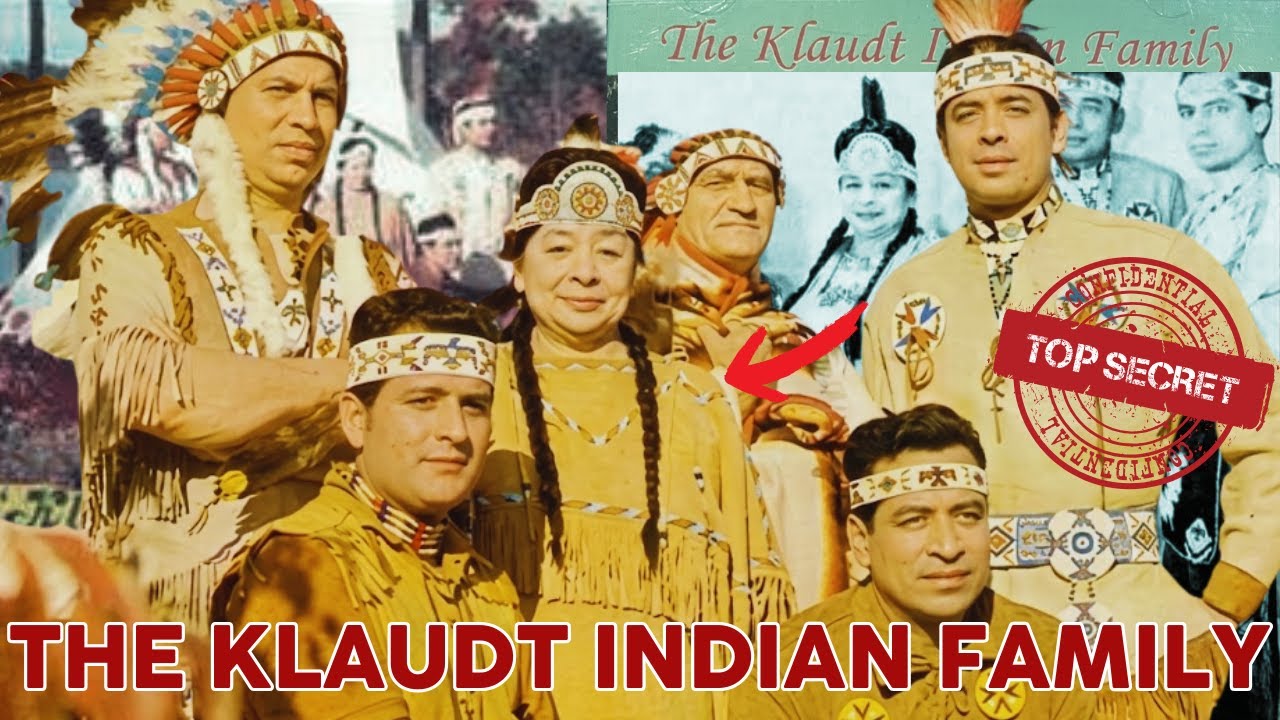
The tragedy was not merely the theft of millions; it was the theft of faith itself, as he methodically targeted the elderly and the lonely, trading false promises of Christian prosperity for their final dollars. When the FBI finally stopped the music, they did not merely arrest a singer. They dismantled an illusion, exposing that the man who sang about the old rugged cross had spent decades building a golden calf. To understand this financial massacre, one must look past the criminal records and return to the dusty roads where their hunger began.
The Clouth family legacy, like that of the Hopper family, was forged in the unforgiving crucible of the early twentieth century. But while other families were rooted in the stability of farms, the Clouths were rooted in the complications of identity. They claimed Creek ancestry, a fact that placed them in a fragile social limbo in the racially segregated South of the 1930s and 1940s. They were neither white nor Black.
They occupied a third space, one of strangeness and curiosity. In the mid-century South, the racial hierarchy was rigid, but the figure of the Indian held a unique place in the white imagination thanks to western films and the romanticized vision of the noble savage. The Clouths instinctively understood this dynamic. Early on, they realized their heritage was not a burden to hide but a marketing tool to refine.
The family began singing in the depths of the Great Depression, a time when music was one of the few escapes from poverty. If you could sing, if you could make a weary farmer forget his debts for an hour, you could eat. Their early days were marked by extreme poverty. They did not sing for fame; they sang for survival.
Vernon Clouth, born into this scarcity, learned a lesson that would govern the rest of his life: poverty was a sin, and wealth was a virtue. He watched his parents struggle, saw the family’s dignity fade, and within the dusty churches of rural Georgia and Alabama, a fire ignited in his gut—not a fire for the Lord but a fire for more. He saw evangelists in their Cadillacs. He saw the power a man held behind a microphone before a room of believers.
He understood that the pulpit was the most powerful piece of real estate in the South. As the family entered the 1950s and the postwar boom reshaped America, the Clouths began professionalizing their craft. This was the era when southern gospel transformed from a folk tradition into a commercial industry. Quartets were dominant, with groups traveling in buses, wearing tailored suits, and selling millions of records.
Vernon looked at this scene and saw an opportunity. The market was crowded with white quartets, so he leaned heavily on the family’s heritage. They often appeared in buckskin and feathered headdresses, exploiting the image of the Christian Indian to maximum effect. It was a gimmick, but underneath the costumes was undeniable talent.
The trick only worked because the talent was real; had they been ordinary singers, they would have remained a local curiosity. But they possessed an innate harmony, a biological precision that no training could simulate. By the 1960s, they had traded the costumes for silk suits but kept the name The Clouth Indian Family. They became stars, regularly performing at the National Quartet Convention, sharing stages with genre giants.
For white southern audiences, they were the safe kind of strange, allowing listeners to feel worldly and open without challenging the racial status quo. For Vernon, applause was not enough. He understood the limitation of concert fees: you sing, you get paid; you don’t sing, you don’t. He wanted to own the cycle.
To understand the crime, one must first understand the victim. The 1960s and 1970s were decades of immense anxiety for America’s elderly religious class. The sexual revolution, the anti-war movement, and the secularization of culture made them feel like strangers in their own country. The Clouth family offered these people a sanctuary.
When you entered a Clouth concert, you stepped back to 1955. Men wore ties, women wore dresses, and the Bible was the infallible word of God. Vernon presented himself not merely as an artist but as a guardian of these values. Unlike distant, zealous evangelists, Vernon was the friend.
He stayed after shows, shook hands until his fingers ached, remembered names, and asked about grandchildren. He built a database of trust, handshake by handshake. Behind that gaze was a calculator. Vernon was assessing the crowd’s net worth.
He realized that while the young had energy, the elderly had capital—widows, retirees, and farmers who had sold their land sat on savings they feared losing. They did not trust banks and did not understand the stock market. But they trusted the man who sang “How Great Thou Art. ”
In the pre-internet era, the mailing list was the ultimate tool of power.
Vernon built a mailing list that was the envy of the industry. It began innocently as a way to inform fans of tour dates. But in the late 1960s, the newsletter’s tone changed. It became less about music and more about expanding the ministry.
Vernon wove a story of urgent growth: the Lord was opening doors, they had a chance to build a Christian retreat center, buy a radio station, construct homes for retired evangelists. He was not asking for charity; he was inviting people to become partners in a divine empire. Then came the shift. Vernon introduced the concept of Christian investments.
Why leave your money in a secular bank earning paltry interest when you could lend it to the Clouth family? They promised astonishing returns, far above market rates—12%, 15%, sometimes 20%. The pitch was perfect: earn money while doing the Lord’s work. It resolved the moral dilemma of greed; you were not greedy for wanting high returns, you were a faithful steward of God’s money.
The first checks began to flow. A thousand dollars from a widow in Alabama, five thousand from a retired mechanic in Georgia. Vernon sent promissory notes that looked formal, printed on fancy paper with gold seals and impressive legal language. For a time, it worked.
Interest checks arrived on time. The investors were happy and told their friends. Word spread remarkably fast, and the trickle became a flood. As money poured into the family headquarters in Atlanta, their lifestyle changed.
The tour bus became a mobile palace. The suits became more expensive, the jewelry heavier. Vernon, who grew up in the dust of the Depression, began driving luxury cars and flying private. On stage, they sang of humility, while backstage they indulged in earthly rewards.
Whether the rest of the family knew about the fraud remains a contentious historical debate. Vernon was the autocratic driving force. Some family members likely believed the lie that Vernon was a financial genius. But ignorance is hard to claim when you are the one signing checks.
The brothers and wives all received salaries; they were all beneficiaries of the machine. By 1970, The Clouth Indian Family was not just a singing group; they were a financial institution operating without a license, without oversight, and without a conscience. Ponzi schemes only survive by using new investors’ money to pay old ones. As long as money kept flowing, the illusion held.
Vernon became obsessed with feeding the machine. He targeted the most vulnerable, those who were lonely. He developed a system of personal correspondence. If a widow sent a check, she received a personal letter from Vernon addressing her as “sister” and telling her she was part of the family.
For a woman living alone in a silent house, that letter was worth more than gold; it was connection, it was love. Vernon knew these women were dazzled by celebrity and would never dare question him. But the 1970s carried a storm. The economy was about to turn for the worse, and trusts in institutions were eroding.
By 1972, the optimism that fueled the postwar era was evaporating under the weight of Vietnam, Watergate, and inflation. In the living rooms of the silent majority, there was a palpable feeling of vertigo. They were looking for something solid. Vernon Clouth sensed this anxiety not as a tragedy but as a business opportunity.
While the rest of the country tightened its belt, the Clouths entered their imperial phase. They replaced the bus with a private plane and the off-the-rack suits with custom silk. The Atlanta headquarters buzzed with corporate efficiency, staffed by true believers who thought they were building a revival, not running a heist. The vehicle for the fraud was the Clouth family newsletter.
In the pre-internet era, this publication was a stroke of genius, reaching tens of thousands of mailboxes each month. It contained photos of the family smiling, praying, and pointing toward the horizon, along with religious reflections and tour dates. But buried between the Bible verses were the donation requests. Vernon did not use cold Wall Street language; he used warm Zion tones.
He spoke of building the kingdom and suggested partnerships where investors received returns exceeding 20% while funding the Lord’s work. Imagine a seventy-year-old widow in rural Tennessee. Her husband died, leaving a modest insurance settlement. Her children moved away.
She watches the news and sees a world she does not recognize. At the bank, she is treated as a number. Then she opens her mailbox and finds a letter from Vernon Clouth. He calls her “sister,” tells her he prayed for her that morning, and says the ministry has an opportunity to buy land for a retreat for weary evangelists.
If she lends the ministry $10,000, they will pay her monthly interest and return the principal. It was not an investment; it was an act of belonging, a way to feel useful again. The money did not trickle in; it poured. An FBI investigation later revealed that the Clouths collected millions of dollars from thousands of investors across the United States.
They were running an unregulated bank inside a tour bus. The family justified their extravagance with a prosperity gospel theology that would dominate the 1980s. Vernon preached that God wanted his children to be first, not last. If a rock star could own a plane, why not a gospel singer?
On the road, they maintained the image of a humble Native American family, telling stories of their ancestors and the Trail of Tears to gain sympathy and trust. In Atlanta, the truth was different. Money raised for Christian retreats was diverted into a maze of shell companies and personal accounts. They bought properties at inflated prices from partners and resold them quickly to create the illusion of activity.
They bought luxury cars and paid themselves extravagant salaries. The legal record suggests the brothers and wives were willing participants; they signed documents, drove the cars, and lived in the houses. The entire family unit transformed into a corporate entity designed to consume capital. The victim impact was devastating.
The prosecution’s files were filled with the handwriting of the elderly. There was Mrs. Edna, a widow who saved $5,000 over forty years of scrubbing floors, sending everything she owned because she wanted to help build a church. There was Mr.
Thompson, a World War II veteran who feared inflation would devour his savings, trusting a man who sang of heaven would not steal on earth. Vernon knew exactly who these people were and targeted them with design. He used a technique sociologists call affinity fraud, disabling critical thought by emphasizing shared values of faith, family, and patriotism. When a widow demanded her money back, he framed it as opposing the Lord’s work, trapping victims who feared being the cause of the ministry’s failure.
By 1974, the scheme had become a true monster. Interest payments to early investors were enormous, forcing Vernon to find ever more new investors. The pressure was unbearable, and the fundraising tone became frantic. Interest rates offered jumped higher, and the promised projects became grander: a massive Christian theme park, a television network, a global empire.
It was the strategy of the big lie—make the promise so huge that people are stunned by its size and forget to examine the foundation. The end began with a whisper from the most unexpected place: the secular press. Post-Watergate investigative journalism was aggressive, and financial writers began scrutinizing the Clouths’ offerings. They noticed these bonds looked very much like securities, so why were they not registered with the SEC?
The state of Georgia began asking questions. The SEC pursued, and Vernon arrogantly claimed they were a religious organization exempt from secular law. He played the Native American martyr card, portraying investigators as cavalry coming to wipe out the Indian family. For a short time, it rallied his base; investors wrote angry letters defending the brother.
But regulators looked at the bank accounts and saw a disaster: they were empty, the investments were fictitious, and the properties were mortgaged to the hilt. The family was technically bankrupt, kept alive only by daily checks in the morning mail. As 1975 approached, the walls closed in. Vernon gained weight and sweated profusely on stage, yet they kept singing, touring, and smiling.
They had mortgaged the future to pay for the sins of the past. The first cracks came not from the FBI but from state securities offices in North Carolina and Georgia. Complaints trickled in—not many, because victims were loyal—but enough to raise alarms. Regulators examined the notes Vernon was selling; to believers they were Christian partnerships, but legally they were unregistered securities.
Vernon seemed to believe the First Amendment shielded him. When he received cease-and-desist orders, he escalated, portraying the investigations as satanic attacks on the ministry. He told followers the government was trying to silence the gospel, turning a financial inquiry into a religious war. Widows and farmers sent more money to help with legal costs, funding the defense of their own deception.
By 1976, the FBI joined the investigation, viewing it not as a spiritual war but as mail fraud. The raid was a moment of intense cognitive dissonance. Federal agents entered the headquarters of America’s favorite gospel family, past the gold records and photos of Vernon smiling with politicians, and went straight for the filing cabinets. They found unbalanced ledgers and investor lists numbering in the thousands, evidence of money drawn for personal luxuries while evangelist homes remained unbuilt.
A grand jury indictment hit the news like a bomb: Vernon Clouth and his associates were charged with over 800 counts of mail fraud and securities violations. The family had become a gang. The gospel world, a tightly knit community, was shocked. Fans refused to believe it; admitting Vernon was a thief meant admitting their own judgment had been deceived.
The trial was gospel’s version of O. J. Simpson. Vernon entered the courtroom as a performer, in his finest suits, holding a Bible, smiling at the jury.
His defense presented theology over law, claiming the money was given as religious gifts and the failure to repay was misfortune, not criminal intent. Vernon cried on the witness stand and testified of his love for the Lord. But the prosecution had a weapon tears could not neutralize: the victims. The elderly took the stand—the widow facing foreclosure, the retired couple unable to afford their medicine.
They looked at Vernon not with hatred but with bewildered, broken disappointment. The jury deliberated briefly. The evidence was overwhelming. Vernon Clouth was convicted on multiple counts, and his brothers were also convicted.
He was sentenced to twelve years in federal prison. The television program was canceled, the records pulled from stores, the tour dates vanished. The government seized what assets it could, but they were crumbs; millions had evaporated into bad deals and lavish living. Victims received notices informing them they would likely recover nothing.
After prison, Vernon Clouth found the world had changed. The era of televangelists was in full swing, but there was no place for a convicted fraudster. He attempted to revive the family act, touring in obscure independent churches and high school gymnasiums, performing for voluntary donations. The industry imposed a total quarantine on the Clouth name, never inviting them, never mentioning them.
Vernon spent his final years in obscurity, watching his peers become icons while he struggled to survive. He died without headlines, a quiet footnote. His funeral was attended by family and a few loyalists; industry giants were absent. He died believing he was a victim, never realizing he had mortgaged his crown for a Cadillac.
The legacy of the Clouth Indian Family endures as patient zero in religious financial fraud. They demonstrated that trust-based fraud is the perfect crime because it turns the victim’s best qualities—trust, faith, generosity—against them. The regulatory scrutiny religious ministries face today can be traced to the wreckage Vernon Clouth left behind. In dusty thrift stores across rural Georgia and Alabama, his albums still appear, the cover photos showing the family in their prime, Vernon standing in the middle like a king.
They sell for fifty cents. No one buys them. The music is objectively beautiful, but it is contaminated. It is a relic from a crime scene.
A legacy is not built on the stage; it is built in the darkness, in the account books no one sees, in the letters written to widows. Vernon Clouth wanted to build a kingdom; he built a prison. He wanted to be remembered as a prophet; he is remembered as a cautionary tale. The bus rusted, the suits suffered moth damage, and the money is gone.
But the lesson echoes like a ghost through an empty hall: you cannot harmonize with a lie. Talent is common, but character is rare. The true measure of a life is not how loudly the audience applauds when you take the stage but how deep the silence is when you leave it. The Hoppers left a silence filled with gratitude.
The Clouths left a silence filled with debt. In the end, that is the only account that matters.