By 1926, a former World War I Navy aviator named Paul K. Guillow had watched the way children handled model aircraft and saw something worth building a business around. He started his company in a barn in Wakefield, Massachusetts, under the name New Craft Toys. Within a year, Charles Lindbergh had flown solo across the Atlantic, and America went airplane-crazy.
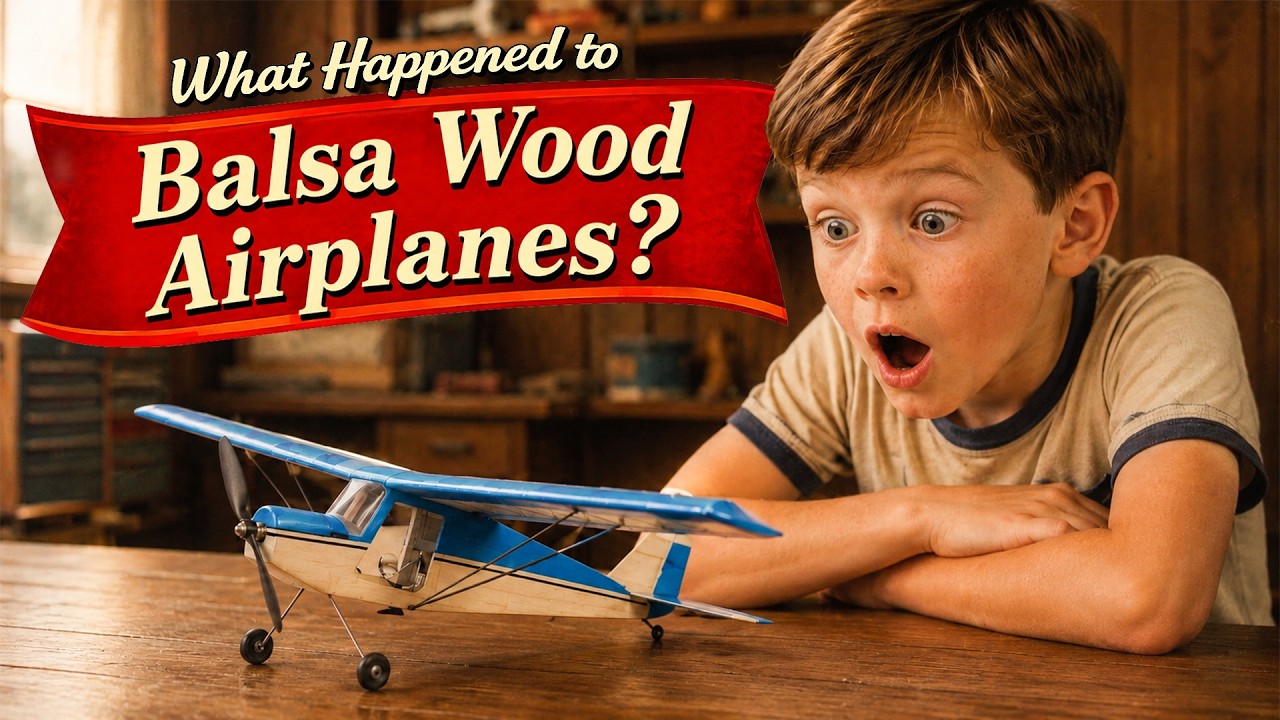
Guillow seized the moment and began shipping balsa wood kits that gave any youngster the means to build a flying machine with nothing more than wood, tissue paper, rubber, and patience. The company was soon joined by others, including Comet in Chicago, Cleveland Model, and Scientific Models. What Guillow was selling was not an airplane but the possibility of one. From the moment the box was opened, the child was responsible for whether it ever left the ground.
The process demanded something of those who took it up. The plans were taped flat to a building board, covered with wax paper so the model cement would not stick. Wing ribs and spars were pressed out of die-cut sheets, one piece at a time, and if the grain was wrong the piece cracked as it came free. Glue joints had to be held for a full minute before moving on, and rushing them meant the plane would fail on its first flight.
Tissue paper was stretched over the frame, then brushed with a lacquer called dope, which tightened the covering until it rang like a drum when tapped. The build took anywhere from a long weekend to three weeks of evenings spent at the kitchen table. Knife slips and bleeding knuckles were routine. Most builders crash-landed their creation on the first attempt, often three weeks of work ending in splinters against a fence post in seconds.
Almost always, the response was the same: go back inside, take out the plans, and start over. The second build was faster and better. By the 1950s, these kits were everywhere. The Sears catalog carried them, as did local drugstores and downtown hobby shops, where an older man behind the counter could sight down a sheet of balsa and judge by the grain which pieces were worth buying.
For under two dollars, a kid from any town in America could become at once a pilot, an engineer, and a manufacturer. The golden age of balsa lasted well into the 1980s. Then the first real crack appeared. In the early 2000s, the market turned to foam.
Expanded polystyrene, sold under various brands, produced planes that did not splinter when they crashed. A model could be slammed nose-first into concrete and flown again within seconds. Old-time builders dismissed the newcomers as flying ice chests, but the new generation did not care. A foam plane came out of the box nearly ready to fly.
A child could unbox it in the afternoon, charge the battery, and launch it before dinner. The weeks of building were gone. The barrier to entry did not just lower; it disappeared. Electronics soon caught up.
For years, radio-controlled balsa craft had relied on nitro glow engines that were greasy, loud, and temperamental, often requiring an entire field box of tools just to start. Electric brushless motors then arrived, cheap and clean and powerful. Lithium polymer batteries grew lighter every year, and foam proved itself lighter on impact, easier to replace, and cheaper to mass-produce than wooden airframes. The hobby that had once demanded skill and sacrifice became an off-the-shelf purchase.
One company’s collapse captured the shift. Tower Hobbies had been the central catalog for radio-controlled builders from the 1970s through the 1990s, shipping kits, engines, and balsa sheeting to doorsteps across America. In January 2018, Hobico, Tower’s parent company, filed for Chapter 11 bankruptcy. Horizon Hobby bought the radio-controlled assets for just under nineteen million dollars.
Horizon’s core business was foam, ready-to-fly aircraft. Wooden kits were not where the industry was growing. Independent shops that had once stocked balsa shuttered, and the men who could match wood grain by sight retired. Their storefronts became nail salons and phone repair shops.
Balsa survived in a niche, but the open market was finished. Then came a development no one in the hobby had anticipated, one that had nothing to do with toys at all. Around 2020, the price of commercial balsa nearly tripled in about fifteen months. Small kit manufacturers, the survivors of the foam revolution, suddenly could not source material.
The supply had been consumed by wind turbines. A modern wind turbine blade can stretch more than two hundred feet. Inside those blades, engineers needed a core material that was incredibly light yet strong enough to withstand decades of stress and weather. They chose balsa.
Ecuador produces roughly ninety percent of the world’s commercial balsa, and around 2019 the wind energy industry moved in hard. China was building turbines at a scale never seen before, and Ecuador’s balsa exports more than tripled in a single year. On one side of the market stood small hobby companies in need of a few thousand sheets. On the other stood multi-billion-dollar energy conglomerates needing thousands of tons for turbine blades.
There was no real competition. The balsa was gone, and the prices crushed manufacturers already working on razor-thin margins. The same industry built to generate a cleaner future had consumed the raw material of a childhood that had already mostly vanished. Guillow’s, however, never disappeared.
The company still operates on Salem Street in Wakefield, still producing kits and still sourcing balsa from Ecuador. It switched to laser cutting years ago, and the pieces now pop cleanly from their sheets instead of cracking under the old die-cut press. In 2026, the company reaches its hundredth year: from a World War I pilot cutting wood in a barn, through the kit craze of the fifties, past the radio-control revolution and the foam takeover, and through the wind turbine shortage that nearly finished it off. Foam planes now bounce off walls.
GPS drones cannot be crashed even if the pilot tries. The toys of the current generation are built around a single idea: make sure nothing is ever truly lost. The balsa wood airplane, by contrast, required something real from the builder. It demanded care and patience, made you bleed a little, and taught you that you could invest weeks of work into something, lose it in three seconds, and still survive the loss.
Then it taught you to start again. That willingness to begin over after a crash, to treat failure as information rather than defeat, was the hidden lesson of the whole enterprise. Much of America’s hobby culture moved away from that lesson. Toys got softer, mistakes became easier to correct, and nothing was ever really at stake.
But the men who grew up building those planes remember what they traded. Somewhere in many attics, a half-finished kit from decades ago still waits for the builder who meant to go back to it.