Decades after Sheriff Pat Garrett gunned down Billy the Kid in a dark bedroom at Fort Sumner, New Mexico, a strange story began to circulate. It claimed that Garrett’s own widow had confessed the killing was a hoax, that the man shot that July night in 1881 was actually some unfortunate drunk, and that the real outlaw lived on for years under another name. The rumor surfaced publicly in 2003, when a man named Homer Overton came forward with a sworn affidavit. Overton said that as a nine-year-old boy in the summer of 1940, he and a friend had visited Apollinia Garrett, the sheriff’s widow, at her home.
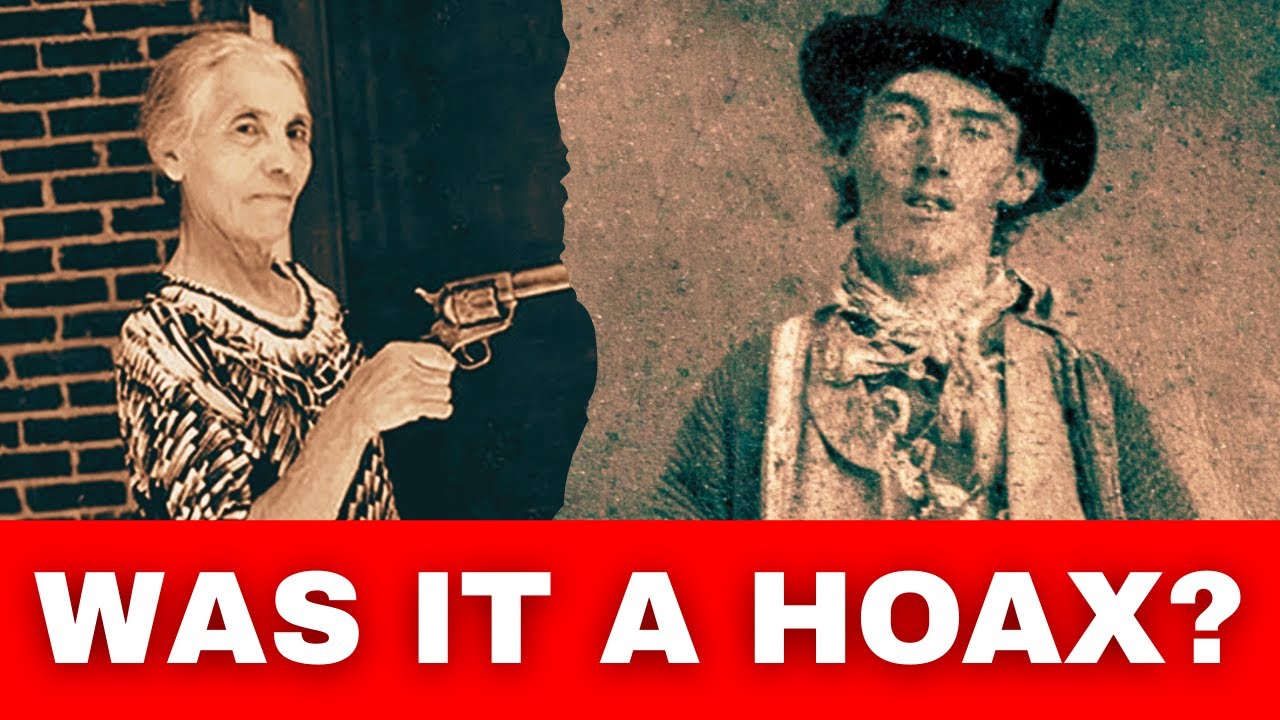
He claimed she told them that her husband and Billy the Kid had worked together to shoot a passed-out drunk in the street, leaving the body so disfigured it could be passed off as the Kid’s. Overton’s story was offered as evidence in a petition to exhume the body of Billy the Kid’s mother, Katherine Antrim, to compare her DNA with that of a Texas man named Ollie Roberts, known to history as Brushy Bill, who claimed until his death in 1950 that he was the real Billy the Kid. Authorities in Lincoln County scheduled a hearing on the exhumation request for January 27, 2004, in Silver City, where Antrim was buried, but town officials opposed disturbing the grave. The hearing generated headlines, but the exhumation never happened.
Neither Katherine Antrim, nor Brushy Bill Roberts, nor Billy the Kid himself has ever been exhumed. Anyone claiming DNA proof linking Brushy Bill to the Kid is repeating something that simply does not exist. As for Overton’s affidavit, it remains entirely uncorroborated. Apollinia Garrett never made any such statement publicly, and she had been dead for decades by the time Overton shared his account.
All that exists is the word of one man born half a century after the Kid’s death, and his story directly contradicts multiple eyewitnesses who were present at Fort Sumner that night. A similar claim has been made about Garrett’s own daughter. According to a rumor repeated across websites and forums, Elizabeth Garrett, the sheriff’s last surviving daughter, gave an interview in 1983 in which she said her father did not kill Billy the Kid. The claim appears on a few sites, often attributed to an interviewer named Paul Kaine, but no one has ever produced a recording, transcript, or verifiable source.
The links cited lead to dead pages, and no information about any Paul Kaine connected to Billy the Kid history can be found. The story appears to be a circular rumor, with each new iteration simply repeating the last without evidence. The most obvious problem is that Elizabeth Garrett died in 1947. She could not have given an interview in 1983.
The claim is impossible on its face. These kinds of stories often grow out of genuine historical sources taken out of context. One frequently cited example involves Deputy John W. Poe, one of the men who accompanied Garrett to Fort Sumner.
Poe wrote a book titled The Death of Billy the Kid, and in it he described the moments immediately after the shooting. Garrett rushed out and told Poe he thought he had killed the Kid. Poe replied that the Kid would not have come to that place, and that Garrett had shot the wrong man. Taken alone, that exchange sounds damning.
But Poe also made clear in the same book that neither he nor Garrett expected to actually find the Kid at Fort Sumner. They were acting on information from locals, including rancher Manuel Brazil, and believed the Kid was somewhere in the area. But they did not think he would be bold enough to hide at Fort Sumner, much less at the home of Pete Maxwell. As Poe himself put it, Maxwell’s house was the one place in Fort Sumner he considered above suspicion of harboring the Kid.
That is why Poe doubted the shooting at first. What the naysayers invariably leave out is what Poe wrote only a few paragraphs later. After Garrett and Poe persuaded Maxwell to bring a candle from his mother’s room, they placed it on the windowsill and looked inside. There they saw a man lying dead in the middle of the room, a six-shooter at his right hand and a butcher knife at his left.
Upon examining the body, they found it to be that of Billy the Kid. Poe’s full account does not support the claim that Garrett killed the wrong man. It describes a deputy’s initial disbelief, followed by certainty once the body was examined. The title of his book alone makes the point.
Another story involves an outlaw named Abraham Graham, better known as Shotgun John Collins. Collins died in 1922, but years later his son claimed that according to his father, Garrett had killed the wrong man and the body was passed off as the Kid. This is the same pattern: third-hand information from someone who was not present. There is no evidence Collins was at Fort Sumner on July 14, 1881.
His name appears in no contemporary article and no eyewitness account. His son’s word cannot outweigh the testimony of the people who were actually there. The evidence against the hoax theories is extensive. Brushy Bill Roberts appears on every census from 1880 to 1950.
His family is known, his residences are documented, and his entire life is well recorded. He was a toddler in 1881, when the real Billy the Kid was killed. Marriage certificates, a family bible, a World War I draft registration, and even a book written by one of his own nephews denouncing him all confirm this. There is no evidence Brushy had the same scars as the Kid, and there are no photographs documenting any scars.
No autopsy was ever performed on Brushy Bill Roberts, despite claims to the contrary. None of Billy the Kid’s former associates ever vouched for him. Some who knew the Kid, including men like Bill and Sam Jones, refused to sign an affidavit supporting him because they knew he was not the Kid. The only person pushing the claim was his attorney, William Morrison, and he left no documentation of the supposed scars.
There is also a persistent misconception that Garrett buried the body before anyone could get a good look at it. This is provably false. Frank Labato, a Fort Sumner resident present at the time, described hearing two shots from Maxwell’s direction and going immediately to the house. He saw Pat Garrett and two other men standing outside, rifles in hand.
Pete Maxwell and the household were at the door of the bedroom. Delvina Maxwell, an old Navajo woman devoted to the Kid, went in to see who had been shot and came out sobbing that her little boy was dead. The body was taken to the carpenter shop, laid on a bench, and a wake was held over it. The Kid was popular at Fort Sumner, and his friends were indignant toward Garrett.
The next day, Labato went to the graveyard and watched the burial. Jesus Silva and another man dug the grave. Jesus Silva, who made the coffin, gave his own account. He said the Kid had gone to get some meat when he and Labato heard two shots from the direction of Pete Maxwell’s house.
They ran over and found Garrett and his two deputies by the door of Maxwell’s bedroom. Delvina went in first, and Silva followed. They found the Kid lying face down on the floor. When Delvina realized what had happened, she began to cry bitterly and curse Garrett.
The body was moved to the carpenter shop at Maxwell’s suggestion, laid on a bench, and surrounded by candles. News spread quickly, and a large number of the Kid’s friends gathered for the wake. Garrett and his companions were frightened enough that they did not dare sleep that night. The next morning, a coroner’s inquest declared that Sheriff Pat Garrett killed William H.
Bonney in the discharge of his official duty and that the homicide was justifiable. Silva measured the body, made a rough box, and buried the Kid in the old graveyard that afternoon. He stated plainly that he knew Garrett killed the Kid and that he knew with absolute certainty the Kid was buried the next day. Delvina Maxwell confirmed the events.
She said she was the first to discover that they had shot her little boy, and she hated those men and was glad she had lived long enough to see them all dead and buried. The only other eyewitness to the shooting besides Garrett was Pete Maxwell himself. In his account, he was in his bedroom at about midnight on July 14 when Garrett came in and sat on the edge of his bed to talk. A short while later, William Bonney came in, got close to the bed with a gun in his hand, and asked who it was.
Garrett fired two shots, and Bonney fell near the fireplace. Maxwell left the room, and when he returned a few minutes later, the man was dead. Other witnesses include Private George Miller, Mike Cosgrove, Charles, and Milner Rudolph, not to mention the many people who attended the wake. There was an official coroner’s jury inquest and an official report.
Garrett was paid the bounty that had been placed on the Kid’s head. And perhaps most tellingly, the Kid was never seen again. There is no shortage of mystery surrounding the life of Billy the Kid. Historians do not know for certain where or when he was born, how old he was at death, who his father was, or even his mother’s maiden name.
But his death is one of the best-documented killings in the history of the Old West. Even historians who doubt the details of Garrett’s own account agree the outcome was the same. Billy the Kid led a charmed life, and he was charismatic and intelligent. But he was not bulletproof.
He grew complacent, and at Fort Sumner, on the night of July 14, 1881, he got caught. The historical record, the eyewitness accounts, and the coroner’s inquest all point to the same conclusion: Pat Garrett killed Billy the Kid, and the boy buried the next morning in the old graveyard was the real thing.