When the Civil War erupted, Jack Henson was not a soldier. He was a wealthy Tennessee farmer, an affluent landowner in Stewart County’s Between the Rivers District, a fertile stretch of country lying between the Cumberland and Tennessee Rivers about a hundred miles west of Nashville. He owned a plantation called Bubbling Springs and held slaves, and he intended to stay out of the conflict entirely. He was too old for conscription, and he urged his sons to remain on the farm rather than enlist.
One son defied him and joined the Confederate Army anyway. The two rivers that defined Henson’s world were also strategic lifelines for both armies. Washington sent Ulysses S. Grant to the Western Theater with orders to secure them.
Union forces first consolidated control of Paducah, Kentucky, then moved against two Confederate strongholds: Fort Henry on the Tennessee River and the heavier Fort Donelson on the Cumberland. Fort Henry fell quickly, but Fort Donelson held out for three bloody days before surrendering. The victory made Grant a national figure and broke Confederate power in the region. It also placed Henson’s plantation directly inside the war zone.
Despite the carnage around his property, Henson tried to stay neutral. Union troops stationed at Fort Donelson regarded him with suspicion but left him alone. That uneasy arrangement collapsed the following autumn. Confederate irregulars, whom the Federals called bushwhackers, began launching small-scale ambushes against Union patrols near Dover.
As Northern casualties mounted, Union command issued a no-quarter policy: bushwhackers were to be eliminated by any means necessary. One autumn morning, Henson’s two sons, aged seventeen and twenty-one, went out to hunt. A Union patrol intercepted them, accused them of being guerrillas, and executed them on the spot. To make the message unmistakable, the soldiers decapitated the youths, carried their heads to Bubbling Springs, and mounted them on the estate’s gate posts.
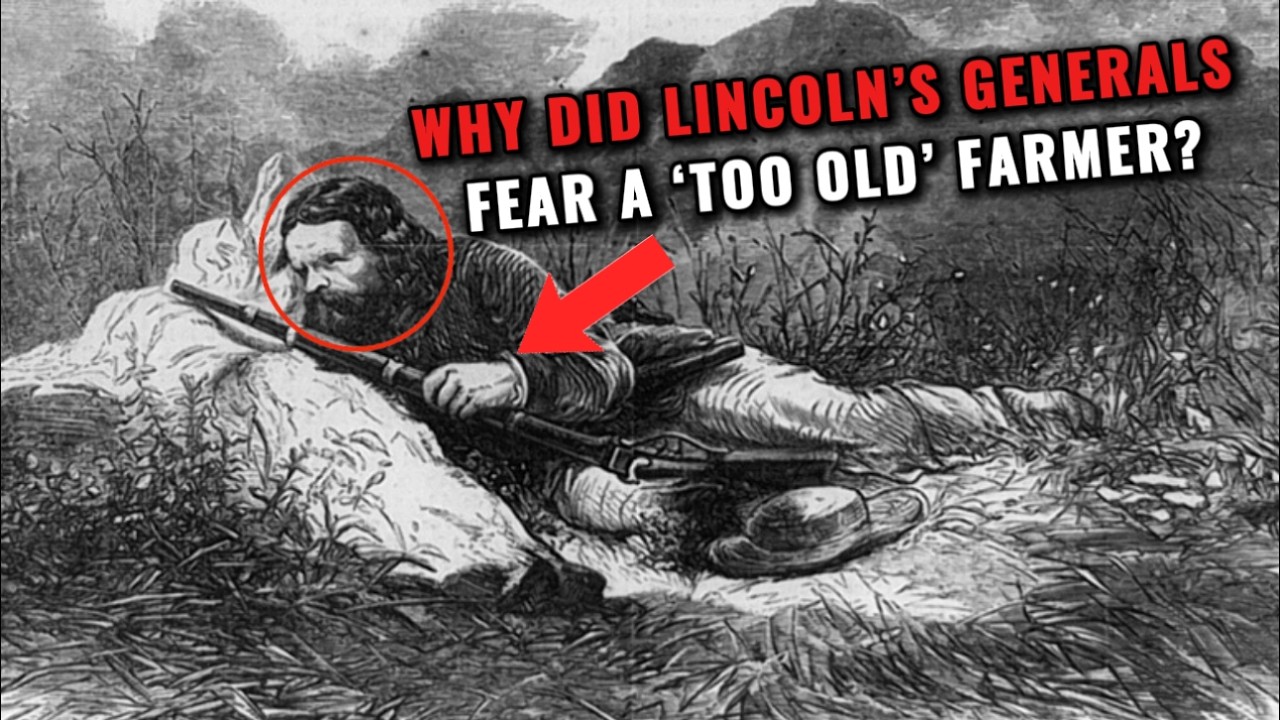
The atrocity shattered the Henson household. Jack somehow maintained the appearance of normal routine, but internally he transformed. He was a wealthy man, and he used that wealth to commission a custom . 50 caliber muzzleloader from an elite gunsmith, a weapon built with the finest components and precision craftsmanship the period allowed.
He spent exhaustive hours mastering it, and he began covertly observing the Union patrols around Fort Donelson, tracking the unit responsible for his sons’ deaths and memorizing its routines. His campaign began with the ambush assassination of the patrol’s commanding officer and the sergeant who had personally overseen the desecration of his sons’ remains. He then returned to his plantation and resumed farming while methodically targeting high-ranking Union personnel, reasoning that officer casualties would maximize both psychological and strategic impact. Each kill was a calculated shot from concealment, delivered with a precision that made him nearly impossible to locate.
As his body count rose, Union forces grew increasingly suspicious of Henson and his family. Guerrilla warfare had destabilized the region, and Union commanders adopted draconian measures, authorizing arrests of suspected bushwhackers without evidence. The paranoia marked the irreversible collapse of Henson’s former life. The commander at Fort Donelson sent troops to Bubbling Springs to arrest him, a mission that would almost certainly have ended in execution.
Only the intervention of a local physician, who negotiated clemency, spared him. Henson understood that his position in the region was no longer tenable. He arranged a nocturnal escape, moving his family westward across the Tennessee River to a refuge some forty miles away. After ensuring their safety, he departed alone, knowing that his continued presence near them would endanger both families.
Seeking isolation, he retreated to a riverside ridge containing a modest cavern, a natural feature that would become central to his wartime identity. He established a sparse existence there with his custom rifle. Union forces, alerted to the family’s flight, torched Bubbling Springs. Formerly enslaved people Jack had liberated months earlier watched helplessly as soldiers reduced the plantation to ashes.
Covertly returning to survey the destruction, Henson confronted the smoldering ruins of his former world. The destruction completed his transformation from neutral farmer to single-minded avenger. Below his hideout, the Tennessee River ran through a narrow channel between an island and the shore, creating a navigational bottleneck. Union vessels laboring upstream through this choke point would have to pass within easy range of his position.
The cave gave him both sanctuary and a lethal vantage point. He began a campaign that merged intimate knowledge of the terrain with ballistic precision, forging a new chapter in asymmetric warfare. His method became ritualistic. He watched the narrow channel until Union supply vessels entered the gauntlet, identified officers on deck through his telescopic sight, and delivered retribution with shots to the brain or heart.
His existence devolved into a cycle of violence divorced from social norms. Occasionally he made clandestine visits to his family, but he invariably retreated to the cave, both to evade Union manhunts and to prevent harm from falling on those he loved. Local collaborators supplied him with provisions as he maintained his lethal routine between ambushes. Historical analysts credit Henson with more than one hundred confirmed kills, a body count that places him among the deadliest marksmen of the war.
He was still hunting Union vessels when news of the Confederate surrender at Appomattox reached him. The hostilities had ended, but the psychological scars had not. After the war, Henson discreetly rejoined his family near Danville, Tennessee, where he operated a grain mill and a general store during Reconstruction. His twilight years passed quietly, though he remained constantly vigilant.
Disgruntled Union veterans still sought the Ghost of the Cumberland, the man who had decimated their ranks from the caves above the river. Henson died in 1905, not on a battlefield but in a quiet Tennessee town. His rifle outlived him, its barrel notched with tallies of his kills. The weapon remains curated by a descendant, Judge Ben Hall McFarland, in Murfreesboro, and periodically appears in museum exhibitions.
The etchings on its barrel testify silently to a father’s irreversible transformation. The Union had burned his home but not his rage. The Confederacy had lost the West, but his shadow still haunted its rivers.
He was a hero to some, a monster to others, and to history a man whose vengeance became a war within the war.