The dollar store movement began in the 1950s when the first Dollar General opened in Springfield, Kentucky, promising to sell every item for less than one dollar. The idea proved so successful that it inspired countless imitations, and over time, most of those stores consolidated into three major national chains. Among them, Dollar Tree carved out a distinct identity, becoming famous for the strict promise that everything in the store cost exactly one dollar. That promise defined the company for decades, and it made Dollar Tree a favorite among bargain hunters.
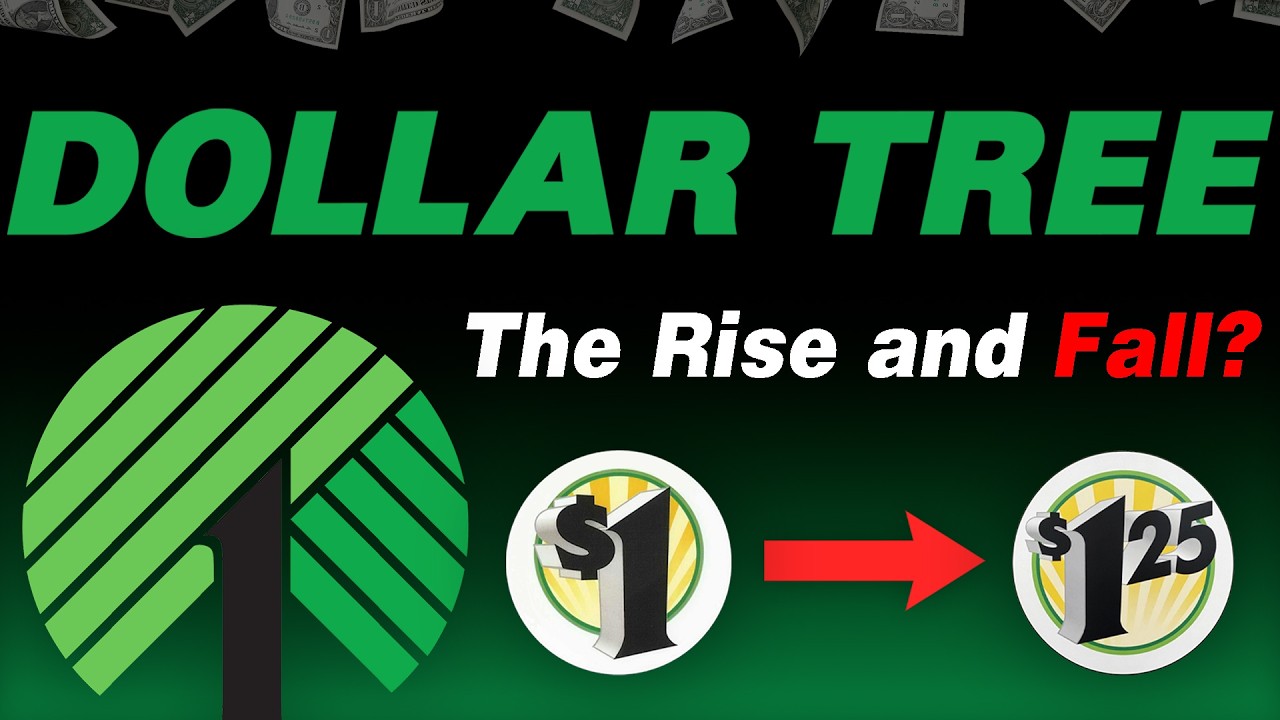
In 2021, a popular video examined the differences between the major dollar store chains, noting that Dollar Tree stores tended to be slightly larger, less dependent on everyday consumables, and typically located in suburban areas, often near big-box discount retailers like Walmart. The video also highlighted that, unlike its rivals, Dollar Tree had remained committed to the one-dollar price point. Within days of the video’s release, Dollar Tree made a controversial announcement that would immediately date that segment of the content: the company was raising its base price to $1. 25.
After decades of selling everything for a dollar, the chain was increasing prices by 25 percent. That decision proved to be only the beginning of a turbulent era. Looking back at four decades of Dollar Tree’s history, the last five years stand out as the most eventful by far. The company’s stock price tells the story plainly, with dramatic swings representing billions of dollars in market value.
In 2022, shares reached an all-time high; by 2024, they had fallen to a ten-year low. In a single day in September of that year, the stock dropped 22 percent, marking its worst daily decline since 2001 and making it the third-worst performer in the S&P 500 that day. The volatility has continued since, with the stock currently climbing again, though no one can confidently predict the long-term direction. Leadership instability has been a major source of uncertainty.
Since 2020, three executives have left their positions. In late 2021, the company found itself in a conflict with an activist investor, Mantelet Ridge, which owned 5. 7 percent of Dollar Tree’s common stock and demanded a sweeping overhaul of the board and a strategic review of the business. Dollar Tree called the demands aggressive and unwarranted.
A few months later, the two sides reached a settlement that expanded the board from five to twelve members. One of the seven new members was Rick Dreiling, the former CEO of Dollar General, who became Dollar Tree’s CEO the following year before resigning two years later for health reasons. Not long after the settlement, the chief financial officer, who had held the post for nearly fourteen years, left along with other executives, and his replacement also departed. The constant churn at the top made it difficult for the company to execute a consistent vision, especially while so many operational changes were underway.
The company’s distribution network also became a point of concern. Despite the difficulties, Dollar Tree kept expanding, opening more than 1,000 new stores over five years and planning another 400 by 2026. Such growth required a robust supply chain to keep shelves stocked efficiently, which is especially critical for a retailer competing on price. In 2024, a major distribution center in Marietta, Oklahoma, was shut down after being hit by a tornado, though fortunately no one was injured.
The company has been working to rebuild it and expects to reopen it by 2027. Around the same time, a new million-square-foot distribution center opened in Litchfield Park, Arizona, designed to support 700 stores across Arizona, Colorado, Nevada, New Mexico, and Utah. Dollar Tree also invested in updated technology and used artificial intelligence to manage inventory, all in an effort to become faster and more efficient. The biggest story of the past few years, however, involved Family Dollar.
Dollar Tree acquired the chain in 2015 for $8. 5 billion, outbidding Dollar General, which had offered more but faced regulatory concerns due to its larger size. In hindsight, the word “win” hardly seems appropriate. Family Dollar underperformed, and the fundamental differences between the two companies made integration difficult and prevented the efficiencies that had been hoped for.
At one point, the company experimented with combined stores, split literally down the middle, a concept featured in their 2021 annual report under the slogan “A new chapter, two iconic brands, one big deal. ” But the experiment did not pay off. Dollar Tree recorded significant losses in 2023 and 2024, largely due to impairment charges and store-closing costs tied to Family Dollar. In 2024, the company announced it would close nearly a thousand stores, most of them Family Dollar locations.
In 2025, Dollar Tree finally announced it would divest the chain entirely, selling it for about one billion dollars, a fraction of what it had paid a decade earlier. The deal that had once seemed so promising had turned into a disaster, and many observers felt more confident about Dollar Tree’s prospects now that the two chains were separated, allowing the company to focus its full attention on its original brand. Economic uncertainty affected the entire retail sector, and dollar stores were especially exposed. Tariffs were a significant factor, since a large portion of their merchandise was imported from other countries, particularly China.
At one point the previous year, the company said tariffs could cut its profits by 50 percent. Yet this year, Dollar Tree received more than $100 million in tariff refunds, adding yet another swing to the rollercoaster. The broader economic pressures of inflation also reshaped the company’s customer base. Unlike the other two national dollar store chains, Dollar Tree had not specifically targeted lower-income shoppers, but recently, in response to inflation, it began leaning toward higher-income customers more than ever before.
Many of the new stores were opening in wealthier communities, including the company’s 9,000th store in Plano, Texas. The company reported that 60 percent of its new customers earn more than $100,000 a year, a surprising shift. The logic was that wealthier consumers watch their spending more carefully during hard economic times, making them a large group actively looking for deals. Chipotle had explored a similar strategy, so while the approach might seem counterintuitive, it was not unprecedented and could prove to be a clever way forward.
Which brings the story back to price, the issue that started this turbulent period. Dollar Tree began in 1986 with five stores operating under the name Only One Dollar, and from the start, the one-dollar price point was the marketing hook. But realistically, a dollar in 1986 was worth roughly three dollars today. Over the years, the company kept prices down through clever methods, altering package sizes, improving operational efficiency, and selling products of lower quantity or quality.
Eventually, the one-dollar price rose to $1. 25, and the company did not stop there. It had already begun testing items priced up to five dollars at about 100 locations under the name Dollar Tree Plus. In the following years, the program was renamed Dollar Tree 3.
0 and expanded to more than 5,000 stores, the majority of its locations. Today, although the company says 85 percent of sales still come from items priced under two dollars, most stores now sell goods up to ten dollars, something unheard of just a few years earlier. On the positive side, the one-dollar concept could not have lasted forever, and the pivot toward a higher-income demographic offered a natural opportunity to abandon it. On the negative side, the shift alienated many longtime customers, and the company lost some of its identity in the process.
The stores look noticeably different than they once did. The wealthier new customers reportedly shop less frequently but spend more per visit. This was clearly reflected in 2022, when the conversion was applied vigorously: customer traffic fell about 4 percent while the average basket size rose more than 13 percent, resulting in a 9 percent increase in comparable store sales. Even though the price changes seemed to reduce the number of customers, the company still reported higher overall sales, and comparable store sales have remained positive every year since.
Dollar Tree now faces a future full of unresolved questions. After all the leadership changes, the failed Family Dollar integration, the disruptions to its supply chain, the tariff swings, and the abandonment of the one-dollar price point, it is genuinely difficult to say whether the company is stronger or weaker than it was five years ago. The answer depends entirely on who is asked. When viewers of that earlier video were asked to vote for the best dollar store, Dollar Tree was the clear winner with over 100,000 votes.
Now, after everything that has happened, its reputation is not what it once was. The company continues to expand and reports positive sales figures, but the volatility of its stock, the instability of its leadership, and the erosion of its core identity leave investors and customers alike uncertain about what comes next.