In 1692, the Puritan town of Salem, Massachusetts, was gripped by a panic that would become the most infamous witch hunt in American history. It began with two young girls, Betty Parris, age nine, and her eleven-year-old cousin Abigail Williams, who started to scream in pain, claim they were being pinched by invisible forces, and suffer violent fits. The local minister, Samuel Parris, desperately sought help from a physician named William Griggs. After examining the girls, Griggs could find no known medical condition and declared that the only explanation was diabolical possession.
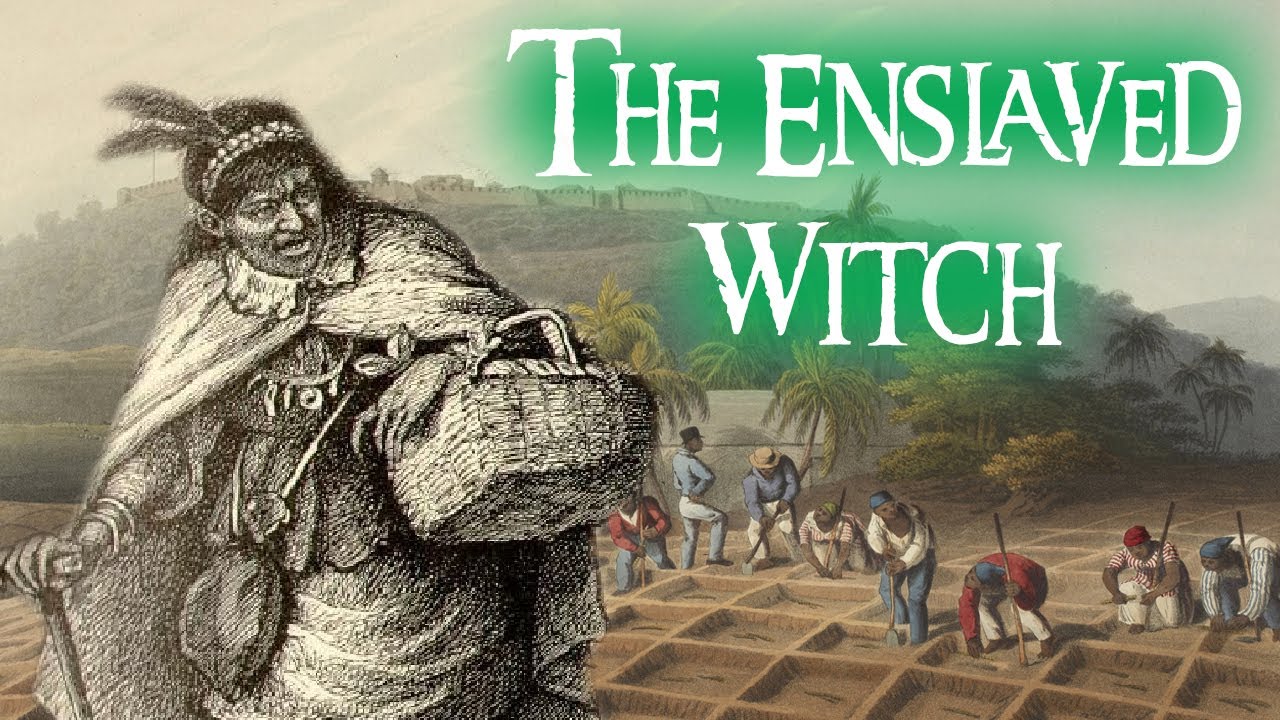
Soon, two of the girls’ friends, Ann Putnam and Elizabeth Hubbard, began complaining of strange visions and hallucinations. Fear swept through the colony, and town leaders announced that Salem was under attack by supernatural forces. The ensuing trials would lead to the accusation of nearly two hundred people, the deaths of nineteen by hanging, and five more who died while imprisoned. At the center of that hysteria was a woman named Tituba, remembered as the first woman accused of witchcraft during the trials.
Little is known for certain about Tituba’s origins, but scholars believe she was likely an Arawak Indian from Venezuela, captured and taken to Barbados to be sold into slavery. Other historians have suggested she may have been a native of Barbados itself. The main story of how Tituba arrived in Barbados begins with an English sailor. In July of 1674, Captain Peter Roeth sailed from Kent, England, and left Barbados on his ship the Saonoy, bound for the northeastern coast of South America.
His intentions were to kidnap some American Indians and sell them into slavery, while also trading with friendlier tribes. Arriving at the Amacura River, Roeth began searching for potential targets. As he sailed the river, he encountered groups of men traveling in canoes and invited them aboard to trade. These men were not taken captive, as Roeth claimed that female slaves were preferred and that some tribes were protected by the English Crown.
Eventually, Roeth came across eight women and two children who wished to barter their goods. Roeth had another purpose in mind and devised a plan to abduct the group once they came aboard his ship. The ship’s mate, William Price, and his crew managed to seize the women, and they sailed back down the Amacura River toward the Atlantic on a return voyage to Barbados. Historians generally agree this is the most likely account, though there is a possibility that Tituba descended from a group of Arawaks brought to Barbados to teach settlers how to cultivate crops.
However, a major contradiction in the story is that by the 1650s, most Arawaks had either died or returned to the mainland, and it is believed none remained on the island. Despite the uncertainty of her origins, Tituba was eventually purchased by Samuel Parris, a sugar plantation owner in Barbados. Parris had studied theology at Harvard University while his father managed the plantation, but he left without completing his degree. After his father’s death in 1678, he returned to Barbados, but the plantation was suffering from falling sugar prices and a hurricane that had destroyed the warehouses.
Deciding to leave his string of bad luck behind, Parris moved with his wife Elizabeth Eldridge and their three children to Salem, where he was accepted as the local minister. Tituba went with them as a household servant. Enslaved American Indian women were not usually sent to work in the fields; they were considered skilled cooks and were assigned primarily to domestic work in the kitchen or within the household. The number of enslaved American Indians remained small compared to enslaved Africans, and Roeth’s raids along the South American coast may have been an attempt to increase the number of domestic slaves.
Tituba may have been one of them. After arriving in Massachusetts around 1680, the family settled in Salem once a dispute over Parris’s salary was finally resolved. Some villagers were happy to meet the Parris family’s needs with generous contributions, allowing the family a decent income, while others in town were less enthusiastic about contributing. Salem was a town mired in bitter disputes.
The Putnam clan and the Towne family were locked in conflicts over forest rights, each cutting timber on the other’s land in a feud that lasted more than fifty years. Both previous ministers had been forced out of their jobs when villagers refused to pay their salaries. Despite this, the Parris family managed to settle in, and in particular, Tituba and Betty Parris got along well. The Parris parents were often away from home attending to parish business, so the children spent most of their time with Tituba, who entertained them with stories of traditional Barbadian practices.
After Betty and Abigail began behaving strangely, Samuel Parris pressured the girls to tell him who was responsible for practicing witchcraft. Despite her close relationship with the young girls, they were quick to accuse Tituba. She had become involved in the practice of folk magic and had allowed the girls to participate in baking a so-called witch’s cake. It was the Parris family’s neighbor, Mary Sibley, who allegedly ordered Tituba to bake the cake and feed it to a dog, hoping it would reveal who was bewitching the girls in Salem.
At the time of the trials, Tituba was accused of practicing witchcraft on the girls, but she denied all charges. She was arrested and thrown into prison alongside two other women, the elderly Sarah Osborne and a beggar named Sarah Good. Although Tituba at first strongly denied practicing witchcraft, under interrogation by magistrate John Hathorne, she made a stunning confession. Tituba claimed she had done no harm to the girls but admitted she had made a pact with the devil.
Hathorne asked, “Did you never see the devil? ” Tituba confessed, “The devil came to me and bid me serve him. ” The townspeople packed the courtroom to hear Tituba’s confession, and they were utterly captivated by her tale of diabolical entities operating in Salem. She offered descriptions of a variety of demonic characters, animal companions, and other evil spirits that had arrived in Salem eager to destroy the Puritan community.
She also accused others of witchcraft in her confession, claiming that Sarah Osborne possessed a creature with a woman’s head, two legs, and wings. She supposedly also mentioned riding on flying broomsticks to go to various places. Tituba spoke of a tall man with white hair in a dark meeting who appeared to her and ordered her to hurt the children. He told her that if she did not comply with his request, she would die.
It remains unclear what led Tituba to confess to her alleged pact with the devil, but researchers believe she was a perfect scapegoat for the Parris family. It is widely assumed she was coerced into making the confession, giving her owner, Samuel Parris, a plausible explanation for the girls’ behavior, especially for villagers who were concerned about the fortune-telling techniques the girls had begun practicing before their health deteriorated. As an enslaved person, Tituba was required to obey her master and had no choice but to carry out Samuel Parris’s orders. Parris treated her harshly for refusing to confess to witchcraft and beat her for allowing the girls to participate in fortune-telling practices.
But it is also entirely possible she was attempting to appeal to the Puritans’ principle of forgiveness by confessing to her alleged pact with the devil. She was already imprisoned, so perhaps she believed confession was the best way to survive. Tituba relied on the strict Puritan belief that if you confessed your sins and repented, you could still be saved. In her testimony, Tituba claimed that women had an innate predisposition to sin, and because she was enslaved, she also had an obligation to servitude.
Sarah Good and Sarah Osborne were also implicated in these charges and appeared before the court alongside Tituba. Both women denied the charges against them. Despite their claims of innocence, Good and Osborne were convicted. Osborne died in prison, and on July 19, 1692, Sarah Good was among those hanged on Gallows Hill.
Tituba recognized the seriousness of the accusations and needed a miracle of her own if she hoped to survive. She confessed, repented, and declared her love for Betty, Samuel Parris’s daughter. The public began to warm to Tituba, and the jury’s sentiments shifted toward her confession, which she later recanted, claiming it had been extracted from her under Parris’s cruel treatment. She survived her trial because the Puritan community could not justify executing her after her repentance.
Her ability to win over the villagers was her triumph. On May 9, 1693, the grand jury refused to file a formal indictment against Tituba for lack of evidence, but she had spent thirteen months in Boston’s overcrowded prison, where Samuel Parris refused to pay her bail because she had recanted her confession. After her trial, she was sold to an unknown person to settle a debt. After that, Tituba vanished from the historical records.
She has been immortalized in numerous works of fiction and has become one of the most intriguing figures of the Salem witch trials, a mystery preserved in the record of the hysteria she helped ignite.