On the night of June 2, 1864, the Army of the Potomac lay in the dirt at a Virginia crossroads called Cold Harbor, exhausted after twenty-seven days of nearly constant contact with Robert E. Lee. The Wilderness had burned men alive in the underbrush. Spotsylvania had produced the Bloody Angle, where soldiers fought hand-to-hand in the rain for twenty-four hours.
North Anna had been another maze of rivers and trenches. When the fighting paused, the marching started south, always south. Now, across the fields from their camp, a fresh line of Confederate earthworks waited in the summer dark. Every veteran in blue understood what that meant.
That night, there was very little talk. Men too tired to do more than stare at the sky scratched out letters home. Some did something stranger. Horace Porter, one of Grant’s aides, moved through the camps in a light drizzle carrying orders for the morning attack and noticed men who seemed to be mending their coats.
Looking closer, he saw they were writing on small slips of paper—their names, their regiments, their home addresses—then pinning the papers to their coats or stitching them into their shirts. Homemade dog tags, invented on the spot. These were not men expecting a glorious charge. They had walked into entrenched fire before.
They were being practical, tagging their own bodies so someone would know where to send the news. In a farmhouse headquarters behind them, Ulysses S. Grant studied maps with a cigar in hand. The plan for morning was simple on paper and horrifying in practice.
At 4:30 a. m. , roughly fifty thousand federal soldiers would go straight at the center of Lee’s line. Grant gave the order knowing the ground and the cost.
He also knew there was no real surprise left in this war. The slips of paper were for after. To understand Cold Harbor, one must understand what came before it. When Grant left Washington in May 1864 as general-in-chief, he broke with every Union commander who had preceded him.
They had fought Lee, taken a beating, and retreated across a river. Grant decided on a different rule: no more retreats. Once he crossed the Rapidan, he would keep going south, stay between Lee and Richmond, and keep hitting until one army broke. He described his mandate in one stark phrase: to hammer continuously until, by mere attrition if in no other way, there should be nothing left of the enemy’s force.
The Union could replace losses; the Confederacy could not. The price came due almost immediately. By the time the army reached Cold Harbor, Grant had lost roughly fifty thousand men killed, wounded, or missing in less than a month—almost half of the force he had started with. Lee’s smaller army had been bled as well.
But through it all, Grant had never turned back. After each collision, the blue column sidestepped south, not north. On June 1, Union cavalry seized the dusty junction called Cold Harbor, about ten miles northeast of Richmond. Lee rushed infantry to meet them and put his engineers to work.
Over the next thirty-six hours, Confederate soldiers built miles of earthworks, trenches, gun pits, and overlapping fields of fire running in a rough arc toward the Chickahominy River. Grant’s own staff could see what was coming. Theodore Lyman, an observant officer, wrote home that he heard the order for a general assault at 4:30 the next morning without any great hope. The men sewing their names into their coats had reached the same conclusion from a different angle.
Grant ordered the assault anyway. June 3, 1864, 4:30 a. m. A single signal gun cracked through the fog.
Along a seven-mile front, nearly fifty thousand Union soldiers from three corps rose from the dirt and stepped forward into the gray. There was no flanking move, no diversion. Just a straight frontal assault across open fields aimed at the strongest fortifications Lee’s army had built so far. In the half-light, the earthworks resolved into tiered trenches, headlogs, artillery in prepared positions.
The defenders had spent a day and a half turning the ground itself into a weapon. What happened next took less than thirty minutes. On the Union left, parts of Hancock’s corps reached the works and clawed out a foothold near Breckinridge’s front—the closest thing to a breakthrough anyone would see. Confederate batteries turned and poured fire into that captured segment from three sides.
The short stretch of trench became a box of flame. Smith’s corps, attacking over broken ground, funneled into low ravines where units bunched up. When they emerged into clearer fields, the Confederate line was waiting. The fire was constant, more like a sheet of bullets and shell.
A Southern officer would later say his men hardly had to aim; they just fired into the dense blue shapes and watched them fall. In places, whole regiments seemed to dissolve. Elsewhere, the assault never really got close. Men walked into what felt like a wall, dropped in clumps, and the survivors hit the dirt and began scraping at the Virginia clay with bayonets, tin cups, even bare hands.
By the time the sun was fully up, twenty to thirty minutes after that first gun, roughly seven thousand Union soldiers were dead or wounded in front of the Confederate works. Lee’s losses were a fraction of that. In some sectors, the Union line had simply vanished. On paper, orders for renewed assaults went out from headquarters.
On the ground, corps and division commanders sent back word that further attacks were impossible. Some simply did not relay the new orders. Their men would not move. Around 12:30, Grant rode the forward lines.
He did not see an attacking army. He saw a sprawled, stunned one. Between the works lay a strip of open ground scattered with blue uniforms. From that strip came a steady sound—cries for water, for help, for someone to drag them back.
Grant suspended the attack. Both armies dug deeper instead. That evening, Grant sat down to report to Washington. In his official dispatch to the War Department, he wrote, “Our loss was not severe, nor do I suppose the enemy lost heavily.
” Read that again. How does a man who had just watched thousands of his soldiers fall in less than thirty minutes write that sentence? To understand, one has to think about the election year. Cold Harbor happened in June 1864, when Lincoln’s hold on the presidency was shaky.
Casualty lists from weeks of brutal fighting had been pouring into northern newspapers. Peace Democrats were rallying around a platform that called the war a failure and demanded a negotiated settlement. That August, Lincoln himself would write a private memo assuming he would probably lose. If the full truth of Cold Harbor had hit the northern press unfiltered, it might have gutted public faith in the war at the exact moment the administration most needed people to believe the blood was buying something.
The War Department controlled the telegraph lines and issued its own statements. Grant’s “Our loss was not severe” message, sent the afternoon of June 3, was not logged as received in Washington until the next morning, giving Secretary of War Edwin Stanton time to decide how to present it. A later statement admitted about three thousand killed and wounded, still well below the real bill. It was a whole government managing bad news in the middle of a political and military crisis.
Grant understood Lincoln’s position, knew McClellan was likely to be the Democratic nominee, and knew that a story of relentless forward pressure was Lincoln’s best argument that the war could still be won. So he wrote a sentence that simply was not true. It bought time. It kept faith, for a while, in the story that the Union was grinding its way toward victory.
It helped protect a president whose defeat might have meant a negotiated peace that left the Confederacy and slavery standing. It was a cold calculation and, in its way, a moral one. But the men between the lines were still there, calling for water. For four days after the assault, the two armies stared at each other across ground full of dying men.
The Virginia sun did the rest. Temperatures climbed. Canteens ran dry. Some men crawled back after dark.
Others lay wedged among the dead, unable to move. Their cries went on day and night, growing weaker. On June 5, Grant wrote to Lee proposing an informal rule: whenever there was no active fighting, either side could send unarmed stretcher parties between the lines without asking special permission. Lee refused, insisting on the old protocol of a formal flag of truce at a specific time under a white flag.
He also noted he had no wounded of his own in that space. A smaller, nastier war of letters followed. Grant hesitated to send the formal truce request because, in the etiquette of the time, the side that asks for a truce admits itself beaten. Lee answered slowly and precisely, making sure any cease-fire would be on his terms.
Historians still argue over who bore more responsibility for the delay. There is no argument about what it cost. On the evening of June 7, a two-hour flag of truce finally took effect. Burial parties in blue and gray stepped out under white flags, met between the lines, and started digging shallow graves.
By then, almost everyone out there was dead. Of the thousands of Union soldiers who fell wounded on June 3, most accounts agree that only a handful—as few as two men—were found alive. Years later, in his memoirs, Grant gave this only one spare line: “The wounded between the lines died before they could be reached. ”
Why Cold Harbor?
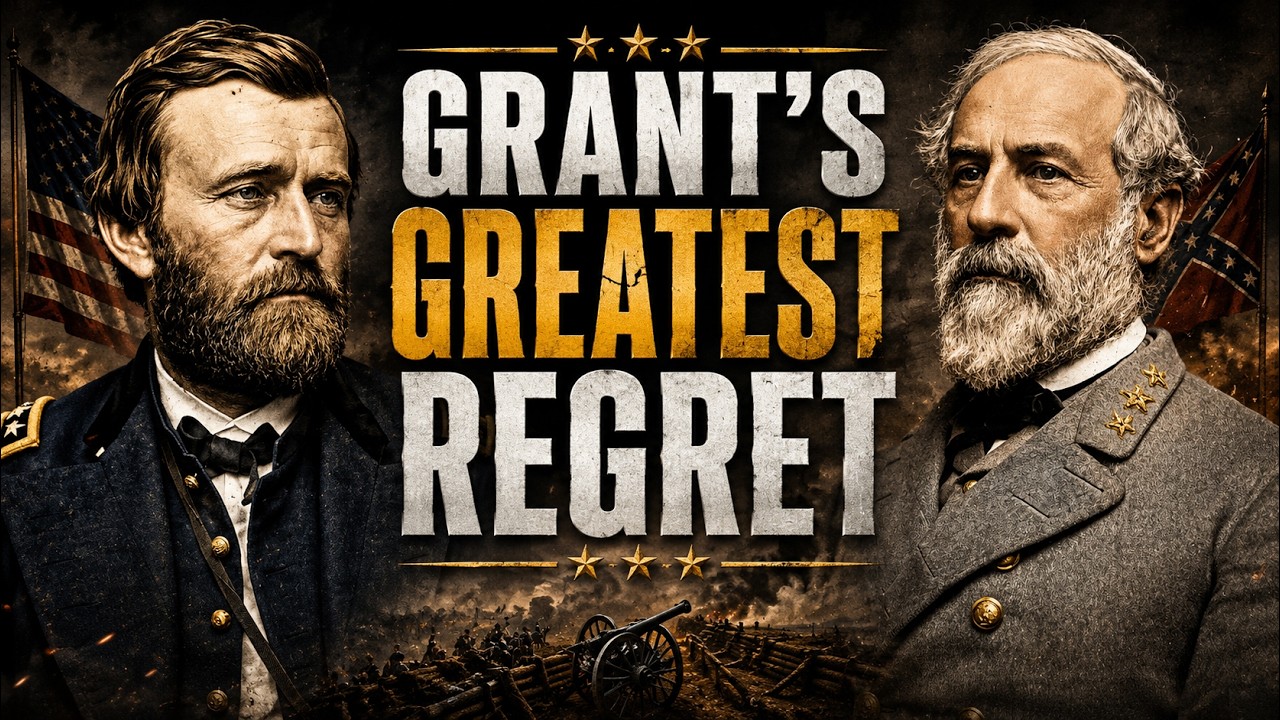
Why not the Wilderness, where more men fell? Why not Spotsylvania’s Bloody Angle? Grant gave his one answer in his personal memoirs, written in the last year of his life: “I have always regretted that the last assault at Cold Harbor was ever made. I might say the same thing of the assault of May 22nd, 1863 at Vicksburg.
At Cold Harbor, no advantage whatever was gained to compensate for the heavy loss we sustained. ”
Two parts matter. The small word for time, always, and the phrase for the result, no advantage whatever was gained. At the Wilderness, the fighting was savage, but when the smoke cleared, Grant turned south instead of north, breaking the old pattern of retreat.
At Spotsylvania, the attack tore into Lee’s line, captured thousands of prisoners, and forced the Confederates to reshape their defenses. Cold Harbor gave none of that. No shift in position, no captured salient, no forced retreat. The men who died on June 3 did not buy a bridgehead or even time.
They charged a position too strong, across ground too open, on a schedule too rushed for proper reconnaissance. This was not a brutal but necessary cost. It was a mistake. The regret in the memoirs is not a new revelation.
Grant had been carrying that knowledge since the moment he rode the lines at midday and saw nothing in return for what he had spent. The Wilderness and Spotsylvania haunted the men who fought there. Cold Harbor haunted the man who told them to go. Twenty-one years later, in the summer of 1885, Grant was back in a kind of trench.
He lay in a rented cottage on Mount McGregor in upstate New York, his body being eaten by throat cancer. Swallowing was agony. Speaking was often impossible. When he needed to say something, he wrote it on a pad.
He had one last campaign: finish his personal memoirs before the cancer finished him. A Wall Street swindle had wiped him out, and the only way to leave his wife any security was to get the book done. He wrote as if time was chasing him, sometimes fifty pages a day, dictating when his voice worked, scratching sentences in pencil when it did not. His style was exactly what it had been in his orders: plain, compressed, suspicious of drama.
He rarely stopped to defend himself. When he reached Cold Harbor, the account was shorter than one might expect. He described the failed assault, the losses, the wounded who died before they could be reached. Then, almost as if forcing the words out, he added the sentence that has outlived almost everything else he wrote about that day: “I have always regretted that the last assault at Cold Harbor was ever made.
”
Look at the small word doing the heavy lifting. Always. He does not say “I came to regret” or “looking back, I regret. ” Always is not a late discovery.
It is a line back through victory, the presidency, and ruin, to the afternoon he rode the lines and saw the ground covered with men he could not get back. I have always regretted means I knew then and I never stopped knowing. From the same man who, on the day of the battle, sent a report saying our loss was not severe. One sentence belonged to a general fighting a political war at home.
The other came from a dying man with nothing left to protect but his own conscience. On July 20, 1885, Grant wrote the last lines of the memoirs. Three days later, he died. The book rescued his family from poverty and was praised as one of the great works of military autobiography.
Somewhere inside those pages, the general who almost never talked about his feelings let one of them sit in plain view without defense or disguise: I have always regretted. The nickname “Grant the butcher” appeared in Democratic newspapers within weeks of Cold Harbor and stuck for generations. There is some truth inside the insult. Grant’s strategy did rest on a brutal logic: the Union could afford losses the Confederacy could not, and he was willing to keep pressing even when the price was plain.
But Cold Harbor also shows what the label misses. A commander truly numb to human life does not carry one morning with him for twenty-one years. He does not sit in a cottage dying and single out one assault as something he has always regretted. He does not add that no advantage whatever was gained to compensate for the heavy loss we sustained.
That is not the voice of someone who does not care. It is the voice of a man keeping a ledger he knows he can never balance. We end where we began, June 2, 1864. Men in blue coats hunched over by firelight, quietly sewing slips of paper into their uniforms.
They were not naive recruits. They were veterans who had walked through the Wilderness and Spotsylvania and kept going. They knew the ground, saw the trenches, read the orders. And they made a small, stubborn choice.
If the worst happened, they would not vanish unknown. Someone, somewhere, would know their name and where to send the news. Grant knew what they were doing. He gave the order anyway.
He wrote the dispatch that said our loss was not severe. He kept the army moving south. And then he carried that morning with him through victory, the presidency, and ruin, all the way to a cottage on Mount McGregor, where, with very little left to lose, he finally named it as the one decision he had always regretted.