Days before her royal wedding, reports swept through the European press that the Olympic swimmer had tried to flee Monaco three times. The whispers claimed she had been intercepted by palace authorities, dragged back to a life she no longer wanted. Forced to the altar, she wept through the ceremony, her despair broadcast to billions. The images were impossible to spin away.
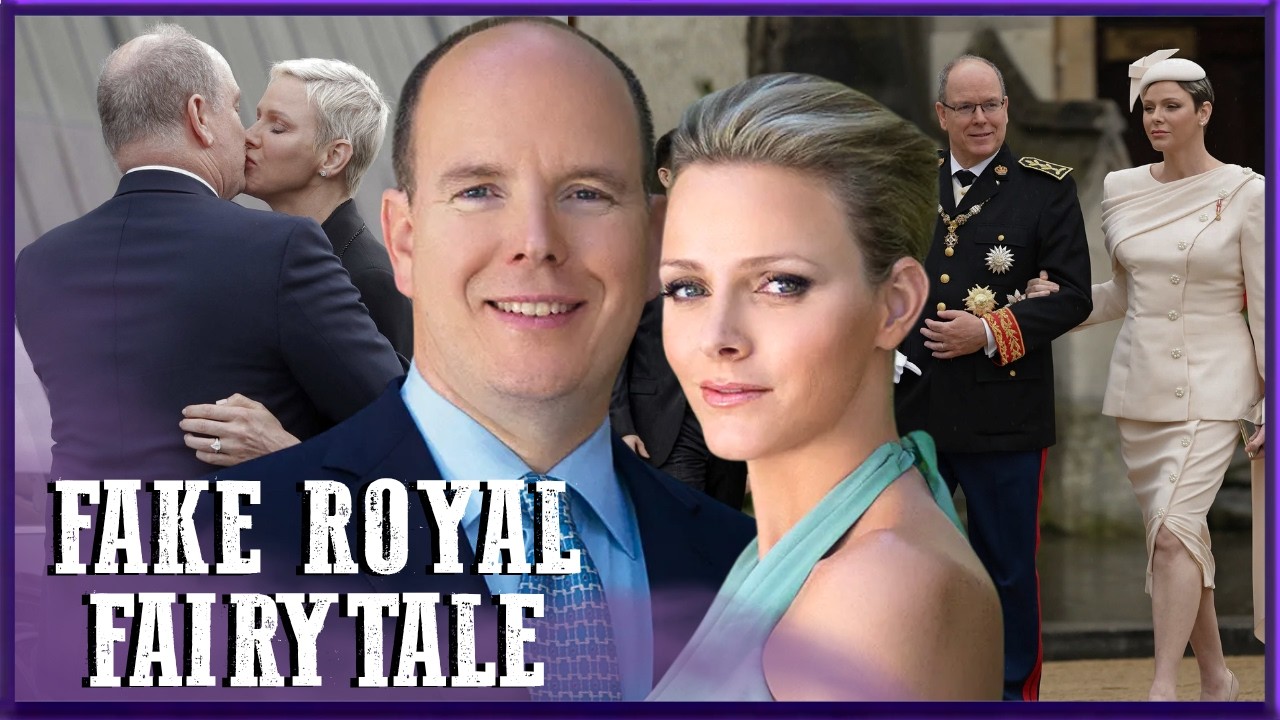
Long before she became the world’s most scrutinized princess, Charlene Wittstock was a creature of the water. Born in Rhodesia and raised in South Africa, she built her life on discipline and physical strength, rising to become an Olympic swimmer. In the pool, nothing mattered but merit. Her bloodline meant nothing.
Her savings could not buy speed. She controlled her own destiny, defined by broad shoulders, early mornings, and an uncurated smile. That independence made her a target. When Prince Albert of Monaco approached her at the Mare Nostrum swimming meet in 2000, he was not looking for an equal.
He was the sovereign of a wealthy, secretive principality, aging and burdened by a century-old expectation to produce a legitimate heir. His reputation as a playboy had followed him for decades. He did not win her with vulnerability. He deployed the overwhelming machinery of royal power.
From a dynastic standpoint, his pursuit was calculated. He needed pristine genetics, physical stamina, a photogenic face, and, above all, an outsider. An aristocratic bride would arrive with connections, allies, and an understanding of elite politics. Charlene had none of those defenses.
She saw a charming prince. He saw a blank canvas. Over several years, Albert pulled her away from the clear waters of her athletic career and dropped her into Monaco, a city-state that functioned less like a country than a privately owned corporation. Every police officer, every camera, every business ultimately answered to the prince.
Charlene was geographically severed from her family and her support networks. Surrounded by the wealthiest people on Earth, she experienced profound loneliness. She was forced to rely on Albert for everything, social validation, financial support, even translation. She was navigating a minefield blindfolded, and the only person holding her hand had laid the mines.
The illusion began to fracture in the mid-2000s. In 2005, shortly after ascending the throne following his father’s death, Albert publicly confirmed he had fathered an illegitimate child with a former Air France flight attendant. A year later, DNA tests forced him to admit to another child, a daughter with an American real estate agent. The press exposed this hidden life relentlessly.
Albert demanded Charlene accept his past as an unavoidable byproduct of privilege. He used his wealth to buy silence, settling trusts and housing for former lovers, treating his own children as public relations liabilities. He expected her to swallow her humiliation and smile. Every time she forgave him, every time she held his hand on a red carpet after another scandal broke, she eroded her own worth.
She was learning that her feelings were irrelevant. Her only value was maintaining the illusion of Albert’s respectability. By the time Albert proposed in the summer of 2010, the trap had closed. Charlene accepted the massive pear-shaped diamond, not with joy, but with quiet resignation.
She was 32. She had sacrificed her career, her home, her language, and her autonomy. As the wedding machinery roared to life, the shadows of Albert’s past returned. Weeks before the ceremony, whispers emerged of another paternity claim.
This time, the timeline suggested the child had been conceived during Albert’s relationship with Charlene. The previous infidelities had been framed as ancient history. This proved they were a permanent feature of his character. The realization hit her like a physical blow.
She was not marrying a partner who had made mistakes. She was binding herself to a compulsive deceiver who viewed his vows as optional. Her survival instinct finally overrode the palace conditioning. She decided to run.
According to reports from French journalists and palace insiders, Charlene attempted to flee three times in the weeks before the July wedding. The first attempt reportedly happened in Paris, during a fitting for her custom Giorgio Armani gown. She allegedly tried to seek refuge at the South African Embassy. Palace courtiers intervened, smoothed over the incident, and brought her back.
The second attempt came during the Monaco Grand Prix, when the principality flooded with tourists and the surveillance grid was stretched. She was intercepted again. The third attempt was the most desperate. Days before the ceremony, she reached the airport in Nice, France, with a one-way ticket.
She was minutes from boarding a flight home to South Africa. According to explosive rumors published by the French press, senior Monaco police officers intercepted her. The palace denied it, but the narrative lingered. Her passport was not seized by a jealous lover.
It was seized by the sovereign authority of a European microstate. She could not call for help because her fiancé was the authorities. The ensuing negotiations were cold and pragmatic. The wedding could not be canceled.
Heads of state were arriving. Hundreds of millions of euros in investments hinged on the spectacle. The emotional well-being of the bride was irrelevant to the balance sheet. A deal was struck.
The exact terms remain buried in the palace’s classified vaults, but the result was undeniable. She was escorted back under armed guard to prepare for her role. On July 2, 2011, the world watched the religious ceremony in the palace courtyard. Charlene emerged in an off-the-shoulder Armani Privé gown embedded with 40,000 Swarovski crystals.
She looked flawless and completely dead behind the eyes. As the choir sang, she began to weep, not delicate tears of joy, but convulsive despair. She cried through the ceremony, down the aisle, and as she laid her bouquet at the Chapel of Saint Devote. The palace spun it as overwhelming emotion.
The audience saw a woman mourning her own freedom. Prince Albert did not comfort her. He leaned in with a tight, strained expression, furious that his expensive prop was malfunctioning on live television. The honeymoon stripped away the last remnants of pretense.
The couple traveled to South Africa, but they did not share a bed. They did not share a hotel. Albert stayed at the Hilton in Durban while Charlene was booked at the Oyster Box in Umhlanga Rocks, over ten miles away. Palace spokespeople cited logistical security concerns and morning traffic.
It was a transparent lie. The proximity was intolerable. Back in Monaco, Charlene entered the most grueling phase of her captivity. Albert’s older sisters, Princess Caroline and Princess Stephanie, had effectively run the principality since their mother’s death.
They viewed Charlene as a hostile interloper. They mocked her lack of aristocratic pedigree and her athletic build. They weaponized the French language against her, conducting rapid whispered conversations in her presence. She was frozen out of palace operations, her initiatives blocked, her staff loyal to the sisters.
She had millions in jewelry and a wardrobe of bespoke gowns, but no agency. Her only value to the system was her womb. Monegasque succession law required a direct legitimate heir. Albert’s illegitimate children could never inherit.
If he died without an heir, the throne would pass to his sisters’ lines, triggering a destabilizing crisis. Charlene’s body became a state asset. Every public appearance was scrutinized for a baby bump. Every illness sparked invasive speculation.
For a woman who had spent her life in peak physical condition, possessing absolute control over her own body, this reduction to a biological vessel was profoundly traumatizing. The vibrant swimmer evaporated. In her place stood a rigid, hollow-eyed woman. In May 2014, the palace announced she was pregnant.
On December 10, she gave birth to twins, Princess Gabriella and Prince Jacques. Because Monaco operates under male-preference primogeniture, Jacques, born two minutes after his sister, became Crown Prince. Cannons fired, church bells rang, and the principality celebrated. Charlene had fulfilled her contract.
But the birth shifted the power dynamics against her. The palace no longer needed her for the bloodline, yet she could never leave. If she fled, she would have to abandon her children. Albert had weaponized her maternal instinct, using the twins as collateral to ensure her permanent compliance.
With the succession secured, Charlene began missing public engagements. She looked gaunt and disconnected. The press questioned her mental stability. Albert executed a master class in gaslighting.
He attended galas alone, sighing with practiced sadness, explaining that the princess was overwhelmed. He hinted at emotional fragility and exhaustion. By pathologizing his wife, he erased the confiscated passport, the tears at the altar, the separate honeymoon hotels. He rewrote history.
He was not the villain. He was the noble, patient victim. And if she ever spoke out, he had already planted the seed: Do not listen to her. She is unwell.
By December 2020, Charlene had been silenced long enough. She stepped out to distribute Christmas gifts to Monegasque children with half her head shaved bald, the remaining hair dyed dark, heavy eye makeup, and a defiant glare. The tabloids called it a bizarre fashion choice. It was a calculated act of psychological rebellion.
She could not issue a press release, so she used her own body to destroy the pristine image Albert had purchased. The rebellion signaled the collapse of the fragile truce. In early 2021, Charlene boarded a plane for South Africa, officially to support a rhinoceros conservation charity. She did not return for ten months.
The palace issued a chaotic stream of medical bulletins, claiming she had a severe ear, nose, and throat infection that made flying impossible. She required multiple surgeries. Whether the illness was genuine or a cover, the result was the same. She had retreated to the African bush, the only place she had known freedom, and she refused to come back.
Albert stayed in Monaco, attending galas and taking the twins to public events. On National Day, he stood on the palace balcony with the children holding handmade signs that read, “We miss you, Mommy. ” It was a masterclass in emotional manipulation, framing Charlene as the absent mother while casting himself as the devoted father. In November 2021, Charlene finally returned to Monaco.
She was a ghost, shockingly thin, wearing a protective mask. Within days, the palace announced she suffered from profound exhaustion. She disappeared again, this time to a psychiatric clinic in the Swiss Alps, where she remained for four months. When she returned in the spring of 2022, explosive reports leaked into the French media.
Her return had not been secured by love or reconciliation. It had been secured by a financial contract. According to prominent publications, Albert agreed to pay his wife up to 12 million euros a year, untaxed. In exchange, she would fulfill her royal duties, attend state functions, and appear beside him to maintain the illusion of an intact family.
The marriage was formally codified as a commercial transaction. Charlene became an employee of the state. Today, the situation remains a grim tableau. Charlene makes her contracted appearances at Formula 1 races and Red Cross galas.
She wears exquisite armor from Parisian fashion houses. Her eyes remain haunted. The question outsiders always ask is why she does not leave. The answer lies in the legal architecture of the monarchy.
If she filed for divorce and tried to leave Monaco, she would trigger a legal battle she could never win. Prince Jacques is the heir apparent. The palace would never allow the future sovereign to be raised abroad by an estranged ex-wife. Albert has turned her biology into a permanent shackle.
He knows she will never abandon her children. He used her womb to secure his throne, and now he uses the children from that womb as the invisible chains that bind her to the palace. The marriage of Prince Albert II and Princess Charlene will not be recorded as a fairy tale that lost its spark. It stands as a chilling study in institutional control.
Albert used the absolute power of his state to trap a woman who tried to escape. He used his wealth to silence the mothers of his illegitimate children. He used his media apparatus to gaslight the world. He took a strong, independent, world-class athlete and systematically dismantled her into a hollowed-out prop.
Charlene fought back in the only ways available to a prisoner, through tears at the altar, through the mutilation of her own image, through desperate, doomed flights for freedom. Her survival is a testament to the limits of human endurance. The tragedy of Charlene Wittstock proves that a cage is still a cage, no matter how much gold plates the bars, and that a diamond tiara can be the heaviest, most unbreakable chain of all.