On the morning of June 14, 2015, surveillance cameras at a gas station off Highway 29 captured a gray Subaru Forester belonging to 22-year-old Kelly Tyler. She filled the tank, bought water and energy bars, then turned onto the narrow road leading to the Ty River hiking trailhead. It was the last digital trace she left in the civilized world. Kelly worked as a barista in Charlottesville and was known among friends as an experienced hiker who had conquered difficult routes and always kept to her schedule.
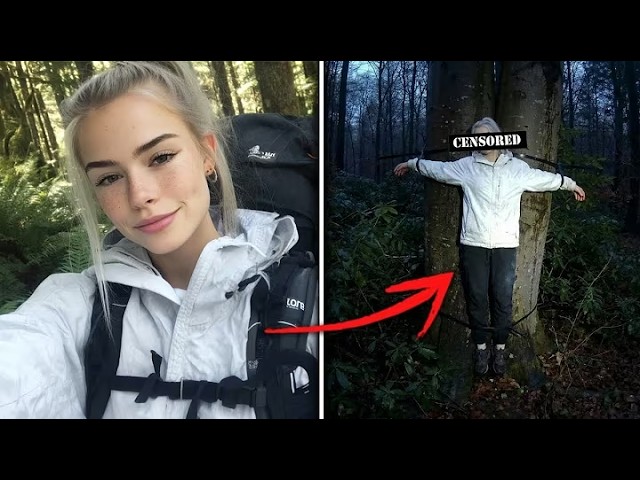
Her car entered the gravel lot at the trailhead around 6:40 a. m. , and she set off with a two-day pack: a one-person tent, a topographic map, a gas burner, a change of clothes, and freeze-dried food for four meals. She planned to cross the ridge, spend the night at a designated spot, and return by the evening of June 15.
The last time anyone saw her alive was at 10:30 that morning. Two tourists descending the mountain met her on a narrow section of the climb. They noted her light blue windbreaker, dark pants, and steady, confident pace. She nodded briefly to their greetings and continued uphill without slowing.
No pursuers. No sign of anxiety. When Kelly failed to return or call by the afternoon of June 15, her parents contacted police. A search operation began that evening.
Her Subaru was found locked at the trailhead, with no signs of struggle around it. Inside were a road atlas and the gas station receipt. The next day, a full-scale search was launched. County police, forest rangers, and volunteers divided the area into squares.
The working theory was an accident: rocky scree and slippery slopes made injury plausible. But by the end of the first day, this version began to fail. Search groups combed dangerous sectors, rappelled into gorges, and inspected cliffs. No body, no backpack, no slip marks.
The confusion deepened on June 17, when search dogs were brought in. The lead dog picked up Kelly’s scent from the car and followed it confidently for nearly four miles. Then, half a mile from an observation deck, on a flat stretch of forest path, the dog stopped. It circled in place, froze, sneezed several times, lowered its tail, and refused to move in any direction.
The handler described the reaction as atypical for a simple loss of trail. It looked as though Kelly’s scent had simply broken off at one point in space, with no continuation forward, backward, or sideways. A careful examination of the ground within a fifty-meter radius found no dragging, struggle, blood, or crushed grass. A week of intensive searching yielded nothing.
More than one hundred people took part. Helicopters with thermal imagers scanned the forest at night, but the dense canopy limited their effectiveness. Volunteers combed the woods in chains, overturning logs and peering into ravines. Not a single piece of clothing or equipment was found.
On June 24, the search operation was formally suspended. The report noted that Kelly had disappeared from the route without signs of chaotic movement or departure, and that no trace of her presence in the search sector had been found. With no body and no evidence of an accident, the case was frozen. She became a missing person.
On July 5, twenty-one days after her disappearance, a team of three Forest Service employees was performing a routine inspection in a remote sector called Deep Creek, a wilderness of ravines and dense rhododendron scrub. Around 11:40 a. m. , the senior forester noticed a bright blue spot in the thick of the forest, contrasting sharply with the summer green.
The group pushed through thickets where visibility was less than five meters. When they reached an old spreading beech tree on a small hill, they froze. Kelly Tyler was vertically pressed against the trunk, fixed in place with thick industrial zip ties. The ties wrapped her torso, shoulders, and hips, pressing her back against the bark.
Her arms were extended outward, secured to lower branches. Her feet barely touched the ground with the toes of her boots, meaning she was effectively hanging, held upright only by the tight binding. Her eyes were open, staring through the foresters into the void. She was alive but in a deep catatonic stupor.
What struck the rescuers most was the cleanliness. Her blue windbreaker and dark pants bore not a trace of dirt, dust, or cobwebs, despite three weeks in the forest. There were no scratches or insect bites on her skin. The soles of her shoes were completely clean, with no clay, soil, or pine needles in the treads.
It was as though she had been washed and dressed after arrival. Someone had brought her here without letting her touch the ground, and fixed her to the tree like a grotesque installation. The foresters called for a rescue helicopter and began cutting her free. She did not react to touch, did not blink at the knife near her face, and made no sound.
When the last tie was cut, her body fell forward. She was critically dehydrated, but her muscles remained tense, as if she were still holding an invisible crucifixion pose. A medical helicopter landed forty minutes later. Her pulse was weak and thready, below fifty beats per minute.
Under her collar, paramedics noticed a red stripe, like a rubbing from a hard collar, but not from strangulation. During the flight, she lay motionless, staring at a single point on the cabin ceiling, completely ignoring the roar of the propellers. At the University of Virginia Medical Center, doctors assessed her condition as serious but not life-threatening from injuries. The problem was metabolic: rhabdomyolysis, the destruction of muscle cells from prolonged stillness.
Toxicology screening came back completely clean. No drugs, no sedatives, no alcohol. Only critically high cortisol levels. For three weeks, her mind had not been clouded by chemistry.
She had experienced everything in full clarity. Her psychological state was the greatest concern. She was in deep numbness bordering on catatonia. When her parents entered the intensive care unit, she showed no emotional reaction.
She did not blink until her eyes watered from dryness. Nurses were forced to administer nutrients intravenously. On July 6, a nurse accidentally dropped a metal tray. The crash cut through the silence of the ward.
Kelly’s reaction was immediate and frightening. In a split second, she was upright, back straight, muscles stone-like. Her face froze in terror, and her eyes went wide. In the silence that followed, a dry whisper escaped her lips.
The nurse heard the words clearly: “The first rule is not to make a sound. ”
A psychiatrist, Dr. Jonathan Evans, was called in. Over the next hours, he observed her through a mirror.
Every time a loud voice, a slamming door, or moved equipment occurred, Kelly stopped all movement, held her breath, and whispered the phrase. Evans also noticed she fixed her eyes on the source of light, a fluorescent lamp on the ceiling, as if expecting something to happen to it. He concluded that she was demonstrating a classic conditioned response. She was repeating the phrase not as a prayer, but to avoid punishment.
For twenty-one days, she had been held under strict discipline where sound was prohibited and punished. Someone had broken her will, forcing her to obey a rule that contradicted human nature. She was not afraid of her captor. She was afraid of her own voice.
On July 8, the case was reclassified from disappearance to kidnapping with extreme cruelty. FBI experts returned to the forest. At the beech tree, they found subtle geometric marks on the bark, made with a thin marker, five feet off the ground. A tripod mark was left in the moss.
Analysis showed that before tying Kelly up, the perpetrator had used a laser level. She had been fixed to the tree with millimeter precision. This was not chaotic violence. It was an engineered installation.
The key evidence explaining the abduction itself was found on the same flat section of trail where the dog had refused to go. In a fern thicket three meters from the path, investigators found a bed of crushed grass where someone had lain for hours watching the trail. It was an ideal ambush point. On a fern leaf, a biological expert found a microscopic oily spot.
Laboratory analysis revealed residues of a veterinary tranquilizer, a synthetic opioid used to immobilize large animals. Kelly had been shot with a dart from a pneumatic tube. She lost control of her muscles before she could scream or resist. There was no struggle because she fell where she stood.
The question remained: how did the perpetrator move an unconscious body several miles without leaving drag marks, crushed grass, or a scent trail for the dogs? The answer came when a ranger looked up and noticed unnatural scuff marks on a thick oak branch overhanging the trail. Climbers recovered fibers of bright orange climbing rope, the type used in industrial mountaineering. The criminal had not dragged her along the ground.
He had used a pre-prepared pulley and rope system, suspended between trees at height. He lifted her body into the air like cargo and moved it tree to tree using a block-and-tackle system all the way to an abandoned logging road three hundred meters up the slope. This explained the dogs’ confusion and the absence of footprints. He had moved in three-dimensional space, beyond the reach of conventional search.
The FBI profiler described a suspect with professional high-altitude skills, an engineering mindset, and enough strength to handle an adult’s weight. He treated Kelly not as a person but as a logistical object to be packed, lifted, moved, and secured. The coldness of the operation frightened even experienced detectives. They were dealing with someone who had likely done this before, or had been practicing for years.
On July 10, lead detective Sergeant David Slater focused on the only verbal clue the victim had given. The phrase “The first rule is not to make a sound” had a bureaucratic, almost technical dryness to it, like a paragraph from a regulation or a manual. Slater sent a request to FBI linguists, but also decided to check local archives. On July 11, he met with a seventy-year-old local historian, Arthur Vance, in the basement of the city library.
When Slater showed him the written phrase, Vance stood silently, walked to a shelf labeled “industrial objects 1980s,” and pulled out a yellowed photograph. It showed a massive metal door embedded in rock, with a rotary steering wheel instead of a handle. Painted in white stencil were the words: “Attention acoustic control zone. The first rule is not to make any sound.
”
It was the same text, word for word. Kelly was not delusional. She was quoting a sign she had seen every day of her imprisonment. Vance explained that in the late 1970s, the US Geological Survey and the military had deployed a network of observation stations in the region, officially to monitor seismic activity, unofficially to test equipment for recording underground nuclear tests.
The facility in the photo was code-named Station 4, located in the George Washington National Forest in the remote area of Priest Mountain. Geologists called the area an acoustic shadow: due to the folded mountains and dense rock, vibrations from roads and railroads never reached it. It was a natural chamber of silence. Documents from the Geological Survey confirmed the historian.
Station 4 was a self-contained bunker buried thirty feet into granite, with its own ventilation, generator room, and soundproofing laboratory. It was officially closed in 1995. The decommissioning report noted that the entrance was sealed and underground utilities mothballed, but that dismantling the concrete base was economically unreasonable. The bunker was not destroyed.
It was locked and left forgotten for two decades. Slater drew lines on a topographic map. From the abduction point to the bunker was about three miles across the ridge. From the bunker to the beech tree where Kelly was found was another two miles downhill.
The logistics of the crime became clear. The kidnapper had used a ready-made prison built by the state to ensure absolute silence. The main laboratory, called the pure sound room, had double walls with a vacuum layer and a coating that absorbed ninety-nine percent of sound waves. In such a room, a person begins to hear their own blood flowing.
On July 13 at 5:00 a. m. , a tactical group approached the coordinates. The bunker was built into the rock on the northern slope of the mountain, camouflaged by wild grapes and young pines growing on its roof.
From the outside it looked like a dead relic of the Cold War. But the padlock on the heavy steel door was clean, rust-free, and freshly greased. At 6:00 a. m.
, the team cut the lock. The door creaked open, releasing cold air smelling of ozone, heated plastic, and sterility. Inside, absolute silence reigned. The walls were covered from floor to ceiling with gray pyramidal acoustic foam.
Footsteps in heavy boots became muffled. Weapon bolts made no echo. In the center of the main room stood a single piece of furniture: a heavy metal chair bolted to the concrete floor, with nylon straps on the armrests and legs. Opposite it, three meters away, a powerful halogen lamp was aimed directly at the face of anyone sitting in the chair.
Beneath the lamp, painted in fresh red stencil, were the words: “The first rule is to make no noise. ”
On the opposite wall, above the level of a seated person’s head, were dark charred spots, traces of thermal overheating. A technical specialist discovered the system that made the room a torture chamber. Thin wires ran from the chair and wall to a homemade device: a highly sensitive decibel meter connected to an electrical relay.
If the microphone picked up a sound louder than a soft whisper, the circuit closed. It triggered the blinding lamp and a high-frequency sound generator in the corner. The speaker emitted ultrasound, which causes headache and nausea. It was a sensory deprivation and operant conditioning chamber.
The perpetrator did not beat Kelly. He created conditions in which she punished herself. Every sound she made brought pain. No food was found near the chair, only a plastic bottle of water and a tube fixed so she could drink without moving her hands.
For twenty-one days, she had sat in that chair, learning to be silent to avoid the flash of pain. She had learned her lesson perfectly. On July 14, during a search of the bunker’s living quarters, Slater found a locked metal cabinet. Inside, on the top shelf, was a thick notebook with a gray cover.
On it, one word in black marker: “Journal. ”
It was not the diary of a maniac. It was a dry, methodical scientific report. The handwriting was small and even, like an engineer’s.
Each entry had a date, time, and serial number. The first page, dated June 14, was headed: “Object 4, Phase 1, Isolation and Induction. ” It contained hourly notes on Kelly’s pulse, pupil reaction, and water consumption. The author described a living person solely as a biological mechanism to be calibrated.
But the real horror was on earlier pages. Investigators found references to Subject 1, Subject 2, and Subject 3, with dates covering five years. Opposite each number was a short resolution: “Protocol failure. Failure to maintain complete silence.
Culling. ”
Kelly Tyler was the fourth attempt, and the first to survive the preparation stage. An entry from June 26 read: “Subject 4, Day 12, complete obedience to the protocol. No reaction to provocative sounds.
Pulse stable, 60 beats per minute. Verbal activity zero. The subject has stopped crying. The reflex is formed.
”
The last entry was dated July 4, the day before the foresters found her. It said: “Laboratory phase complete. All readings normal. Moving on to phase two, open environment reflex test.
Stress test to maintain silence without hardware support. ”
The investigation had believed the kidnapper had abandoned Kelly to die. Now the truth was worse. Kelly was not rescued.
She was not thrown away. She was taken to the forest, washed, dressed in clean clothes, and tied to a tree not to kill her, but to continue the experiment. He wanted to see if his training would hold outside the bunker. Would she scream when the lamp and noise sensor were gone?
He left her alive, dehydrated, in an uncomfortable position, precisely to provoke her to scream. The fact that she remained silent when the foresters approached meant the experiment was a success. She passed the test. The profiler noted that the subject was probably watching her in the forest.
It was a triumph of engineering. He had turned a human being into a perfectly obedient mechanism capable of ignoring the survival instinct to follow instructions. The discovery of the journal shifted the search. Police were now looking for a person with technical education and access to specific equipment.
Receipts in the cabinet, dated 2010, partially preserved an order number and a buyer’s name. On July 15, analysis of serial numbers led to a suspect: Mark Von, a forty-year-old acoustic engineer. He had worked as a technical director at several Virginia radio stations but resigned exactly one year earlier. Former colleagues described him as brilliant but unbearable, obsessed with eliminating noise, and often complaining that the world was too loud and dirty.
He had no criminal record. A warrant was issued. His address led to a rental house in Waynesboro, thirty miles from the forest. On July 16 at 6:00 a.
m. , a SWAT team surrounded the one-story house. Neighbors described him as a perfect tenant who never played music and always kept the blinds closed. The team broke down the door and rushed in, expecting resistance or traps.
The house was empty. It was sterilely clean. The walls were freshly painted blinding white, the floors shining with chlorine solution. There was no furniture, no clothes, no dishes, no garbage.
Not a single fingerprint, hair, or receipt. Mark Von had eliminated every trace of his existence. The only object in the house was an old studio microphone on a stand in the center of the living room, connected to a portable recorder. Next to it was a printed note: “Sample number four.
Final test. ” When a gloved forensic scientist pressed play, the room filled with white noise. Then came heavy, intermittent breathing. A quiet, trembling whisper, unmistakably Kelly Tyler’s voice, said: “Please let me go.
I won’t do it again. ” A sharp electronic beeping sound followed, then the recording cut off. It was his trophy, left to the police as proof of his power over the victim. Von’s car was found two days later at Dulles International Airport, but security cameras and passenger lists showed he had not boarded a plane.
He had left the car as a decoy and disappeared, likely using fake IDs and cash withdrawn in small installments over a year. His accounts were empty. His credit cards canceled. He vanished as silently as he had lived.
The federal manhunt continues, but no confirmed information about his whereabouts has emerged. Kelly Tyler returned home to her parents. Her physical wounds healed in months, but the psychological scars ran deeper. She refused interviews, changed her name, and moved to another state.
Those close to the family say her life is governed by strict rituals. She sleeps only with a bright light on. Her apartment has triple-glazed windows and soundproofed walls. She does not listen to music, watch television with sound, or speak above a whisper.
Mark Von’s experiment formally ended the day the foresters found her. But in reality, it continues. Every time a door slams or loud laughter breaks out, Kelly flinches and searches for a light source, waiting to be punished. She is free.
But she still follows the first rule. She does not make a sound.