In September 2015, police in Dusseldorf, Germany, responded to what should have been a routine burglary report. The resident, a quiet middle-aged woman who gave her name as Mrs. Schneider, could not produce a single piece of identification. When pressed, she sat in silence before saying seven words that turned a mundane call into a national shock: “I am Petra Pacitka.
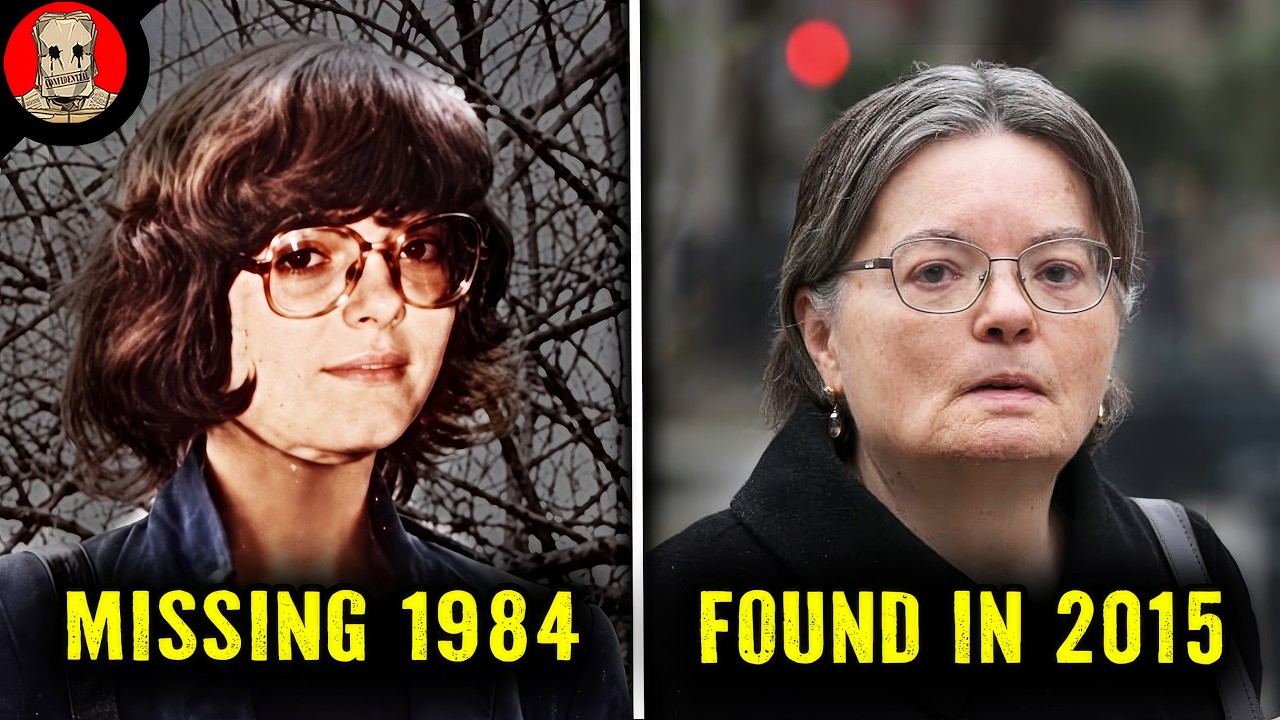
” The name meant nothing to the responding officers, but back at the station, it would make older detectives go pale. Officially, Petra Pacitka had been dead for 26 years. There was a death certificate, a convicted killer’s confession, and a grieving family. Yet here she was, alive, standing in a Dusseldorf apartment.
Petra had been a 24-year-old computer science student in West Germany in 1984. On the morning of July 26th, she handed her apartment keys to a neighbor and asked him to feed her bird while she visited her parents in Wolfsburg. She ran ordinary errands: she tried to buy a typewriter ribbon for her younger brother’s birthday, sat through two dental fillings, paid her bill, and booked a follow-up appointment. Then she walked toward a bus stop and was never seen again.
No struggle, no note, no signs of foul play. She simply vanished. The case became a national sensation. In January 1985, it was featured on a televised true crime program, and tips poured in, all of them worthless.
Then a 19-year-old carpenter’s apprentice named Gunter K. , already arrested for the murder of a 14-year-old girl, confessed to killing Petra as well. Although he later recanted and never produced a body, the police accepted the confession. In 1989, with no hope remaining, Petra’s parents had her legally declared dead.
The family held a private funeral for a daughter who was not in a grave. For 31 years, Petra lived as Mrs. Schneider. She paid rent in cash, worked odd jobs off the books, and collected bottle deposit refunds to make ends meet.
She had no ID, no bank account, no health insurance, no tax records. She avoided doctors entirely, which was a grim irony, since her last confirmed act as a citizen in 1984 had been visiting the dentist. Her teeth were rotting when police finally found her. The details of her escape suggested deliberate planning, not a spontaneous breakdown.
Before disappearing, she had quietly withdrawn 4,000 Deutsche marks in savings and rented an apartment hours away under her assumed identity. She left her bird with a neighbor so no one would check on her apartment and trigger an alarm. She booked a dentist appointment she never intended to keep and shopped for a birthday gift she never intended to give. Every action was designed to buy time and make her trail go cold.
When she was finally caught, the legal consequences were almost absurdly minor. German law does not criminalize faking your own death unless it involves fraud. Petra had never claimed insurance money or government benefits. All she faced was a fine of up to 500 euros for violating the residential registration law.
Her mother and brother wrote her an emotional letter, begging her to come home. She refused. She would not see them, and to this day, she has never explained why she chose to spend three decades scavenging for bottles rather than speak a single word to her own family. A similar story unfolded in Cape Town, South Africa, where a 17-year kidnapping case was cracked by a teenage selfie.
On April 28th, 1997, an 18-year-old mother named Celeste Nurse gave birth to a daughter, Zephany, at Groot Schuur Hospital. The family was overjoyed. Two days later, a woman in a nurse’s uniform entered the maternity ward, picked up the infant, and walked out. The day before, the same woman had tried to take a different baby but had been confronted by that child’s alert mother.
Nobody connected the two incidents. The kidnapper, Lavona Solomon, had suffered a miscarriage months earlier but had never told her husband. She faked the remainder of her pregnancy, and on the day she stole Zephany, she went home and presented the stolen three-day-old baby as her own newborn. She raised the girl as Misha Solomon in a Cape Town suburb just a few miles from the Nurse family.
For 17 years, the Nurses held a birthday party every April 28th, pleading for information, while their daughter grew up as someone else’s child. The case broke in January 2015 when Zephany’s younger biological sister, Cassidy, started high school. Students kept stopping her to say she looked exactly like a senior named Misha Solomon. The two girls met, became friends, and took a selfie.
When Cassidy showed the photo to her father, Mourn, he recognized the face he had been searching for in age-progression sketches for almost two decades. He took the information to the Hawks, South Africa’s elite investigation unit, and a DNA test confirmed a 99. 9 percent match. Misha Solomon was Zephany Nurse.
The reunion was not the fairy tale the Nurses had imagined. Misha was devastated. The woman she had called mother for her entire life was her kidnapper, and her real family were strangers who had thrown sad birthday parties on the news. At their first meeting, she hugged them out of politeness, not love.
She publicly defended Lavona, refused to call her a monster, and kept the name Misha. Lavona was sentenced to 10 years in prison in 2016. Misha later tried to build a relationship with her biological family, but the gap of 17 stolen years never fully closed. In central Italy, a different kind of disappearance had a far quieter ending.
In November 2015, two mushroom foragers deep in the Tuscan woods near Scarlino stumbled upon a makeshift shelter: a filthy blue tarp strung between trees, plastic jerry cans catching rainwater, and a dead campfire. A man with a wild beard stepped out. He spoke perfect Spanish and introduced himself as Carlos, explaining that he had been living there since 1997. To prove it, he produced a long-expired passport and a university library card.
The man was Carlos Sánchez Ortiz de Salazar, a respected medical doctor from Seville who had suffered from severe clinical depression. In 1996, he walked out of his house without a note or a word to anyone. Spanish authorities opened a file, but there was no trail to follow. In 2010, after 14 years, his family had him legally declared dead.
Meanwhile, Carlos had crossed into Italy and simply decided to live in the forest. For 19 years, he survived under a tarp, drinking rainwater and scavenging for food. He avoided villages during the day, moving through them at night to raid garbage cans. He kept his passport, dry and preserved, for two decades, even though it was the one piece of his old identity he could have destroyed.
When the foragers found him, he calmly showed them his documents and let them take photos. Then, knowing the authorities and his family would come, he dismantled his camp and vanished deeper into the woods. His elderly mother flew from Spain to stand in the empty clearing where her son had lived. She told the press that the important thing was that he was alive and that the family would respect his freedom.
She hoped for a hug. She never got one. As far as anyone knows, Carlos has not been seen since. He remains somewhere in the Tuscan forest, still choosing solitude over the world.
An entirely different case of self-erasure emerged in Indiana in 1993. Richard Hoagland, an insurance salesman in his early 40s, was drowning in debt. Credit cards were maxed out, he had forged his wife’s signature on a fraudulent loan, and law enforcement was investigating theft allegations against him. On February 10th, he told his wife Linda he felt ill and was driving to the emergency room.
He never came back. His car was found abandoned at the Indianapolis airport. For 23 years, his family believed he was dead. Linda lost their home to the debts he had left behind, was interrogated by police who suspected her of murder, and raised their two sons under a cloud of suspicion.
Richard, meanwhile, had moved to Zephyrhills, Florida. He had rented a room from an elderly widower whose son Terry Samanski had died at sea in 1991. Using Terry’s stolen death certificate, Richard obtained his birth certificate, then a driver’s license, then property. In 1995, he married a woman named Mary Hickman under the dead man’s name.
They had a son together, and Richard bought an airplane. He was caught in 2016 after a curious nephew built a family tree on Ancestry. com and noticed records under Terry’s name dated after his death. The systems that had allowed Richard to erase himself in 1994 were the products of a pre-digital age, when states never shared records.
He was prosecuted for identity theft, not for abandoning his family, because walking out of your own life is not a crime in America. He was sentenced to federal prison. When he was released, Linda took him back to court for 23 years of unpaid child support. The magistrate issued an order for nearly $1.
9 million. Richard had destroyed two families with one lie. His first wife had spent two decades being suspected of his murder. His two sons had grown up fatherless.
His second wife learned that her entire marriage was a fiction, built on a stolen name. He wore his wedding ring from his first wife and a ring from his son for all nine years he lived as Richard King, the handyman in Rock Hill, New York, where he had vanished to after walking away from his life in Connecticut in 2013. He never called his family. He never came home.
He died of natural causes in December 2022, and only then did police discover that the quiet handyman in the small Catskills town was one of the most publicized missing men in the northeastern United States. In Fort Worth, Texas, a DNA test solved a 51-year-old kidnapping. In August 1971, 22-year-old Alta Apantenko placed a newspaper ad for a babysitter. A woman calling herself Ruth Johnson responded, sounding warm and motherly.
She failed to show up for an in-person interview, then convinced the exhausted single mother to let her pick up the 21-month-old baby the next morning. On August 23rd, a woman in long white gloves arrived at the apartment, took little Melissa Highsmith, and disappeared. For 51 years, Alta was suspected of murdering her own child. Detectives interrogated her repeatedly, and relatives whispered accusations.
She never gave up hope. In 2022, on a tip from relatives, the family took DNA tests and uploaded them to genealogy sites. A match came back to Melissa’s own children, three adults living in Fort Worth. Melissa had been raised in the same city, a woman named Melanie, by the woman who had kidnapped her.
She had endured an abusive childhood, run away as a teenager, and lost her own children to the foster system before rebuilding her life. The woman who raised her was never prosecuted. The statute of limitations for kidnapping in Texas had expired decades earlier. Alta finally received vindication and a reunion with the daughter she had never stopped loving.
Melissa reclaimed her name, but she carried the painful knowledge that the woman who had hurt her all her life was also the woman who had stolen her from a mother who would have loved her unconditionally. In Philadelphia in 2011, a software salesman named Steve Carter stumbled onto his own kidnapping by accident. He had always known he was adopted from Hawaii, but his fair skin and blue eyes never matched the half-Native Hawaiian heritage listed on his birth certificate. One night, browsing the website of the National Center for Missing and Exploited Children, he found an age-progressed image of a six-month-old boy who had vanished in 1977.
The face in the digital reconstruction was his own. The name under the photo was Marx Panama Barnes. His biological mother, Charlotte, had suffered from severe psychiatric issues. In June 1977, she had taken her baby for a walk and never returned.
She was arrested weeks later for squatting, gave a false name, and told police the baby’s father was Native Hawaiian. No one connected the arrest to the missing-person report filed just miles away. The baby was absorbed into the foster system, adopted by a military family, and raised as Steve Carter in New Jersey. A DNA test confirmed his identity 34 years after his disappearance.
He contacted his biological father, who had never stopped searching, and learned he had a half-sister. His adoptive parents remained his parents. His biological mother, Charlotte, disappeared from a psychiatric hospital in the late 1970s and has never been found. The same pattern repeated in Australia in 2013.
Federal police and FBI agents raided a home in Queensland, arrested a woman named Alexandria Geldenhuys, and told her 20-year-old daughter Samantha that she was actually Savannah Todd, a girl abducted from South Carolina in 1994 at 11 months old. The woman was Dorothy Lee Barnett, who had lost a bitter custody battle and decided to take her daughter anyway. She had fled through France, Germany, Malaysia, New Zealand, South Africa, and finally Australia, building a new identity and raising Savannah as her own, even marrying and having a second child. Dorothy kept a diary addressed to Savannah, explaining her side of the story.
She slipped only once, accidentally calling her daughter by her real name in front of relatives years earlier. That small mistake eventually led to her capture. Savannah, given the choice, refused to reject her kidnapper. She said she had a happy childhood, stood by her mother in court, and kept the name Samantha.
Her biological father, Harris Todd, had spent 19 years searching for her and keeping her nursery intact. He met a polite young stranger instead of the daughter he had lost. Brenda Heist of Leitz, Pennsylvania, vanished in February 2002 under circumstances that looked like an abduction. She had left a load of laundry running and meat defrosting on the counter, then drove to a park where she sat on a bench and cried.
Three homeless people approached her. They mentioned they were heading to Florida. She said, “Can I come? ” She left her car and never returned.
For 11 years, her husband Lee was suspected of murdering her. She was declared legally dead in 2010. She had been living on the streets of Florida the whole time, using fake names, sleeping under bridges, and eating from dumpsters. When she finally turned herself in to a police station in 2013, her daughter Morgan publicly said she wished her mother would rot in hell.
In St. Catharines, Ontario, a man walked into a social worker’s office in January 2016 and said he had been having strange flashes of memory. He thought his name might be Edgar Latulip. The social worker typed the name into Google and found a missing-person poster from 1986.
Edgar was a 21-year-old man with developmental delays who had vanished from a Kitchener group home. He had walked to the Niagara region, slipped, hit his head, and lost all memory of who he was. The Canadian system gave him a new identity and a new life, just 75 miles from his mother, who had spent 30 years believing he had drowned at Niagara Falls. He had been sitting in front of a social worker, in the care of the state, for years.
The case was cracked by a memory and a search engine. None of these people were victims of crime in the traditional sense. Some were abducted, some walked away, and some simply lost themselves. The systems built to find them failed for decades.
In the end, it was a burst of memory, a DNA test, a teenage selfie, a family tree on a genealogy website, or a Google search that brought the truth to light. The answers, when they came, did not always bring comfort. They brought knowledge, and for the families who had waited, sometimes that was the only thing that mattered.