In the spring of 2024, Chuck Weller, a 71-year-old retired bartender in Joplin, Missouri, sat at his kitchen table and called the Jasper County Sheriff’s Office cold case tip line. He asked if they still had the file on Loretta Marsh. They did. Weller had a reason for calling, and it had taken him nearly three decades to act on it.
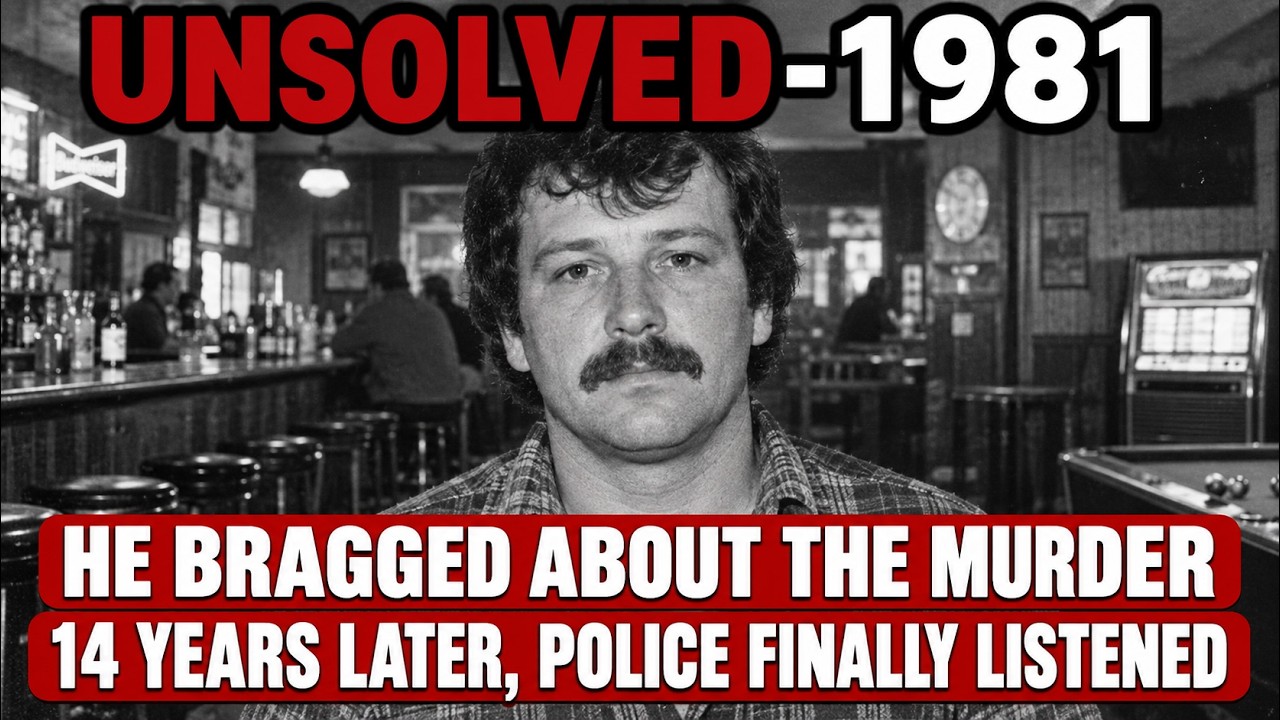
Weller had spent eleven years tending bar at O’Brien’s Tavern, a dim, unremarkable drinking establishment that could have been found in any midsize American city. He knew the regulars by their patterns rather than their lives. One of those regulars was a 43-year-old HVAC worker named Glenn Parish, a quiet, divorced man who came in two or three nights a week. On a Thursday night in November 1995, Parish sat with a man Weller did not recognize.
Their conversation dropped to a low register. Weller was not listening, but he caught part of what Parish said anyway. The words had a quality that made them arrive regardless. Parish claimed he had been careful, that no one would ever find it, that the woman next door had never known it was coming, and that by the time anyone asked him about it, he had already been home long enough that it did not matter.
At that moment, Parish looked up, made eye contact with Weller across the bar, and stopped talking. Weller did not call the police. He was not certain enough of the context, and he told himself he had heard a drunk man say something that probably meant nothing. He went home.
But he carried those words for twenty-nine years. By 2024, his cardiologist had made clear that his heart was running out of time to put off certain things. He decided he could no longer justify holding what he knew. To understand why those words landed the way they did, it is necessary to go back to Joplin in 1981.
The city was a working-class community of about 40,000 people, built on mining and rebuilt on manufacturing. Loretta Marsh was 38 years old that summer, a woman whose routine held her family together. She worked the day shift at a plastics factory, a physically demanding job she had held for nine years and performed with efficiency. She was divorced and raised three children alone, Donna, 14, Carl, 11, and May, 7.
She planned for every emergency. A neighbor’s name and number were stuck to the refrigerator. An aunt lived two blocks away for the evenings the shift ran late. A ten-dollar bill sat in an envelope in the kitchen drawer, and a second ten was hidden in the medicine cabinet, because one backup was never quite enough for Loretta Marsh.
Her nearest neighbor was Glenn Parish, 29 at the time, who had moved into the duplex next door eight months earlier. He was quiet and helpful in the early months, shoveling the shared walk without being asked. Loretta told him which nights she worked late and which nights she was home, the way neighbors do, so he would know whether her lights were expected to be on. He knew her schedule.
On the evening of July 14, 1981, Loretta came home from the factory around 5:30. Her children were staying with her mother for two weeks, a summer arrangement Loretta’s mother insisted on. Loretta had told a coworker she planned to make a real dinner and sit in the quiet for once. She was found the following morning by that same coworker, who had come to give her a ride to work and received no answer.
The door was unlocked. What the coworker found would stay with her for a very long time. Glenn Parish was interviewed by police the next day. He said he had been home all evening and heard nothing unusual.
A search of his apartment produced nothing. There was no physical evidence connecting him to the crime, no witness, no motive that could be proven to the standard required for a charge. The investigation ran for eight months and produced no arrest. The file listed Parish as a person of interest, a notation that was careful and indirect.
The case went inactive. Loretta’s three children were raised by their grandmother. They grew up with the unanswered question, the shape of their mother’s absence as familiar as any piece of furniture. The Jasper County Sheriff’s Office reviewed the case twice in the 1990s, in 1993 and again in 1998.
Both reviews produced no new information, and Parish was noted both times as a person of interest cleared by the absence of physical evidence. He remained in Joplin both times. After the Thursday in November 1995, Parish never said anything like that again in Weller’s presence. He stayed the same, quiet and unremarkable.
He eventually ran his own HVAC operation before retiring, remarried in 2001, and lived in a house in South Joplin that looked like all the other houses in the neighborhood. By 2024, he was 72 and still in Joplin. After receiving Weller’s call in April 2024, the cold case was assigned to Detective Yolanda Perkins of the Jasper County Sheriff’s Office, a 46-year-old investigator with seven years of cold case experience. She drove to Weller’s house on a Friday afternoon and listened to him for two hours.
He could not quote Parish’s words verbatim after twenty-nine years, but he said it was close, the way certain things lodge in the mind almost completely. The core of it was that Parish believed no one would ever find what he had done, that the woman next door never knew it was coming, and that he had already been home long enough that it did not matter. Perkins pulled the original Joplin PD file. She found the person of interest notation on Parish.
She also found that the original investigation had collected a DNA reference sample from Parish in 1981 as part of routine processing, a standard swab cataloged and placed in evidence storage, never re-examined in the forty-three years since. The biological material from the Marsh scene, collected in 1981, was also still in the evidence archive, preserved through two building moves and three file audits. In 1981, DNA profiling did not exist. By the time it became available in the 1990s, the case was inactive and nobody with the authority to order testing had reason to do so.
The file notation had classified Parish as cleared on the basis of no evidence, not exculpatory evidence, so the case never rose to the top of the review queue. Perkins submitted both samples to the Missouri State Highway Patrol Crime Laboratory in May 2024. The results returned in July. The DNA from the Marsh scene matched Glenn Parish’s 1981 reference sample.
The match was clear and complete. It had been possible in theory to run this test for thirty years. Nobody had ordered it because nobody knew what Chuck Weller had heard in a bar on a Thursday night in November 1995. And nobody knew that until Weller picked up the phone in April 2024 and said he did.
Detective Perkins drove to Parish’s house in South Joplin on a Wednesday morning in August 2024 with a colleague and a warrant. Parish was 72, in his kitchen. When she showed him the warrant, he looked at it for a long time. Then he asked if Chuck Weller had called.
He was arrested and charged with first-degree murder. The case would proceed through the Jasper County court system. Loretta Marsh’s daughter, Donna, was the first sibling reached after the arrest. She was at work in Joplin.
She had stayed, as all three children had stayed, because Joplin was where their grandmother was and where their mother had been. She asked about the bartender, who he was, why he had waited so long. When Perkins told her, Donna said she understood. She was glad he called before he ran out of time.
Glenn Parish had carried what he did for forty-three years without it being visible from the outside in any way that anyone who knew him could have identified. In 1995, something shifted. It may have been the drinks, or the presence of a man he trusted, or fourteen years of carrying something that needed to be felt by someone else. The bartender was washing glasses on the wrong side of the counter.
Parish looked up, saw Weller across the bar, and stopped talking. Both men maintained the arrangement. Parish because he understood from the look that Weller had heard enough to matter. Weller because he was uncertain.
That understanding held for twenty-nine more years, until Weller was 71 years old and his cardiologist had given him a timeline, and he decided that holding it was no longer a position he could justify. In a strange way, that is what justice often looks like. Not a dramatic confrontation, not a system catching its own failure at the moment of the failure, but an old man at a kitchen table who decided he had held something long enough, and that the cost of holding it longer was higher than the cost of saying it.
He made that calculation with his own mortality on the table, for Loretta Marsh, who had made backup plans for every emergency and had not gotten the chance to use the one she would have needed that Tuesday evening in July.