On the night of October 23, 1930, Joe Aiello stepped out of an apartment house on North Colmar Avenue in Chicago, a hideout he had occupied for weeks while waiting for a taxi that was to move him one more time. He was forty years old, hunted, and planning to flee to Mexico. Then the windows across the street came alive. Thompson machine guns opened fire from rented rooms, and bullets tore across the doorway like metal rain.
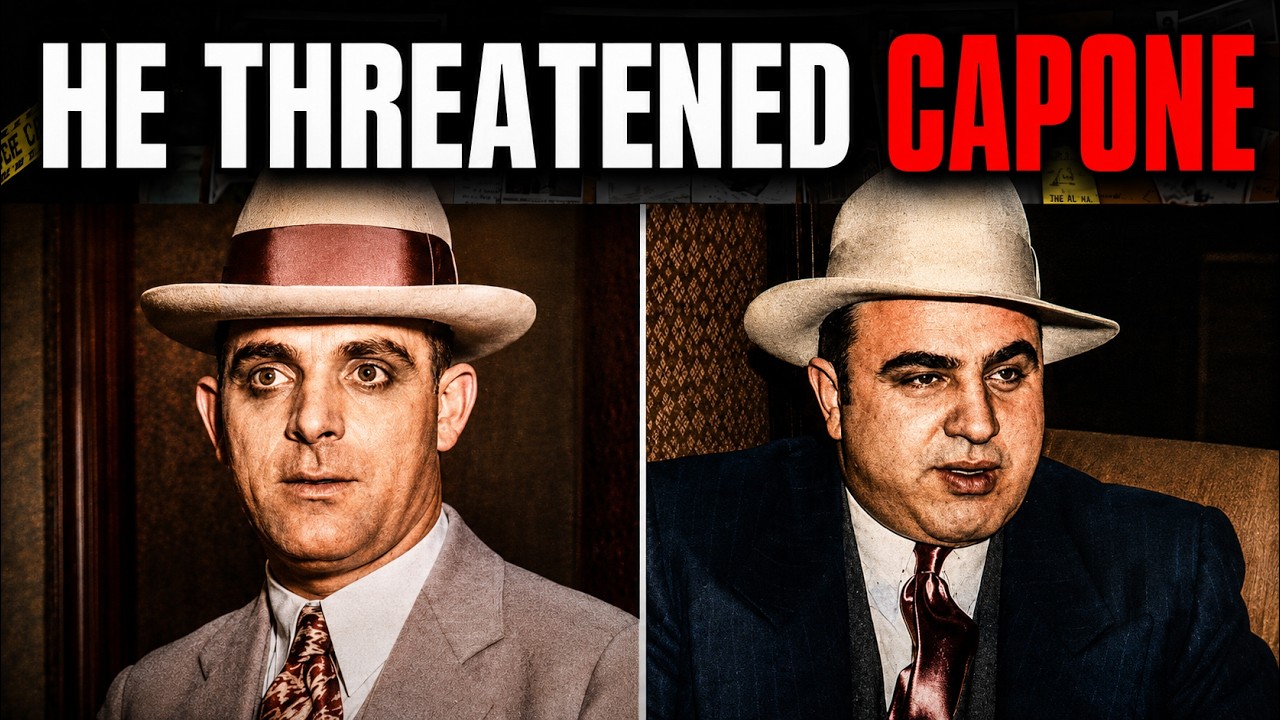
Aiello ran toward the gangway, but another gunman was waiting at a second angle. When the street went quiet, the exact count remained disputed. Some accounts said more than fifty shots were fired. Time reported fifty-seven holes and more than a pound of lead in his body.
The Chicago Crime Commission archive said fifty-nine wounds. It was the sixty-first gang-related killing in Chicago that year. Giuseppe Aiello was born in Bagheria, Sicily, in 1890. He came to the United States and joined a family network that moved between New York and Chicago.
The Aiellos were merchants, dealing in olive oil, cheese, and sugar, ordinary goods on paper but gold during Prohibition. After the Eighteenth Amendment took effect in 1920, alcohol became an underground empire. Beer needed breweries, whiskey needed stills, cheap spirits needed fermenting mash, and mash needed sugar. That made the grocer important.
A man with access to sugar was not just selling supplies; he was feeding the stills. Buy sugar through a legitimate importing business, move it along ordinary routes, sell it to illegal distillers, and the money came from volume. But once sugar became underworld currency, every bag raised questions of who got supplied, who got cut off, who paid tribute, and who answered to whom. Aiello understood this better than most, and so did Antonio Lombardo, known as Tony the Scourge, his business partner and later his enemy.
Lombardo was older, polished, politically useful, and close to Al Capone. Aiello burned with ambition of his own. He wanted respect, tribute, and most of all the presidency of the Unione Siciliana, a benevolent society that had started as a help network for Sicilian immigrants, promising burial benefits, community support, and political access. In Chicago, that noble shell became a prize.
The president could influence votes, pressure businessmen, settle disputes, collect tribute, and decide which gangsters were legitimate. To outsiders it looked like a society. To gangsters, it looked like a crown. And that crown had already killed most everyone who wore it.
Capone wanted the Unione but could not claim it himself. He was not Sicilian but Neapolitan by family background, and that mattered in the old country politics of Chicago’s underworld. So he needed a man who could sit in the chair and still answer to him. In November 1925, Tony Lombardo became that man.
To Aiello, this was an insult. He believed he had earned the place through family, business ties, Sicilian standing, and money channels. Lombardo had Capone. That one fact turned a friendship into a feud and a business partnership into a death sentence.
At first, Aiello did not attack like a loud street boss. He attacked like a merchant who understood leverage. In 1927, he allegedly tried to reach Capone through the kitchen of Joseph Diamond Joe Esposito’s Bella Napoli Cafe, a restaurant Capone was known to favor. Reports say Aiello offered the chef between $10,000 and $35,000 to put prussic acid into the soup meant for Capone and Lombardo.
The money was real enough to change a working man’s life. The opportunity was routine, the inside connection was a chef who could get close without a gun, and the execution would have been invisible. But the chef talked. Instead of killing Capone, the plan warned him.
That was Aiello’s first catastrophic mistake. He had tried to poison a man whose entire empire depended on proving that betrayal had a price. Capone answered in language Chicago understood: gunfire. Aiello family businesses were shot up.
One attack sent hundreds of bullets into the Aiello brothers’ bakery on West Division Street and wounded a family member. Aiello did not back down. He escalated. He reportedly offered $25,000 to gunmen willing to kill Capone and Lombardo, then raised the number to $50,000 for anyone who could eliminate Capone.
That sum was not a rumor in that world. It was a magnet, pulling in ambitious killers from outside Chicago who thought the famous Scarface could be turned into a payday. But Capone had his own intelligence service in Frank Nitti, Jack McGurn, and paid eyes around the city. Hit men arrived, some were followed, some were identified before they got close, and several ended up dead.
The hunter list became a casualty list. Aiello was spending money to hire killers, and Capone was spending information to bury them. Jack McGurn, born Vincenzo Gibaldi, was a boxer turned Capone gunman with a professional’s lack of hesitation. When Aiello put out the bounty, Capone sent McGurn to intercept out-of-town hit men.
Capone’s strength was not just brutality; it was surveillance before brutality. By late 1927, the war was spreading. Capone’s side killed or wounded men around Aiello. Aiello’s brothers Robert and Frank were gunned down in Springfield, Illinois.
Raids found guns and ammunition. Police arrested suspects, bonds were posted, lawyers appeared, and men disappeared. This was not a clean gang war. It was a rotating system of ambushes, warnings, revenge, and paperwork.
One scene captures the psychology of the feud. After police picked up Aiello in connection with murder conspiracy, Capone men appeared near the police station. Louis Little New York Campagna, a feared Capone bodyguard, was placed close enough to Aiello for the message to be understood. A hidden officer who understood Sicilian reportedly heard Campagna tell Aiello, You’re dead, friend.
You’re dead. Aiello pleaded for time. He wanted fifteen days to sell his stores and house. He mentioned his wife and baby.
For a while, Aiello ran. He moved between New Jersey, New York, and Chicago, not just hiding from Capone but trying to keep his political claim alive. Then came September 7, 1928. Antonio Lombardo was shot down in broad daylight near Madison Street and Dearborn Street in the Loop.
His bodyguard Joseph Ferrara was also hit and later died. The murder was public, a cancellation of Capone’s Sicilian proxy in the middle of the city. No one proved in court that Aiello personally ordered it, but police, newspapers, and later historians widely tied the killing to Aiello-aligned forces with North Side help and possible New York influence. For Capone, proof was not the standard.
Suspicion was enough. The Unione chair passed again. Pasqualino Lolordo, tied to Capone, took over and was murdered in January 1929. Then came St.
Valentine’s Day, February 14, 1929, when seven men connected to Bugs Moran’s North Side Gang were lined up in the SMC Cartage garage and machine-gunned by killers posing as police. Capone was in Florida and was never convicted, but the massacre was widely seen as his operation against the North Side and part of the same web of revenge around Aiello, Lombardo, and the Unione. Aiello survived that storm, and by 1929 he finally reached the position he had chased. He took control of the Unione Siciliana.
But the title did not give him peace. It gave him visibility. Around the same time, Capone was temporarily removed from Chicago, arrested in Philadelphia on concealed weapons charges and sentenced to a year. He served months at Eastern State Penitentiary and came out in March 1930.
While Capone was away, Aiello had room to breathe. When Capone returned, that room disappeared. By 1930, the pressure in Chicago had changed. Reform groups, newspapers, federal tax men, and the Chicago Crime Commission were turning gangsters into public enemies.
On April 24, 1930, Aiello was named among the public enemies alongside Capone, Moran, and others. The list did not stop anyone from killing, but it changed the weather. Every move became public, every arrest became theater. For Capone, leaving Aiello alive created a problem.
Aiello had tried poison, backed gunmen, challenged Lombardo, reached the Unione presidency, and survived too long. Worse, he had shown other men that Capone could be openly defied. In organized crime, that is sometimes more dangerous than a bullet. A bullet kills one man.
Defiance spreads. Aiello knew the trap was closing. He stayed with Pasquale Patsy Presto Di Giacomo, a close associate and company treasurer, at 205 North Colmar Avenue. Reports said he planned to flee to Mexico.
His wife and child visited, and that detail may be how his enemies found him. A man can hide his own movements, but it is harder to hide family and routine. The final scheme against Aiello was a surveillance ambush. Men rented rooms across the street.
They smoked, waited, and watched the door. A second firing point covered the gangway, and a third suspected position was later discovered. The only problem was timing. Aiello had to step outside.
On October 23, 1930, he did. The taxi was expected. The front door opened. Aiello moved out.
Then the first machine gun tore into the night from a second-floor window across the street. He was hit and ran for the gangway, but the gunmen had planned for that instinct. Another shooter had the angle. The crossfire caught him.
The street became noise, smoke, dust, and shattered glass. This was not a warning. It was overkill with a signature. Buster Giacometti disappeared after the shooting and later came forward.
Police publicly suspected Capone men, though some speculation pointed elsewhere, including Moran, because in Chicago every murder had layers. But the method, the motive, and the timing all pointed back to the same reality. Aiello had made himself Capone’s permanent problem, and permanent problems in Capone’s Chicago did not retire. The aftermath was almost theatrical.
Crowds gathered for Aiello’s funeral. Reports described an expensive bronze coffin and heavy floral displays. The man who had spent years trying to become untouchable was now an object in a procession watched by neighbors, police, rivals, and the curious. His body was eventually laid to rest in Riverside Cemetery in Rochester, New York, far from the Chicago streets that consumed him.
Capone’s reign did not last forever. In October 1931, one year after Aiello’s death, Capone was convicted of tax evasion and sentenced to eleven years in federal prison. The government did not need to prove every shooting. It followed the money.
Frank Nitti, Paul Ricca, Tony Accardo, and others carried the outfit forward. The Chicago machine did not die with Capone. It professionalized. The Unione Siciliana lost the dark magic it once had.
The office that men killed for had become a grave marker. Aiello’s dream of a Sicilian crown in Chicago was exposed for what it was: a chair placed in the center of a firing range.