In May 2010, Sarah Ferguson, the Duchess of York, sat in a Mayfair hotel suite across from a man she believed to be an Indian-born businessman named Sheikh Muhammad Salem. She had just pocketed forty thousand dollars in cash from a briefcase on the coffee table, a down payment on a much larger sum: five hundred thousand pounds. What that half-million bought was access. Specifically, access to her ex-husband, Prince Andrew, the eighth in line to the British throne and the United Kingdom’s special representative for international trade and investment.
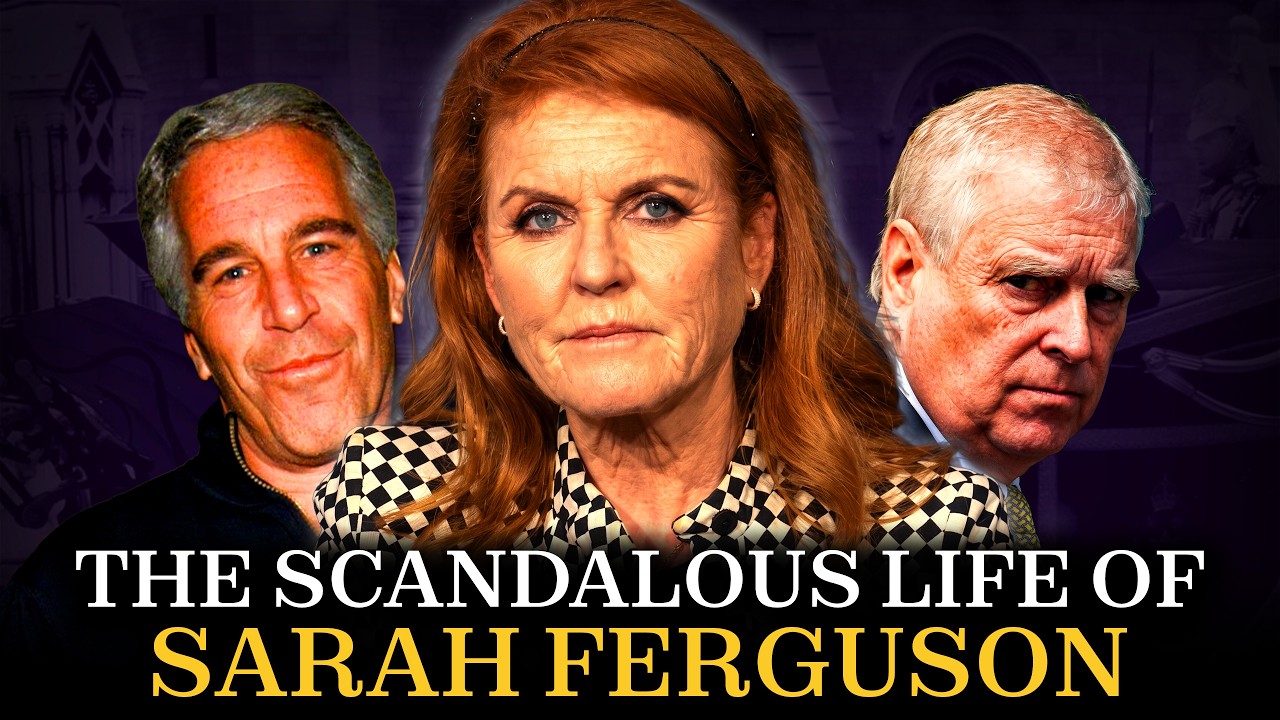
The man she believed to be a wealthy sheikh wanted a private meeting with the prince, and she was there to broker it. What she did not know was that the sheikh was actually Mazher Mahmood, the most famous undercover journalist in Britain, whose lapel held a recording device and whose name the tabloids knew as the Fake Sheikh. By the time the footage aired, Sarah Ferguson had already spent more than two decades as one of the most scrutinized public figures in Britain. Born in London in October 1959, she was the daughter of Major Ronald Ferguson, who managed polo for Prince Charles, and Susan Wright, who abandoned the family when Sarah was thirteen to run off with an Argentine polo player.
Raised in a Hampshire estate with a grieving, drinking father, Sarah developed a loud, hearty personality that carried her through boarding school and into a string of ordinary jobs in public relations and publishing. She was perpetually short of money, the kind of upper-class broke that made rent a genuine concern. Her path to the monarchy ran through her childhood friend Diana Spencer, who married the Prince of Wales in 1981 and promptly tried to set Sarah up with her new brother-in-law, Andrew. The match worked.
At Royal Ascot in June 1985, the Queen seated them next to each other on purpose, and Andrew, a freshly returned Falklands War hero who found royal dinner parties stifling, was charmed by Sarah’s loud laugh and unapologetic appetite. By March 1986 they were engaged. On July 23, 1986, they married at Westminster Abbey before five hundred million television viewers, and the Queen made Andrew the Duke of York and Sarah the Duchess of York. The wedding gift from the Crown was Sunninghill Park, a thirty-million-pound estate in Berkshire that the couple nicknamed South York because it resembled a Texan ranch.
The happiness lasted about eighteen months. Andrew returned to active naval duty, disappearing for months at a time, and Sarah, at twenty-seven, found herself alone in a thirty-million-pound house with no real job and no children. Princess Beatrice arrived in August 1988, Princess Eugenie in March 1990, but two babies did not fix a marriage in which one partner was gone half the year. The press noticed her weight gain and dubbed her the Duchess of Pork.
Newspapers ranked her against Diana in attractiveness and found her wanting. Palace patience wore thin, and in March 1992, Buckingham Palace formally announced the separation. Five months later came the scandal that would define her. In August 1992, Sarah vacationed at a rented villa in the south of France with her two daughters and a Texan financial advisor named John Bryan.
A photographer named Daniel Angeli crouched in the bushes with a telephoto lens and captured the Duchess sunbathing topless, with Bryan leaning over her, his face close to her bare foot. The Daily Mirror published the pictures on August 20, 1992, claiming Bryan stood accused of sucking the Duchess’s toes. The phrase entered the English language overnight. The Queen reportedly threw her newspaper across the breakfast table at Balmoral, where Sarah happened to be sitting with the royal family at that exact moment.
Sarah left within twenty-four hours and did not return for years. Bryan denied for three decades that any actual toe sucking ever occurred, explaining that he had been playing a game called Cinderella with the children and that no toes entered his mouth. The denial never mattered. The nickname followed her for the rest of her life.
The divorce came through on May 30, 1996. Sarah publicly claimed for decades that she received a settlement of around fifteen thousand pounds a year, a story she repeated on Oprah and in magazines for thirty years. In 2010, however, The Sunday Telegraph reported, citing senior royal sources, that the real settlement had been substantially more generous: a five-hundred-thousand-pound payout for a house, a one-point-four-million-pound trust fund for her daughters, and another three hundred fifty thousand in cash, totaling over two million pounds in 1996 money. The palace stayed silent, and the two versions never reconciled.
That same year, she signed a publishing deal for her autobiography, My Story, with an advance widely reported at two-point-two million pounds. She followed it with children’s books about a character named Budgie the Little Helicopter, filmed Weight Watchers commercials that reportedly paid several million dollars, and turned herself into a one-woman commercial enterprise. A tea company. An organic skincare line called Ginger and Moss.
A wellness app. A romance novel. Guest-hosting stints on American daytime television. She paid off her reported four-million-pound debt, bought a place in New York, and rebranded the toe-sucking Duchess as the entrepreneurial Duchess.
Then she met Jeffrey Epstein. The introduction came sometime in the early 2000s, when Epstein paid off a fifteen-thousand-pound debt Sarah owed to a former assistant. She would later insist she knew nothing about the federal investigation that had opened in Palm Beach, Florida in 2005. But on July 18, 2006, Sarah hosted the eighteenth birthday party of her daughter Beatrice at Windsor Castle, with the Queen, Prince Philip, Charles, Camilla, and most of the royal family in attendance.
Also on the guest list were Ghislaine Maxwell and Jeffrey Epstein, who walked through the doors of the Queen’s residence while an active police investigation and an FBI inquiry into him had been underway for more than a year. Sarah pointed the finger at Andrew, saying she did not approve the guest list. The damage was done. In March 2011, the Evening Standard published an interview in which Sarah condemned Epstein in the strongest terms, telling the paper, “I abhor pedophilia and any sexual abuse of children and know that this was a gigantic error of judgment on my behalf.
” She promised to repay the fifteen thousand pounds and have nothing further to do with him. But when Epstein-related correspondence was unsealed after his death in 2019, an email from Sarah to Epstein surfaced, dated shortly after her public condemnation. In it, she called Epstein her “steadfast, generous, and supreme friend. ” Her spokesperson explained the contradiction by claiming Epstein had phoned her after the Standard piece ran and threatened her in what the publicist described on the record as a “Hannibal Lecter type voice.
” The Teenage Cancer Trust, which had counted Sarah as a patron for over thirty years, severed ties permanently. Other charities followed. The royal family pulled back further. But the Epstein connection was not even her biggest scandal of that era.
That distinction belonged to the Mayfair hotel suite. When the News of the World published the full video of the Fake Sheikh sting on May 23, 2010, the footage showed Sarah accepting forty thousand dollars in cash, saying she had not got a pot to piss in, calling the half-million-pound fee a lick of the spoon, and telling the journalist that Andrew himself had set the figure. On camera, she said plainly: “Andrew said to me, ‘Tell him five hundred thousand pounds. ’” Andrew, who was at a state dinner in Paris when the story broke, denied knowing anything about it.
His staff brought him the newspaper at the table, and by every account, he turned pale and said nothing for the rest of the evening. Sarah issued a statement calling her conduct a serious lapse in judgment, then flew to America for an interview with Oprah, where she cried, apologized, explained she had been drinking, and said she needed help. Six years later, in November 2016, she sued the journalists who had exposed her, claiming the sting had been unfair and that illegal methods had been used. Her court filings named two cartoon production deals she insisted the scandal had ruined, shows called Sophie on Safari and Fergie’s Farm, and a ninety-million-pound private equity deal for which documentation never materialized.
The case settled quietly. By that point, Mazher Mahmood himself had been convicted in a separate case for perverting the course of justice, and her lawyers exploited that fact relentlessly. Throughout all of it, she never left her ex-husband. In 2004, Andrew took a seventy-five-year lease on Royal Lodge, a thirty-room mansion on the grounds of Windsor Great Park that had been the Queen Mother’s residence until her death in 2002.
Sarah moved in with him that same year and never left. They had divorced in 1996, but by 2026 they had lived together continuously for twenty-two years. They were not, as far as anyone could tell, romantically involved. They told interviewers they were the happiest divorced couple in the world, raised their daughters in the house, walked their dogs together, and appeared at Royal Ascot together every June.
The late Queen made no issue of it. King Charles, who had never liked Sarah, tolerated the arrangement while his mother lived. After her death in September 2022, the tolerance ended. Charles could not legally evict Andrew, who still had roughly fifty years on the lease, but he could cut Andrew’s allowance and stop paying for his security detail, making life at Royal Lodge expensive and uncomfortable.
By late 2025, palace insiders described the situation as a standoff. Charles wanted them out. They refused to leave. As of May 2026, they remained inside.
Sarah’s financial dealings continued to generate headlines. In March 2020, high court documents revealed that a theater investment firm called Gate Ventures, of which she was a director, had transferred what a judge called unexplained loans to her personally and to her brand. Two hundred eighty-seven thousand pounds to her directly. Two hundred thirty-two thousand to Ginger and Moss.
Half a million to the same ventures. The company collapsed soon after. The matter settled without a criminal finding, but the numbers remained public. In the summer of 2023, Sarah received a diagnosis of breast cancer.
She went public quickly, underwent a mastectomy, and recovered after the doctors caught it early. Six months later, in January 2024, came a second diagnosis: malignant melanoma, a second cancer unrelated to the first. She posted on social media that she felt grateful her family was supporting her and that she would be okay. As of May 2026, she had beaten both cancers.
She was out speaking at women’s health conferences across Britain, doing podcast interviews, telling her version of her own story, four times a grandmother through Beatrice and Eugenie, whose devotion to her never wavered. At sixty-six years old, after four decades of scandal, bankruptcy, rehabilitation attempts, cancer, and relentless hustling, Sarah Ferguson was still going. The divorced couple still lived together at Royal Lodge, waiting to see whether the King would finally force them out, and the woman who once told the world she had not got a pot to piss in remained, somehow, inside the gates of Windsor.