On a clear afternoon on 116th Street in Harlem, Frank Lucas walked up to a 270-pound gangster named Tango, pulled a .45, and aimed it directly between the man's eyes. Before the big man could finish his sentence, Frank ended the argument for good.
Four shots rang out in broad daylight. The crowd went silent. Tango's body fell to the pavement. Frank Lucas bent down calmly, took $20,000 from Tango's pocket, and walked back across the street to finish lunch with his brothers.
That moment in September 1968 changed everything in Harlem. What most people never hear about the shooting is why Frank did it, what Tango said that sealed his fate, and how a single act turned Frank Lucas from Bumpy Johnson's driver into the most feared drug lord in New York.
Tango was no ordinary hustler. He was towering, 270 pounds of muscle and arrogance, with a bald head that caught the sun like a warning sign. People crossed the street when Tango came through. He had been dealing drugs in Harlem since the early 1960s, had Italian connections, and genuinely believed he was untouchable.
At Bumpy Johnson's funeral in July 1968, Tango made his first mistake. Frank was there to pay his respects. Tango set his glass on the piano without a coaster. Frank wiped up the ring it left. As Frank turned away, Tango called out: "Frank, while you're there, light my cigar too."
Bumpy had barely been buried, and Tango was testing Frank, seeing whether he would take Bumpy's place or stay a driver and a servant. Frank said nothing. He just looked at Tango for three seconds, then walked away. But everyone knew something was coming.
Three weeks later, Frank returned from Thailand with "Blue Magic," the purest product New York had ever seen, 98 percent pure. His brand was making him rich, and he needed distributors. Frank gave Tango a territory. The deal was simple: sell Blue Magic, and Frank gets 20 percent. It was not a partnership. That was how things were supposed to work.
Tango had other ideas. He still thought he was the strongest man around. When Frank's debt collectors came for the 20 percent, Tango laughed. He told them to tell that driver that if he wanted his money, he should come get it himself.
Frank was not like the flashy gangsters. He moved in silence. Every morning he sat in his Lincoln parked across from Tango's spot on 116th Street, watching. He wore disguises: a garbage man, a mailman, sometimes just a bum. Frank called that car "Nellie Bell." From inside it, he learned everything.
Tango came to 116th Street every day at noon. Same time, same route, same store to buy a Coke and a meat sandwich. He was predictable. And predictable men do not live long in that business.
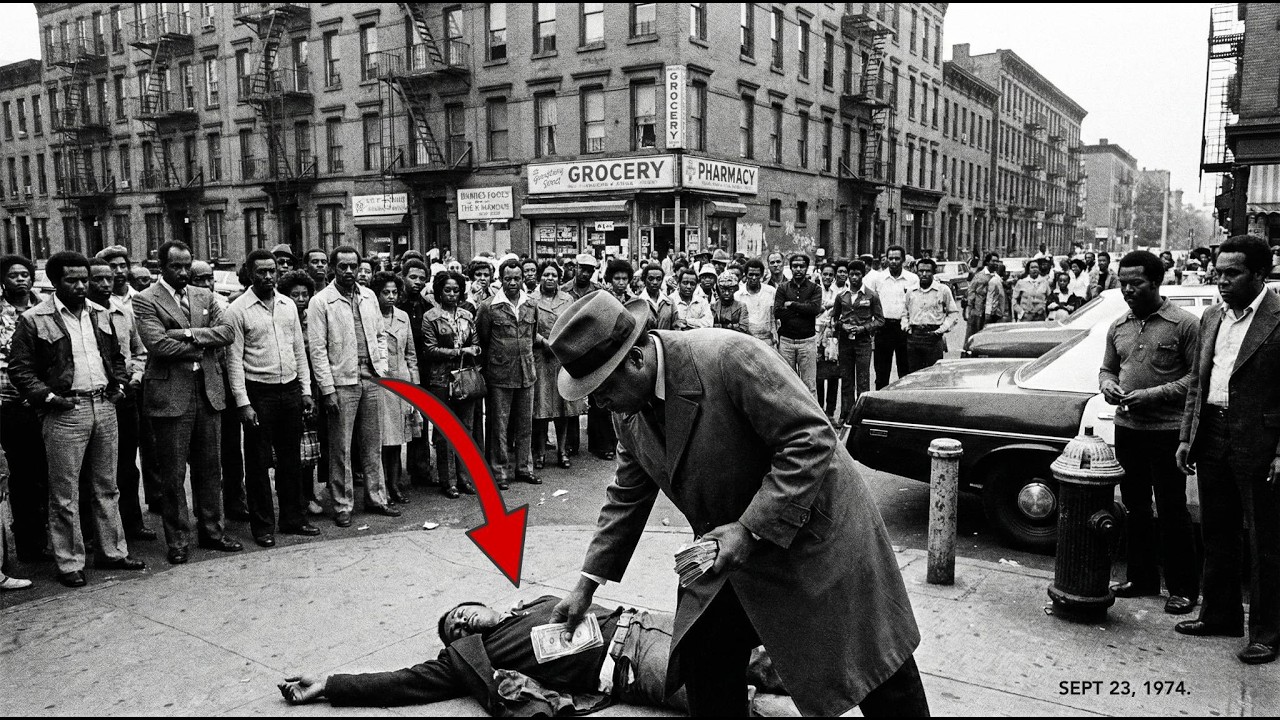
September 12, 1968, was a hot Thursday, one of those late-summer Harlem days when the heat sits on you like a wet blanket. Frank's brothers had just arrived from North Carolina. Richie, Huey, and Turner were all sitting in Sylvia's cafe on 116th Street celebrating. Blue Magic was printing money: $50,000 a week, then $100,000, then more.
But there was a problem across the street. Frank was eating fried chicken when he saw Tango walking down 116th. That familiar swagger. Three men with him. Frank set the chicken aside and wiped his hands. His brother Huey noticed. "Frank, where are you going?" Frank did not answer. He stood, adjusted his jacket, and walked out.
Frank crossed the street. Tango saw him coming and that wide smile spread across his face, the smile of a man who thinks he is in control. Tango's crew stopped walking. They formed a loose half-circle, casual but ready. There were about 40 people on that sidewalk: elderly women with shopping bags, kids playing ball in the street, a mailman, and a street vendor selling incense and bootleg cassette tapes. An ordinary Thursday afternoon in Harlem.
Tango spoke loudly enough for everyone to hear. "Well, well, well. Isn't this Bumpy's little driver? What do you want, Frank? Did you come to shine my shoes?" Tango's crew laughed, the agreed-upon laugh, the kind that says, "We back our man no matter what."
Frank stopped about six feet from Tango. His voice was quiet, steady, almost friendly. "You owe me money, Tango. 20 percent of everything you moved this month. That comes to about $18,000."
Tango's smile widened. "Eighteen grand, man. I don't owe you anything. You're not Bumpy. You're nothing. You're just a worker. And workers don't get a cut."
People on the street stopped moving. They could feel it, that electricity in the air before lightning strikes. Frank did not blink. "I'll give you one chance to reach into that jacket and pull out my money."
Tango looked at his men. They were all smiling now. This was entertainment. "Or what, Frank? What are you going to do?" Tango spread his arms wide. "We're in broad daylight, my friend. 300 people are watching us. The police could pass any minute. So what are you going to do?"
In that moment, Frank reached into his waistband and pulled out a .45. Sunlight glinted off the chrome. A woman gasped. The children stopped playing. The street vendor dropped his tapes. Frank raised the gun and pointed it straight at Tango, dead center. The smile finally vanished from Tango's face.
His men started to reach for their weapons, but Frank's voice froze them in place. "Whoever moves, Tango dies first, then you choose your own fate."

Tango tried to play it cool. He tried to bring the smile back. "Man, you're not going to do anything. You're not crazy. If you shoot me here, you'll go to prison for life. Every cop in Harlem will be looking for you. You're not that stupid, Frank."
Frank's finger moved toward the trigger. "You know what Bumpy taught me, Tango? He taught me that respect isn't about being liked. It's about being understood. You need to understand something right now."
"Understand what?" Tango asked. His voice was shaking now. Just a little, but enough.
"That I'm not Bumpy's driver anymore. I'm the king, and kings don't negotiate."
"Wait, Frank, hold on." Frank squeezed the trigger.
The first bullet cut the air like a whip, then came the thunder. Tango's head snapped back, but Frank did not stop. Bang. Bang. Bang. Four shots in total. Each one was deliberate. Each one carried a message.
Tango's 270-pound body collapsed onto the pavement. Blood pooled on the concrete, mixed with dirt and heat and the dreams of a man who thought he was untouchable. Total silence fell over the street. No one moved. No one screamed. They stood frozen, watching Frank Lucas stand over Tango.
Frank bent down, completely calm. He reached into Tango's jacket and pulled out a thick roll of money, $23,000. Frank counted it right there, standing over the body while 300 people watched. He took $20,000, folded it, and put it in his pocket. Then he took three thousand and let the bills scatter across Tango's bloodstained shirt.
Frank said to those around him, without addressing anyone in particular: "That's for your funeral." Then Frank Lucas turned and walked back across the street to Sylvia's.
He sat down at his table again, picked up his fried chicken, and took a bite. His brothers stared at him as if they had seen a ghost. The owner, a woman named Miss Dorothy, stood at the kitchen door with her hand over her mouth. Frank said quietly, "Everything's fine, Miss Dorothy. Everything's fine."

About 90 seconds later, sirens started. But when the police arrived, no one had seen anything. Not the old women, not the children, not the mailman, not the vendor. 300 witnesses, and not one description of anything. That was how things worked in Harlem.
The story spread through New York's underworld like fire. By morning, every dealer from the Bronx to Brooklyn knew. Frank Lucas had shot Tango in broad daylight, had not run, had not hidden, had taken his money, and had finished his lunch.
The Italian families called a meeting. Carlo Gambino said, "A man who kills in front of 300 people fears nothing. We're not dealing with madmen. We're dealing with professionals." That man was both.
That moment changed everything. It was not just about Tango. It was about every dealer, every cop, and every politician realizing who Frank Lucas was. He was not Bumpy's shadow. He was the storm.
Frank's Blue Magic operation exploded. Dealers who had hesitated suddenly wanted in. His brothers ran territories across Harlem, the Bronx, and Brooklyn. Within six months, Frank Lucas was making a million dollars a day.
Years later, after Frank was arrested and had served his time, an interviewer asked him, "Frank, when you shot Tango, were you afraid?" Frank smiled that cold smile and said, "Afraid of what?" Tango was already dead the moment he disrespected me at Bumpy's funeral. It took him a few weeks to find out.
That is the difference. Gangsters react. Legends plan. Frank had been planning Tango's death for three weeks while Tango thought he was winning.
Harlem's streets in 1968 were brutal. Italian gangsters were trying to take control. Corrupt police were selling drugs. Deep poverty made people do anything to survive. In the middle of that chaos stood Frank Lucas, who understood one truth: power is not given. It is taken. And once you take it, you defend it by any means necessary.
Frank built an empire that lasted seven years. From 1968 to 1975, he smuggled his product from Vietnam and made more than $400 million. But none of it would have been possible without September 12, 1968. Without four bullets in broad daylight. Without a message so clear that the whole underworld heard it.
Harlem belonged to Frank Lucas. In Harlem, respect was everything, and Frank Lucas made sure everyone learned that lesson.