In June 2000, three casino executives sat down together inside an FBI field office in Las Vegas. They represented different casinos and different players, but they shared the same problem. Each was missing millions of dollars, and each was chasing high rollers who had clean credit, real bank accounts, and long histories of paying back debts. But the names didn’t check out.
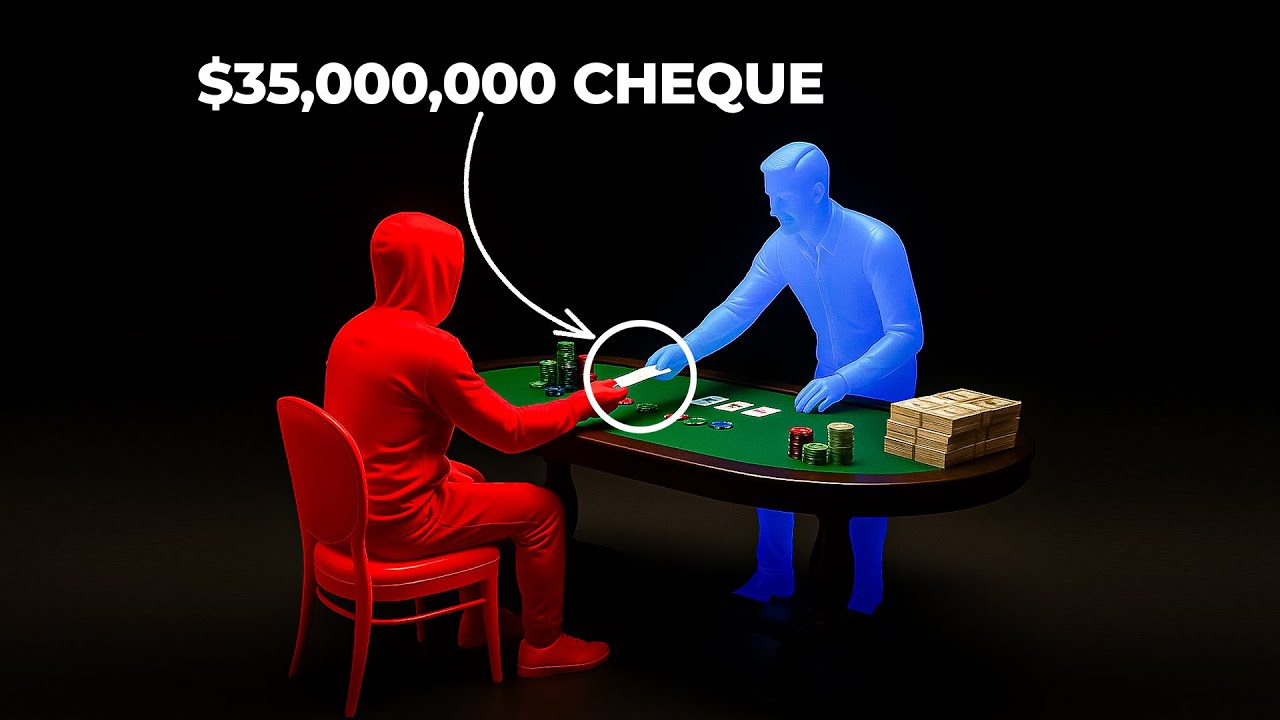
The numbers were dead. When the FBI started digging, they realized none of these men actually existed. In less than 24 hours, a crew had walked into the biggest casinos in Vegas and walked out with over $35 million in casino credit, never intending to repay any of it. There were no weapons, no hacked systems, and no cheating at the tables.
They simply built fake identities convincing enough that the casinos handed over millions willingly. The case became known as the Roselli Brothers operation, and it remains one of the most remarkable casino heists in American history. The FBI never solved it. The groundwork began around 1995 in Fort Lee, New Jersey.
Inside a penthouse apartment, a man sat alone at a desk surrounded by credit files, social security numbers, dormant accounts, and inactive profiles. None of them were his. Some belonged to the dead; others belonged to people who hadn’t used credit in years. All the records were clean.
The man’s name was Charles Kent, at least according to the paperwork, the lease, and the bank records. An answering service confirmed his existence whenever anyone called. Charles Kent was not real, but for the next four years, casinos would believe he was. The scheme was built on an understanding of casino credit.
Unlike a bank loan, casino credit is based on trust. If a person looks wealthy, acts wealthy, and leaves a paper trail to prove it, casinos will extend credit. A lot of it. The crew behind the Roselli name understood that system completely.
They called themselves Frank and Anthony Roselli, but those names weren’t real either. There were no birth certificates, school records, or family ties. The name was borrowed from Johnny Rosselli, a real-life mobster who once worked for the Chicago Outfit and had connections to the CIA. The men behind the con weren’t related to him, but they knew the name would carry weight.
It sounded like someone casinos should know, someone with money and history. That was all they needed. Before ever stepping inside a casino, they engineered identities from the ground up. Each fake name came with a luxury apartment in a known zip code, a bank account with $50,000 in verified deposits, an answering service that operated like a real office, and a fake business registered as international consulting with matching letterhead, voicemail, and a secretary.
Every detail was covered. Charles Kent, Bill Hearn, Robert Payne, and Sha Grant were all built from hacked credit data or from deceased individuals with clean financial histories. The goal was not to use these identities immediately. The goal was to build credibility slowly.
They opened accounts at multiple banks, kept the money in place, and let time do the work. Casinos don’t just hand over credit. They verify behavior over months, sometimes years. So the crew waited.
By 1996, the Rosellis made contact with the MGM Grand in Las Vegas under their new names. They didn’t ask for credit right away. They gambled small, tipped well, and lost often. Every weekend they returned.
Sometimes it was Kent at the baccarat table. Other times it was Hearn at the craps pit. Different faces, same results. Always polite, never causing problems, and occasionally winning big, just enough to keep the illusion alive.
After six months, they approached the credit office and requested a line. It was immediately approved: $50,000. They took the chips, played, and lost. But a week later, the marker was paid in full, no delay, no excuses, just a wire transfer from the same account the casino had verified months earlier.
The hosts were impressed. They extended another offer. This time $100,000. Same result.
The Rosellis kept losing but kept paying, always on time, always in full. Behind the scenes, they began applying at multiple casinos. Atlantic City, Puerto Rico, Caesars, the Bellagio. Each time, a new identity, a new credit line, the same pattern.
Look wealthy, lose chips, pay the debt. It worked. By 1998, the Roselli operation had access to over $2 million in legitimate casino credit, issued to identities that didn’t exist. They still hadn’t taken a dollar.
This wasn’t the heist. It was the setup. The longer they waited, the more they could take when the time came. By the end of 1998, the Rosellis had credit lines open in half a dozen casinos.
But two men couldn’t run the operation alone forever. They needed more names, more hands, more people who could play the part. So they expanded into a network with new members and the same plan. Every recruit had a specific job.
The primary player was the face. They walked into the casino, signed the credit marker, played the games, shook hands with the hosts, and looked like they belonged. The backup better sat at the same table on the opposite side and placed counter bets. If one lost, the other won.
On paper, they both looked like high-stakes gamblers taking real risks. In reality, the money never moved. The chip casher never gambled. They stayed close to the cashier, brought in chips in small amounts, cashed them out quietly, and left without a word.
Always under reporting limits, always invisible. Each person was trained on what to say, what not to say, how to act, where to stand, and what kind of watch to wear. Then came the front. Casinos were doing more checks, verifying employers, running background checks, making phone calls.
So the Rosellis built real businesses to support the lies. JDS Global, Worldwide Weston, registered companies with legal filings, office space, answering services, voicemail systems, business mail subscriptions, and receptionists trained to confirm everything. Charles Kent supposedly worked out of Fort Lee as a senior investment consultant. Bill Hearn had a Midtown office as a financial analyst.
If anyone called, they reached a receptionist, not voicemail. If anyone mailed a letter, it was received. If anyone looked up the company name, it appeared in business directories. Nothing led back to the Rosellis, but everything looked real.
That was the point. There were no second chances, no improvisation, and no room for error. The network moved like clockwork across states, across casinos, across aliases. The scam wasn’t just about gambling.
It was about infrastructure. And now it was ready. On December 31, 1999, Las Vegas was packed for the most anticipated night of the century. While crowds watched fireworks, the Roselli crew watched the clock.
They were spread across the Strip: Caesar’s Palace, MGM Grand, the Mirage, the Bellagio, the Tropicana, plus Puerto Rico and Atlantic City. Every identity had an assignment. They weren’t improvising. They were following a sequence rehearsed for months.
Phase one was maxing out the credit. Each alias approached the credit office with the same request: raise my line. The accounts had been active for over a year. No missed payments, consistent high-stakes play, perfect behavior.
The casino host had no reason to deny the request. So the lines went up. $50,000 became $100,000. $100,000 became $250,000.
Some reached $500,000, $750,000, and even $1 million. These weren’t suspicious. They were rewards, the kind casinos give to players they trust. The Roselli crew had spent five years earning that trust.
Phase two was placing the bets. With chips in hand, each identity hit the tables: baccarat, craps, roulette. No excessive betting, no wins that stood out, just enough action to keep the illusion alive. Each alias played fast, tossing bets, nodding at dealers, acting like they always had.
In some casinos, a second alias sat at the same table betting on the opposite outcome, offsetting the risk, maintaining the image, making it all look normal. Phase three was cashing out. Once the bets were done, the real move began. Chip after chip was brought to the cashier’s cage, but not in small structured amounts like before.
This time there were no thresholds, no caution, no IRS reporting limits. They cashed out everything. $40,000 in one window. $90,000 in another.
Six figures in chips converted to cash in minutes. No one questioned it. These were known players, players who always paid. By the time casino security started tracking the chip flow, it was already too late.
Phase four was the exit. No one stayed the night. No one returned to their hotel room. No one caught a flight under their real name.
Escape routes had been planned: cars rented under other identities, cash divided, routes mapped. Some left Nevada within hours. Some disappeared into other cities. None were ever seen again.
In the days that followed, nothing seemed wrong. The casinos assumed the markers would be repaid like always. They sent reminders, then statements, then made calls. No response.
Weeks later, it still hadn’t sunk in. Only after months of silence did the casinos start comparing notes. Different names, different states, same tactics, same credit patterns, same result. Nothing paid.
By the time they contacted law enforcement, it was too late. The FBI began its investigation in June 2000, but every trail ended the same way. The Roselli brothers had been dead since the 1980s. The names were stolen, the identities fabricated, the people gone.
No prints, no passports, no real names. Just a clean disappearance and $37 million gone. No violence. No weapons.
No alarms. Just patience, precision, and timing. The FBI dug through the records, tracking bank accounts, company registrations, phone numbers, and lease agreements. Everything seemed real until it didn’t.
The names led nowhere. Charles Kent had died in 1987. Bill Hearn’s identity had been stolen. Robert Payne didn’t exist in social security records.
The bank accounts were closed. The business addresses were empty. The office numbers were disconnected. One after another, every thread ended in the same place: a dead end.
Some of the identities were taken from the deceased. Others came from living citizens with clean credit. When the FBI reached out to them, they were just as shocked. They had no idea their names had been used to steal millions.
The official damage was over $37 million taken across seven casinos. No physical evidence was left behind. No suspects were named. No arrests were made.
The industry response was immediate. Casinos tightened their credit policies. Six-month verification became twelve. Background checks were upgraded.
Surveillance systems got new software. Transaction limits were lowered. New anti-fraud protocols were rolled out across Nevada and beyond. The scam had exposed vulnerabilities no one thought possible.
It wasn’t just that someone fooled the casinos. It was that they built the perfect lie and then vanished. The Roselli case remained open for years. Eventually, with no suspects, no evidence, and no progress, the FBI quietly closed the case in 2005.
Officially, the file is labeled unsolved. The FBI calls it one of the cleanest financial crimes ever committed in the gambling world. The crew behind it, whoever they were, were never caught.