In early June 1968, a 46-year-old woman stood under hot studio lights on a Los Angeles sound stage and waited for her cue. Her husband had been dead for six weeks. In that time, she had learned that the roughly $20 million she earned across two decades of films and records was gone.
The money had been consumed by investments she never approved, routed through accounts she never saw, and managed by men she had trusted with everything. She owed the government $450,000 in taxes. The television series she was about to begin filming was a show she had never agreed to make.
Her husband had signed the contract without telling her. Now the contract was all she had left. The name on the call sheet was Doris Day.
For more than a decade, that name had been synonymous with American optimism itself. She was the brightest smile in Hollywood and the biggest box office draw in the country. Her public image radiated such complete control that no one had ever thought to ask what was happening behind it.
No one asked because the surface was perfect. And the surface was perfect because the people destroying everything beneath it needed it to be.
This is the story of how one of the most successful women in American entertainment had her entire fortune stolen by the two men closest to her, her husband and her attorney, across 12 years of concealment, self-dealing, and financial ruin.
To understand how Doris Day ended up walking onto that sound stage with nothing left but a contract she never signed, you have to go back to Cincinnati, and to a girl who was not yet Doris Day.
Doris Mary Anne Kappelhoff was born on April 3, 1922, in Cincinnati, Ohio. Her father, Frederick Wilhelm Kappelhoff, was a music teacher and choral director. Her mother, Alma Sophia, was the one who paid closer attention to the girl's ambitions.
What Doris wanted from a young age was to dance. She was serious about it, disciplined, already training with the kind of physical rigor that would later show up in her screen work. Dancing was the plan. It was the future she could see.
Then, when she was still a teenager, a car struck the train she was riding in. The collision shattered her right leg so badly that the dancing career was over before it had properly started. She was bedridden for months.
What she had instead was time, long and painful weeks of recovery, and a mother who was not willing to let the girl sink into that emptiness. Alma arranged singing lessons with a local vocal coach named Grace Raine.
Raine recognized almost immediately that the teenager could sing with a clarity and emotional directness most professionals never achieve. The lessons were meant as rehabilitation. They became a vocation. By the time the leg healed, Doris Kappelhoff was no longer a dancer. She was a singer.
That origin matters. Her career did not begin from ambition in the conventional sense. It began from injury. She was redirected by catastrophe before she was old enough to name what had happened to her.
That rhythm, loss followed by reinvention, crisis followed by performance, would repeat across decades. What changed each time was the scale of the catastrophe and the cost of the survival.
Within a few years, she was performing with big bands under the name Doris Day, borrowed from the song "Day After Day" and chosen partly because it was easier for emcees and radio announcers than Kappelhoff. She sang with Les Brown and his Band of Renown, and the fit was immediate.
Her voice had a warmth and emotional precision that made listeners feel she was singing directly to them. By her early 20s, she had become one of the most sought-after vocalists in the country.
"Sentimental Journey," recorded with Les Brown in 1945, became one of the defining songs of the postwar era. It captured a mood the entire country was feeling: soldiers coming home, families reassembling, the fragile hope that ordinary life might resume. It made Doris Day a national name almost overnight.
She was 23 years old, already a single mother, already a survivor of domestic abuse. The public knew none of it. What the public knew was the voice, clear, bright, emotionally present, and seemingly unburdened by anything heavier than the melody.
Before the fame reached the scale that would make the later destruction so staggering, there was Al Jorden. A trombonist, he became Doris's first husband when she was still very young.
What is known about Jorden comes largely from Day's own later accounts, relayed through her autobiography and confirmed in broad strokes by people close to her. The picture is painful. She said he hurt her. She said that when she became pregnant, he pressured her to end the pregnancy, and when she refused, he became abusive.
Their son, Terrence Paul Jorden, was born in early 1942. The marriage did not survive, and Jorden later died.
In the larger arc of this story, Al Jorden might seem like a footnote. He is not. He is the first man in Doris Day's life who presented intimacy as shelter and then turned that shelter into a cage. He established a pattern she would live inside for decades.
She was gifted. She was hardworking. And she was capable of absorbing extraordinary private pain while maintaining a surface so composed that no one outside the household had any reason to suspect a thing.
That capacity for composure would serve her career beautifully. It would define the Doris Day persona audiences fell in love with. It would also make her uniquely vulnerable to the next man, and the man after that, who understood that a woman who keeps her suffering private is a woman whose suffering can be sustained indefinitely.
Terry, the boy born out of the first abusive marriage, would later be adopted by Martin Melcher and become Terry Melcher, a name that would carry its own weight in the music industry. He would go on to produce records for the Byrds, for Paul Revere and the Raiders, and for the Beach Boys.
When Martin Melcher adopted him, the family name consolidated. Terry Jorden became Terry Melcher. The boy's identity was now formally tethered to the man who controlled his mother's career.
The household that took shape around that consolidation was, on its surface, one of the most professionally successful family units in Hollywood. Doris was the star. Martin was the operator. Terry was the son growing up inside a world of money, access, and industry power.
The private version was a system of dependency in which one woman's extraordinary talent generated the wealth, and two men, her husband and increasingly her attorney, decided what happened to it.
By the late 1940s, Doris Day had moved from big band success into solo recording stardom, and Hollywood had taken notice. Warner Brothers signed her, and her first film, "Romance on the High Seas" in 1948, demonstrated something the studio had not entirely anticipated. The voice translated. She could act.
More films followed quickly: musicals, dramas, comedies. With each one, the scale of her fame expanded. By the early 1950s, she was one of the most bankable stars at the studio.
The question of who would manage the infrastructure around her, who would stand between Doris Day and the machinery of Hollywood finance, was about to be answered in a way that would determine the rest of her life. That infrastructure had a name: Martin Melcher.
She married him in 1951. By all accounts, Melcher was shrewd, energetic, and deeply attentive to the business architecture of Hollywood in a way that Doris was not and had no particular desire to be.
The appellate court would later describe him in a phrase that captures the entire marriage: her surrogate in all her business and financial affairs. Publicly, he was husband, agent, co-producer, the man who helped Doris Day navigate the transition from studio contract player to independent star.
After her contract with Warner Brothers ended, following "Young at Heart," it was Melcher who steered the decision not to renew, a move that opened the door to more lucrative and more artistically ambitious projects. From the outside, that looked visionary.
The films that followed were not just commercially successful. They were culturally definitive. Postwar America wanted warmth, optimism, romantic comedy, a woman who seemed both desirable and safe. Doris Day supplied all of it with a precision that made the whole enterprise look effortless.
"Pillow Talk" in 1959 opposite Rock Hudson essentially invented a genre: the glossy, witty, romantically charged romantic comedy in which Doris Day played a woman who was smart, independent, desirable, and somehow untouchable all at once.
"Lover Come Back" in 1961 and "That Touch of Mink" in 1962 deepened the formula. The pairing with Hudson worked because the chemistry was genuine and because the films gave American audiences exactly what they wanted at that moment.
Doris Day became the embodiment of something larger than any single role. She was the perfect image of postwar American femininity: optimistic, intelligent, wholesome without being dull, desirable without being dangerous. She was not just a star. She was a cultural ideal.
That cultural function, the fact that her image did work for America, not just for the box office, is what made the later revelation so devastating. The woman the country used as proof that the world was bright and manageable was living a private life shaped by forces she could not see, could not control, and would not fully understand until she was standing alone in the wreckage.
By the early 1960s, by one widely repeated measure, she had become the only woman in American entertainment history to be the number one box office draw and the number one recording artist simultaneously.
The entire time, the private reality was simpler and more dangerous than any of it looked. Martin Melcher was not just her husband. He was the sole conduit through which her professional and financial life passed.
Every contract, every check, every investment decision moved through Martin. Doris did not handle money. She did not review statements. She did not sit in on the meetings where her earnings were allocated, her taxes planned, her future structured.
The court would later describe her as unsophisticated in the real world of finance. That phrase describes something more specific and more human than ignorance. It describes a woman who had built her career on talent and discipline and who had consciously, perhaps even gratefully, handed the business side of her life to a man she trusted.
When the films kept earning, when the records kept selling, when the household kept running smoothly, who would stop to ask whether the foundation was sound? Not Doris, who trusted Martin. Not the studios, who saw a thriving star and a competent manager.
Success became camouflage. Prosperity became proof. And the woman at the center of the machine, the one generating all of the revenue, was the person with the least visibility into how any of it actually worked.
That blindness was not an accident. It was the product of a division of roles that had calcified over years. Doris supplied the talent and the trust. Martin managed the access and the money. And somewhere in the comfortable efficiency of that arrangement, the space for an outsider to enter and take hold of the entire system opened wide.
Jerome B. Rosenthal walked through that opening. He became the Melchers' sole attorney by 1952. Within four years, he would be not just their lawyer, but also their accountant, their business manager, their investment adviser, and their recordkeeper.
That accumulation of roles is the hinge on which this entire story turns. Each new title Rosenthal absorbed removed one more layer of independent oversight from Doris Day's financial life. A separate accountant might have flagged transactions a combined lawyer-accountant would never question.
Rosenthal occupied every chair at the table. There was no one left to object, and the man who might have objected, Martin, was incapable of it. The court would later say that Melcher was dominated by Rosenthal.
Melcher's office sat adjacent to Rosenthal's for years. They sometimes met daily. This was not the architecture of distant professional consultation. This was proximity converted into dependency, door to door, conversation to conversation, recommendation to recommendation.
The more complex Rosenthal made the financial architecture, the less capable the Melchers were of evaluating it independently. The system fed on its own opacity. Doris kept working. The camera kept rolling.
On May 11, 1956, Doris and Martin Melcher signed a set of retainer agreements with Jerome Rosenthal. The documents were short. The court would later call them simple, and the simplicity was part of the design.
In a few pages, the agreements gave Rosenthal a 10 percent interest in virtually everything the Melchers owned and earned. Ten percent of a fortune that Doris Day had built with her voice, her timing, her ability to show up on a set and make millions of people feel that the world was kinder than it actually was.
The court found that Rosenthal never adequately informed the Melchers of the implications of what they were signing. He never advised them to seek independent counsel, a step any ethical attorney would have insisted upon when asking clients to hand over a contractual share of their entire estate.
The court determined that the agreements were procured through undue influence, a legal term that sounds clinical but describes something deeply human: a person in a position of trust using that trust to extract concessions that no properly informed client would grant.
Doris later contended that she signed without reading the documents and was not even told it was a retainer agreement. Whether that claim is precisely literal or whether the truth is more layered, the result was identical. The last meaningful boundary between trusted adviser and owner-operator had been erased.
The Melchers did not experience the fracture as a fracture. They experienced it as business as usual. And business as usual is what every fracture feels like when the people inside the system are the last ones capable of seeing what the system has become.
For Rosenthal, the agreements changed everything. What had been informal influence was now contractual entitlement. Almost immediately, the money began to move in directions that served his interests as much as or more than theirs: oil and gas ventures he controlled, investment structures that funneled Doris Day's earnings through entities Rosenthal had designed and from which he quietly profited.
The pattern had been established before the retainer agreements were even signed. As early as March 1953, Rosenthal had negotiated the purchase of $3 million in Federal Land Bank bonds for the Melchers on credit at an interest rate of 4 percent.
The state bar record later revealed that Rosenthal, in the same transaction, secretly arranged a better rate for himself: 3.5 percent on a similar purchase. The conflict of interest was not incidental. It was structural.
From 1956 to 1962, the scale expanded. Rosenthal promoted oil and gas ventures through entities he controlled, including Phoenix Enterprises and Donby, names that would later appear throughout the court record as vehicles for self-dealing.
The appellate court found that the Melchers lost more than $4 million in these ventures between 1956 and 1968, while Rosenthal realized more than $400,000 in secret profits through the same structures. This was not risky investing. This was a man directing his client's wealth into entities he had built for his own benefit.

Because Rosenthal controlled the books, the statements, and the records, there was no independent source of information that might have revealed the pattern while it was still happening.
Rosenthal was supposed to provide regular financial statements. The court found that the material he did provide was inaccurate and misleading and that statements he was obligated to deliver were either late, incomplete, or never produced at all. More than $2.2 million of Melcher funds deposited in Rosenthal's trust account could not be accounted for.
The family did not just lose money. They lost the ability to know what was true about their own finances. The records that should have told Doris Day where her earnings went were in the hands of the man who had redirected them, and he was not sharing.
Between 1961 and 1968, Rosenthal induced the Melchers to keep advancing personal funds into hotel ventures: the Palo Alto Cabana and the Dallas Cabana. The state bar opinion found that he failed to disclose that the hotels were insolvent and undercapitalized, and that he had undisclosed financial interests of his own in the projects.
The Melchers' money went in. The hotels kept bleeding. Rosenthal kept recommending more capital infusions, presenting each one as the injection that would stabilize the investment. It never turned. The operating losses mounted, the mortgages deepened, and the properties became monuments to a particular kind of financial cruelty.
Martin Melcher's position in all of this grew more complicated as the years passed, more human and more difficult to judge cleanly. The court record does not describe a man who woke up one morning and decided to betray his wife. It describes a man who was in over his head.
He had delegated his own judgment to someone more confident and more fluent in the language of money, and he kept following Rosenthal's recommendations because the alternative, admitting that the system he had built his authority on was failing, would have meant confronting a truth he was not equipped to face.
Doris needed Martin to be competent. Martin needed Rosenthal to be honest. And Rosenthal needed both of them to keep trusting him, because the moment they stopped, the entire structure would collapse. It did not collapse. It held for 12 years.
By the mid-1960s, Terry Melcher was no longer a child watching from the margins. He was a young man in his 20s, building his own career in the music industry and old enough to begin sensing the contours of the household he had grown up inside.
The court record shows that after Martin's death, Rosenthal attempted to maintain control through Terry, arranging his appointment as estate administrator and then moving to remove him when Terry refused to follow Rosenthal's direction.
When Terry proved that the assumption of compliance was wrong, Rosenthal did not accept the refusal gracefully. He tried to have Terry removed from the position entirely, initiating yet another legal fight in a story already drowning in them.
That refusal was one of the first acts of genuine independence in this family's history. Terry was 26 years old, standing in the wreckage of an estate he had been asked to administer, facing down the man who had controlled his family's finances for longer than Terry had been an adult.
The late 1960s brought a shift in Doris Day's career that tightened the financial pressure further. The romantic comedies that had made her the biggest box office draw in the country were no longer performing with the same force. Audience tastes were changing.
The culture was moving toward something harder, more cynical, more overtly mature, toward "Bonnie and Clyde" and "The Graduate" and a new generation of filmmakers who had no use for the bright, frictionless world the Doris Day comedies had embodied.
The commercial momentum that had masked the financial deterioration for more than a decade was slowing, and the gap between what the public image promised and what the private ledgers showed was widening with every year that passed.
On April 20, 1968, Martin Melcher died. He was 63 years old. The death was sudden enough that the household had no time to prepare, no opportunity to settle affairs or ask the questions that might have mattered.
In the immediate aftermath, Doris Day did what any newly widowed woman would do. She grieved. She buried her husband. She absorbed the loss of the man who had been, for 17 years, the central organizing structure of her professional and personal life.
The revelation came through Terry. In the days following Martin's death, Terry Melcher, 26 years old, sat with Doris and told her what he and the new advisers had begun to discover. The picture was not merely bad. It was annihilating.
The $20 million she had earned across decades of films, records, and television, a fortune that should have been one of the largest personal estates in Hollywood, was gone. The investments were worthless or underwater. The oil ventures had bled dry. The hotels were insolvent.
Beyond the absence of the fortune, there was a presence that made the absence feel even worse: a tax debt of roughly $450,000 owed to the government, sitting on the books like a bill delivered to a house that had already burned down.
Doris Day was 46 years old. She was a widow. She was broke. And she was about to learn that the wreckage extended even further than the money.
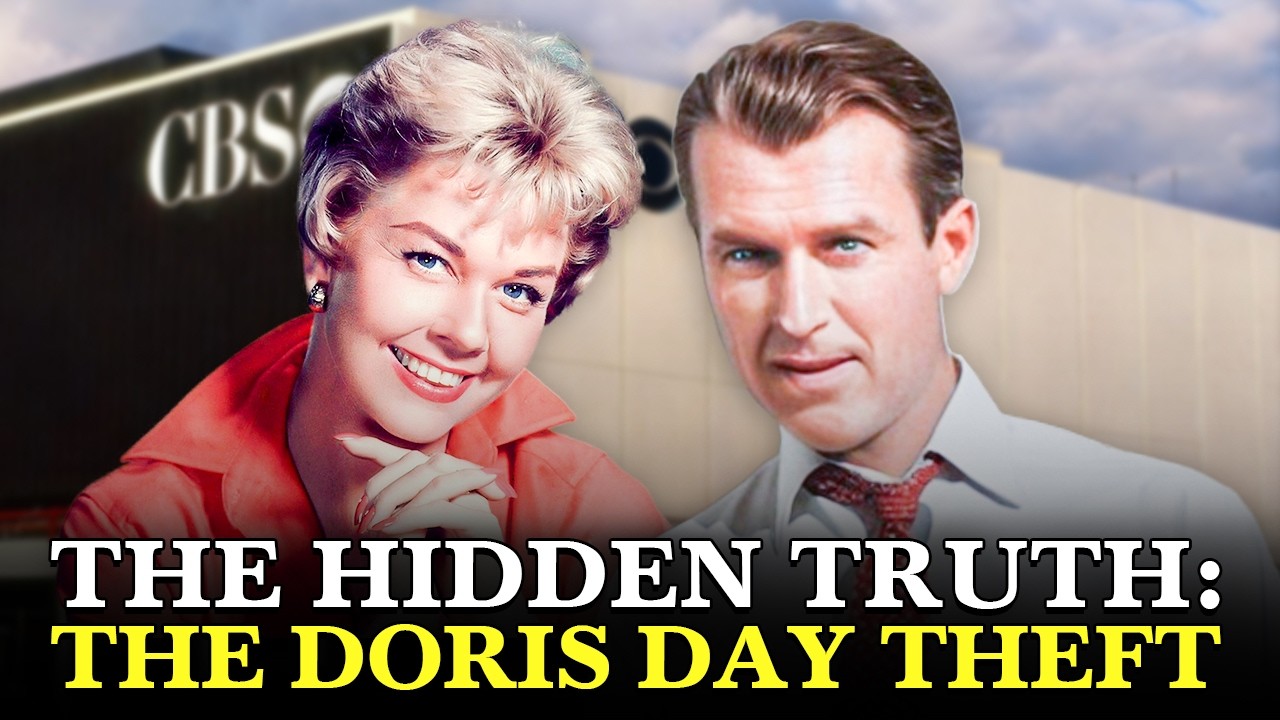
Martin, it turned out, had signed her to a contract with CBS to star in a television series. He had done this without her knowledge, without her consent, without even mentioning it. The show would become "The Doris Day Show," and it would run for five seasons. But in the spring of 1968, Doris Day did not know it existed.
The contract had been negotiated and executed by Martin, and by extension by the advisory apparatus Rosenthal had built around both of them. It was, in the most literal sense, a commitment made on her behalf by men who had decided what her professional future would look like without asking her whether she wanted it.
Because the advanced money had likely already been spent or absorbed into the financial wreckage, walking away from the contract was not a realistic option. The series was not an opportunity. It was an obligation, the last remaining asset attached to a fortune that no longer existed.
For a movie star of Doris Day's stature, television in 1968 would have felt like a step down under the best of circumstances. Under these circumstances, it was not even a choice. It was the floor catching her after a fall she had not known she was taking.
Doris Day was not simply a widow learning bad news. She was a woman discovering that the life she thought she had been living, the stable marriage, the managed career, the protected finances, the competent husband, the trustworthy attorney, had been a construct.
By mid-1968, once independent counsel had finally entered the picture, the full scope became clearer and worse. The Palo Alto Cabana Hotel was insolvent. The Dallas Cabana would be adjudicated bankrupt by May of 1969. The hotel wreckage alone would eventually cost Doris Day an unnecessary additional half million dollars.
Rosenthal himself, rather than cooperating with the new legal team, began fighting. He refused to turn over files. He refused to surrender records. He launched legal proceedings of his own, the beginning of what the appellate court would later describe as 18 separate legal actions against his former clients.
When Doris and Terry's side saw the appointment of a receiver to recover the financial documentation, sheriff's deputies went to Rosenthal's office. The man who had controlled every aspect of the Melchers' financial lives for more than a decade stood between them and the evidence. He would not unlock the file room.
A locksmith had to be called. The deputies waited while the lock was defeated, and the receiver, once inside, found material information that had been withheld: folders, statements, transaction records, the paper trail of more than a decade of self-dealing, concealment, and financial destruction.
Production on "The Doris Day Show" began approximately six weeks after Martin Melcher's death. She had buried her husband, discovered the fortune was gone, learned about the tax debt, found out about the contract she never signed, and now she was standing on a sound stage in Los Angeles in wardrobe under hot studio lights.

Nobody watching had any reason to suspect that the woman on their television screen was performing not out of creative desire, but out of financial necessity. The public saw a star calmly entering television. The private reality was that television was now debt service.
Doris and Terry renegotiated the terms of the CBS deal to gain more control over the scripts and the direction of the series. She took the obligation Martin had created without her knowledge, shaped it into something she could inhabit with professional discipline, and used it over five seasons to dig herself out of the financial hole.
In December 1968, less than eight months after Martin Melcher's death, Doris Day and Terry Melcher filed formal complaints against Jerome Rosenthal. The filings went to both the civil courts and the California State Bar.
On one side of her life, she was Doris Day, the cheerful star of a family sitcom. On the other side, she was a plaintiff in one of the most complex malpractice and fraud cases in California legal history, sitting through depositions and reviewing financial documents that revealed, item by item, what had been taken from her.
Rosenthal did not simply contest the complaints. He attacked. The appellate court would later describe what followed as a campaign of post-termination hostility that extended across 18 separate legal proceedings against his former clients.
Each proceeding required a response. Each response required attorneys. Each attorney required fees. For Doris Day and Terry Melcher, already fighting from a position of financial devastation, each new legal front opened by Rosenthal was another wound.
The civil trial began on March 4, 1974, nearly six years after Martin's death and nearly six years after the first complaints were filed. When it finally reached the courtroom, the trial ran through the summer, with session after session laying out the full anatomy of what Rosenthal had done.
The trial ended on August 30, 1974. On September 18, 1974, the court delivered its verdict: a judgment against Jerome Rosenthal in the amount of $22.8 million. It was at the time one of the largest malpractice and fraud judgments ever awarded in the state of California.
The consolidated judgment issued on March 31, 1975, encompassing all of the related claims, came to $26,396,511 including punitive damages. Both numbers are real. Both appear in the court record.
But a judgment is not a recovery. Rosenthal could not pay $22.8 million. He could not pay $26 million. He could not pay anything close. The headline number was an abstraction. The real number was much smaller and arrived much later.
In August 1977, Doris Day settled with Rosenthal's insurers for $6 million, paid in 23 annual installments. A woman who had earned $20 million over the course of one of the most successful careers in American entertainment history received $6 million back, parceled out over more than two decades.
She would receive roughly $260,000 a year before taxes and legal fees as compensation for the destruction of a fortune that had taken her entire professional life to build. The headline said she won. The reality was that winning in this case looked nothing like the number in the newspaper.
In 1985, 17 years after Martin's death, the California Court of Appeal affirmed a massive judgment in Day v. Rosenthal, a decision that remains one of the most detailed judicial anatomies of attorney self-dealing and client exploitation ever published in the state of California.
The opinion traces the entire arc: the retainer agreements, the oil ventures, the hotel sinkholes, the accounting failures, the secret profits, the refusal to surrender records, the 18 legal proceedings, the locksmith at the office door.
In 1987, 19 years after Martin Melcher's death and 19 years after the first complaints were filed, the California Supreme Court adopted the state bar's recommendation and disbarred Jerome Rosenthal. Doris Day was 65 years old by then.
Rosenthal's disbarment did not give Doris Day back the $20 million. It did not give her back the decade she spent in litigation. It closed a professional file. It did not heal a life.
What healed the life, or at least stabilized it, was work. "The Doris Day Show" ran for five seasons, from 1968 to 1973. Across those seasons, the format shifted repeatedly, from rural widow comedy to career woman comedy to something closer to the urban professional sitcoms reshaping television in the early 1970s.
Doris Day had walked onto that set as a financially devastated widow performing under duress. By the time the series ended, she had used it to pay down the tax debt, fund the legal battle, and rebuild a financial foundation that no longer depended on anyone else's management.
The irony is permanent and unresolvable. The coercion and the rescue were the same instrument. The contract Martin signed without telling her generated the income that saved her. The medium she reportedly never wanted to enter became the medium that gave her back her autonomy.
In 1976, Doris Day published her autobiography, "Doris Day: Her Own Story," written with A.E. Hotchner. The book was the first time the public heard the full private version: the abuse with Jorden, the dependency on Melcher, the Rosenthal catastrophe, the discovery of the CBS contract, the tax debt, the rebuilding.
A later documentary, "Doris Day: A Sentimental Journey," aired in 1991 and revisited the arc with archival footage and interviews. But the autobiography remains the primary text, the closest thing to an unmediated account of what it felt like to live inside the machinery that her fame had built and other people had captured.
After the television years, Doris Day did not return to Hollywood. Instead, she moved to Carmel-by-the-Sea, a quiet town on the central California coast, and turned her attention to the thing that had mattered to her for as long as anyone who knew her could remember: animals.
In 1978, she founded what began as the Doris Day Pet Foundation, an organization dedicated to animal welfare that she maintained hands-on involvement with for the rest of her life. The Doris Day Animal Foundation remains active today.
The life she built after the catastrophe looked nothing like the life that had been taken from her. She had spent the first half of her adult life inside a system of fame, management, and financial dependency. She spent the second half in a small town with animals, on her own terms.
Terry Melcher's thread runs alongside his mother's and it ends before hers does. After the legal battles in the estate crisis, Terry built a career that stood on its own, producing and songwriting in the music industry he had helped shape during the California sound era of the 1960s.
He was the son who had been born into violence, adopted into dependency, and then thrust into the role of messenger and estate administrator at 26. He was the one who told his mother there was nothing left. He was the one who refused to serve as Rosenthal's instrument when it would have been easier to comply.
Terry Melcher died in November 2004 at the age of 62 after a long battle with melanoma. His mother was 82 when she buried her only child.
Doris Day died on May 13, 2019, in Carmel Valley, California. She was 97 years old. She had outlived every principal figure in this story: the abusive first husband, the dependent second husband, the exploitative attorney, and most painfully, the son who had been her steadiest ally.
Martin Melcher had been dead for 51 years. Al Jorden had been dead far longer than that. Terry had been gone for 15 years. Rosenthal had been disbarred more than three decades earlier, and the court record he left behind remains the clearest surviving anatomy of what he did and how he did it.
The living family line now runs through Day's grandson, Ryan Melcher, who works in real estate in Carmel-by-the-Sea, the same town where his grandmother spent her final decades. In 2025, Ryan and his wife Brittany welcomed a daughter, Madison Marie Melcher.
The family name continues, but the inheritance it carries is not a fortune. It is a name, a place, a connection to animal advocacy, and the long complicated shadow of a story that began with a young woman's trust and ended in a courtroom where the cost of that trust was measured in the tens of millions of dollars and the decades it took to account for them.
There is no neat moral in any of this. What there is instead is a pattern. Doris Day was one of the most recognizable women in America, and yet the decisive facts of her own life sat in offices next to hers, in agreements she did not fully understand, in accounts she did not control, and in a television contract she said she never signed.
The public image that made her beloved, the brightness, the composure, the sense that everything was fine, was also the image that made the private destruction possible, because no one looks behind a surface that convincing. A carefully maintained facade does not just hide what is wrong. It protects the people causing the wrong, and it ensures that the person living inside the facade is the last one to know.