New York was holding its breath. For three weeks, Italian crews and Irish gangs had been cutting pieces from one another, and the violence was creeping closer to Harlem. A bookmaker had vanished in Hell’s Kitchen. A warehouse had burned near the river.
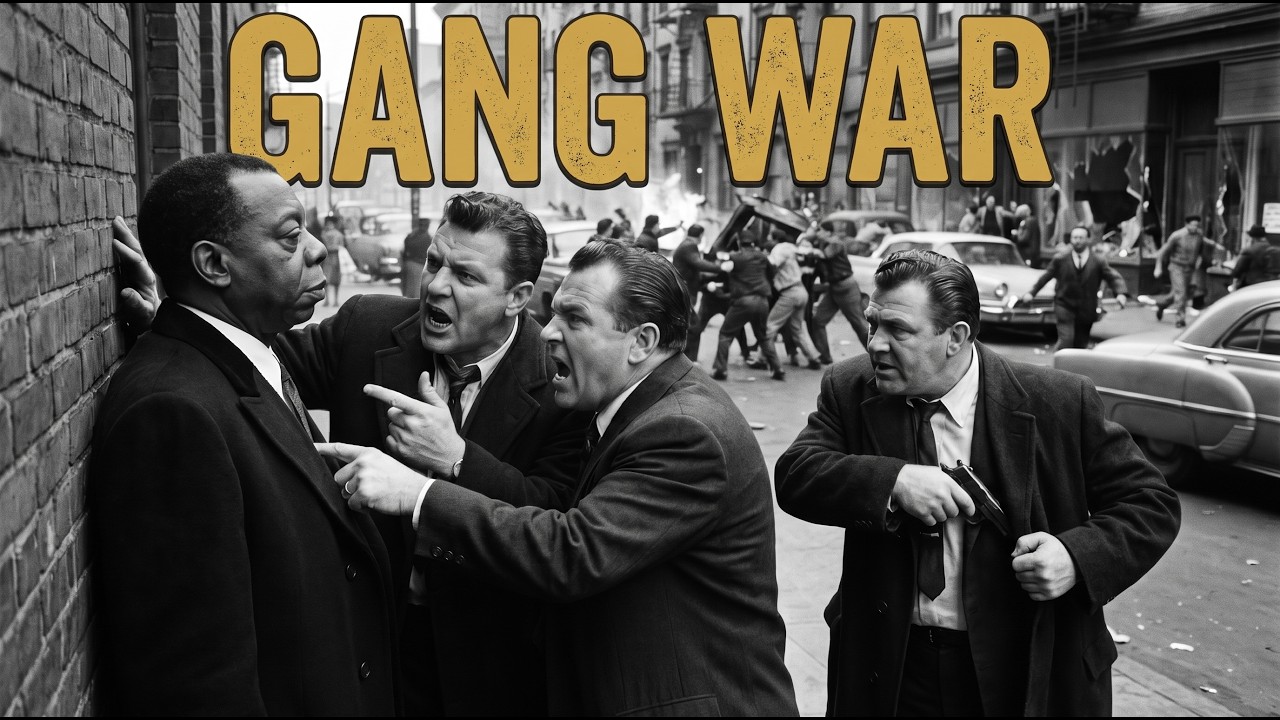
Two Italian collectors were found dead in a car with the engine still running. Nobody claimed responsibility. Silence, the city understood, was for wars that had only begun. Harlem itself had not joined the fighting, but the district had become the prize.
The neighborhood sat above Midtown like a hand resting near a throat, able to interrupt New York’s movement of men, money, and messages. Both sides knew that whoever controlled Harlem could reshape the balance of power. Both sides were racing to win over the one man whose decision mattered most: Bumpy Johnson. Bumpy had spent his life navigating between empires.
He knew the Italians, who built power slowly through restaurants, unions, contracts, and judges who remembered favors. He knew the Irish, who took territory like weather—fast, loud, and without asking whether the roof could survive. Neither side was a friend. Friendship was not part of the calculation.
Only consequence. That morning, at 135th Street, a milk truck stopped too long beside a closed pharmacy. At 137th, a white sedan passed the same intersection three times. At 141st, a man in a gray hat read one newspaper for forty minutes without turning the page.
Harlem noticed. By 7:30, three separate messages were already moving toward Bumpy. Bumpy was eating breakfast in the back room of a small restaurant on Lenox Avenue when a folded note arrived beneath his coffee cup. No name, no greeting, only three locations.
He read it once, then buttered his toast. His face showed nothing. Men who shout are usually surprised. Men who stay calm have already begun arranging the room.
The surveillance was deliberately obvious. Real watchers disappear into routine. Bad watchers hide poorly. Deliberate watchers hide just well enough to create a question.
Bumpy understood that someone wanted him to know he was being watched. The only uncertainty was whether the message had come before the meeting or before the funeral. On the way south, Bumpy stopped the car at 128th Street. A mother stood outside a narrow apartment entrance with two children beside her, their belongings stacked in boxes near the curb.
The landlord had changed the lock, not for unpaid rent, but for a larger payment from someone else. Bumpy watched for six seconds. Then he told his driver to stop. The landlord arrived twenty minutes later.
The lock was changed back. The family returned upstairs. No threat was spoken. The landlord understood the cost without hearing the price.
Bumpy’s next stop was a small office above a tailor shop, where three local business owners waited. Their deliveries had been delayed. Their drivers had been questioned downtown. An Italian-controlled trucking company had raised fees.
An Irish crew had offered protection against those fees. Two prices for one problem. Bumpy gave them one instruction: no private agreements, no new protection, no trucks rerouted without his approval. Across town, at an Irish-owned bar opened three hours early, a large man named Declan Ror studied a map of Manhattan.
Italian locations were circled in blue. Irish locations in red. Harlem had no color. That was why everyone kept looking at it.
Declan did not want to buy Harlem. He wanted leverage over the man who decided its price. He had ordered the surveillance to be obvious on purpose, to keep Bumpy alert. Prediction creates narrow paths.
Declan intended to meet him on one. The Irish moved first. Declan’s men blocked three streets near an underpass, trapping the Cadillac in a corridor of vehicles. Declan himself stepped out of a warehouse that had been occupied all along.
The cars were theater. The room was the real weapon. He offered Bumpy money, access to Irish-controlled docks, protection for Harlem shipments, and a voice in future union decisions. Bumpy listened and counted the omissions.
The Irish were stronger than before and weaker than they wanted him to know. “We’re not asking you to fight our war,” Declan said. “Not yet,” Bumpy replied. “We’re asking you to choose where it can move.
Through Harlem. ”
“And when Italians respond? ”
“They won’t. ”
Bumpy looked at him.
Certainty without evidence was either stupidity or deception. Declan did not look stupid. That left deception. Bumpy turned and walked back to the Plymouth.
The Irish had threatened, promised, and warned. They had done everything except acknowledge Harlem as equal. That was the problem. The Italians were enemies, but they understood tables, seats, terms, signatures.
The Irish believed an agreement lasted only until strength changed. That night, a courier arrived at Bumpy’s restaurant with a message from the Italian families. A man named Meyer Lansky was already in Harlem asking whether he would be received. Bumpy closed the housing folder on the table.
“He will be received,” he said. Lansky entered alone, smaller than the name that arrived before him. He did not reach for the folder immediately. Good negotiators notice what a room is protecting.
The two men circled each other through principles. The Italians wanted Harlem closed to Irish traffic. Bumpy wanted to know what that was worth. “What did Ror offer?
” Lansky asked. “Future promises. ”
“How much? ”
“Enough to prove he needed more.
”
Lansky nodded. Then Bumpy moved the folder across the table. Fifty low-income housing buildings for Harlem, financed by the families, with community oversight on tenants and contractors. Lansky studied the maps and costs.
“They will call it tribute,” he said. Bumpy answered without hesitation. “Then they can call war cheaper. ”
The negotiation was interrupted by the Irish, who had discovered the meeting and surrounded the restaurant.
Sheamus Carrian, Declan’s lieutenant, demanded an answer before sunrise. Bumpy refused. The Irish left one car behind as a threat, then slowly pulled back. Lansky returned to the table.
The families would not agree that night. Bumpy said he had not asked for that. “I asked whether they prefer brick or war. ” Lansky left with the number fifty in his head.
The price was not negotiable. The next morning, Bumpy began hunting the thirteen Irish listeners planted inside Harlem. A photograph arrived of Lansky entering the restaurant, stamped with the time. Noon was approaching.
At exactly noon, a boy delivered a small wooden box. Inside were thirteen silver bells wrapped in black cloth. Each bell smelled of a different place: oil from a garage, flour from a bakery, soap from a laundromat, tobacco from a bar. One bell was clean, smelling of nothing.
The hidden center had no workplace, no public routine. “Touch one, lose all,” the note said. Bumpy did not touch one. He touched the spaces between them.
A landlord delayed access to a rented room. A telephone line developed a fault. A delivery route changed. A bar closed early for repairs.
Each ear remained alive. Each connection became less reliable. The network began to feel pressure without seeing the hand. The clean bell led Bumpy to a man named Colin Sheay, an accountant who lived above a pharmacy warehouse.
He had no known gang ties, paid his rent six months in advance, and rarely received visitors. Too clean. That night, Bumpy entered his room. The accountant tried money, then information, then protection.
Finally, he gave a name: a banker’s clerk downtown who moved Irish money into Harlem through false housing loans. Before dawn, Bumpy signed the agreement with Lansky and the Italian representatives in a church basement. Fifty buildings. Financing within thirty days.
Construction within sixty. Harlem contractors given priority. Community representatives controlling tenant selection. No Italian crews entering Harlem for retaliation.
No Irish weapons, messengers, or safe rooms allowed inside the district. Across Harlem that night, movement began quietly. A garage locked early. A laundromat lost power.
A landlord changed two locks. The thirteen listeners discovered their routes had disappeared. One by one, they were removed from the map. No shots were reported.
No bodies were left on sidewalks. By morning, the Irish network was gone. Declan Ror returned to Harlem with six cars and ten men, stopping at the unfinished housing foundation. Bumpy was waiting.
“You chose a graveyard,” Declan said. “No,” Bumpy answered, “a beginning. ”
Declan demanded to know what had happened to his people. Bumpy said they had been removed.
“Where are they? ” Declan asked. Bumpy looked around the foundation and gave no answer. Some questions lose value when the asker already knows enough.
Declan stepped closer. “You think Italians will honor paper? ”
“No,” Bumpy said. “Then why sign?
” Declan asked. “Because now breaking it costs them more. ”
The Irish boss tried one final threat, but it was arithmetic. His crews had lost thirteen ears overnight.
The Italians were already hitting Irish docks. Three crews had been lost in two weeks. A second front in Harlem would finish them. Declan turned and left.
The cars drove south one by one. Construction began fifty-nine days later. Italian money moved through legal banks. Union workers raised walls.
Harlem contractors hired Harlem men. Families placed their names on waiting lists. The war continued elsewhere, but Harlem did not become the battlefield both sides had wanted. Twenty months later, children played beside the first completed building.
Bumpy stood across the street and watched families carry furniture upstairs. Marcus said, “Fifty buildings. ” Bumpy watched the families enter. “Fifty foundations for what?
” he asked. “The next negotiation. ”
The Irish had brought roadblocks. The Italians had brought contracts.
Bumpy had turned both into homes. The city had been forced to align with Harlem.