In the spring of 1952, a man of 64 sat at the center of the British court and settled a question that by every natural right belonged to a father and his son. The son was 3 years old. His name was Charles. And one day he would be king.
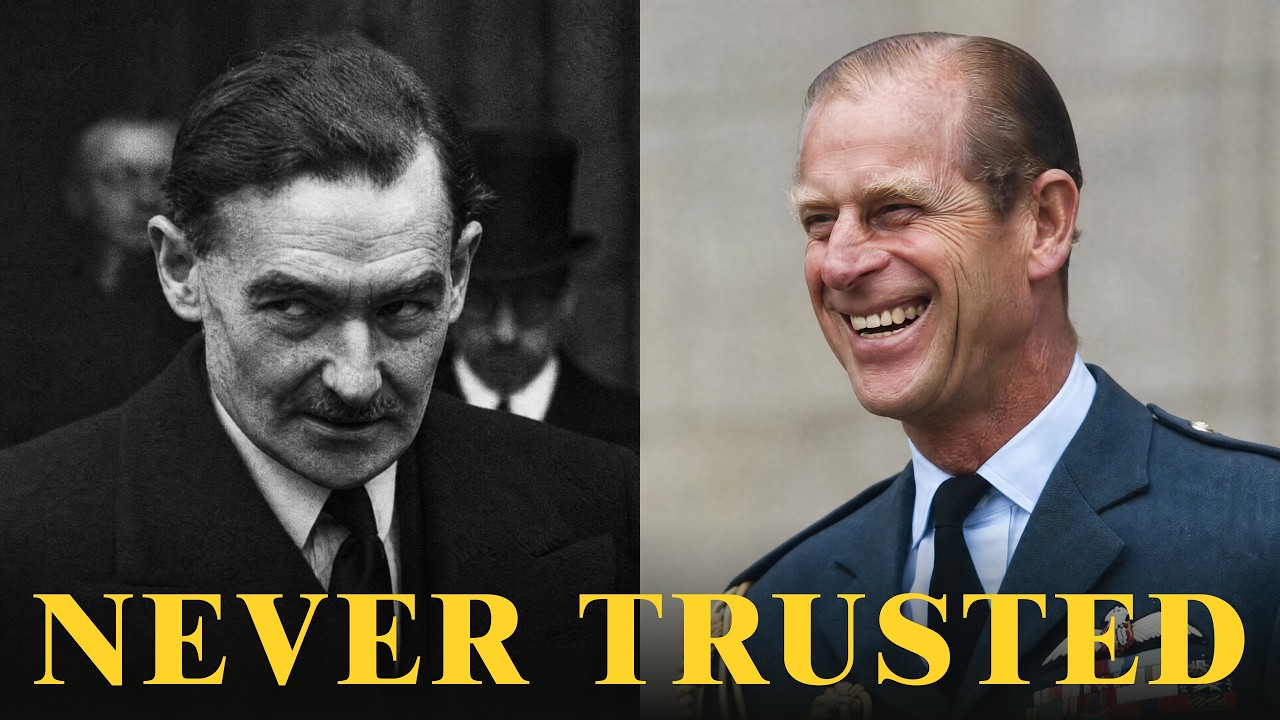
But the boy’s father, a serving naval officer who had married the new queen, was told he could not give that child his own name. The man who made the machinery run was not a king and not a minister. He was a private secretary called Alan Lascelles. And long before any of this, he had decided that the throne could not be trusted to the people who sat on it.
What he sealed away that spring is in part still sealed today. Chapter 1. A courtier is made in Dorset. The man who would decide a future king’s name was born into the servant class of the aristocracy, close enough to power to touch it and too far down ever to inherit it.
Alan Frederick Lascelles came into the world on the 11th of April 1887 at Sutton Waldron in Dorset, the youngest son of a naval commander and a member of the junior branch of a Yorkshire family whose senior line held an earldom. That distinction between the branch that held the title and the branch that did not shaped everything about him. He grew up understanding the great houses of England from the inside and from below at the same time, knowing exactly how their world worked, and knowing that he would have to earn his own place in it rather than be handed one. Everyone who knew him called him Tommy, a soft name for a hard man.
He was sent to Marlborough College and then to Trinity College Oxford, where he read the classics and took a respectable second-class degree in 1908. He was clever, well read and dry to the point of coldness, with a gift for the cutting phrase and a deep almost devotional belief in the idea of institutions, in the notion that some things were larger than the people who happened to embody them at any given moment. It was a belief that would one day cost a prince his name and win Lascelles a place in a sealed government file. Then came the war, and the war made him.
He served with the Bedfordshire Yeomanry in France, rose to the rank of captain and won the Military Cross for gallantry. He rarely spoke of it. The men of his class and generation did not tell war stories. They carried them, and the carrying left its mark in a certain flatness of manner, a refusal of sentiment that later observers would mistake for simple snobbery.
He had seen how quickly the whole edifice of civilization could fall in on itself, how a continent of settled certainties could dissolve into mud and wire in the space of a few seasons. He came home believing that the structures which held society together had to be defended by someone quietly without thanks, whatever the cost to the individuals inside them. After the war, he took his first steps toward the world he would eventually rule from the shadows. He served as aide to his brother-in-law, Lord Lloyd, who was governor of Bombay.
And there he watched at close hand how a great office of state was run, how power was exercised through ritual and paper, and the careful management of men. It was an apprenticeship in the invisible craft of the courtier. In 1920, he married Joan Thesiger, a daughter of the first Viscount Chelmsford. The marriage was more than a match of affection.
Chelmsford had been Viceroy of India, the man who had ruled a subcontinent in the name of a distant king and later First Lord of the Admiralty. In marrying his daughter, Lascelles married directly into the governing cast of the empire. They would have three children, two daughters and a son. The son, John, would die young in 1951, the year before the public drama of his father’s life reached its height, a private grief the old man bore in his usual silence.
That same year, 1920, the door to the rest of his life opened. He was appointed assistant private secretary to the Prince of Wales, the eldest son of King George V, the heir to the throne, the most glamorous and famous young man in the world. To an ambitious courtier, it looked like the summit of good fortune. In truth, it was the beginning of the great disillusionment of his life.
The private secretary is a peculiar kind of power. He is not elected, not appointed by any minister, not accountable to any parliament. He is chosen by the sovereign or by the heir and serves at their pleasure. And yet within the walls of the palace, he is often the most powerful person in the room.
He controls the diary and therefore controls time. He decides who is seen and who is turned away and therefore controls access. He drafts the words the principal speaks and the letters the principal signs and therefore quietly shapes what the principal thinks. In a monarchy that runs not on written law but on precedent, the accumulated weight of how things have always been done, the man who knows the precedents and can cite them holds a kind of authority that no statute grants and no election confers.
Lascelles understood this from the beginning, and he was very good at it. He was discreet, tireless, and possessed of an almost frightening clarity about the difference between the man and the office. He could serve a prince he did not respect, because he served in his own mind not the prince but the crown, the thing behind the man, the institution that would outlast them all. Chapter 2.
The prince he could not save. For nine years he served the most glamorous heir in the world and came to believe that the man was unfit to be king. The Prince of Wales, the future Edward VIII, was the golden figure of the age, adored by crowds wherever he went, the very image of modern royalty. Women wept at the sight of him.
And Lascelles, standing just behind him, watched the image and the reality drift steadily apart until the gap between them became, in his eyes, a danger to the throne itself. The prince was restless, self-absorbed, and in Lascelles’s judgment, fundamentally without the sense of duty that the role demanded. He resented the work of monarchy, the endless small ceremonies, the reading of official papers, the discipline of a life lived for others. He would neglect engagements, keep dignitaries waiting, and treat the ancient obligations of his position as tiresome interruptions to his pleasures.
He preferred the company of married women and the glitter of the fashionable world. He drank, he gambled with his health and his reputation, and he treated the machinery of the state that surrounded him as a nuisance to be evaded rather than a trust to be honored. To the public, he was the future. To the man who organized his days, he was a slow catastrophe, moving toward the throne one careless year at a time.
The crisis of conscience, when it came, was expressed in a single sentence that has survived because Lascelles himself recorded it. During a tour in the late 1920s, worn down by the prince’s conduct, Lascelles spoke privately to Stanley Baldwin, who was then Prime Minister. He told Baldwin that he had come to believe the best thing that could happen for the prince and for the country alike would be for the prince to break his neck. Baldwin by Lascelles’s account replied that he had come to the same conclusion.
It is one of the most extraordinary exchanges in the history of the modern monarchy. Two of the most senior men in the kingdom quietly agreeing that the heir to the throne would be better dead than crowned. What he did instead was rarer and, in its way, braver. In 1929, he resigned.
He walked away from the household of the heir to the throne, from the center of the fashionable world, from the surest path to the very top of his profession, because he could no longer serve a man he did not believe in. He was giving up the future to keep his self-respect. He had decided that his loyalty was owed to the institution and not to the individual. And when the individual and the institution could no longer be reconciled, he chose the institution and paid the price.
For a time it looked as though he had thrown himself away. He went abroad serving as secretary to the Governor General of Canada, Lord Bessborough, from 1931 to 1935. It was honorable work, and it kept him close to the machinery of the crown across the wider empire. But it was exile of a kind, a long detour from the center of things.
And then history vindicated him utterly and publicly. In January of 1936, George V died, and the prince became King Edward VIII. Within months, the new king made plain that he intended to marry Wallis Simpson, an American woman who was twice divorced, a step the Constitution, the church, and the government would not accept in a monarch who was also head of the Church of England. In December of 1936, the king abdicated, giving up the throne for the woman he loved, and the whole structure that Lascelles had feared for was shaken to its roots.
Everything Lascelles had believed about the man had come true. It was a vindication that fixed his conviction in place like iron setting in a mold. Chapter 3. The night he walked the park.
By the time of the abdication, Lascelles had returned to the center. He had come back from Canada and rejoined the royal household, first as an assistant private secretary to George V in the last months of that old king’s life. And so he was inside the palace at the very heart of the machinery when the storm he had predicted finally broke. On the night the thing became certain, this most contained of men, who never permitted himself a display of feeling, went out into the darkness of St.
James’s Park, and walked around it three times, alone, unable to be still. And as he walked, he thought, by his own account, of James II, the last British king to lose his throne, driven out in the revolution of 1688, the ghost at the feast of every English courtier who has ever watched a monarchy come near to falling. To Lascelles, this was not a scandal or an embarrassment. It was a wound to the constitution itself.
What steadied the monarchy in the end was the man who took the fallen king’s place. Edward’s younger brother became King George VI, a shy, stammering, dutiful man who had never expected or wanted the throne and who now had to carry it through the gathering shadow of another world war. He was in almost every way the opposite of his brother. Where the new king had been glamorous and hollow, the new king George was awkward and solid.
To a man like Lascelles, who believed that the office mattered more than the man, the new king was the answer to a prayer. Lascelles gave himself to the service of this king with the full force of his loyalty and he rose. In 1943, in the middle of the war, he became private secretary to the sovereign, the highest post in his profession, the single official who stands between the monarch and the government and holds the whole delicate machinery in his hands. He would hold that post for a decade through the end of the war, the years of austerity and recovery, and the slow decline of the old king’s health.
He was also made keeper of the royal archives, the custodian not only of the monarchy’s daily business, but of its records, its papers, its memory. The way he reached the top was itself an exercise of the very ruthlessness he would later turn on Prince Philip. His predecessor, Alec Hardinge, was eased out, his position made untenable, his resignation effectively brought about, and Lascelles was the man who stepped into the place that was made empty. He was capable, when the good of the institution required it, of moving against his own kind.
This was a man who would act decisively and without sentiment when he judged that the throne needed protecting. Through the war years, he stood at the right hand of George VI as the monarchy remade itself in the public mind. No longer the glittering distant thing of the Edwardian age, but a family that stayed in London through the bombing, that shared in appearance at least the dangers and privations of the people. Lascelles helped to manage that transformation, drafting, advising, steering, always invisible, always essential.
One of the currents he watched inside the family concerned the elder of the king’s two daughters, the Princess Elizabeth, who was growing into a serious, beautiful young woman very much in the mold of her father. And another concerned the young naval officer she had fallen in love with, a prince of Greek and Danish blood, penniless and foreign raised, with a famous and ambitious uncle standing just behind him. Lascelles, who missed nothing, did not miss this. He watched the courtship with the weary eye of a man who had learned to distrust anything that might threaten the settled order of the throne, and he did not like what he saw.
Chapter 4. The man who kept the king’s secrets. By the late 1940s and into the early 1950s, Lascelles was not merely a senior official. He was the institutional memory of the crown made flesh.
The man who had served three kings, who had lived through the abdication and the war, who knew where every difficulty lay and every precedent slept. Ministers came and went. Prime ministers rose and fell. Lascelles remained at the center.
The role meant something very precise in practice. Every day the sovereign received a flow of papers from the government, the boxes of state that a constitutional monarch must read and in a formal sense approve. It was the private secretary who managed that flow, who summarized, who advised, who framed the questions and shaped the context in which the monarch made every decision. When the sovereign needed to know how a thing had been done before, it was the private secretary who supplied the precedent.
As keeper of the royal archives, he held the monarchy’s paper memory in his personal charge. He knew the records, controlled access to them, and understood better than any living person the power that lay in deciding what was written down, what was kept, and what was hidden. He kept a diary too, privately, for himself. Across decades he recorded the inner life of the court, the conversations and the judgments and the secrets, in black leather books fastened with silver locks.
He is said to have shown them to visitors with the dry remark that they would not be seen by anyone for 50 years. Chapter 5. A word made to save a throne. The word was Windsor, and in 1952, it was less than a lifetime old.
It had been invented deliberately and under pressure in the middle of the First World War. By the spring of 1917, the pressure had become unbearable. German aircraft, the great Gotha bombers, had begun to attack London directly, killing civilians in their homes and streets. And the very name of the machine that dropped the bombs, Gotha, was also appallingly part of the name of the reigning house.
In the same month, the king’s own cousin, Tsar Nicholas II of Russia, was swept from his throne by revolution, a warning to every crowned head in Europe that even the oldest monarchies could fall in a season. On the 17th of July 1917, King George V issued a royal proclamation abandoning all the German titles and dignities of his house and declaring that his family would from that day forward be known by a new name, an English name, a name drawn from the ancient castle that was the very symbol of English monarchy: Windsor. With a stroke of the pen, the German dynasty became an English one, and the monarchy remade itself in the image of the nation it served. It was an act of survival, and it worked.
At the very same moment, the wider family of German relations attached to the British royal house also anglicized their names. The Battenbergs, a princely German family closely tied to the throne, translated their name into English and became the Mountbattens. One of the quiet ironies of this whole story is that the name Mountbatten, which would later threaten to swallow the House of Windsor, had itself been created in the same act of wartime reinvention, an English mask on a German face, just as Windsor was. The living guardian of the 1917 proclamation, the person for whom Windsor was most sacred, was Queen Mary, the widow of George V.
She had stood beside her husband when he made the change. She had watched the monarchy pass through the fire of the First World War and remake itself to survive. She had then watched it pass through the far greater humiliation of the abdication when her own son threw away the throne, and she had watched it steady again under her second son, George VI, through the Second World War. Now in 1952, she was very old, and she regarded the House of Windsor as the achievement of her husband’s reign, the thing that had kept the family safe.
She had already outlived one king who nearly destroyed the monarchy through selfishness. She was not going to sit quietly while the name that had saved it was quietly set aside. Chapter 6. The boy from Corfu.
The man the old court feared had been carried out of his own country as a baby in a fruit box. Prince Philip of Greece and Denmark was born on the 10th of June 1921 on the island of Corfu in a house called Mon Repos, the only son and the youngest of five children of Prince Andrew of Greece. On paper, he was royalty, a prince of two royal houses connected by blood to half the thrones of Europe, including the British. In reality, his childhood was one of exile, poverty, and dispersal.
Greece was defeated in war with Turkey, and in the upheaval that followed, Philip’s father, a royal prince and army commander, was arrested and came close to being executed. The whole family was forced to flee for their lives. The infant Philip was carried into exile. The story that has always been told is that he was carried aboard the ship that took the family to safety in a cot improvised from a fruit box.
Whether true or half legendary, the image is exact in its meaning. This was a prince born to nothing secure. What followed was a boyhood spread across Europe. His family scattered.
His parents’ marriage broke apart under the strain. His mother suffering a collapse in her health. His father drifting away to the south of France. His four sisters had all married German princes, tying that side of the family firmly into Germany at the worst possible moment in history.
And into this fractured, rootless childhood stepped the man who would become the great shaping force of his life and the great object of Alan Lascelles’s suspicion, his uncle, Lord Louis Mountbatten. Mountbatten, of the anglicized Battenberg line, was ambitious, charming, and endlessly energetic. A naval officer of high birth and higher aspiration who thought in terms of dynasties and destinies. When Philip’s other guardian uncle died in 1938, Lord Louis took charge of the boy, assuming the role of father and mentor.
And in the eyes of his critics, the bright, handsome royal nephew was more than a family duty. He was an opportunity. Philip, to his great credit, was no one’s puppet. He was clever, forceful, and independent, and he made his own way through sheer ability.
He entered the Royal Navy, graduating from the Naval College at Dartmouth as the best cadet of his year. He served with distinction in the Second World War, in real danger, in real battles. But to the old guard around the throne, his virtues counted for less than his origins and his connections. It was at Dartmouth as a girl of 13 that the young Princess Elizabeth is said to have first fallen for the dashing older cadet, and the attachment held through the war years and after.
In the run-up to the wedding in 1947, Philip took the necessary steps to become acceptable. He gave up his Greek and Danish royal titles. He was naturalized as a British subject and he took a surname, an English surname, the anglicized family name of his mother’s line. He became Philip Mountbatten.
The very act meant to make him British bound his new identity to the one name in England that the guardians of the House of Windsor most distrusted. The wedding took place on the 20th of November 1947, a burst of color and hope in the gray exhaustion of postwar Britain. But even the wedding carried the mark of Philip’s difficult inheritance. His three surviving sisters, all married to Germans, were not invited.
It was thought impossible in the raw aftermath of war. And so Philip stood at the altar of his greatest day without his own sisters present. Chapter 7. Ten weeks a queen.
The death of George VI in February of 1952 did not merely bring a new monarch to the throne. It brought a young woman, grieving and inexperienced, into a role of crushing loneliness and weight, and it placed her in the crucial opening months in the hands of a household she had inherited rather than chosen, a household presided over by Alan Lascelles. She was 25. She had been raised carefully and dutifully, prepared in a general way for a destiny that everyone knew would one day come, but she had not expected it so soon.
Her father had been only 56. She had a young family, a small daughter, and a son of three, and a husband whose own place in the new arrangement was suddenly, painfully uncertain. For Philip, his wife’s succession was in many ways a personal disaster, however much he loved her. Overnight, his naval career was effectively over.
His role was undefined, secondary, a matter of walking two steps behind. A proud and active man found himself with no clear function except to support a wife who now outranked everyone. Into this raw and unsettled situation came the question of the family name, and it landed on the most sensitive nerve Philip had: his sense of himself as a man and a father in a life that had otherwise been turned upside down by his wife’s crown. The young queen, meanwhile, leaned on the people around her, and the most important of those people in matters of state and precedent was her private secretary.
Lascelles had served her father for years. He knew the machinery as no one else did. When a question arose that touched precedent and constitution, it was Lascelles who explained what the options were, what the precedent said, what the government thought, and what, in his considered view, the crown required. And this is the quiet heart of the matter.
The advice a monarch receives is never neutral. It is shaped by the person who gives it, by what he chooses to emphasize and what he chooses to leave in shadow, by the precedents he reaches for and the ones he lets lie. Lascelles was a man of fixed and long-held views about Prince Philip and the Mountbatten influence. He believed sincerely that the House of Windsor must be protected.
Chapter 8. The boast at Broadlands. At his country house, the most ambitious man in England told his guests that his family now sat on the throne. Lord Louis Mountbatten, in the exhilaration of the moment, was said to have declared to those around him at Broadlands, his country house, that the House of Mountbatten now reigned.
Those few words caused such alarm because of how they sounded to the people who heard of them. To the guardians of the House of Windsor, it was a threat spoken aloud, a confirmation of everything they had feared. Here was the ambitious uncle, the projector of dynasties, openly claiming that his family had captured the throne through the marriage of his nephew. If the new queen’s children took their father’s name, then the royal line would indeed become the House of Mountbatten.
The remark reached the ears of the one person guaranteed to be most horrified by it. Queen Mary heard that Mountbatten was claiming the throne for his house, and she was appalled. To her it was an insult to her dead husband. She was not going to watch it discarded in favor of the Mountbattons.
And so the old queen did what people of her rank and generation did when they wanted something set right at the highest level. She made sure the matter reached the Prime Minister. The Prime Minister in 1952 was Winston Churchill, back in office in his old age, the towering figure of the war, a man with his own deep reverence for the monarchy and the constitution. He took it with full seriousness.
Churchill had no love for the Mountbatten ambition and every instinct to protect the settled forms of the crown. The government would advise the young queen that the House of Windsor must continue. And in the British system, when the government formally advises the monarch on such a matter, the monarch by long convention accepts the advice. Now watch how the forces align.
Queen Mary supplies the moral authority and the alarm. Churchill and the cabinet supply the constitutional power. And standing at the exact point where these two forces meet, translating between the palace and the government, carrying the messages, framing the choices, and ensuring that everything flows smoothly toward the desired end, stands the private secretary, Alan Lascelles. He did not need to invent the pressure.
The pressure was real. What he did was to stand at the hinge of it, to make the machinery run. For Philip, watching all of this from the outside, it was a nightmare taking shape. He could feel the decision being made over his head.
His uncle’s boast, meant to celebrate the family’s rise, had instead handed his enemies exactly the weapon they needed. There was nothing a mere husband, however proud, however loving, could do to turn it. Chapter 9. The 9th of April.
On a spring day in 1952, a sentence read in council settled who a three-year-old boy belonged to. The date was the 9th of April, and the setting was a meeting of the Privy Council, the ancient body through which the sovereign’s formal acts are given effect. There the young queen declared her will and pleasure that she and her children should be styled and known as the House and Family of Windsor, and that her descendants should bear the name of Windsor. With those words, the identity of the future King Charles was fixed.
He would be a Windsor. His father’s name would not descend to him. The matter was closed. The wording was no accident, and it was no fresh invention.
It reached back deliberately across 35 years to the proclamation of 1917, echoing its language almost exactly, so that the new declaration would carry the full weight and authority of the old one. This was the work of men who understood precedent, who knew that the surest way to make a decision unchallengeable was to dress it as the continuation of an established act rather than as a novelty. The man in the royal household who knew those precedents most intimately was Alan Lascelles. Consider the speed of it.
The king had died in February. By April, a matter of weeks later, the question of the children’s name had been raised, framed, advised upon, and settled formally and finally. There was no public debate, no consultation of the person most affected in his feelings. And there was no consultation of the wider realms that shared the crown.
The dominions were not consulted. They were informed. The decision was taken at the center and communicated outward as a settled fact in a manner that a later government file would describe in a phrase that has survived as “following the precedent of Sir Alan Lascelles. ” His name became in the paperwork of the crown the very byword for how such things were done.
For the boy at the center of it, nothing changed, and everything changed. Charles was three. He could not be consulted and he was not. His identity, the name of the house he would one day head, was determined for him by an alignment of the old and the powerful: a grandmother, a prime minister, and a courtier, in rooms he would never enter, in a language he could not yet read.
Chapter 10. Nothing but an amoeba. The Queen’s husband, denied the one thing an ordinary father takes for granted, gave the bitterest description of himself on record. Prince Philip, defeated in the matter of his children’s name, is recorded as having said in his frustration and humiliation that he was nothing but a bloody amoeba, that he was the only man in the country not allowed to give his name to his own children.
The wound went deeper than pride because it touched the whole shape of his life at its most vulnerable moment. His wife’s succession had already stripped him of his career, his independence, his standing as the head of his own household. The name of his children was perhaps the last thing that might have been truly his to give, the last mark he might have left on the family he had helped to create. And that too was taken, decided against him by men who had never trusted him, in the name of a house he had married into and could never fully belong to.
It is important here to be exact about what the declaration actually did. It settled the name of the royal house. It fixed the reigning line as the House of Windsor and closed the door on the possibility that the name Mountbatten might replace it. It concerned dynasties and styles, the grand heraldic identity of the crown.
It left untouched the everyday surname a small boy might use at school or on a form. What was taken was something at once smaller and larger: the right of his father to have his family name become the name of the royal house. Philip’s humiliation was real, and it was about dynasty and dignity and the refusal of the institution to let his name ascend. By every account, it left a lasting bitterness, a sense of grievance that Philip carried for years.
He had been shown unmistakably where the power lay, and it did not lie with him. The institution had reached into the most personal corner of his life and overruled him. For a proud, able, forceful man, it was a lesson in his own powerlessness, delivered at the very start of what should have been his family’s greatest chapter. He did not sulk his life away.
Instead, he set about building slowly and stubbornly a role for himself in a system that had provided him with none. But he did it in the shadow of that early lesson, and the lesson was never wholly unlearned. Chapter 11. The file with the pages cut out.
The decision was sensitive enough that decades later the government cut pages out of the record and put blank paper in their place. This is not a figure of speech. It is a literal physical fact about a file that sits today in the National Archives. It is a file held in the National Archives catalogued under the reference HO290/72.
It concerns the royal surname and the steps that led to the declarations about the name of the royal house. A researcher who calls it up expecting a complete record finds instead a document with holes in it. Multiple extracts, at least six of them, have been physically removed and replaced with dummy pages, blank sheets standing in for the papers that were taken out. The removal was done under the authority of the Public Records Act of 1958.
The section invoked was the one that permits closure on the ground of personal sensitivity. The reason given, in effect, was that the contents touched matters too personal to be seen. Think about what that means. This is a file about a decision taken in 1952 and confirmed in 1960, decisions that are in their outline perfectly public and well-known.
The declarations were made openly, read in council, reported in their time. And yet, generations later, parts of the working record behind them were judged so sensitive that they had to be removed and replaced with blank paper. Whose sensitivity, and about what? That is precisely what the blank pages will not say.
And the file is not the only sealed thing. The private papers of Alan Lascelles himself, deposited after his death at the Churchill Archives Centre in Cambridge, are partly closed. Portions of them cannot be read freely by any researcher who walks in. Access to some of the material requires the permission of the Royal Archives, that is, the permission of the very institution whose secrets the papers might contain.
Then there are the diaries, the black books that he kept across the decades, the ones he is said to have shown to elderly visitors with the dry remark that they would not be seen for 50 years. Even in their published edited form, they are a partial account. A man spent his life keeping the monarchy’s secrets. And the greatest secret he helped to keep was the working of the decision by which a prince was denied his son’s name.
A secret so well-kept that to this day the record of it has holes cut in it where the answers should be. Chapter 12. The sister he would not let marry. The affair of the name was one expression of a settled character, and that character shows most clearly in the other great intervention of his final years: the matter of Princess Margaret and Group Captain Peter Townsend.
Peter Townsend was a war hero, a Battle of Britain pilot of distinction, handsome, admired, and in every personal way worthy. He had served the royal household as an equerry, and in that closeness he and Princess Margaret had fallen in love. There was one obstacle, and in the eyes of the institution, it was insurmountable. Townsend was divorced, and in the early 1950s, for a princess close to the throne to marry a divorced man, when the sovereign was Supreme Governor of the Church of England and the shadow of the abdication still lay heavy over the family, was a thing the guardians of the monarchy would not permit.
The story that has come down casts Lascelles as the hard institutional voice that set the course against the match. He is remembered as the man who made plain to the lovers and to the queen that such a marriage was impossible while Margaret remained close to the throne. Whether every scene later imagined around him is accurate, the substance is not in doubt. He was one of the senior men who ensured that the institution’s interest overrode the princess’s happiness, exactly as in the matter of the name he had ensured that the institution’s interest overrode the prince’s pride.
In the space of a single stretch of years at the end of a long career, Lascelles was involved in two great interventions into the private lives of the royal family, and both ran the same way. In the affair of the name, he helped to deny the queen’s husband the right to pass on his name. In the affair of Townsend, he helped to deny the queen’s sister the man she loved. The institution above the person, always, whatever the human cost.
The Townsend affair dragged on past Lascelles’s own time. He retired at the very end of 1953, on the last day of the year, at the age of 66. It was only in 1955, after he had gone, that Margaret at last renounced Townsend publicly. But the course had been set in his time.
He retired full of years and honors, having been offered a hereditary peerage three times, twice by Churchill and once by the queen herself, and having declined it every time, preferring instead the high honor of the Knight Grand Cross of the Bath, which he said with characteristic dryness rated much higher than a peerage. He must have believed as he laid down his office that the matter of the name at least was closed for good, sealed as firmly as one of his own locked diaries. He was wrong. Chapter 13.
The solicitor who beat the palace. Six years after he retired, a provincial lawyer with a grievance and a pen forced open the door he had sealed. His name was Edward Iwi, and he was not a courtier, not a peer, not a man of any great position in the world. He was a solicitor with a passion for the technicalities of royal and constitutional law, the kind of dogged, detail-obsessed outsider that the establishment finds most irritating precisely because he cannot be managed by the usual means of patronage and pressure.
His argument was legal, and it was sharp. Iwi contended that the Declaration of 1952 had left the Queen’s children in an anomalous and, as he put it, insulting position. By fixing the royal house as Windsor and denying the descent of the father’s name, the declaration had, in his reading, left any child born to the queen bearing what he called with deliberate provocation the “badge of bastard,” that is, the mother’s name rather than the father’s. It was a barbed phrase chosen to sting.
The occasion for his campaign was a coming birth. By 1959, it was known that the queen was expecting another child, her first in some years. Iwi seized on it. In September of 1959, he wrote to the Prime Minister, Harold Macmillan, and to Buckingham Palace, pressing his case.
When Macmillan’s side rebuffed him, he pressed again in November, refining his argument. And here the story turns, because this time the current inside the palace ran the other way. The queen herself, it emerged, wanted the matter put right. Whatever the pressures of 1952, by the end of the decade, she had come to feel the injustice done to her husband, and she wished to find a way to honor his name in her descendants.
In January of 1960, while Macmillan was abroad in South Africa, Rab Butler reported to him that the queen had, in a striking phrase, absolutely set her heart on a change to the royal surname. The result came quickly. On the 8th of February 1960, the Queen declared in council that while the royal house would remain Windsor, her descendants who did not carry the style of Royal Highness would bear the name Mountbatten-Windsor, joining her husband’s name to her own house at last. It was a compromise, and it did not undo the settlement of 1952 in the grand sense, for the reigning house was still Windsor.
But it opened the door that Lascelles had shut. Prince Andrew, the child whose coming had given Iwi his occasion, was born on the 19th of February, 1960, just 11 days after the declaration. The great courtier had arranged the machinery so cleverly that it looked unchallengeable, and it had been challenged, and beaten, not by a greater power, but by a smaller one: a single stubborn man who would not let the matter drop. The deeper reason he prevailed is the one that matters most for the human story.
The queen had changed her mind. In 1952, as a bereaved girl of 25, she had been guided by her household into a decision that wounded her husband. As an established sovereign in her 30s, she had the confidence and the standing to put it right, and she wished to. The wife, who had been steered into denying her husband his name, now, of her own settled desire, gave it back to their descendants.
Chapter 14. The grandfather he never had. The man the whole fight had been built to keep away from the dynasty took the boy anyway. This is the deepest irony of the entire story.
Lascelles and the old guard had fought to keep the House of Mountbatten from the throne, to deny Lord Louis Mountbatten the dynastic prize his ambition craved. They had won the battle of the name. And while they were winning it, Mountbatten was quietly winning something far more valuable: the heart and the loyalty of the boy who would one day be king. For Charles grew up, and as he grew, he gave his trust and his affection to the very man the institution had tried to keep at bay: the charming, attentive, worldly great-uncle, Lord Louis Mountbatten, who had time for the young prince and knew how to make him feel valued and heard.
The bond became one of the closest of Charles’s early life. Mountbatten became the central older man in Charles’s life, his confidant, his adviser, his champion. Charles himself would describe him as “the grandfather he never had. ”
Everything Lascelles had fought to prevent, the intimate hold of the Mountbatten influence over the royal line, came to pass anyway.
Not through a name in a declaration, but through the far stronger bond of a boy’s love. Lascelles had power over the paperwork and he used it completely. But he had no power over the human heart, over where a lonely boy would give his love and his trust. And in the end, that was the only power that mattered.
The name went to the House of Windsor, exactly as he had arranged. The boy went to Mountbatten, exactly as he had feared. The bond ended in horror. On a summer day in 1979, the Irish Republican Army planted a bomb aboard Mountbatten’s fishing boat at Mullaghmore on the coast of Ireland and detonated it as he went out to check his lobster pots.
He was killed along with others, including a young boy. For Charles, the loss was shattering. The man Lascelles had fought to keep from the dynasty had become so central to the future king’s life that his murder was one of the great sorrows of that king’s young manhood. The name had been the battlefield.
The boy had been the prize. And the boy had never been Lascelles’s to win. Chapter 15. The hermit beside the palace.
When Lascelles retired at the end of 1953, he was granted a grace and favour house, a residence in the gift of the crown, and the one he received was the Old Stables at Kensington Palace. He settled there in the very shadow of the institution he had served, to live out what turned out to be a very long old age indeed. He had spent his life at the center of the palace, and now he lived at its edge, close enough to see its windows, far enough to be outside its daily life. And he was, by the accounts of those years, increasingly a recluse, withdrawing from the world, keeping his own company, a formidable old man alone with his memories and his diaries.
He had refused the ordinary rewards that might have taken him elsewhere. Three times he had been offered a hereditary peerage, twice by Churchill and once by the queen, and each time he had declined it. He preferred, he said, the Knight Grand Cross of the Bath, which in his dry judgment rated much higher than a peerage. And through the long years of his retirement, he kept his diaries and guarded his silences.
The black books with their record of the inner court sat in his fine house, waiting for the decades to pass. The habit of a lifetime did not leave him. He had been the keeper of the monarchy’s memory, and he kept it to the end in a locked drawer in a house beside the palace. When the diaries and letters were at last published years after his death, they surprised the people who thought they knew him.
The cold enforcer of legend turned out on the page to be a man of feeling and reflection, capable of tenderness and doubt, as well as of the hard judgments for which he was remembered. But even then the record was a chosen one, edited and shaped, and the deepest matters remained where he had left them, in the guarded and the gated and the cut. Chapter 16. The fireworks in the garden.
In the last summer of his life, aged 94, he stood in a palace garden and watched the boy he had helped to shape become a married king in waiting. It was July of 1981, and all of Britain and much of the world was fixed on the wedding of Charles, Prince of Wales, to Lady Diana Spencer, the great fairy-tale spectacle of the age. There were fireworks for the wedding, and the old man, frail now but still watchful, went out into the garden at Kensington Palace to see them. Those who were near him remembered that he was anxious that it should all go well.
It is a small human detail, and it is the perfect last note for the man. He had spent his life caring, above everything, that the monarchy should be safe, that the great occasions should pass off correctly, that the institution should be preserved and should shine. And here at the very end, watching the wedding of the boy whose name he had settled almost 30 years before, his last recorded concern was the old one: the wish that the thing should go well. He did not live to see how wrong it would go.
Twelve days after the wedding, on the 10th of August, 1981, Alan Lascelles died at the Old Stables, the fine house beside the palace, aged 94. He was spared the knowledge of what was to come: the slow unraveling of that marriage, the years of public misery, the death of the bride in a Paris tunnel 16 years later. And what of the name, the thing he had fought for? It survived him in the compromise the solicitor had forced.
To this day, the reigning house is the House of Windsor, exactly as Lascelles and Queen Mary and Churchill decreed in 1952. And to this day, the descendants of the queen who do not carry the highest styles bear the name Mountbatten-Windsor, exactly as Edward Iwi forced open in 1960. Both names endure. The one Lascelles saved and the one he could not keep out, joined together in the family he served.
For that is where the story returns: to the boy. Everything in it was decided over his head in rooms he never entered, by men and women who arranged his identity as a matter of state while he played on nursery floors knowing nothing of councils or declarations. He could not be consulted and he was not. He is king now, that boy, an old man himself, wearing the name that was chosen for him before he could speak.
And somewhere in the sealed record of how he came to bear it lies the last secret of the courtier who decided so much and revealed so little. He had kept the secrets of kings for a lifetime. And of his own deepest workings he had said with dry certainty that they would not be seen by anyone for 50 years.
The 50 years are passing now, and still the pages are blank.