When Hong Kong media learned that TVB star Myolie Wu was dating businessman Philip Lee, the warnings were immediate. He was labeled a notorious playboy, someone many felt was not good enough for one of the network’s biggest names. After her painful, highly publicized previous relationship, the cautionary headlines seemed impossible to ignore. The story took an unexpected turn quickly.
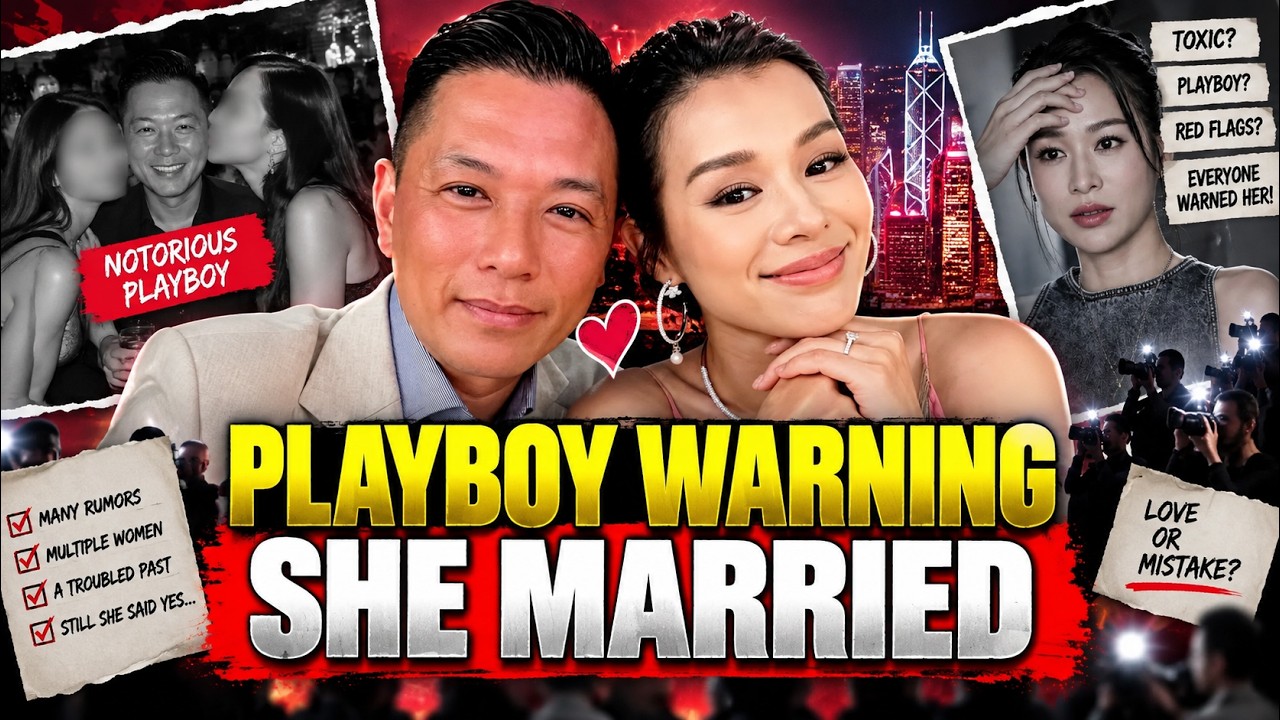
Instead of fading away, Philip reportedly proposed after just three months of dating. They married in December 2015. Years later, an innocent photo of Philip at a birthday gathering sitting near several women reignited the old accusations. But the scandal everyone seemed to expect never actually materialized.
By 2014, Myolie had spent years living under the microscope of Hong Kong’s entertainment media. She was not just any television actress; she was one of TVB’s most prominent stars, a familiar face to millions of viewers. Her career, her looks, and especially her relationships were constant fodder for gossip columns. When reports surfaced that she was dating Philip, he immediately became a character in a story he did not write.
Entertainment reports described him as a “playboy” who knew many women and moved comfortably through Hong Kong society. Some coverage went further, questioning whether he was good enough for Myolie. The story became a warning tale: she had fallen for a man the public was told not to trust. The timing made everything more explosive.
Before Philip entered the picture, Myolie had been in a long and heavily scrutinized relationship with TVB actor Bosco Wong. The relationship lasted years before ending publicly in 2012. The breakup became major entertainment news, with every detail examined and every rumor turned into a headline. When Philip arrived, many compared him to the man who came before.
The audience believed they already understood the pattern: a famous actress falling for a charming businessman with a certain reputation. The press was skeptical. For celebrity news readers, it looked like the beginning of another predictable disaster. But there was a significant flaw in that narrative.
Most of what people believed about Philip was based on reputation, not proven misconduct. That distinction mattered, but it did not stop the headlines. His friendships, social life, and associations with women could easily be explained by the label attached to him. Once someone was described as a “playboy,” almost anything could look like evidence.
A photo at a gathering became suspicious. A friend became part of a rumor. A night out became proof. Myolie later spoke about how the constant negative coverage affected the relationship.
She reportedly feared the pressure would become more than Philip could handle. Imagine starting what should be the happiest period of a new relationship while watching the man beside you repeatedly portrayed as someone you should fear. Philip did not disappear, though. Instead, the relationship moved in the opposite direction at remarkable speed.
According to Myolie’s later account, Philip proposed about three months into the relationship. While outsiders were still arguing over whether she should trust him, he was already thinking about marriage. The proposal itself was simple and strangely personal compared to the glamorous image surrounding him in the press. Myolie recalled that he prepared a small projector with photos of them together.
The surprise came next: a diamond ring was hidden inside a bag of rice. He knelt on one knee and asked her to marry him. She said yes. There was no long public trial period, no years of waiting for the headlines to fade.
Within months, the man portrayed as a risky romantic gamble had asked one of Hong Kong’s biggest television stars to spend her life with him. From the outside, the situation looked almost reckless. Yet Myolie’s description of Philip differed strikingly from the image surrounding him. She saw qualities in him that did not fit the character presented in entertainment coverage.
On December 28, 2015, the relationship that had spent months under suspicion became something the public could no longer treat as a passing romance. Myolie Wu married Philip Lee in Hong Kong. Reports described a grand wedding with luxury cars and a celebration full of friends, relatives, and entertainment figures. One detail stood out for its sharp contrast with Philip’s public image.
During the ceremony, he reportedly made an emotional promise to take care of Myolie for the rest of his life. For a man repeatedly cast by some media as having a questionable romantic reputation, that moment carried obvious contradiction. The person many predicted would become just another temporary chapter in Myolie’s life was now standing beside her as her husband. What happened next made the contrast even clearer.
Instead of returning quickly to typical celebrity life, the couple went on an extraordinary honeymoon lasting more than 70 days across 12 cities. The long journey gave them something rare since their relationship began: time away from the constant rhythm of Hong Kong entertainment headlines. The old story about Philip had not disappeared. It had only gone quiet.
That meant any future photo, rumor, or misunderstanding could instantly bring it back. That moment arrived in 2018. Philip posted a photo from a birthday gathering, and in the image, he was sitting near several women. The photo itself was not controversial on its own; it showed people at a social event.
But the online reaction proved how powerful the old reputation remained. Some commenters revived the same accusations that surrounded him before the wedding, again suggesting Philip was a womanizer. There was no confirmed scandal behind the photo. There was no confirmed affair, no documented betrayal, no evidence that the women with him were anything more than people at the gathering.
Yet the reaction was immediate because the public had already been trained to interpret Philip through a specific lens. Philip did something unusual for a public figure under this kind of scrutiny. He responded. Instead of waiting silently for the comments to fade, he defended himself against how the photo was being interpreted.
He argued that the accusations did more than insult him; they also insulted the women in the photo by turning their presence into alleged evidence of misconduct. Myolie also publicly defended her husband. She explained she did not attend the gathering because she was busy, not because of any hidden conflict between them. That detail mattered because celebrity gossip often feeds on absence.
In this case, the explanation was ordinary, but the reaction had already become dramatic. The public did not need a scandal; it just needed a photo that looked like the scandal it already expected. The incident revealed something larger about the marriage. Philip and Myolie were no longer trying to prove their relationship could last.
They were living inside a system where every new moment could be forced back into an old story. The more ordinary their married life became, the stranger the accusations looked. By then, the couple had already begun starting a family. The relationship lasted far longer than the early headlines suggested.
Yet Philip’s reputation remained strangely fixed. The wedding did not erase it. The long honeymoon did not. Even Myolie’s public defense could not completely stop people from returning to the same assumption.
The next shift made the contradiction sharper. Soon, Philip would be attacked for the exact opposite reason. The man once criticized for paying too much attention to women would later be mocked for spending too much time with his wife and children. While Myolie continued working and appearing in entertainment, Philip became more visible as a husband and father spending considerable time with his family.
That image should have weakened the old pattern around him, but online critics simply changed direction. Some began using the Cantonese insult “soft rice king,” a phrase used to mock a man believed to be financially dependent on a woman. Suddenly, the accusation was no longer that Philip was too interested in women. It was now that he benefited too much from being married to one of Hong Kong’s most successful actresses.
The target stayed the same, but the reason for attacking him changed completely. It was as if the public decided that whatever he did had to fit a negative story. Philip eventually addressed the criticism directly. He explained that the image being painted online did not match his actual financial situation.
According to his public comments, he had worked for years, been involved in business, and built enough flexibility in his life to spend more time with his children. He rejected the idea that spending time with his family was evidence that his wife supported him financially. Myolie made the situation even more striking. Instead of staying silent, she publicly defended Philip’s career and financial independence.
She said her husband had achieved success in business and was financially stable enough not to depend on her income. Her comments directly challenged the online image of a man living comfortably at his famous wife’s expense. The clearest evidence was time itself. Myolie and Philip became parents to three sons, born in 2017, 2019, and 2021.
Each new chapter made the original expectations seem increasingly distant. Their lives were no longer a fresh celebrity romance being tested by headlines. It had become a long-term marriage full of children, routines, responsibilities, and years of shared history. By 2026, they had been married for over a decade.
That does not prove every rumor written about Philip was false, and it would be irresponsible to claim that. But it demonstrates something important: the strongest version of the public story never turned into the disaster people were encouraged to expect. There was no famous breakdown confirming the early narrative, no public ending turning the warnings into prophecy. Instead, the relationship simply continued.
This is what makes the story of Myolie Wu and Philip Lee more interesting than a simple tale of a labeled playboy who changed after marriage. Philip gained a strong reputation before most people knew much about his private life. Ordinary moments were repeatedly interpreted through that reputation. Then, when his public behavior no longer matched the original image, a new negative description appeared to replace the old one.
The final question is not whether Hong Kong was completely wrong about one man. It is larger than that. How many celebrity scandals are built on facts, and how many are built on repetition until a reputation begins to feel like evidence? In this case, the most surprising possibility is also the simplest one.
Maybe the public spent years judging a marriage it never truly understood. The most surprising part of their story is not a dramatic betrayal. It is how often the public narrative changed while their marriage simply continued.