The story has been told and retold across a dozen history channels, racking up millions of views between them. A German general is marched into a headquarters tent, expecting the courtesy officers extend each other even in war. Instead, the American commander doesn't stand up. A white bulldog growls. A revolver gets slammed onto the desk, and the general is told he will be shot where he stands if he ever demands a privilege again.
There's just one problem. It never happened. Not like that. No pistol on the desk, no growling dog, no threat to shoot a man on the spot. If you've repeated that story at a dinner table, you're in good company. Half the internet has.
What General George Patton actually said to the one real German general he interrogated in person is colder than the fake version by miles.
Everything about Patton's public self was built on purpose, the way you'd build a weapon. Two revolvers with ivory grips, not pearl, as he would correct you. A lacquered helmet with stars that caught light from a hundred yards off. A white bull terrier named Willie riding shotgun in the Jeep.
But there is a detail almost nobody puts in the reel. Patton genuinely believed he had already died as a soldier, more than once. He claimed to have fought as a Greek spearman against the Persians, as a Carthaginian under Hannibal, as a knight at Agincourt, as a marshal under Napoleon.
When a British general once joked that Patton would have made a fine marshal for Napoleon, Patton didn't laugh it off. He said flatly, "But I did." He wrote 96 lines of poetry about it, describing one soul returning again and again, always a soldier, always dying the same kind of death. He seemed certain he already knew how his story was supposed to end.
It didn't end that way.
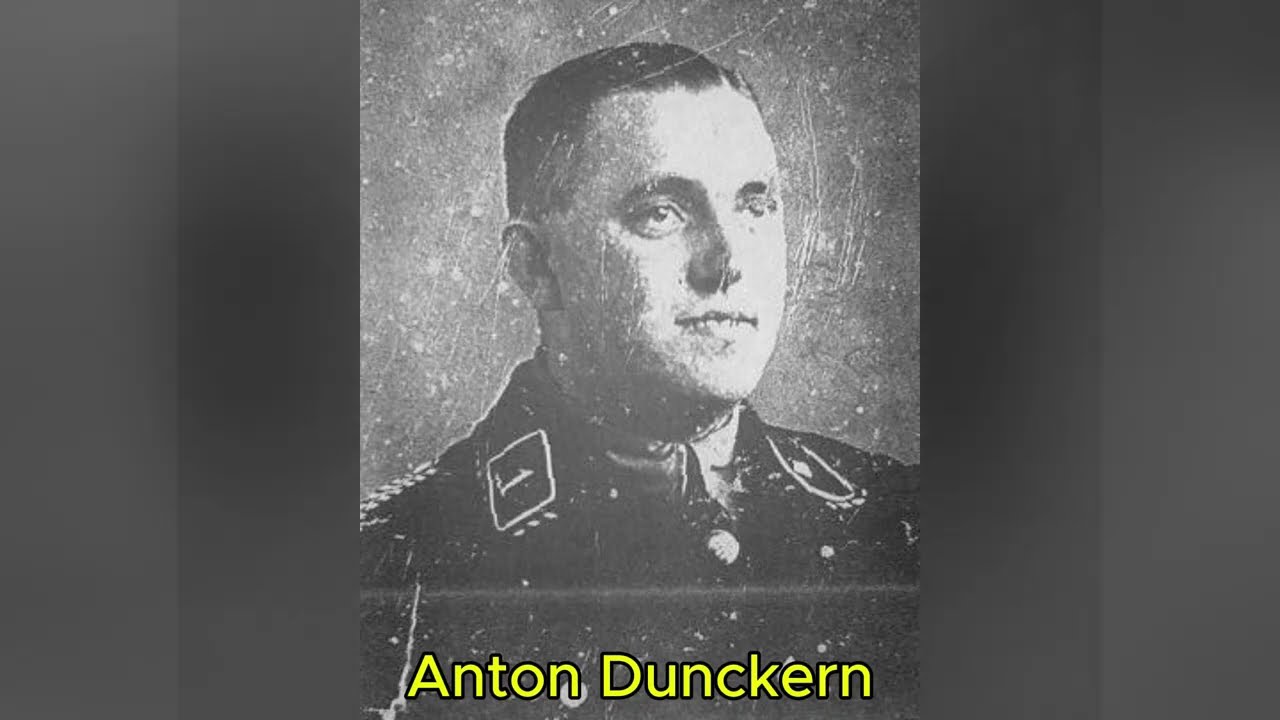
On November 19, Third Army troops were clearing Metz, a fortress city the Germans had held for weeks. Soldiers from the 10th Infantry Regiment found a man hiding inside a brewery. He was not a private or a corporal. He was SS Brigadenführer Anton Dunckern, Gestapo and SS Police Chief for the entire Metz sector, a personal friend of Himmler, and a man who had marched with Hitler back in 1923.
He was the highest-ranking SS officer Third Army had caught so far. Word reached Patton, and he decided he wanted this one himself.
Here's what you'd expect from that room. A general, even an SS general, expects to be treated like one. Officer to officer. Maybe a translator. Maybe the basic courtesy the Geneva Convention is supposed to guarantee everyone wearing stars on a collar.
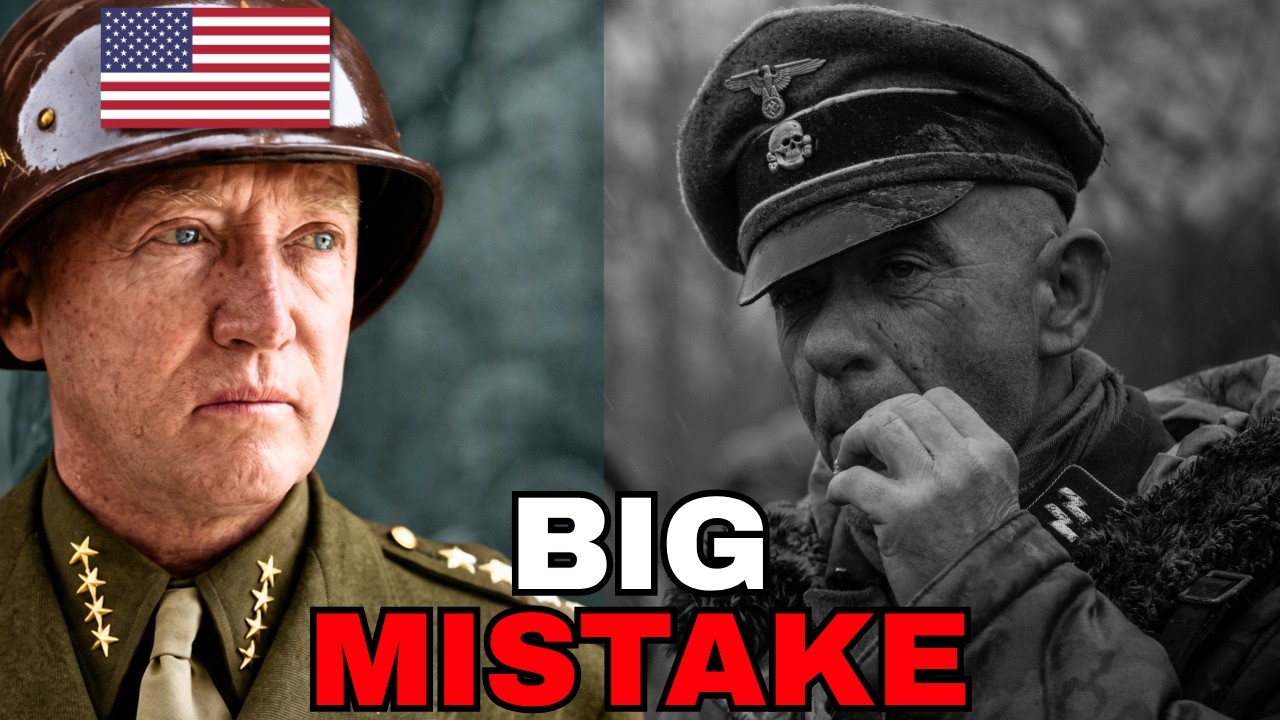
Patton gave him none of it. He wouldn't even speak German to Dunckern, though he could. He was refusing him, in Patton's own words, the honor.
Through an interpreter, he said he couldn't be bothered to question the man personally because out of every German general he'd captured, this was the first one wholly untrue to everything. A Nazi who betrayed even the Nazis by surviving instead of fighting.
Dunckern tried to explain. He said he couldn't reach his weapon in time to fight back. That was the only reason he was alive. Patton didn't blink. "He is a liar," he said. Four words, flat.
Then comes the part every viral version gets wrong. There was no gun on the table. Patton didn't need one. He told Dunckern exactly what would happen if he didn't start talking. "I will turn him over to the French. They know how to make people talk."
What makes this unusual isn't a pistol slammed down for effect. It's what happened after the room cleared. Patton didn't send Dunckern to a standard POW camp and let the rules take over from there. He had him reclassified, not as a prisoner of war, but as a political detainee.
Dunckern was stripped, on the spot, of protections every other captured German officer in Third Army's custody still had. That's not a threat shouted across a desk. That's a man quietly rewriting the rules in real time because he decided this particular prisoner hadn't earned the ones already written.
So where did the gun on the desk actually come from? Almost certainly Hollywood. The 1970 film Patton leans hard into pistol theatrics that the real transcript, preserved in Patton's own papers, simply doesn't contain. No Willie in the room. No "I will personally shoot you where you stand." Just contempt, an interpreter, and a piece of paperwork that quietly ended a man's rights.
It's a better story precisely because it's smaller and colder than the fake one.
Metz isn't the only place Patton's real story got quietly rewritten into something louder. But first, one more piece of the rock-solid general, because you need it as contrast.
In March 1943, in Tunisia, American troops had just been mauled at Kasserine Pass, outfought and sent running by an army half of them assumed was already broken. You'd expect the fix to take months: retraining, new equipment, a strategy overhaul from the top down.
Patton took command of Second Corps and did something almost embarrassingly small instead. He made every officer wear a necktie in combat. He fined soldiers $25, half a private's monthly pay, for showing up without a helmet strapped on, even near the latrine.
It looked petty. His own deputy, Omar Bradley, said every knotted necktie was a soldier being reminded the sloppy days were over. Three weeks later at El Guettar, Second Corps stopped the 10th Panzer Division cold, the first time American troops beat German armor outright in the war.
That's the man the myth is built on. Now here's the man underneath him.
Patton didn't learn to read until he was 11 years old. Before that, by his own account, he assumed he was simply stupid. Classmates mocked him for it at school. So he recited long passages he'd memorized by ear, because reading them off a page was nearly impossible for him.
At West Point, he failed mathematics and was held back an entire year, watching classmates graduate ahead of him while he restarted his first year from scratch. Today it would likely be called dyslexia. Nobody had that word yet for what was happening to him.
Remember the fake interrogation's high-pitched fury? That detail is actually true, just aimed at the wrong scene. Surviving recordings confirm Patton really did have a notably high, thin voice, nothing like the gravel George C. Scott gave him on screen. Patton himself reportedly admitted the swearing was there to cover for it, that a general with a voice like his needed something else to make men listen.
His wife, Beatrice, was cut from the same cloth. At a formal dinner in Washington not long after the First War, a desk-bound officer sneered within earshot about little boys getting promoted to colonel. The next thing anyone remembers, Beatrice was sitting astride the man's shoulders, banging his head against the marble floor, until Patton and another officer pulled her off him.
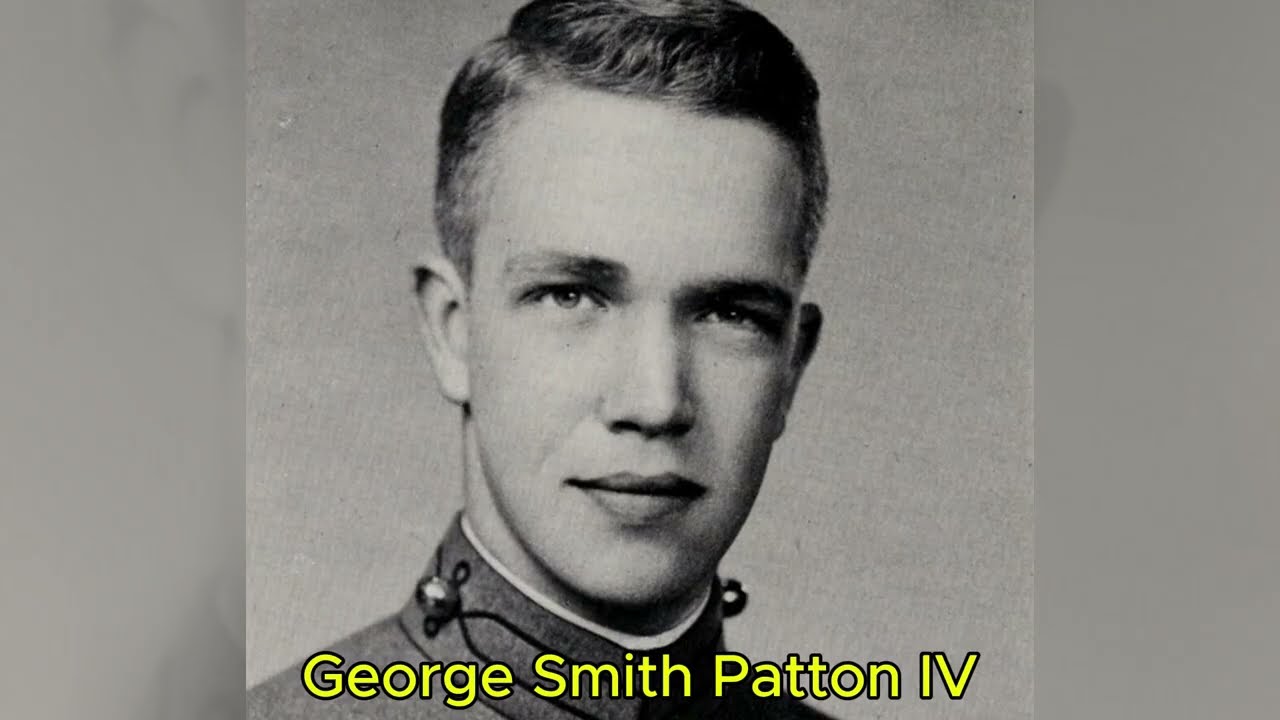
Then there's his son. During the entire Second World War, by most accounts, Patton saw him exactly twice. Their relationship survived almost entirely on paper, weekly letters to a cadet at West Point. When George Jr. was accepted into the Academy, his father's letter of congratulations read, "We are really proud of you for the first time in your life. See to it that we stay that way."
Their daughter had her own line about him, muttered once after he'd yelled at her mid riding lesson, "Dear God, please let that son of a break his neck." Nobody thought twice about it at the time.
On April 25, 1944, six weeks before D-Day, Patton was asked to say a few off-the-record words at the opening of a servicemen's club in a small English town called Knutsford. Nothing prepared, nothing official.
He told the crowd it was the evident destiny of the British and Americans, and of course the Russians, to rule the world. Off-the-record doesn't mean off the page. The quote ran in papers worldwide within a day, and early versions left the Russians out entirely, turning a throwaway line into an international incident six weeks before the most important invasion of the war.
Eisenhower didn't relieve him, but he put it in writing. One more incident like this and Patton was finished, instantly, no discussion.
So Patton sat in England on June 6, 1944, while the invasion he'd spent his whole career preparing for happened without him. That night he wrote to Beatrice, "It is hell to be on the sidelines and see all the glory eluding me."
He got another chance, but he never fully learned the lesson.
On September 22, 1945, the war in Europe was over, and Patton was military governor of Bavaria, responsible for denazification, removing former Nazi officials from power. At a press conference, he said he didn't see the need for this denazification thing, and compared it to a Democratic and Republican election fight back home.
Walking out afterward, he told an aide the truth quietly. Stupid goddamn mistake. I knew better, but I wouldn't give the son of a the satisfaction of knowing it.
Knowing better didn't save him. Eisenhower summoned him to Frankfurt and told him flatly, "George, you have broken the back of our policy." Ten days later, Patton was relieved of Third Army, the army he built, the army that broke the siege at Bastogne, and handed a desk job writing history instead of making it. His own summary of the day: "I've just been fired by the best friend I ever had."
Remember the reincarnation, the soldier certain he'd already died a dozen times before, certain he knew exactly how a warrior's story was supposed to end? He's quoted endlessly saying there's only one proper way for a professional soldier to die. The last bullet of the last battle of the last war.
He never said it. It's a line from the 1970 film, put in his mouth by a screenwriter 25 years after he was gone. No letter, no document, no witness places those words in the real Patton's mouth.
Here's what actually happened. On December 9, 1945, eight months after the war in Europe ended, Patton was on a pheasant hunting trip outside Mannheim. Passing the wrecked, burned-out vehicles still littering the road, he said, almost to himself, "How awful war is. Think of the waste."
Minutes later, an army truck turned into his car's path at a crawling speed. He was thrown forward and broke his neck. Paralyzed, but still talking, he told the man beside him, "This is a hell of a way to die." Twelve days later, he was gone.
Sixty years old, killed not by the enemy, not by the last bullet of the last battle, but by a truck on a wet road and a broken neck. Exactly the way his own daughter once wished on him, without meaning a single word of it.