The most photographed woman in Britain had stopped opening her own chest of drawers. Princess Margaret, living in her apartment at Kensington Palace, would ask her maid to open them instead, afraid of what her husband might have hidden inside. For years, Lord Snowdon had left cruel notes for her to find alone, tucked between the pages of books she was reading or folded among her handkerchiefs. These accounts come largely from her friend and lady-in-waiting, Lady Anne Glenconner, who wrote about them in her memoir years later, and from biographer Anne de Courcy, who studied Snowdon’s life.
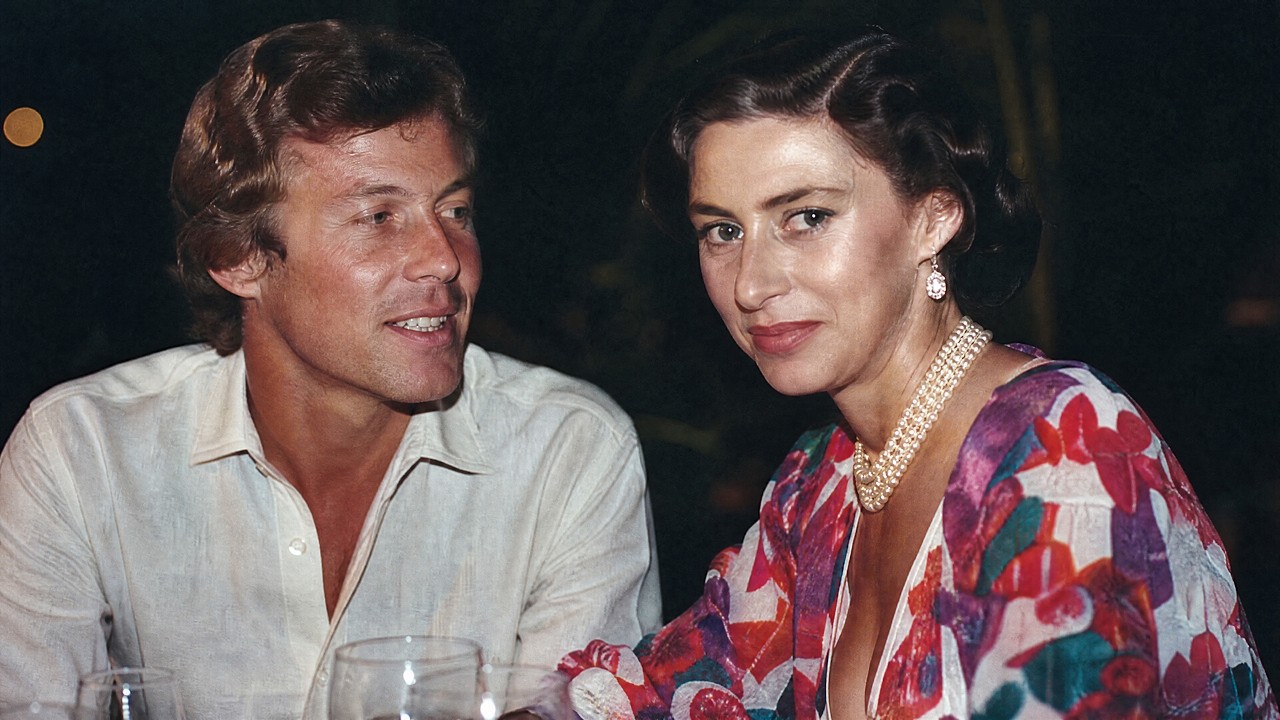
They are remembered accounts rather than proven documents, but they offer the clearest picture of what the marriage had become. Before the marriage that would wound her, there was another love she was forced to give up. Margaret had fallen for Group Captain Peter Townsend, a decorated Battle of Britain pilot who served as an equerry to her father, King George VI. He was 16 years her senior, and he was divorced.
The relationship became public at her sister’s coronation in 1953 when Margaret was seen brushing a fleck of fluff from Townsend’s uniform. The establishment moved quickly to separate them. The Church of England did not permit a royal to marry a divorced person, and the memory of the abdication crisis, when Edward VIII gave up the throne to marry Wallis Simpson, remained raw. Margaret was told she could wait until she was 25 and then seek Parliament’s approval instead.
When the moment came in 1955, she issued a public statement saying she was mindful of the church’s teaching that Christian marriage is indissoluble and conscious of her duty to the Commonwealth. She gave him up. She was 25 years old. A few years later, she found a new love in Anthony Armstrong-Jones, a society and fashion photographer from a bohemian London set that had nothing to do with the court.
He was clever, magnetic, and entirely of her own choosing. The engagement was announced in February 1960. The wedding took place on May 6, 1960, at Westminster Abbey. It was the first royal wedding ever televised, watched by an estimated 20 million people in Britain and as many as 300 million worldwide.
The country embraced it as proof that the princess who had sacrificed her heart to duty had finally been rewarded with love. In October 1961, the queen made Armstrong-Jones the Earl of Snowdon. A son, David, was born that November, and a daughter, Lady Sarah Armstrong-Jones, followed in May 1964. The couple settled into Apartment 1A at Kensington Palace, a grand residence renovated at public expense, where they hosted the most fashionable gatherings in London.
Snowdon kept a studio in the basement, a private domain where he spent increasing amounts of time. By the mid-1960s, the excitement of the marriage was curdling. Two proud, competitive people were discovering they could not both be the most interesting person in the room. The wit that had delighted them was becoming a weapon.
Friends found Snowdon delightful. The public adored him. But according to those closest to Margaret, he developed a habit of writing cruel notes to his wife and hiding them where she would find them alone, often lists of things he supposedly hated about her. His biographer described him as a relentless playboy and unashamed womanizer who could be genuinely cruel.
The marriage was not one of a villain and a victim. By the accounts of those who watched it closely, it was one of mutual wounding. Margaret had a famous temper and could be imperious and sharp. Both took lovers.
Snowdon’s cruelty, however, was cold and designed, while hers was hotter and more openly expressed. The public pressure on Margaret grew through the 1970s as Britain faced economic hardship. Critics attacked her as an expensive symbol of royal waste. Member of Parliament Willie Hamilton made her a particular target of his contempt, portraying her as a princess with no job and a very large bill.
By the middle of the 1970s, Margaret was in serious trouble. She suffered what can only be called a breakdown during this period and reportedly took an overdose of sleeping pills. Responsible accounts reject the more lurid tabloid versions of repeated suicide attempts, describing instead a single serious crisis in a woman worn far past her strength. In September 1973, she had met Roddy Llewellyn at a house party in Scotland.
He was 25, she was 43. He was a landscape gardener, the youngest son of Olympic gold medalist Sir Harry Llewellyn, and by every account, gentle and kind. Snowden was hard and contemptuous; Llewellyn was soft and admiring. The affair flourished on the island of Mustique.
Colin Tennant, one of Margaret’s closest friends, had given her a plot of land on the private Caribbean island as a wedding present in 1960. She built a home there called Les Jolies Eaux, completed around 1972, the only residence she ever truly owned. Llewellyn designed and planted her gardens there. Her entire circle knew about the affair and kept it secret for nearly two years.
Friends like photographer Norman Parkinson and magazine proprietor Jocelyn Stevens knew and said nothing, protecting her out of affection. The secret ended in February 1976 when a News of the World photographer named Ross Waby flew to Mustique after being tipped off. He photographed Margaret and Llewellyn on the beach in swimwear, together and unguarded. The images were nothing explicit.
They only showed the truth, and that was enough. On February 22, 1976, the News of the World published the photographs on its front page. The revelation was the beginning of the end. Once the country had seen the truth, the performance of the marriage could not continue.
Less than four weeks later, on March 19, 1976, the palace announced that the couple had agreed to live apart. The double standard in the aftermath was stark. Snowdon’s affairs had barely dented his reputation. A single photograph nearly ended Margaret publicly.
The press, which had cast Llewellyn as a “beach boy,” now cast her as the wasteful princess who had thrown away a fairy tale marriage. Willie Hamilton seized on her as proof of royal excess. The divorce was granted in 1978. A decree nisi was issued on May 24, and the decree absolute, which legally ended the marriage, followed on July 11.
Margaret became the first senior member of the royal family in direct line to divorce since the 16th century. Snowdon remarried within months. Margaret did not. The relationship with Llewellyn continued for a few more years before fading gently.
The divorce broke a spell the monarchy had held as near-religious faith. Within two decades, three of the queen’s four children divorced, including the future king. Llewellyn did not end in ruin. He married Tatiana Soskin in 1981, had three daughters, and built a respected career as a garden designer, horticultural writer, and broadcaster.
In 2009, he succeeded to the family baronetcy and became Sir Roddy Llewellyn. He never sold his story and never gave a bitter interview. Margaret’s later years were marked by declining health. She had part of a lung removed in January 1985.
She suffered a stroke while on Mustique in February 1998 and badly scalded her feet there in 1999. Further strokes followed, leaving her frail and largely withdrawn from public life. She gave up the Mustique house. She died on February 9, 2002, at King Edward VII’s Hospital in London, after a final severe stroke.
She was 71. In an unusual choice for a senior royal, she was cremated so that her ashes could rest beside her father in the small memorial chapel at Windsor that bears his name. Seven weeks later, her mother, Queen Elizabeth the Queen Mother, also died. Snowdon lived until January 13, 2017, dying at age 86.
His obituaries remembered him as a brilliant photographer and charming figure. The fuller account of the marriage reached the wider world only after both were gone, particularly when Lady Glenconner published her memoir in 2019 and described the hidden notes. Margaret had carried the truth of her marriage to her grave. She never told the story herself, never gave the interview or wrote the memoir that could have been believed and avenged.
She was humiliated for years in secret, and then she stopped hiding. The hidden note was her cage, and the public photograph was her key.