On the morning of July 18, 1989, a doorbell rang at a Los Angeles apartment. Rebecca Schaeffer, the 21-year-old star of the sitcom “My Sister Sam,” answered. She was waiting for script pages for a “The Godfather Part III” audition. The person at her door was not a studio courier.
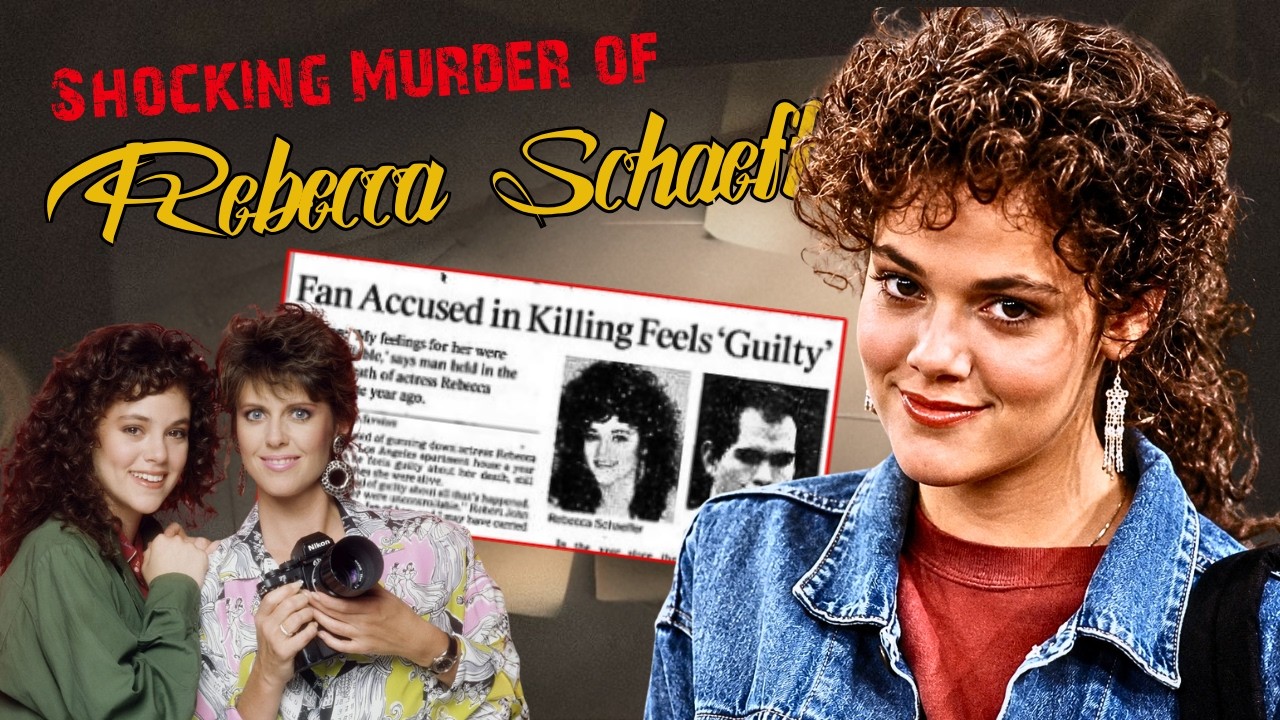
Robert Bardo, an obsessed fan, raised a . 357 Magnum and fired a single shot into her chest. The killing exposed a fatal gap in the American legal system. For just $250, the state of California had legally sold the victim’s home address to a private investigator.
Her death later forced Congress to rewrite personal data privacy laws nationwide. Schaeffer was born on November 6, 1967, in Eugene, Oregon. She was the only child of Dr. Benson Schaeffer, a child psychologist, and Danna Schaeffer, a literature professor.
Her upbringing was intellectual, stable, and deeply rooted in Jewish tradition. She initially aspired to become a rabbi. In high school, she discovered community theater. Between ages 14 and 15, she began local print modeling for regional catalogs.
Her parents enforced strict boundaries, limiting work to weekends and summer breaks. In August 1984, at 16, she moved to New York City to pursue professional modeling, with the non-negotiable condition that she finish high school. She graduated from the Professional Children’s School in Manhattan. She signed with elite agencies like Wilhelmina and Elite.
However, at 5 feet 7 inches, she was deemed too short for high fashion. A trip to Tokyo in 1985 confirmed the same rigid standards. Her career pivoted to commercial print modeling, where she landed two covers of Seventeen magazine. Aware that commercial modeling careers were short-lived, Schaeffer transitioned to acting.
She appeared in the soap operas “Guiding Light” and “One Life to Live. ” She landed a role in Woody Allen’s “Radio Days,” though most of her scenes were cut. She also appeared in Steven Spielberg’s “Amazing Stories. ” In early 1986, she moved to Los Angeles.
Warner Bros. was casting for a new CBS sitcom, “My Sister Sam,” starring Pam Dawber. The role of the teenage sister who moves to San Francisco was described as a girl from Oregon. Schaeffer auditioned and tested with Dawber.
Their on-screen chemistry was immediate. The show premiered on October 6, 1986, and became a top-25 hit almost overnight. Despite sudden fame, Schaeffer remained grounded. She lived in a modest two-story apartment complex at 120 North Avenue in West Hollywood.
She dated Brad Silberling, a UCLA graduate film student. She avoided the Hollywood club scene and volunteered with a charity for at-risk youth. CBS moved the show to Saturday night for its second season, a slot known in the industry as a death sentence for young audiences. Ratings collapsed.
In April 1988, the network canceled “My Sister Sam. ” Twelve completed episodes never aired. Schaeffer pivoted to film roles to prove her range. She starred in “Scenes from the Class Struggle in Beverly Hills” and appeared in several TV movies.
By the summer of 1989, she was building a serious film career and was a finalist for the role of Mary Corleone in “The Godfather Part III. ”
Her killer, Robert John Bardo, was 19 and lived in Tucson, Arizona. He came from a troubled family, dropped out of school in the ninth grade, and worked as a fast-food janitor. He had been diagnosed with schizophrenia, bipolar disorder, and erotomania, a delusional disorder in which a person believes a public figure secretly loves them.
Bardo became fixated on Schaeffer while watching “My Sister Sam. ” He recorded her episodes, covered his walls with her photos, and mailed hundreds of letters to CBS. The studio’s fan mail department sent him a standard autographed publicity photo. Bardo interpreted the printed signature as a personal declaration of love.
In June 1987, he traveled to Los Angeles and demanded to see her at the studio gates. Security chief Jack Edgar calmed him down and put him on a bus home. A month later, Bardo returned with a folding knife. Security confiscated the weapon and banned him from the lot.
For two years, he stayed away. In early 1989, he watched Schaeffer’s film “Scenes from the Class Struggle in Beverly Hills. ” He saw her perform a romantic scene. In his delusional mind, she had been corrupted.
His obsession turned to punitive rage. He decided to kill her to preserve her pure image. He needed her address. He gave $250 cash to a Tucson private investigation agency.
The investigator filled out California Department of Motor Vehicles form INF70, paid a processing fee of about four dollars, and mailed it to Sacramento. Under California public records law at the time, home addresses were publicly available information. The state sent back her exact address without any security check or justification. At 19, Bardo was legally barred from buying a handgun.
He gave his older brother $90 to buy a . 357 Magnum revolver. His brother tried to hide it, but Bardo found and stole it. He also obtained hollow-point bullets, designed to expand on impact and cause maximum internal damage.
He carried a copy of J. D. Salinger’s “The Catcher in the Rye,” mirroring Mark David Chapman, the man who killed John Lennon. On July 17, 1989, Bardo wrote a suicide note to his sister.
It ended with the line, “I have an obsession with the unattainable and I have to eliminate what I cannot attain. ”
The morning of July 18 began as ordinary. The security intercom at Schaeffer’s apartment complex was broken, and the main iron gate was left swinging open. Schaeffer, wearing a bathrobe, was waiting for a studio courier to deliver her “Godfather Part III” script pages.
She expected the courier to walk through the open gate and knock on her ground-floor door. Around 10 a. m. , Bardo entered through the broken gate.
He carried a brown paper bag containing the signed photo, a letter, the Salinger novel, and the loaded Magnum. He knocked. Schaeffer opened the door, expecting the courier. Bardo introduced himself as her biggest fan from Arizona.
She stayed calm and professional. She shook his hand, accepted the letter, and spoke politely. She told him, “Thank you. I hope you take care of yourself.
” She explained she was busy preparing for an important meeting. He nodded and left. She closed the door. Bardo walked to a small restaurant one building away.
He sat alone and ordered breakfast. He interpreted her polite dismissal as deliberate coldness. His rage boiled over. He left his food, grabbed the bag, and walked back to the apartment with the intent to kill.
At 10:15 a. m. , he knocked again. This time, his hand was inside the paper bag, gripping the gun.
Schaeffer opened the door, visibly annoyed. She said, “You’re wasting my time. ”
In that instant, Bardo pulled the gun from the bag, aimed at her chest from close range, and fired once. The hollow-point bullet expanded inside her chest, destroying her heart and severing her pulmonary arteries.
She fell back into her entryway, bleeding heavily. Neighbors heard the shot and found her dying. Witnesses reported hearing her whisper, “Why? Why?
” She was rushed to Cedars-Sinai Medical Center, where surgeons performed emergency open-chest surgery. She was pronounced dead at 11:15 a. m. , thirty minutes after arrival.
She was 21 years old. The next day, police in Tucson responded to reports of a man running across an interstate highway, trying to throw himself into traffic. Officers subdued him on the asphalt. He screamed, “I killed Rebecca Schaeffer.
” A photo of her was found in his pocket. He led authorities to the Hollywood rooftop where he had discarded the gun. Prosecutor Marcia Clark argued that Bardo’s mental illness did not negate his calculated planning. Defense psychiatrist Dr.
Park Dietz testified that Bardo suffered from schizophrenia and erotomania. On October 29, 1991, Judge Dino Fulgoni rejected the insanity defense and convicted Bardo of first-degree murder. Citing his mental state, the judge spared him the death penalty and sentenced him to life in prison without parole. Her death triggered sweeping legal reform.
In 1990, California passed Penal Code 646. 9, the first anti-stalking law in U. S. history.
Within a few years, all 49 other states passed similar legislation based on this precedent. In 1994, Congress enacted the Driver’s Privacy Protection Act, which permanently barred states from selling personal information from DMV records. The Los Angeles Police Department also formed the Threat Management Unit, the first police unit in the world dedicated exclusively to stalking investigations. Rebecca Schaeffer was buried in Ahavai Sholom Cemetery in Portland, Oregon.
From her death came an enduring structural legacy for public safety. Every time a citizen’s address is protected from a stranger, and every time a stalker is prosecuted before they can attack, that protection traces directly back to the memory of Rebecca Schaeffer.