Highclere Castle is widely seen as the picture of timeless English elegance, the stately home that later served as the real-life backdrop for “Downton Abbey. ” But behind the polished stone façade lies a history of near-financial collapse, a marriage engineered around a fortune, an obsession that changed the world of archaeology, and a curse story that refused to die. The fifth Earl of Carnarvon inherited the estate in 1870 at age 24, along with 97,000 acres and a castle that had been lavishly redesigned by Charles Barry in the 1840s. The redesign had drained the estate’s finances, and the cost of maintaining a grand country house proved relentless.
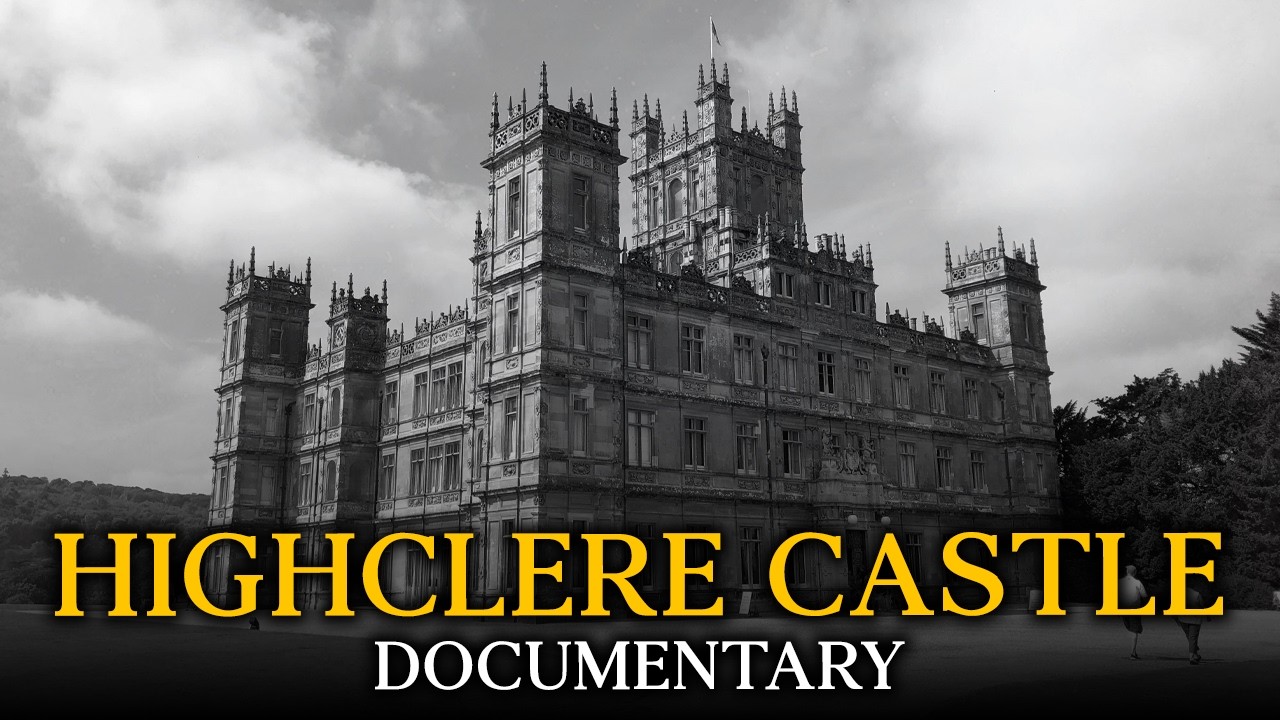
With staff wages, heating, repairs, and the social obligations of the aristocracy, the Earl’s agricultural income of around £10,000 a year was far from sufficient. By the early 1890s, the estate was weighed down by debt, and the unmarried Earl faced a grim financial outlook. The rescue came in 1895 through his marriage to Lady Almina Wombwell, then 20 years old. Though officially the daughter of Frederick Wombwell, Almina was widely believed to be the unacknowledged daughter of Alfred de Rothschild, one of Britain’s wealthiest bankers.
Rothschild provided a settlement of £500,000, a sum worth tens of millions in today’s money, which cleared the estate’s debts and provided ongoing income. In exchange, the child Rothschild could not publicly claim became a countess, and her children would carry an ancient title. The marriage was not loveless, but it was a transaction as much as a romance—money for legitimacy. Almina took on the immense task of managing the estate, overseeing a staff of 30 to 50 people and hosting lavish gatherings that placed Highclere at the center of Edwardian society.
With Rothschild funding, the castle gained electric lighting, modern plumbing, and updated kitchens. But the wealth also raised expectations, and the castle continued to consume resources at an extraordinary pace. The Earl, meanwhile, developed a passion for Egyptology. After a serious car accident in 1901 left him with chronic breathing problems, he began wintering in Egypt.
There he met the meticulous excavator Howard Carter, and beginning in 1914 the Earl funded expeditions in the Valley of the Kings. For years the digs yielded little, and the Earl, who had spent an estimated £35,000 on the project, was ready to withdraw funding. Carter persuaded him to finance one final season. In November 1922, Carter discovered the intact tomb of Tutankhamun.
It was the richest archaeological find in history, filled with gold, statues, and the mummy of the young pharaoh. The Earl became the public face of the discovery, a global celebrity lauded as a patron of science. But the fame and pressure took a toll on his fragile health. The Earl died in Cairo on April 5, 1923, at age 56.
The official cause was pneumonia brought on by blood poisoning from an infected mosquito bite that he had irritated while shaving. Almina was at his bedside. The death was tragic, but for the press it was an opportunity. Newspapers quickly spread a story that the Earl had been struck down by a curse—ancient retribution for disturbing the pharaoh’s rest.
No such curse inscription existed in the tomb, but the story was too irresistible to check. The curse legend grew with embellishments: claims that all the lights in Cairo went dark at the moment of his death, and that his dog at Highclere howled and died at the same instant. Neither account holds up under scrutiny. Power outages were common in 1920s Cairo, and there is no contemporary record confirming a synchronized citywide blackout.
The dog’s death, according to estate staff, came hours later, not simultaneously, and the howling is unverified. The stories appeared days later in British papers, sourced vaguely and shaped into narrative. Yet the curse became a permanent part of the legend, overshadowing the scientific achievement and fueling a myth that persists a century later. Returning to Highclere as a widow, Almina faced the challenge of maintaining the castle without her husband.
The Rothschild money was finite, agricultural income was declining, and the estate entered a long period of quiet financial strain. Deferred repairs accumulated, and the curse story lingered as an eerie part of the estate’s identity. Decades later, the estate was in serious trouble again. The eighth Earl and Countess, who inherited in 2001, faced an estimated £12 million in essential repairs, including the roof, stonework, and infrastructure.
Income from land and tourism could not cover the costs. In 2009, a television production company approached the family about filming a period drama at the castle. The show was “Downton Abbey. ”
When the series aired and became a global phenomenon, Highclere was transformed.
Visitor numbers more than doubled, reaching up to 1,200 people on peak days. The surge in revenue allowed the family to begin the long-delayed repair work, with roughly £1. 8 million in urgent repairs completed by 2013. But the rescue came at a cost: the castle became inseparable from a fictional story, and its real history became secondary to the on-screen narrative.
The constant maintenance is now a grinding reality. The roof is repaired section by section, using specialist craftsmen who match 1840s techniques. Bath stone weathers badly and requires careful, expensive restoration. Electrical wiring, plumbing, and heating systems all need updating, subject to heritage approvals.
The work is unglamorous, perpetual, and expensive, and the estate survives on a financial tightrope. Highclere has been rescued twice by attention built on stories that are not entirely true. The curse myth created fame and interest, but reduced the Earl to a victim of supernatural vengeance. “Downton Abbey” created revenue and survival, but framed the castle as a symbol of nostalgic elegance, obscuring the financial desperation and labor that the real house always depended on.
The estate must balance its documented history with the myths that attract crowds. Each generation of the family has made a bargain to keep the castle standing. The fifth Earl traded privacy and the pretense of a purely romantic marriage for Rothschild money. Almina traded years of her life managing an unrelenting machine.
The current family has traded the privacy of their home for public spectacle and screen tourism. The stone keeps weathering, the roof keeps leaking, and the bills never stop. Highclere survives because someone, at every critical moment, has been willing to pay the price.