In the winter of 1999, one of the most recognizable athletes in American history stood in front of a crowd of reporters and calmly explained that his own body was killing him. Walter Payton, the Hall of Fame running back who had defined the Chicago Bears for thirteen seasons, revealed that he was suffering from a rare liver disease that had been destroying his body for years. The man who had never missed a game due to injury, who had built his entire legend on punishing opponents and refusing to stay down, was now facing the one thing he could not outrun. Walter Payton was not just the greatest running back to ever play the game.
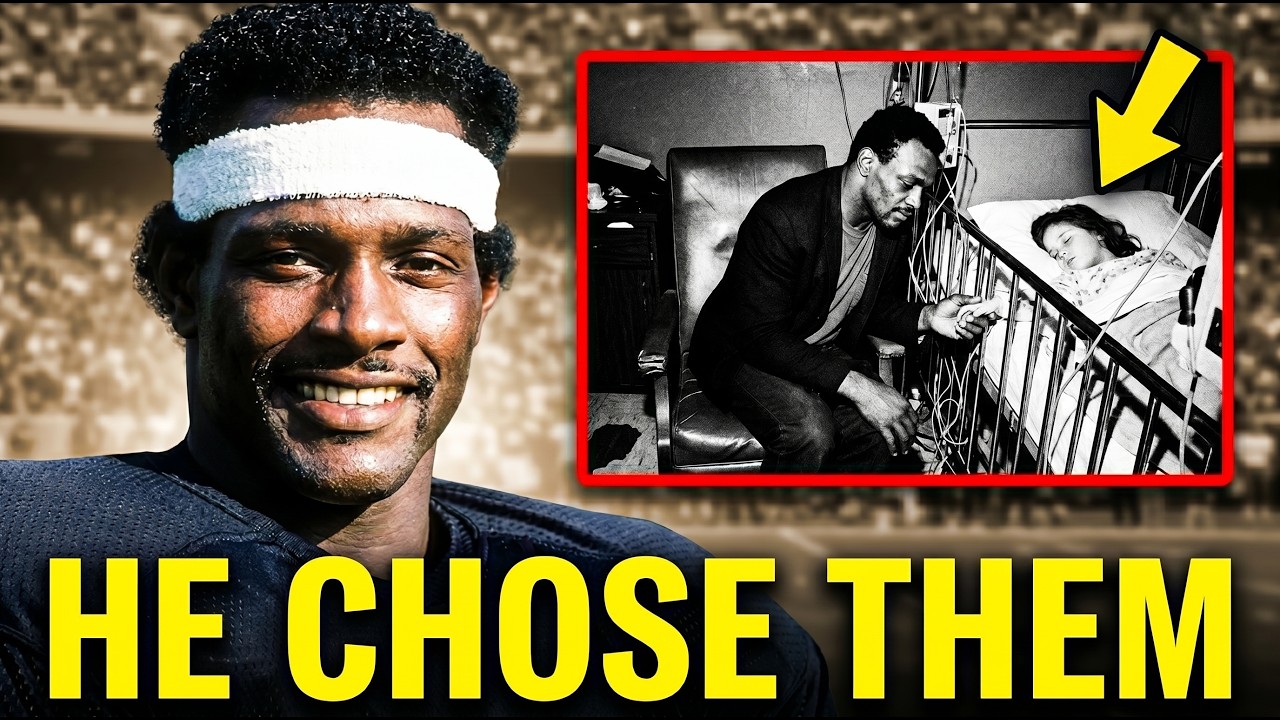
He was a Super Bowl champion, a nine-time Pro Bowler, the NFL’s Most Valuable Player, and the man who had broken the all-time rushing record that had stood for nearly two decades. He was a cultural force in Chicago, a city that would have done anything for him. He had a wife and two children at home. And he was dying.
The diagnosis was bile duct cancer, a brutal and rare disease that affects roughly three people in every 100,000, one that inflames and blocks the bile ducts before slowly destroying the liver from the inside out. The only treatment was a liver transplant, and even that was not guaranteed to work. But instead of using his fame to jump the line, to call in favors, to use the weight of his name to move up the waiting list, Walter Payton did something that should have made him the most celebrated man in America. He waited.
He stood in the same line as everyone else. He did not make phone calls. He did not use his name. He knew there were people on that list who had no famous name, no connections, no one to advocate for them, and he refused to let his celebrity be the thing that put him ahead of them.
He waited, just like everyone else had to wait. And then, while he waited, he started fighting for other people. In May of 1999, just months before his death, Walter Payton appeared in a public service announcement on the television show Touched by an Angel, asking viewers to become organ donors. He spent what was left of his energy, the last drops of his failing health, telling strangers to sign up, to give someone else a chance at the life they might otherwise lose.
The man who was fighting for his own life was spending his final months fighting for the lives of people he had never met. Walter Payton had been told to die easy. His college coach, Bob Hill, had given him a piece of advice early in his career that had become the central code of his life. “If you’re going to die anyway,” Hill told him, “die hard, never die easy.
” Payton had lived that way on the field, attacking defenders instead of avoiding them, turning what should have been the end of a play into a nightmare for the defense. He had never run out of bounds to avoid a hit. He had never taken the easy exit. And now, at the very end, when the choice was between his own comfort and someone else’s chance, he did not take the easy way out.
There is one moment from his career that sums up who Walter Payton really was, and it happened in the biggest game of his life. In 1985, the Chicago Bears dominated the NFL and reached the Super Bowl in historic fashion. But Walter Payton, the greatest running back who ever lived, was held to just 61 yards on 22 carries in that game. Blockers, receivers, and backups all crossed the goal line.
Walter Payton did not score a single touchdown. It remains one of the most dominant performances in Super Bowl history, yet the greatest running back of all time did not get into the end zone. His coach, Mike Ditka, would later say that not getting Walter Payton a touchdown in that Super Bowl was the thing he could never fix, the greatest regret of his entire career. But Payton never complained.
He never blamed anyone. He just went back to work. Now, in the final months of his life, that same quiet strength was on full display. While he waited for a liver that would never come, he spent his remaining days in the spotlight, not asking for help, not complaining about his own fate, but using the platform he still had to encourage others to save lives.
He never said “Why me? ” His former teammate, Matt Suhey, would later say, “I never heard him say, ‘Why me? ‘ I know I would have been saying, ‘Why me? ‘ I never heard Walter say that.
”
In the end, Walter Payton died on November 1, 1999. He was 45 years old. He never got his transplant. He never used his fame to cut the line, never once made it about himself.
He stayed in the same line as everyone else, and he spent the last healthy months of his life making sure other people might get the chance he would never have. In a culture that rewards celebrity with every conceivable shortcut, Walter Payton declined the shortcut. He was the best who ever played, but the most important thing he ever did happened off the field, in the quiet space between a diagnosis and a death, where a man decided for the last time who he was. He had been told his whole life to never die easy, and he did not.
He waited the way everyone else had to wait, and he spent what was left of his life fighting for everyone else.