When Prince Philip was laid to rest on April 17, 2021, only thirty people were permitted inside St George's Chapel at Windsor Castle. Every name on that list belonged to the Windsor family, had married into it, or came from Philip's scattered German relatives. Then there was the thirtieth guest, a woman who fit none of those categories. Her name was Penelope Knatchbull, and for nearly thirty years she had been the closest companion Prince Philip had in the world outside his wife.
The country has always kept a ready word for a woman in that position. This is the story of how that word took hold, what it was actually built on, and the quieter, stranger truth it concealed — told from that one church seat no one could quite explain.
Penelope Eastwood was born in London in the spring of 1953 into a family whose wealth was only one generation old. There were no titles behind her, no inherited country house, no aristocratic ancestors. What stood behind her instead was meat. Her father, Reginald Eastwood, was born in 1912 and began his working life, by his own account, as a butcher's apprentice at fifteen. From that start he built a substantial fortune, launching a chain of steak restaurants in London in the early 1960s. At its peak the business was said to turn over around £20 million a year and to sell roughly 700,000 steaks annually. It was loud, modern money — the kind that smelled of grills and cash tills.
Her mother was Marion Hood, and she had a younger brother named Peter. This was a close, ordinary, hardworking family that had become rich suddenly. The money made Penny a wealthy girl. It did not make her a society lady. In the England she was born into, those two things were not the same, and everyone involved understood the difference perfectly. She grew up on the wrong side of a line the aristocracy drew very quietly and never spoke aloud.
She was nonetheless educated for a wider world, schooled in Switzerland and then at the London School of Economics, where she graduated in 1976. That detail matters because it tells you who she was before famous names entered her life. She was not a society girl drifting through the London season on the strength of a family name. She was educated abroad, good with numbers, self-possessed — a young woman who had learned how to think and how to keep her own counsel. Those two habits, thinking and silence, carried her deeper into the royal family than her father's millions ever did.
She was still in her early twenties, around twenty-one, when she met the Queen and Prince Philip in the mid-1970s. It did not happen at a grand ball. It happened through horses and open air — the world of weekend parties and country sports, where classes mix more freely than they do in drawing rooms. Prince Philip, born in the summer of 1921, was thirty-two years her senior, a man in his fifties who had been at the heart of British life for a generation. Yet something in that acquaintance lasted and continued throughout his life.
To grasp how strange this was, place the two worlds side by side. On one side, a family rooted in the last Viceroy of India and standing at the head of the British Crown. On the other, a girl whose father rose from butchery to sell steaks by the ton. Broadlands, the Hampshire house she would later call home, was a Grade I listed mansion of around sixty rooms. It was the house where the Queen and Prince Philip spent their honeymoon in 1947, and where Charles and Diana spent the first three days of theirs in 1981. It was the kind of place that swallowed new money whole and rarely let it near the family. Penny entered that place and stayed for more than forty years.
It is tempting, looking at all this, to see calculation — a clever girl climbing on the arm of an older man. But the woman the records actually describe did not climb through charm and dazzle. She watched while others performed, and stayed quiet while others showed off. In a world that runs on who speaks loudest at dinner, she was known for saying little and missing nothing. It is a rare kind of ambition, if it was ambition at all, that advances through reticence rather than display. It is the first piece of evidence that the story the newspapers wanted to tell was about the wrong woman.
Set the numbers of that fortune beside the world she was trying to buy into and the gap becomes almost comic. Reginald Eastwood started with a butcher's apron at fifteen and floated his company on the London market in the winter of 1964. Broadlands, by contrast, had stood in its park for nearly three centuries and had once been the seat of a Viceroy of India. Her father counted success in shares sold and millions earned in a year. The family she joined counted success in reigns and wars survived. Penny spent the rest of her life closing that gap, and she did it so quietly that most people never noticed she was there at all.
Later, the country looked at that ascent and chose the simplest explanation — the one that always sells. A beautiful young woman. An older, powerful man. The oldest story in the world. But the plain facts of who she was contradict that story strangely from the outset. She did not reach the heart of the royal family through seduction. She reached it through thinking and watching. And she did it first through a marriage that began in the shadow of the worst grief the family had ever known.
Eight weeks before Penny Eastwood joined them, the family she was about to enter had been a target for slaughter. The house she joined in the autumn of 1979 was a house in mourning. On August 27 of that year, at Mullaghmore on the coast of County Sligo in Ireland, the IRA assassinated Lord Louis Mountbatten. He was seventy-nine, the last Viceroy of India, and Prince Philip's uncle — the man who, more than anyone else, had been an anchor for the rebellious young Philip.
That morning Mountbatten had left his summer home at Classiebawn Castle to check lobster pots in a small wooden boat called Shadow V. A bomb estimated at around fifty pounds of gelignite was hidden aboard. It was detonated by a signal from the shore as soon as the boat cleared the harbour. Mountbatten was not the only one killed. Also aboard were members of the Knatchbull family — the same family Penny was about to marry into. Nicholas Knatchbull, a boy of fourteen and one of a pair of twins, was killed. So was Paul Maxwell, a local boy of fifteen who was helping on the boat. Doreen, the Dowager Lady Brabourne, aged eighty-three, died of her injuries the following day. The boys' parents, John and Patricia, and the surviving twin, Timothy, were badly wounded. A man named Thomas McMahon was later convicted of the murders and sentenced to life imprisonment in November of that year.
The Mullaghmore killing was only part of the day's atrocities. At midday the same day, at Warrenpoint in County Down, the same organisation ambushed a convoy of British soldiers and killed eighteen of them. It was the heaviest loss of life suffered by the British Army during the Troubles. It was a day designed to strike the state at its most vulnerable points at once — the royal family on one coast and the army on the other. It succeeded beyond anything its planners could have hoped.
For Prince Philip, that August day took the man who had taken him in as family when his own family had collapsed. For the Knatchbull family, that midday destroyed a household, killing a grandfather, a grandmother and a fourteen-year-old son, and wounding the rest. And in the middle of that raw, burning grief, just eight weeks later, Penny Eastwood entered as a bride.
She married Norton Knatchbull, Lord Romsey, on October 20, 1979, at Romsey Abbey. He was Lord Mountbatten's grandson and Prince Philip's godson. The wedding thus gathered the entire grieving circle into one church. Prince Charles, the future King, stood as the bride's attendant. Penny was twenty-six years old. She had chosen, or fate had chosen for her, to bind her life to a family that had just learned, in the most terrible way imaginable, how quickly the people you love can be taken.
There is a quiet significance in that timing that the later scandal never wanted to see. Penny did not enter the royal circle through a party or a triumph. She entered it at the edge of a grave. The first thing she shared with the family she joined, and with the grieving uncle at its heart, was loss. That is the ground on which the friendship grew, and it is a fact worth holding onto, because grief defined this relationship far more than desire ever did.
It is hard to absorb the scale of what happened in that single midday. Fifty pounds of explosives, a man of seventy-nine, a woman of eighty-three, a boy of fourteen and another of fifteen, all gone within one day. Eighteen soldiers killed at Warrenpoint in the same few hours, with one conviction and a life sentence handed down that November. These were the numbers hanging over the house Penny entered by marriage. No wedding, however carefully arranged, could have erased them.
The man she married carried all of it in his name. Norton Knatchbull was born in 1947, the godson of Prince Philip and grandson of Lord Mountbatten, and a second cousin of the man who is now King. He was known as Lord Romsey for a quarter of a century, then Lord Brabourne, and finally, after his mother's death, Earl Mountbatten of Burma. He was the doorway through which Penny entered the family, and the grief of that August was in his blood before she even took his name.
Overnight she became Lady Romsey, the future mistress of Broadlands, and a fixture in a circle centred on a man she had already met — the godfather of her new husband, Prince Philip. She was inside now, married into the line of the murdered Viceroy, standing beside the prince who had loved him most. At last the butcher's daughter had found a place at the table. What she did with that place over the following forty years, and how she earned the trust of the most reserved man in Britain, is where the real story begins.
To understand why she was allowed so close to him, you first have to understand the boy he had once been. Prince Philip learned very early that the people who were supposed to be permanent could vanish, and he never forgot who stayed. That single fact about his childhood explains his loyalty to Penny Knatchbull better than any rumour, and it applied to him long before she was born.
He came into the world in the summer of 1921 on the island of Corfu, said to have been born on a kitchen table in a house called Mon Repos. He was a prince of Greece and Denmark by birth and owned nothing else to his name. Before he was two, his family was expelled from Greece into exile, and the story goes that the infant was carried out of the country in a cot made from a fruit box. It was a fitting start for a boy whose entire childhood would be temporary, borrowed and easy to take away.
The losses came steadily after that. When he was about nine, in 1930, his mother, Princess Alice, who had been born deaf and suffered a severe mental breakdown, was taken to a sanatorium and effectively disappeared from his daily life for years. She had not died. She had simply gone. To have someone present somewhere in the world and unreachable is, in some ways, the hardest thing for a child to absorb. His father drifted away to the south of France to live his own independent life. His four sisters all married into German princely families within a short period and were drawn off into their own households and countries.
Add those losses together. A family blown apart, and a small boy left standing in the space where a family had been. What held him in the absence of all that were other people's houses and strict institutions. He was passed between relatives, and above all to his Mountbatten relatives in England. He was sent to Gordonstoun, the spartan school on the Moray Firth in northern Scotland whose headmaster believed in shaping character through hardship and discipline. It suited a boy who had no warm home to return to at the end of term, and he adapted to it, forging something formidable out of that harshness.
From there he joined the Royal Navy and served with real distinction during the Second World War, and was mentioned in dispatches. By the time the country knew him beside a young princess, he was a straight-backed, self-contained naval officer who appeared entirely in command of himself. That man had built plank after plank over the wreckage of that child. But a self assembled that way keeps its oldest debts. A person who learns as a boy to expect nothing and ask for less does not easily give up the few who were kind to him before the walls went up.
People from the past — those who gave him a place at the table when he had none — stayed fixed in his affection in a way that later and grander relationships never matched. That is the deep architecture of the man, and it is the key to everything the country would later misunderstand. His loyalty ran backwards, toward everyone who had been present in the cold years, and it was a loyalty that did not submit to anyone's questions.
He was in his fifties and in exactly that frame of mind when he came to know Penny. She entered his world in the mid-1970s before her marriage, through horses and country weekends, which were his natural element away from the cameras. He had given up polo in 1971 and was turning with real seriousness to a new and demanding sport. Here was a young woman, clever and self-contained, who understood that world and asked nothing of him at all. Then, within a few years, she married his godson and buried herself in his family's griefs. She became, through her marriage and her nature together, one of the people who belonged to a time that had passed.
The public record of the man she stood beside is full of numbers few human lives can match. He was married to the Queen for seventy-three years, the longest-serving royal consort in British history. He carried out more than 22,000 solo engagements before retiring from public duties in August 2017 at the age of ninety-six. He served as president of the International Equestrian Federation from 1964 to 1986, and in that role helped set the modern rules of the very sport he was about to share with a grieving young woman.
That was the stature of the person who chose, of all the people in the world, to place his trust in the heiress to a London steakhouse chain. This is the balance the whole story needs, and it should be here at the beginning. When the country later searched Philip's devotion to Penny Knatchbull for a hidden love affair, it was interpreting a lonely man's loyalty and assuming it must be a lover's loyalty. Another explanation was available all along, quieter and more human. A boy abandoned by illness and distance and the bad luck of history grew into a man who did not abandon people in return. He held on to his intimates beyond all logic, and he never once justified himself to anyone who asked. Penny became one of those intimates. Then, in the autumn of 1991, the two were given the one thing that would bind them forever.
In the autumn of 1991, a five-year-old girl was buried on the grounds of Broadlands, and the nature of their friendship changed forever. Everything the country later found suspicious about Penny Knatchbull and Prince Philip has its true source in that grave, and in a particular kind of pain that two people who have each lost something irreplaceable can genuinely share.
Penny and Norton had three children. The youngest was a daughter named Leonora, born in the summer of 1986. She was a bright and much-loved child. While she was still very small, she developed kidney cancer. The family did everything families like theirs do. It was not enough. On October 22, 1991, Leonora died. She was five years old. There is no way to phrase that sentence that makes it bearable, and no scandal in the world is large enough to stand beside it. A mother buried her small daughter. The earth did not care in the slightest who her friend was.
What Penny did next tells you almost everything about her. Leonora was not buried in a distant churchyard but on the grounds of Broadlands itself, in the garden of the great house, where she could be seen from its windows. Penny is said to have insisted on it, even over the initial opposition of her husband, who felt a grave so close would prevent them from ever moving past their grief. A close friend later put her reasoning into words for a magazine. She wanted Leonora somewhere she could see her and stay with her always. So she would never leave Broadlands. Ever.
It is one of the most quietly devastating sentences in the whole story. A woman tied herself to a piece of English ground for the rest of her life because her child was in it. And it was here, in the middle of all this, that Prince Philip drew closer. Ingrid Seward, the royal biographer who studied his life longer than anyone else, records the moment simply. She writes that Philip befriended Penny when her life began to fall apart. He was the one who encouraged her to take up carriage driving. He did not merely send a note and withdraw. He pulled a shattered young woman toward the one thing he knew might hold a broken person together — hard physical work in the open air. And then he stayed beside her while she learned it.
To know why he, of all people, understood, remember the boy from earlier. Here was a man who lost his mother to a sanatorium while she was still alive, and watched his entire family scatter across a continent. A man who lost his beloved uncle when his boat exploded on an August morning. He knew in his body the specific loneliness of the bereaved — the way grief isolates a person from everyone who has not felt it. He saw in Penny someone standing exactly where he had once stood. What drew them together was the one thing no one outside the edge of a grave can truly fake. It was a sense of sameness.
This is the heart of the whole matter, and it must be handled gently, because the temptation to cheapen it is precisely the temptation the country later gave in to. A prince in his seventies and a woman in her late thirties, joined by a small grave and a set of reins. There are two ways to read that picture. The first is the way the tabloids read it, rushing straight to romance. The other is the way the evidence actually supports. A man who survived abandonment quietly refusing to let another person face the worst alone. The second reading is the quieter one. It asks more of you. And it is the one the records point to again and again.
Out of that unbearable loss, Penny built something that would last. In her daughter's name she helped found a children's cancer charity, the Leonora Children's Cancer Fund, so that other families facing the same illness would have what hers lacked. It was the reaction of a practical woman to an unhealable wound — to turn the pain outward, to make it useful, to give the death of a five-year-old a meaning beyond her own ache. That instinct to contain pain and put it to work rather than display it is the same instinct that defined her friendship with Philip. Neither of them believed in speaking their pain aloud. Both believed in carrying on.
And so two very different losses met on common ground. His loss was old and layered — a mother taken while still alive, a father drifted away, a family scattered across a continent, an uncle killed in a boat. Hers was fresh and sharp and painfully specific — a small girl in the garden soil. More than thirty years and every difference of birth and station separated them. But grief is the great equaliser among human beings, and it does not ask for credentials at the door. In the bare fact of loss, a prince of the royal family and a butcher's daughter became, for once, exactly equal.
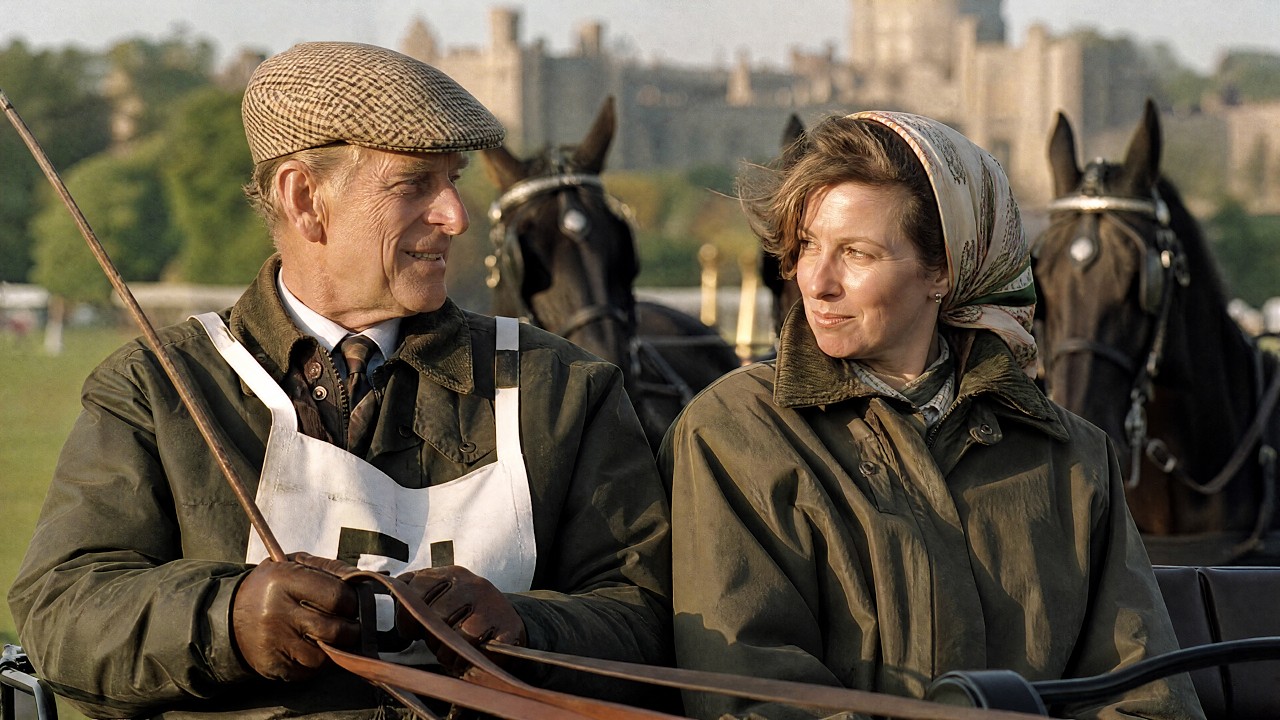
This is the moment on which every accurate source agrees the friendship truly deepened. Before 1991 there had been an acquaintance of about fifteen years, warm but ordinary, the kind families quietly accumulate. After 1991 it was different — a closeness that would draw comment for the rest of their lives. The country, seeing only the closeness and not the cause, misread it, imagining a spark where there was in fact a wound. The friendship did not begin with desire. It deepened in a graveyard, and any honest account of it has to start there, or not start at all.
One thing should be said carefully, because it is the most human part of the story and the easiest to spoil. There is a version of those years that lingers on the small grave for effect, turning a real mother's suffering into a soundtrack for a scandal. This account will not do that. What matters is the simple sequence. A child died. A grieving woman was guided toward a way of carrying it. The man who guided her had carried far more for far longer, and never said so out loud. That is the friendship. Everything else was invented later by people who were never there.
Grief has its own long timetable, and this grief lasted for decades. The friendship that formed after Leonora's death did not flare and fade. It settled into a steady, lifelong relationship, sustained on horseback and in carriages, at horse shows and country houses, for the next thirty years. Penny went on, in her daughter's name, to build a lasting monument in the world — a children's cancer charity that still carries on its work today. But the private monument was always that grave in the garden. And the private consolation was that old man who showed her how to keep breathing. The newspapers spent three decades trying to turn that into a love story. It began, and remained, at a child's headstone.
There was one place where a prince and a much younger woman could stand side by side for hours and have it called nothing but sport. That place was the strange, demanding and deeply unglamorous world of competitive carriage driving, and understanding it solves half the puzzle at a stroke.
Prince Philip gave up polo in 1971, at forty-nine, when his hands and wrists could no longer take it. Most men of his station would have retired gracefully to the sidelines. He did the opposite. He threw himself into carriage driving — a sport in which the driver controls a team of horses pulling a carriage through three gruelling phases. A formal driving test. A marathon cross-country race full of hazards. A cone course that tests the nerves. It is a cold, muddy, dangerous sport with no glamour and no spectators to speak of. He helped popularise it in Britain, competed for the country, and kept at it into his eighties. It was, by every measure, the passion of his later years.
And it was into this world that he drew Penny after 1991. For a grieving woman it was almost ideal. It demanded her full attention. It filled the early mornings, which are the hardest hours for the bereaved. It placed her among horses and open country. And it gave her, week after week, the steady company of the one man who understood exactly what she was carrying. They appeared together at the Royal Windsor Horse Show year after year — an ageing prince and his driving companion, in a setting so public and so ordinary that no photographer on earth could turn it into a secret.
That last point is where the scandal always tripped. A secret relationship hides itself. This friendship did the opposite. It was conducted in the most watched sporting arena the royal family owns, in broad daylight, in front of grooms and organisers and crowds and cameras, season after season for nearly thirty years. You do not hide an affair at the Royal Windsor Horse Show. What you can do there with complete safety is accompany a friend, because the setting itself justifies your being beside each other. The sport was the alibi. And the remarkable thing is that the alibi was entirely true.
There is another fact that quietly demolishes the idea of a private code between two lovers. Penny was never the only person Philip drew into his sport. He also encouraged his daughter-in-law Sophie, the Countess of Wessex, to take it up. In the next generation, his granddaughter Lady Louise Windsor learned it and took charge of his horses and carriage after his death. Carriage driving was not a secret language spoken by two people. It was a shared discipline across three generations of the Windsor family. Penny was simply the companion who took it most seriously and stayed at it longest. A prince and a younger woman side by side at a horse show were doing nothing the rest of the family was not doing.
Compare the scale of that with the timeline. A sport he took up in 1971 out of pure stubbornness when the game he loved was closed to him. A grieving woman drawn into it twenty years later. Another thirty years of early rising, cold fields and long drives across the country. It lasted into his nineties. A daughter-in-law and a granddaughter carried it on after him. That is not the shape of a hidden affair. It is the shape of an obsession shared generously with the people an old man wanted kept close. And every part of it happened in front of everyone.
The world she entered was not one of glamour. Competitive carriage driving is a life of horse boxes and mud and cold hands before dawn. It is grooms and vets and the smell of leather and horses, wet harness and wheel inspections, and tracks driven in the rain. There are no red carpets and very little money in it. For a woman whose days had been emptied of meaning by the loss of a child, that hard, exhausting, unromantic routine was a kind of mercy. It demanded everything of her body and left no room in her head for anything else, which is exactly what the grieving need and rarely find.
And so the pattern took hold, and it held for nearly thirty years. Every spring the Royal Windsor Horse Show is held in the shadow of the oldest and largest inhabited castle in the world, and the old prince and his driving companion appeared together on the course. The press photographed it every year. The organisers saw it. The crowds saw it. There was nothing furtive in any frame of those pictures. Two people who had found in an exhausting sport both an occupation and a steady companionship, doing the same thing in the same place at the same time every year in front of a nation free to watch as much as it liked.
It gave her something else too — something grief had taken from her. A standing in that world on her own terms. She was not there as anyone's wife or anyone's guest. She was there as a driver, as a competitor, as someone with a difficult skill who earned her place among the ranks of carriage people like anyone else. The heiress to a steakhouse chain had found the one corner of royal life where new money and old blood were equal in the mud. And she had earned her place in it honestly. That too is part of why Philip valued her. Her place beside him was not handed to her on a plate. She worked for it in the cold for years.
But a friendship that continues in public, year after year, gives the watching world an image it can caption however it likes. Every photograph of the two of them together on a carriage was, to an honest eye, a picture of two friends practising their sport. To an editor looking for a story, it could be made to look like something else entirely. The very openness that proved there was nothing to hide became, in the wrong hands, raw material for insinuation. They drove in daylight precisely so that no one could say they had hidden. The newspapers took the daylight pictures and gave them a shadow anyway.
The psychology underneath is worth pausing on, because it is where the two of them genuinely met. Carriage driving is a discipline of control under pressure. A driver holds several powerful animals steady amid fear and mud and speed, keeping a firm hand on forces that badly want to run. For a man who had built his entire self on holding difficult things steady, and a woman relearning how to hold on to a life that had nearly slipped away, the sport was far more than exercise. It was a physical, public embodiment of what each of them was already doing inside. They were two people who knew how to hold on, sitting together, holding on. The country, watching them do it in plain sight, decided the reins must have been a cover.
The royal biographer who studied his life longest gave Penny a title no wife could hold. It was not the title the newspapers wanted. In her 2020 book, Prince Philip Revealed, Ingrid Seward — long-time editor of Majesty magazine and one of the most precise chroniclers of the modern royal family — pinned down the truth of the friendship in words that have shaped every honest account since. Seward described Penny as the second most important woman in the Duke of Edinburgh's life. Not a mistress. The second most important woman in a life whose most important woman was the Queen of the United Kingdom herself. She called Penny his constant confidante, his loyal companion, his keeper of secrets, and a reference point on royal life.
These are not the words of scandal. They are the words for something more intimate than any scandal and far rarer. Plenty of powerful men have had mistresses. Very few have had a keeper of secrets. Think about what that phrase really means for a man like Philip. He was someone who had trained himself since boyhood to disclose nothing, to keep his pain where it could not be seen, and to answer the whole world with a hard shell and a sharp joke. For a man like that to have a keeper of secrets is extraordinary. It means that somewhere behind his armour there was one room that no one outside his marriage was allowed into but one person. And that person was Penny.
Anything he could not say to a member of the household, or to one of his children, or to an audience, he could say to her. That is a form of trust deeper than most marriages reach. And he gave it to the heiress of a London meat restaurant chain. Seward's detail adds a great deal to this picture. She records their presence together at the Royal Windsor Horse Show for years. She describes them dancing together at the Royal Yacht Club. And she captures the essential thing about how they handled it, writing that neither of them cared who saw them or what anyone might say.
That single line carries the whole paradox. Two people behaving with complete openness in full view of the institution that watched them, precisely because they had nothing to hide and refused to act as though they did. The guilty hide. These two danced. Seward is entirely clear about the boundaries, and any honest account must be equally clear. She notes that Philip never discussed the private details of his marriage with anyone at all. And her considered judgement, drawn from all her years of study, is that nothing improper ever happened between him and Penny. No reliable biographer has ever proved otherwise.
What the record does show is closeness, trust and a depth of reliance that was highly unusual. And there is no evidence at all of the thing the headline quietly implies. The scandal, when held up to the light, keeps turning into a friendship. The scope of access widened over the years in ways that can only be explained by deep trust. Seward records that Penny offered her perspective on outside matters to both the Duke and the Queen. And after Philip's road accident late in life, she was included in the family conversation about whether he should keep driving.
Consider that for a moment. When the most private family on earth had to make a delicate, painful decision about their patriarch's independence, Penny Knatchbull was in the room for it. That is not the position of a scandal to be hidden and managed. It is the position of a trusted member of the inner circle, consulted on the most sensitive matters the family faced.
There is one small, telling detail that sums up her place in that world better than any grand phrase. On Prince Philip's guest lists, her name appeared so regularly, event after event and year after year, that she acquired a wry nickname in the household. She was known simply as "and others." Wherever the Duke was going, she was there, added to the list as a matter of course. A presence so familiar that she had stopped being a name and become a habit. It is a joke, but it is also an accurate picture. And others, always there, never quite the point of the story. A woman woven so deeply into the daily fabric of his life that the household had long since stopped remarking on it.
The depth of that trust showed most clearly near the very end. In January 2019, at ninety-seven, Philip was driving near the Sandringham estate when his Land Rover overturned in a collision. He emerged unhurt, though two women in the other car were injured, and within weeks he surrendered his driving licence. It was a small, brutal moment in the life of a fiercely independent man — the moment of handing over the keys and admitting to age. And in the family's careful handling of it, Penny was present. One of the few trusted people brought into the question of how to persuade a proud old prince to stop. She was consulted about his dignity, the most sensitive thing any family deals with.
So set aside for a moment the word the headline suggests, and look instead at the role the record actually describes. A confidante is someone you tell the truth to. A keeper of secrets is someone you entrust with the facts that could hurt you. A reference point is the thing you measure other things against to test their truth. Ingrid Seward, searching for words to describe what Penny was to Philip, chose all three. None of them is the word for a mistress. Each is the word for something a lonely, reserved, formidable old man needs and very rarely finds. A safe person to be unguarded with.
And there is a quiet astonishment about who was granted that trust. Not a duchess, not a lady-in-waiting raised to the role over generations. A woman whose father worked in the meat trade, who graduated from a London university and married into the family only twenty years earlier. The most reserved man in Britain, with the entire aristocracy to choose from, chose to be unguarded with the heiress of a London steakhouse. Whatever else this is, it is a story about worth that outruns lineage, and about a man in his later years who valued the person rather than the pedigree. It is a far better story than the one the newspapers told. It simply sells fewer copies.
So the honest answer to the headline's promise is already clear here, in the middle of the story. And it is stranger than the lie. Was there something more between Prince Philip and Penny Knatchbull than the public knew? Yes. There was a bond of trust so complete that a reserved man handed a commoner the key to the locked room inside him and kept her close through the most private decisions of his old age. That is the "more." It is deeper than the whispers ever guessed. It was simply never what they assumed.
And the one fact that confirms it is the reaction of the only woman in the world who had every right to object, and who never once did. The one person who could have ended the friendship with a single word instead chose this woman to sit in the closest seats. To understand why that scandal never caught fire, you should not look at Philip or Penny at all, but at the Queen, and at what her settled acceptance of the friendship over decades tells you.
No one on earth was better placed to watch this friendship closely than the Queen herself. The friendship between her husband and Penny Brabourne took place entirely under her gaze — at her horse shows, in her houses, and within guest lists she personally reviewed. If there had been anything to fear in the relationship, she was the one most likely to see it. And she, more than anyone, had the power to end it. A quiet word, a revised invitation, a gentle sidelining, and Penny would have faded to the margins of royal life, as unwanted friends always had. None of that ever happened. The opposite happened. Penny stayed close, year after year and decade after decade.
Ingrid Seward, again the most precise witness, speaks plainly about the Queen's own reading of it. Her widely reported judgement is that the Queen was confident nothing happened between Philip and Penny, and that the bond between the two women and the man they shared was, in Seward's phrase, somewhat complementary. It is a genuinely remarkable idea. The friendship was not a wound the marriage tolerated in spite of itself. It was, in some way, part of the fabric of the family, and according to Seward's view it was accepted rather than resented by the wife at the centre of that marriage.
Care is needed here, and this account keeps to it faithfully. No one can slip into the private depths of a seventy-three-year marriage and report what the Queen truly felt in the late hours about the young woman driving carriages beside her husband. That is exactly the kind of claim an honest version of this story refuses to make. What can be stated is what the Queen did and what those who studied her character closely concluded from it. What she did was bless the friendship in every way a queen can express, right up to the final moment.
Because when the time came to bury Prince Philip, and the pandemic's harsh arithmetic cut attendance to just thirty people, it was the Queen who decided who those thirty would be. The guest list, by all accounts, was her personal choice. She could have filled those thirty seats with Windsors and blood relatives, and no one on earth would have objected. Instead she gave one of those irreplaceable seats to Penny Mountbatten. A wife, deciding who would stand at her husband's coffin, chose to include the woman the whole country had spent thirty years whispering about. That decision alone says more than any denial could.
This is the fact that defused the scandal, and the reason the tabloids could never land their blow. A secret relationship is something a wife discovers and a marriage conceals. This was the exact opposite in every detail. The friendship was public, conducted in front of the Queen for four decades, and she kept that woman close even at the edge of the grave. You cannot cover up something that is publicly blessed by the only person entitled to object. The Queen's open acceptance across forty years, all of it under her gaze, spoke for itself. Those who studied her life, Seward foremost among them, read that steady containment as a considered judgement that there was nothing to fear in the friendship.
It is worth remembering what kind of marriage could accommodate that. Elizabeth and Philip married in 1947 and remained married for seventy-three years, the longest union in the history of the British Crown. She once described him, in a rare public tribute on their golden wedding anniversary in 1997, as her strength and stay all these years. This was not a fragile or distant partnership that might shatter at the first appearance of a rival. It was one of the most enduring marriages in modern royal history, tested by seven decades and a lifetime of scrutiny. And that marriage accepted the friendship with Penny Brabourne entirely.
This is something of what Seward seems to mean in calling the bond somewhat symbiotic. Penny was not a wedge driven between a husband and wife. According to the available accounts, she offered a perspective to both of them — a trusted outside voice for a couple who could trust very few. If the friendship had threatened the marriage, it would have been frozen out decades before the end. A friendship that quietly served the marriage, that gave a restless and difficult man somewhere to deposit his secrets and his energy, is something else entirely. And that is what the record describes.
On the available accounts, this was not merely a friendship the marriage put up with. It had long since been woven into the daily fabric of the family. That is why the funeral seat carries such enormous weight, and why this account keeps returning to it. Thirty places. A widow of seventy-three burying her husband under the harsh rules of a pandemic, granted the smallest guest list of any major royal funeral in living memory, and the power to decide every name on it. She chose Penny. Not as an insult to be hidden, not as a scandal she was forced to swallow, but as a deliberate act of inclusion by the one person with every right to exclude.
If the Queen had ever believed there was something to resent, that was the moment to leave the seat empty. She filled it. There is a kind of confidence in that gesture that only a certain few women possess. The Queen spent her whole life watching others speculate about her family. She always answered the same way, by refusing to feed the rumours so they would starve. She was not going to grant thirty years of whispering the honour of a response, not even by raising an eyebrow. She simply seated Penny among the family in full view of the world and let the gesture speak. It was the clearest possible answer, delivered in one deliberate act rather than words. And it was, in its way, the last word she said on the subject, without uttering a single letter.
So by the time Philip reached the end of his long life, the shape of the truth was fixed and plain. A friendship born in grief, declared in daylight, deepened by trust, and blessed from the very top. Yet running alongside all of it, like a second river beneath the first, was the story the country preferred to tell. The one built from photographs and insinuation, and eventually from a television drama.

To see how that story was made, you have to turn from the people who lived the friendship to those who merely watched it and wrote about it without any proof. For forty years the newspapers circled the same friendship. And for forty years they came away with nothing but a photograph. That is the simple, unglamorous truth of the great Philip and Penny scandal. It was a scandal without evidence, a story never written, an accusation that hung in the air and never once became a fact.
Its clearest example appeared in the spring of 2015. A Scottish newspaper ran an expansive report under the headline "Still Charming at 93" and "Philip and His Flirty Admirer." That was all. There was no revelation beneath the headline, no witness, no document, no confession. There was a set of photographs of an elderly man and a younger woman at a horse show. And there was a reporter interpreting, in his own way, how they stood and how they laughed. It was body language dressed up as journalism, insinuation propped up by a picture desk. It is the pattern of the entire case in miniature. A picture, a wink, and nothing of substance underneath.
Philip himself gave a response to the broader infidelity rumours that followed him for decades, and it outlived almost everything else said on the subject. He delivered it with the dry, exasperated logic that was his trademark. He was quoted as saying that for the past forty years he had never moved anywhere without a policeman accompanying him, so how the hell could he get away with anything like that? It is not a romantic denial. It is a practical one, almost annoyed — the response of a man who found the whole idea ridiculous rather than insulting.
A prince of the realm is one of the most watched human beings on earth. The idea that he could conduct a decades-long secret relationship under the eyes of his personal protection officers collapses the moment you picture the logistics. But the Palace as an institution never fought the rumour that way. The way it chose to fight it instead is the real lesson of this chapter. There was no denial. No lawsuit. No counter-campaign. It did something far more disciplined and effective. It said nothing at all. It let the friendship stand in full view and refused, year after year, to answer any hint.
There is a deep logic to that silence, and it is worth understanding, because it is the essential mechanism at the heart of this whole story. A denial is a form of acknowledgement. Denying a rumour admits it deserves an answer and grants it a status it never had. The Palace understood that the surest way to keep a whisper a whisper, and to stop it becoming an accepted fact, was to starve it. Never confirm. Never deny. Never explain. Let the pictures be exactly what they were — two friends practising their sport. And let anyone who wanted to see more in them do so without the slightest cooperation from the people involved.
It worked for decades. The newspapers had the pictures. They had the age gap, thirty-two years, always good for a headline. They had the constancy — the woman who was always there, the recurring name on every guest list. In short, they had all the raw material for a scandal except the one thing that matters: the truth. So they printed the pictures, the hints and the sly commentary. And the story never grew legs to walk on, because there were no legs to begin with. A baseless rumour can float for a very long time. It can never settle anywhere.
This is the oldest theme in its purest form. The Palace was not covering up an act. There is no evidence of an act to cover up. What the Palace managed was ambiguity — not to protect a secret, but to protect a vacuum. And it did so in the oldest and hardest way possible, by refusing to speak. For a family that had learned across generations how catastrophic a loose word can be, silence was not evasion. It was strategy. And the strange result of that strategy was that the friendship became more visible, not less. Because the only way to prove you are hiding nothing is to hide nothing at all.
It is useful to see the technique for what it is. A long lens can compress two people into a single frame and erase the distance between them until a friendly moment looks like an intimate one. A caption can turn a laugh into flirtation and a hand held for balance into a tender touch. None of that requires an outright lie. It requires only a picture and a hint, and leaves the reader to do the rest. The newspapers never wrote plainly that Philip and Penny were lovers, because writing plainly would have invited a libel suit they could never defend. They wrote "flirty admirer" and "still charming" and let the insinuation carry what the evidence could not.
And the age gap did half their work for them. Thirty-two years separated the prince and his driving companion. A gap like that is irresistible to a headline writer, because it carries its own scandal built in, with no fact attached. An old, powerful man, a much younger woman, and the reader's imagination fills in the rest before the article even begins. That the friendship began with horses and deepened over a grave. That the younger woman was herself a wife and a bereaved mother. None of that fit the template the headline wanted. So neither ever made the headlines.
There is a real human cost buried in all this, and it belonged to Penny. For forty years she was written about as a suspicion, her friendship reduced to a smirk, her private grief exploited for a caption. And through all of it she said nothing, gave no interview, answered no story, corrected no lie. It would have been the easiest thing in the world to defend herself. She never did. Whether from dignity or prudence or a simple refusal to feed the machine, she let them print what they liked and kept her silence. And that silence only sharpened the appetite of the watchers, because ambiguity that does not explain itself is the most seductive kind of all.
This was the modern royal celebrity machine at full power — the same machine that turned every royal glance into a story and every royal friendship into a case tried in the newspapers. Penny simply declined to defend herself. So the trial continued without her for forty years and reached no verdict, because there was not one fact to convict her of. The pictures kept appearing, the whispers kept circulating, and the woman at the centre of it all kept saying the only thing she ever said, which was nothing.
And so, for forty years, picture desks kept their long lenses pointed at the horse tracks at Windsor, waiting for the shot that would finally turn a whisper into a headline grounded in fact. It never came. The pictures kept showing the same thing: two friends practising their sport. And the accusation hung in the air, proving nothing and disproving nothing, feeding on its own hunger. Then, in the ordinary course of a long marriage and a longer friendship, the private life around that friendship began to change, and observers found something new to interpret, because Penny's own marriage was quietly coming apart.
The marriage that had opened the Palace doors to her unravelled quietly, and yet she never left his side. Here the story grows delicate, because it touches living people and private grief, and here precisely the honest account and the tabloid account part ways forever. Multiple outlets indicate that the Knatchbull marriage broke down around 2010, after roughly thirty-one years. Reports say Norton left Broadlands for another woman, described in the mainstream press only as a fashion designer based in the Bahamas. He is said to have returned to Broadlands about four years later, in 2014, without a reconciliation. That is the shape of the story as it can be responsibly told.
It matters not to tell it further than the record allows. The other woman is not named here because the serious press did not name her, and because this concerns living people. No divorce is confirmed, because the mainstream coverage speaks only of a marriage that broke down, and speculation is not the business of an honest account. What matters in this story is not the sad detail of a failed marriage but the timing. Place two lines side by side on the same calendar. On one, a thirty-year marriage slowly collapsing, an absent husband, a half-empty house. On the other, a friendship that does not break.
Penny was still steady beside Prince Philip, still driving beside him, still on every guest list, while the marriage that had brought her into the family faltered. The friendship that family had produced did not falter at all. Now, the tabloid mind draws a single line between those two facts, a direct and scandalous line. Her marriage failed, and yet she stayed beside another woman's husband. Surely, surely this proves what everyone always suspected. It is the most natural conclusion in the world, and it is exactly the conclusion this account refuses to draw, because it is an assumption and nothing more.
There is no evidence that the friendship caused the marriage to fail, and no evidence that the marriage's failure turned the friendship into something larger. Both things were true at the same time. That is all that can honestly be said. Two things being true at once does not mean one caused the other, however badly the reader may long for it to. The more level-headed reading is also the more human one. Here was a woman whose life had already been marked by loss — a daughter buried, and now a marriage collapsed. The one constant that remained through all of it was the old friendship: the horses, the sport, and the company of a man who had known her before her worst grief.
When the marriage that had defined her adult life faded, the friendship did not fade with it. If anything, in the natural course of things, a person holds tighter to the constants when the variables around them collapse. That is not a scandal. That is simply how people survive. And its endurance would eventually be proven in the most public and painful way possible. When Prince Philip died, Norton Knatchbull, by then Earl Mountbatten of Burma, was too unwell to attend the funeral. So it was Penny who went to St George's Chapel that April day — not as anyone's wife, for that marriage had long since collapsed, but as herself, as a friend of forty years, come to bury the man who had stood beside her through every loss she had known. The marriage had ended. The friendship went with him to the grave.
There is a quiet dignity in that which no scandal reading can touch. An affair that had run its course would have cooled over the years, or soured, or ended. This did the opposite. It outlived a marriage, outlived the sport that hosted it, outlived the old man's strength, and held steady, without shame or explanation, to the end of his life. Whatever it was, it was made of something more durable than desire, because desire does not last forty years through grief and scandal and a failed marriage without once needing to announce itself. Loyalty does that. And loyalty, according to the evidence, is what it always was.
It should be said plainly that this is the part of the story where the urge to invent is strongest and the facts are thinnest. What is actually known is only the barest outline. A marriage reported to have broken down. A husband reported to have left and later returned. A fourth person the serious press declined to name. Around that outline rumour has woven a great deal, almost none of it provable. The honest account states the little that is documented and then stops precisely at the point where the tabloids accelerate.
The mind craves a single, clear story. One thread tying every fact to the next. It wants the failed marriage and the enduring friendship to be cause and effect, because that is far tidier and more thrilling than the truth. But life is not tidy. A woman can lose a child and lose a marriage and keep a friend. None of those three things needs to be the cause of the others. They can simply be weather systems in a difficult life, each arriving in its own time for its own reasons. To insist that the friendship must explain the marriage is only wishful thinking dressed up as analysis.
And through all of it, Penny stayed where she had always been. At Broadlands, the great house with the small grave on its grounds. Her daughter was in that soil. Her entire adult life had been in those rooms. A marriage inside such a house might come apart. But the house itself, and what it contained, was not something Penny was ever going to leave. She had said as much in her own way, years earlier, when she buried Leonora in the garden so she would never have to be separated from her. A woman who does not leave her child's grave is not a woman who is going anywhere. She stayed, and the friendship stayed beside her.
There is a clearer word for what the friendship gave her in those years than romance, and that word is refuge. When the marriage that had made her a lady faded, the friendship did not judge her, did not leave her, and did not ask of her anything she could not give. It was the one bond in her life that demanded nothing and simply remained. People reach for exactly that kind of constancy when everything around them is coming apart, and they are right to. That Penny reached for it, and that Philip provided it, is not evidence of a secret. It is evidence of a friendship doing the oldest job friendship was made for.
Yet even as the friendship proved its steadiness, the one thing its story had always lacked was about to be added to it — the one thing forty years of photographs had never supplied. Not a fact, but something better for the purposes of rumour: a script. In 2022, a television drama finally gave the rumour the one thing it had always lacked. For four decades the relationship had been an accusation without evidence, a whisper that could never become a fact. Then a streaming drama did what no newspaper reporter had managed. It presented the country with a version of events, complete with actors and dialogue, and with the terrible persuasive power of moving pictures, many people kept it in their memory as truth.
The drama was The Crown, in its fifth season, which portrayed the friendship between Prince Philip and Penny Knatchbull, with the actress Natascha McElhone playing Penny. One account described what the show explored as the public appearance of Philip's open friendship with a woman many years younger. There is the whole problem in a single word. Appearance. The show was not built on new evidence, because there was none. It was built on the appearance of things, on how the friendship might have looked, and it filled that appearance with invented scenes and dialogue that never passed between the real people.
This is the moment to be as clear as possible, because it is the central hinge of the entire modern story. Everything uneasy that a viewer believes they know about Penny Knatchbull and Prince Philip — the charged glances, the loaded exchanges, the sense of a hidden romance beneath the surface — is largely the work of screenwriters. It is drama. It is dialogue composed in a writers' room decades after the events, put into the mouths of real people, one of whom had recently died and the other of whom is alive and unable to reply. Not one line of that invented dialogue is evidence of anything except the skill of the people who wrote it.
The star of the show himself seemed uneasy about it. Jonathan Pryce, who played Philip, rejected the insinuation in interviews, saying of the friendship that it was not what people think. It is striking that the actor at the heart of the drama insisted, quietly, that the real relationship and the one depicted were not the same. That the audience was watching a story and should not mistake it for fact. The man playing the prince was effectively warning viewers against the very reading his own show invited. But warnings of that kind never travel as far as drama does.
The Crown was watched all over the world. Only a fraction of those viewers read the interviews, or the careful biographies, or wondered about the evidence behind the scenes they saw. For most viewers the sequence was simple and devastating. They watched a beautifully made programme. They saw actors perform a charged, ambiguous friendship, and they came away feeling they now understood something real. The fiction did not settle alongside the facts in their minds. It quietly replaced them.
This is how modern rumour achieves what old rumour never could. For forty years the relationship stayed unproven because it had no substance. The drama gave it substance, or the appearance of substance, which in the marketplace of public memory is nearly the same thing. It supplied the scenes the photographs never contained. The words no reporter ever captured. The intimacy no witness ever testified to. It manufactured the missing evidence out of art and handed it to an audience no longer easily able to tell invention from fact.
And the cruelty of that falls heaviest on the two people least able to correct it. Prince Philip was dead. Penny Knatchbull, still alive and intensely private, has never given an interview, never answered a single scene, never come forward to say what is real and what is invented. The drama spoke for her, in a voice that was not hers, to an audience of millions, and she said nothing because silence had been the habit of her whole life. The result is an image of her in the public mind that she never drew and never endorsed, built by strangers from speculation and lit as though it were fact.
The Crown always worked in that borderland between history and fiction, using the real furniture of royal life and staging imagined scenes within it. Most of the time the seams barely showed, and that is precisely the danger. A drama that gets the costumes and the palaces right acquires a kind of authority it has not always earned on the facts. The viewer relaxes, stops sorting the real from the invented, and lets the whole thing wash over them as history. By the time the show reached the friendship with Penny, it had spent years training its audience to believe whatever it showed them.
There is a particular injustice in doing that to people who are still alive, or who died so recently they cannot answer. A historical drama about figures long gone harms no one who can feel it. This was different. One of the two people at the heart of those invented scenes had died only a year earlier. The other was alive, private, and entirely unable to correct a single word without breaking a silence that had lasted a lifetime. To write imagined intimate moments for such people and broadcast them to the world as entertainment is a trespass on a real life that no production value justifies.
The deeper harm happens in silence. Most people do not finish a drama thinking, that was just a screenwriter's guess. They finish it thinking, so that is how it was. Those scenes settle into memory in the exact place reserved for facts. And they are more vivid than any fact, because they arrive with faces and voices and music. Ask an ordinary viewer a year later what they know about Penny Knatchbull, and most of what they tell you will have been written in a script and never happened. Fiction does not merely compete with the historical record. It wins in the public consciousness.
It is worth comparing Jonathan Pryce's quiet warning with the scale of what he was up against. One actor, in one interview, saying it is not what people think. On the other side, a lavish drama watched by the entire world, backed by every persuasive mechanism modern television commands. It was never a fair contest. The correction reached thousands. The invention reached the globe. And so a friendship described by those who knew it in the language of loyalty and grief was retold to a global audience in the language of romance by writers who knew neither of them.
So the modern scandal, the one most people now carry in their heads, rests on no document, no witness, no confession. It rests on a drama whose own star called it untrue and whose subject cannot answer it. And within months of that drama airing, the country was given one final real image to fold into the fiction — an image that needed no screenwriter at all, because it actually happened, in a near-empty church, in front of the whole world.
Then the pandemic emptied the church of mourners and left only thirty, and the whole country saw exactly where she was allowed to sit. Prince Philip died on April 9, 2021, at ninety-nine. His funeral was held eight days later, on April 17, at St George's Chapel in Windsor Castle. It was a funeral unlike any the royal family had ever held, because the whole country was under coronavirus restrictions. Those restrictions did something no ordinary funeral would have done. They cut attendance to just thirty mourners — thirty seats, no more, at the burial of the longest-serving consort in British history, a man who in any other year would have been mourned by a church packed with the world's monarchs and dignitaries.
Instead there were thirty people, and every one of them was a deliberate choice. When you can invite only thirty people to bury your husband, there is no room for anyone who does not truly belong. Every name on that list had to earn its place. And the list, as we have seen, was the Queen's personal choice. She filled most of those thirty seats, as expected, with her children and grandchildren and their spouses — Windsor blood and Windsor marriage — along with three of Philip's German relatives, the last threads of his scattered childhood family.

Then among them, and thirtieth in several accounts, described simply as a close friend of the Queen and Philip, was Penelope Knatchbull, Countess Mountbatten of Burma — the only guest in that church who had neither been born into the Windsor family nor married into it. The friend. The world watching that funeral remembers another heartbreaking image: the Queen sitting entirely alone in her black mask. A widow of ninety-three separated from her family by pandemic rules. That image circled the globe. Fewer people noticed a quieter detail — the presence of one guest seated among the family on the strength of friendship alone.
The Washington Post, going through the guest list name by name, placed her thirtieth and explained her presence simply. It noted that Philip was said to have taught Penelope carriage driving, and that she had since attended countless royal events. Forty years of friendship summarised in one line and one seat at the end of the world. But an honest account must convey the full truth of that seat, because it was, like everything else in this story, two things at once.
The Sunday Telegraph reported that the thirty-strong guest list was chosen by the Queen, and that Penny, then sixty-eight, attended partly as a representative of her husband, Norton, the third Earl Mountbatten of Burma, who was then seventy-three and too unwell to attend himself. So her presence was, from one angle, a family duty — a wife standing in for an ailing husband who was related by blood to the man being buried. Yet it was at the same time something more private than duty. In the same period, an unnamed aide described her as heartbroken. A woman who had lost, in the aide's words, her dearest friend. Both things were true. And the full meaning of that moment lies in holding them together rather than choosing between them.
She was there for her husband's family. She was there for herself as well. She was a stand-in. And she was the chief mourner in a private grief. The seat was official. The grief was real. No honest account can separate the two. There is a bitter irony of timing the country could not resist. Only months after The Crown dramatised this friendship for millions, the reality appeared, without a script and without a denial, on every news channel in the world. The woman the show portrayed as Philip's controversial companion was actually there in the near-empty church, seated among the family at the end. To a mind primed by television, it looked like a confirmation. To anyone who knew the history clearly, it looked exactly like what it was: a friend of forty years and a stand-in for an ailing husband, given a seat at a small funeral by the very widow who had kept her close for decades rather than pushing her away.
Remember her household nickname, "and others," which had followed her for decades. The name that meant she was always on the list, always somewhere in the room. It followed her even here, to the last and smallest list of all. Thirty names at the end of the world, and hers among them. And precisely, exactly as she had been at a thousand ordinary gatherings before this final one. The nickname that had once been a joke about a woman who was always present became, at that funeral, closer to a definition of her. She was always there. She was there at the end.
The church itself made the point impossible to overlook. Under pandemic rules the mourners sat apart, scattered across the old stone, each household isolated in a corner of that great, cold space. There were no crowds to hide among, no packed pews to be one face among many. Each of the thirty was visible, exposed, unmistakable. And there, plainly among the family rather than behind it, sat the friend. In an ordinary year she would have been one guest among hundreds. In that empty, spaced-out church she was one of only thirty. And the whole world could see exactly where the Queen had chosen to place her.
This is the question the noise drowned out. The simple question that dismantles the entire scandal. A widow was burying the husband she had lived with for seventy-three years. She had thirty seats and absolute power over who filled them. If the woman in the thirtieth seat really was the rival the country imagined, and the marriage really had been a forty-year whisper, then that funeral was the one place on earth she would never have been allowed to sit. Grief does not seat its rivals beside the coffin. But the Queen seated Penny. She did it deliberately, in full view of the world. And so the image meant in a thousand accounts to be the final proof of scandal is in fact its quiet refutation.
The thirtieth seat does not show a mistress smuggled in among the mourners. It shows a friend, a stand-in for an ailing husband, and a woman the widow herself wanted near. It granted her a place of honour at the smallest and most guarded funeral of the age. The country looked at that seat and saw the last piece of a scandal. It was in fact the last piece of an answer, sitting in plain sight, if anyone had wanted to read it clearly. But the country had its television version fresh in memory, forty years of photographs, and now this. The empty church and the one guest who fit no simple category of blood or marriage. And so the oldest rumour rose one final time, louder than ever, fed by grief and drama and the strange, glaring power of that single occupied seat.
What almost no one stopped to ask amid the noise was the simplest question of all. If there really was a scandal here, why on earth would the widow, of all people, have given her a seat? Across forty years of insinuation, drama, and a funeral that led every front page, she said only one thing. Nothing. This is the fact that should have told the country everything, and the fact it found hardest to hear in a story crowded with voices — biographers, reporters, screenwriters, unnamed aides. The one voice never heard was that of the woman at the centre of it all.
Penny Knatchbull has never spoken publicly about Prince Philip, not once, in forty years. Consider how extraordinary that restraint is in our age. She could have sold her story hundreds of times for sums that would astonish most people, to papers that would have given her their front pages. She could have written a memoir, given interviews, corrected accounts, defended her name, and settled the whole thing in a single afternoon. Every commercial and human incentive pushed her toward speaking. She chose silence, and not for one noble moment but daily for four decades, through every provocation the press and the public invented.
There is a particular power in that kind of silence, and our noisy age has almost forgotten how to understand it. We tend to assume the innocent shout their innocence and only the guilty keep quiet. But there is another kind of silence entirely — the silence of someone who simply refuses to take part, refuses to grant a lie the importance of a reply, and understands that defending yourself against a rumour is only an acknowledgement of its power. Penny's silence was of that harder, prouder kind. She would not feed the machine, not even with a denial.
And in the end it was consistent with the man she was accused over. Philip too answered the world with a hard shell and a refusal to explain. The Palace too met forty years of speculation with a wall of indifference. The whole circle — from the Queen to the Duke down to the woman in the thirtieth seat — spoke the same language. The language of discipline, of people who had learned that in royal life a word spoken is a weapon handed to the enemy. Penny entered that discipline through her marriage in 1979. She kept to it more faithfully than most people ever could, to the end and beyond.
She kept to it even at the next great farewell. When Queen Elizabeth II died and was buried on September 19, 2022, Penny was present again, attending the state funeral with her daughter, Lady Alexandra Hooper. The woman who had sat among the mourners at Windsor the year before came to mourn the Queen as well. Quietly, amid the crowds of mourners. Once again inside the family circle at another royal farewell. And once again, she said nothing. Because there was nothing she ever wished to say.
So the final irony of the whole story is a fitting one. This was, by every biographer's account, a friendship built on secrets kept. A woman whose specific role was to be the keeper of a reticent man's secrets. And her life became the proof of how well she kept them. She took everything she knew about Prince Philip, the real man behind the public armour, and carried it in absolute silence past his grave and past his wife's. And she still carries it now. In a story about a keeper of secrets, her unbroken silence remains the last secret, and the most carefully guarded.
Compare her silence with the noise around her and the discipline of it is almost superhuman. Around her, for decades, an entire industry was talking. Biographers reconstructed her image from the outside. Journalists published their hints. Friends and unnamed aides offered quotes without attribution. Screenwriters put invented words in her mouth for a global audience. An actress wore her features. Everyone seemed to have something to say about Penny Knatchbull except Penny Knatchbull. And the one voice that could have settled all of it stayed perfectly still, by deliberate choice.
It would be wrong to read that stillness as weakness, or as an absence of anything to say. It was a decision renewed daily for forty years, and decisions of that kind are made of iron. Every time a new story appeared, a fresh photograph, a drama reopening an old wound, she had the same choice we all have: to reply, to clarify, to correct, to be understood. And every time she chose the harder thing — to be misunderstood in silence rather than defend herself in the noise. Very few people could hold that position for a month. She held it for the rest of her life.
There is a kind of loyalty in that which reaches beyond the grave. To speak about Philip, even to defend herself, even to clear her name, would have meant offering part of him to the public — private details, a real memory, in exchange for her own vindication. She would not do it. She protected the man in death exactly as she had protected him in life, by giving the world nothing, not even the small satisfaction of a denial. Her silence was not merely personal dignity. It was her last service to him, as a keeper of secrets continuing to keep them long after the owner of those secrets had gone.
And perhaps that is why the accusation never stuck, however often it was repeated. At its core, a scandal needs a confirmation from the accused, a flustered denial, a suspicious silence read as guilt, and a final confession to complete the missing scene. Penny gave them none of it. She met four decades of speculation with the same quiet refusal. And a rumour that finds nothing to feed on, no reply to provoke it, no facts to confirm it, can only circle itself until it fades. In the end it arrives at nothing at all. Which is exactly what this rumour always was in the clear light of the record.
The country wanted her to speak, because a confession or a denial would have been an ending, a resolution, a line drawn under the endless argument. She refused to give either. And so the woman accused of the greatest possible scandal answered in the quietest possible way, and went on with her life, unbowed and unexplained, in that great house with the small grave, while the world kept speculating without her.
In the spring that followed his death, his carriage horses returned to the same showground, driven by the young granddaughter who had taken charge of them. At the Royal Windsor Horse Show the year after Prince Philip died, his granddaughter Lady Louise Windsor was seen driving his horses and carriage. The same sport, the same place. The reins had passed to a new hand. Life went on in the world he loved in the simplest and most affecting way. And Penny watched life go on from the edge of a frame that had once held the two of them at its centre.
There is something quietly consoling in that image, and something quietly sad in it too. The carriage horses did not know their driver was gone. The show returned, as it always had, in the shadow of the great castle. The carriages set off down the course. And a young woman carrying his blood took up the sport he had spent fifty years mastering. What he built outlived him and passed to the next generation, exactly as he would have wished. But the old prince and his companion of forty years were no longer among the drivers. One had gone, and the other watched from outside a world she had once known entirely from within.
And what survived that sport was the work Penny had made out of the depths of her grief. The children's cancer charity she founded in Leonora's name did not fade with the years. It grew and joined a larger cause. In 2010, the Leonora Children's Cancer Fund merged with the Edwina Mountbatten Trust, the charity named for Lord Mountbatten's wife. In February 2014, the combined entity was renamed the Edwina Mountbatten and Leonora Children's Foundation. And so her daughter's name lives on, joined to the name of a working charity that does good in the world decades after a five-year-old was farewelled in the garden at Broadlands.
Her public life continued, to the extent she allowed it, at the same quiet pace. She became High Steward of Romsey, a town in Hampshire next to her home, taking the office at the end of 2010 and being formally installed the following spring, succeeding her husband in the role. She lent her name, as she had for years, to causes that mattered to her, among them the care of leukaemia patients and a charity called the Hygiene Bank. None of it was loud. None of it sought headlines. It was steady, useful public work by a woman who had long ago decided that her private life would remain exactly that.
And through it all, the anchor held. She remained where she had always been, at Broadlands, the eighteenth-century house of around sixty rooms where the Queen and Philip spent their honeymoon in 1947, and where Charles and Diana began theirs in 1981. This was the house that had made her part of the family, and the house that holds her daughter's grave, and she was not going to leave it. The great rooms, the garden, and the small headstone she had insisted on so she would never have to be separated from her child. This was the shape of the life she chose, and she kept to it.
It is worth pausing on how completely that life refutes the story told about her. A scheming mistress, a woman who traded on a prince's favour, would have had something to show after forty years of supposed intrigue. Penny had a charity standing in her late daughter's name, a ceremonial office in a market town, a garden with a grave, and a silence she never broke. That is not the harvest of a scandal. It is the quieter record of a woman who loved a family, buried a child, kept a friend, and asked the world for nothing, and got forty years of whispers she did not deserve in return.
It says something about the gap between these two people and the story told about them that the things they left behind were all unglamorous. Not a scandal, not a secret love, not a hidden fortune, but a sport passed to a granddaughter, a children's cancer charity doing its steady work in the name of a dead girl, a ceremonial office in a small Hampshire town, and a garden with a grave. These are the real traces of the friendship, and there is not a single romantic whisper in any of them. They are monuments to duty, grief, and quiet usefulness — the things the friendship was actually built on all along, and which will outlast the rumours in the end because they are real and the rumours are not.
Charities keep their names longer than tabloids keep their headlines. A grave in a garden stands when television dramas are forgotten. Philip's horses will still be driven at Windsor by the Windsor family long after the last person who whispered about Penny and Philip has fallen silent. The real legacy of this friendship lies scattered quietly across Hampshire and Windsor and the records of good works. And it tells anyone who cares to read it a story entirely free of scandal. Penny herself never asked anyone to notice any of it. She took the offices, did the work, tended the grave, said nothing, and let the world go on believing whatever it liked. She had learned long ago that the life worth living is the private one — the one lived in the great house among the people and the memories she loved, well beyond the reach of headlines. Let the public keep its story. She kept the actual life. And it was, by every quiet measure that outlasts a person, a good, useful and loyal one.
And so the world she shared with Philip went on turning without him. The horses at Windsor, the charity in Leonora's name, the old house and its grave. She had entered that world at a funeral in 1979, and stood beside it and inside it, and at the end a little outside it, for nearly half a century. What she meant to the man at the centre of that world, the country thought it still knew. It was wrong. And the truth had been sitting in plain sight the whole time, waiting only for someone to prefer it to the story.
There was a word the country reached for, and there was what actually existed, and the two were never the same thing. The word is "affair." It is a small, sharp, exciting word, and from a distance it fit the shape of things. An older man, a younger woman, a closeness that lasted a lifetime and was never explained. From far away the word looked obvious. Only up close, in the actual record of two real lives, does it dissolve in the hand. Because what actually existed was stranger, quieter and much harder to sell.
There was a boy who lost everything that was supposed to be permanent, and grew into a man who could not bear to lose anyone else. There was a young woman who lost a country of a different kind, a marriage, and a child, and needed someone who understood loss without needing it explained. There was a child's grave in a wide green garden, and a set of reins, and a sport that let two grieving people stand side by side in daylight and call it ordinary. There was a wife who watched all of it with her own eyes and kept that woman close even to the edge of the grave. That is what existed. None of it was an affair. All of it was something far deeper.
The deepest truth this story carries is about proximity and silence. Penny Knatchbull had no throne, no title of her own by birth, no office of consequence. All her importance lay in her relationships. She was the woman beside the man beside the Queen. And from that position, with no power anyone could name, she became one of the most trusted people in the most fortified family on earth, and the keeper of an old man's secrets. And she kept that trust by never once exploiting it. Her power was proximity, and her loyalty was silence. And between those two things she built herself a place inside the royal family that no amount of blood or money could have bought her.
What this whole case reveals, in the end, is something uncomfortable in all of us rather than in her. The country was offered two simple explanations for this friendship, and both were in front of everyone the whole time. On his side, loyalty — the fierce, backward-looking devotion of a man who never abandoned the people who stood by him in hard times. On hers, reticence — the discipline of a woman who refused to justify her actions to anyone. Loyalty and silence. Those two words explain every documented fact in this case.
But loyalty and silence lack drama, and they ask something of the listener: a little patience, a little generosity, and a willingness to believe that a man and a woman might simply have enjoyed each other's company without it being a crime. The truth was offered to the country, and it walked straight past it toward the scandal, because the scandal was a better story, and the truth asked more than most people wanted to give.
We should be precise here about what is and is not being claimed. This is not a claim that the friendship was cold, or shallow, or unimportant. The opposite is true. It was one of the defining relationships of Prince Philip's long life, and by Ingrid Seward's account the most important after his marriage. Saying it was not an affair takes nothing away from it. It simply describes it accurately, and that accurate description is in some ways the more impressive thing. Plenty of men have wanted a mistress. Very few have been lucky enough to find, in their old age, a friend they could tell anything to and trust with everything. And fewer still have had the nerve to keep that friend in broad daylight, past every whisper, to the end.
Which raises a question for the rest of us, and it is not a comfortable one to live with. Why was the plain truth so hard to accept? Why did an entire country, offered loyalty and grief and silence, insist on clinging to a scandal it could never prove? Perhaps because scandal flatters us, making us feel we have seen through the powerful and glimpsed something sordid beneath the surface. Perhaps because the friendship of a sad man and a sad woman is, in itself, a lonelier thing to look at than a simple affair. Or perhaps just because it made a better story. And people have always preferred the better story to the truer one. They always will.
Whatever the reason, the woman herself never argued the point. She let the record speak for itself. Then she let even the record alone. And she went on living her private life in the house that holds the grave, while the country told itself the tale it preferred. She could bear that. She knew what had actually happened. She had been present for every detail of it. She never told the secret. And she never will.
So let us return one last time to where this began — to April 17, 2021, and the near-empty church, and the thirty souls scattered on the cold stone of St George's Chapel. Look again at the thirtieth seat and the woman sitting in it. Not of Windsor blood, not of Windsor marriage. Placed there deliberately by the widow herself. For years that seat was read as the final proof of a scandal. It was always the exact opposite. It was the answer. Sitting in plain sight before the eyes of the world, waiting for anyone with the patience to read it. A widow does not seat her rival at the coffin. She seated a friend. That is all there is to it. And that is enough.
Ingrid Seward, who studied the man's life longer than almost anyone, eventually arrived at three simple words to describe what Penny Knatchbull was to Prince Philip. Not the other woman. Not a mistress. A confidante. A loyal companion. A keeper of secrets. There is no scandal in those words. There is only a friendship of forty years in broad daylight, blessed by the Palace, and guarded to the end by a silence that was never broken. The country wanted a caption, and chose the wrong one. The truth was quieter and kinder. And it was sitting in that thirtieth seat the whole time.