On November 22, 1963, Dallas was warm and sunny. Then shots rang out, and the President of the United States was killed. Two days later, the man blamed for the crime was shot dead too.
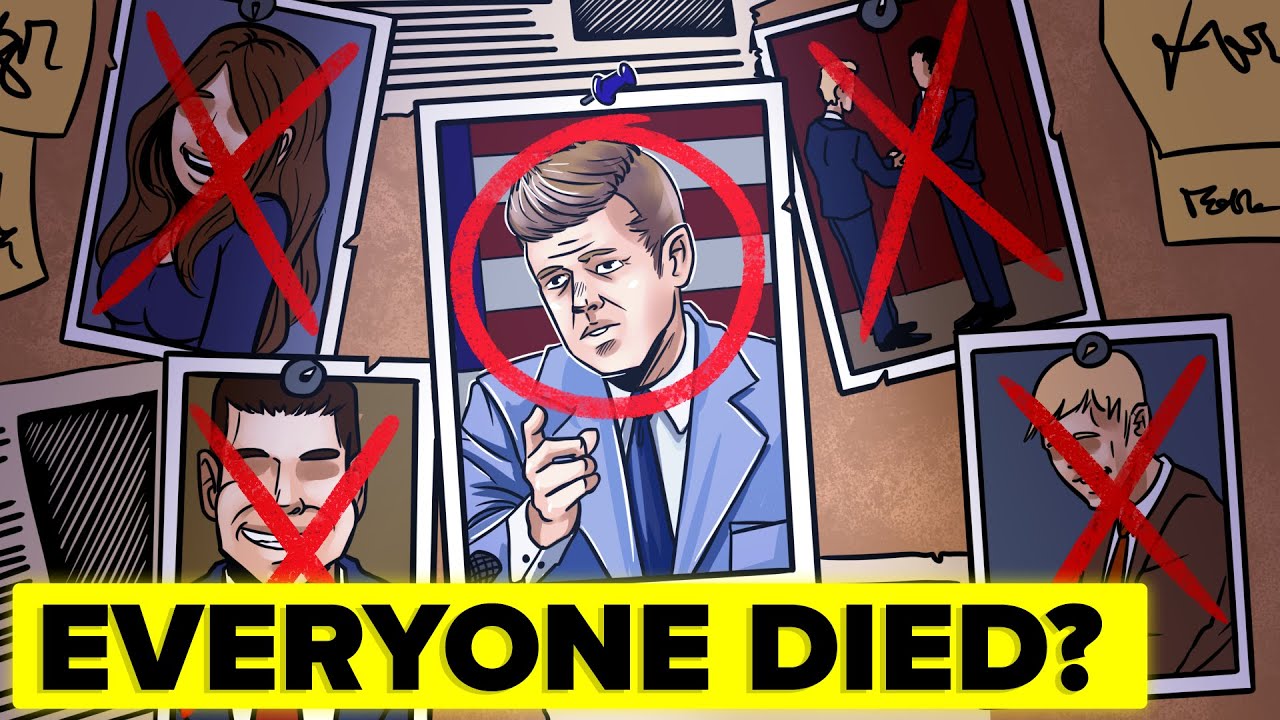
What happened to the man who killed him, Jack Ruby, has never been fully explained. Ruby was said to have fallen into an inexplicable mental illness, and he died not long after. As this series has shown, many people connected in some way to the JFK assassination died soon afterward.
So what really happened to Jack Ruby? How did he lose his mental balance after shooting Lee Harvey Oswald?
Tom O'Neill has researched both this subject and the Manson murders for more than twenty years, and he recently published a book on his findings. He is not completely certain about everything, but he says some things look abnormal.
On a podcast, O'Neill discussed the meeting between Ruby and Dr. Louis Jolyon "Jolly" West, a man who long denied working with the CIA on a mind-control program known as MKUltra.
O'Neill said his most important discovery was that an agent or mind-control researcher contracted by the CIA became the doctor of a witness right before that witness was to testify and tell their story, and then the person went mad. The problem, he said, is that no one who worked on MKUltra wants to talk about it. If the CIA had gotten away with destroying all the related files, it would have remained a complete secret.
We know that right before Ruby was to testify before the Warren Commission, West went to see him in his jail cell. No one else was present. West said Ruby had gone mad and was a paranoid, incoherent man.
It is worth remembering that earlier, when West wrote to Sidney Gottlieb, the CIA's mind-control master, he said his specialty was creating madness in people without their knowledge.
We know something strange happened to Ruby after he shot Oswald. Police pinned him to the floor, and words came out of his mouth: "What am I doing here? Why are you jumping on me?" It seemed as if he had lost control of himself.
A psychiatrist later said Ruby was suffering from a fugue state and subsequent amnesia. A fugue state is a condition in which a person suddenly loses awareness, suffering a kind of mental breakdown in which they do not understand what they are doing.
Remember, no one knew that West was working with the CIA on mind control. West once tried very hard to get connected to Ruby, even asking Judge Joe B. Brown to appoint him to the case. According to documents Tom O'Neill found long after the trial, someone asked West to work on the case, but he never said who.
At first, the judge refused to let West see Ruby, but after some effort West got himself involved in the case. It was thought that West might be able to use all his skills to help Ruby remember the day he shot Oswald.
On April 26, 1964, West boarded a plane to go see Ruby. Shortly afterward, West regained consciousness. He reported what had happened inside Ruby's cell and said the man had shown complete mental imbalance. West said Ruby was completely mad.
No one knows what happened in that cell, and perhaps no one ever will. In an affidavit, West wrote that Ruby was hearing and seeing various things, and even hid under his table because he believed all the Jews in America were going to be killed.
West said Ruby claimed he had seen his brother tortured, horribly mutilated, castrated, and burned in the street outside the jail. West wrote that Ruby could still hear the screams of Jewish children being boiled alive. It sounded like a terrible delusion.
Afterward, all the other doctors who saw Ruby reached the same conclusion. He had suddenly gone mad. Yet the doctors who had spoken with Ruby before his meeting with West said he was completely sane, not mad at all.
West wrote, "Tonight, my own observation has made it clear that there has been an acute change in the patient's condition since these earlier examinations were conducted."
One doctor who saw Ruby both before and after the meeting with West was stunned by the change. His name was Dr. William Beavers, and he wrote that there was a possibility someone had done something to Ruby, perhaps given him some kind of very powerful drug. He wrote that toxic psychosis could be considered, but that it seemed unlikely because of the secure circumstances.
Clearly, Beavers had no idea that West was involved in a project that forced powerful drugs on unwitting victims and tried to play with their minds. A good question is: if he had known about West's involvement in the CIA's dark program, would he have looked into the matter further?
Even stranger, in 1965 Dr. Werner Tuteur saw Ruby. He made an assessment and sent his notes to West so they could be submitted in court. West looked at the documents and deleted one section. It said that Ruby felt considerable guilt about sending weapons to Cuba. Why did West delete that line? Did he have some connection to Ruby? We do not know.
There may be far more to this story than we know. After all, the CIA was not very open about its mind-control efforts.
Now consider how three men entered a room one day, and shortly afterward they were all dead.
Journalist Bill Hunter received some praise for his writing about the three days he spent in Dallas after the JFK assassination. He also wrote about Ruby shooting Oswald. He was one of the few people allowed to tour Ruby's apartment right after the shooting.
In April 1964, Hunter was sitting at a desk at Long Beach police headquarters when he was shot. A bullet apparently fired accidentally from the gun of a police officer named Keaton Wiggins and struck Hunter in the chest, killing him instantly. The officer said he had dropped the gun.
Investigators soon learned that Wiggins was not telling the truth at all. He admitted he had not dropped the gun, but that it had gone off accidentally while he was handling it. It is believed Hunter was still working on the case, and for that reason some in the JFK conspiracy community find his death suspicious.
Ruby lived with a man named George Senator. We have seen the court transcripts, so this is a confirmed fact. Senator said this about Ruby in court: he was a good, sensible American citizen and was never involved in politics. He was not politically involved at all. He spent most of his time on the music business, nightlife, his club, his competitors, and what they were doing.

It was because of Senator that Hunter was allowed into Ruby's home. Dallas Times Herald journalist Jim Koethe and Ruby's lawyer Tom Howard were also allowed inside.
On September 21, 1964, while writing a book about the assassination, Koethe died mysteriously. Some sources say he was killed by a karate chop to the neck, but others say he was strangled. No one knows what happened, although in 1966 Time magazine tried to calm the fires of conspiracy by saying the journalist was well known for mingling with thugs.
Time reported that police at the time said the motive was somehow related to homosexuality, but gave no details. We found a newspaper clipping from the time with the headline "Newsman's Death Ruled a Homicide." A police captain said this in the report. His death could have been caused by a karate blow to the neck, or by falling against a table or bedstand in the room where his body was found. The apartment was ransacked and there were signs of a struggle.
Police ultimately said it was a failed robbery, although many have said it was related to the journalist's notes on the assassination or what he knew about Ruby.
A year later, Howard also died. His death was ruled a heart attack, although many quickly noted that no autopsy was performed. Still, the New York Times wrote that he died of an acute coronary condition and noted that Mr. Howard had been ill for several days but had continued to practice law. He was only 48.
As you will now see, it was not only men connected to this case who died.
Did this woman really come close to solving the case? One journalist actually got the chance to talk with Ruby, and her name was Dorothy Kilgallen. She was not at all sure about the conclusion the Warren Commission reached. She also published what she found. She released some of the commission's information to the public before it was officially released.
What happened to her? On November 8, 1965, she was found dead in her Manhattan apartment. She had previously written that the CIA and the Mafia worked together. Some have even said she was a CIA agent.
After the assassination, she told her friends she would uncover the mystery of the case. She told one person, "In five more days, I will completely solve this case." By all accounts, she gave the first draft of her book to her friend Florence Smith, the wife of the Cuban ambassador.
When Kilgallen's body was found, it was determined that she had died from an overdose of alcohol and barbiturates. According to some sources, she was found in a room where she rarely went. In her lap was a book she had already finished reading, and her reading glasses, without which she could not read, were in another room.
As for Florence Smith, did she have those notes? The answer is no. One day after Kilgallen's death, she died of a brain hemorrhage. She was 45. No book or notes were found. Still, it is known that she had been ill for some time and had just been released from the hospital.
There is evidence that Smith was a friend of JFK and Mrs. Kennedy, and the New York Times never revealed where it got information about her illness and hospitalization. That is exactly what the paper wrote in her obituary.
The next matter has been discussed by conspiracy theorists for years, but they may have been seeing something that was not there.

There were two Benavides brothers, Edward Benavides and Domingo Benavides. Domingo was one of the witnesses who saw police officer J.D. Tippit shot after the assassination. Some sources say he testified that the shooter did not look like Oswald, but from what we can see, he only gave a vague description that could have fit many people.
Some sources say some sinister force feared he would leak secret information, so he needed to be removed. But he was not killed. Instead, his brother, who looked like him, was shot in a Dallas bar. But, and this is important, the brother was shot only after the Warren Commission had people testify in court.
Conspiracy theorists have argued that he was shot during the investigation, but we have actually seen his death certificate. In fact, he was killed on February 16, 1965. That means he could not have been accidentally removed by someone trying to kill his brother. It is another death that can be said to start new thoughts in someone's mind.
Now let us look at how one official believed the CIA killed JFK.
There was a man working at the CIA who had extensive knowledge of the assassination and knew that his own group had done it. His name was Gary Underhill. According to some books, after the assassination he told a friend, "You are going to Spain? That is the best thing to do. I also have to leave the country. This country is now too dangerous for me. I also have to get on a boat. I am really very afraid for my life. Oswald is a mental patient. They framed him. This is going too far. They have done a terrible thing. They have killed the President."
The CIA denied that this man worked for them. But it must be said that the CIA has always been very stingy about revealing the truth. It is true that Underhill worked in military intelligence, so he is a suspect figure. It is also known from reliable sources that he really did say those words after the assassination.
He was found dead in his home shortly afterward. According to the District of Columbia Department of Public Health, his death certificate, dated May 8, 1964, stated that he had shot himself in the head with an automatic pistol. Some people have commented that he was shot behind the left ear and that the gun was found in his left hand. He was right-handed, but if he did commit suicide, perhaps he was an exceptional kind of person. Also, could CIA contract killers be that stupid?
Now we come to the FBI and an agent named Gary Bannister. This man was a staunch anti-communist who later formed his own private investigation firm. A colleague accused him of knowing that the plan to kill JFK was an inside job. This man told many people about it and became a big part of the investigation. Bannister died shortly afterward, in 1964, of coronary thrombosis. He was 63.
First, the girlfriend. According to various mainstream sources, a woman named Mary Pinchot Meyer was JFK's mistress and a friend of his wife. She was also a close friend of the wife of a very high-ranking CIA official. She was murdered in 1964, and her death remains a mystery today.
Her relationship with the President was a big secret, and that information came out later. It was said about her death that the killer must have had extensive firearms training. An African-American man named Ray Crump was accused of the murder, but when the case went to court, he was acquitted.
So why would anyone kill this woman in what looked like an execution? It is widely known that she kept a diary, and that it contained things some people believed the world did not need to know. After she was killed, people went looking for that diary. According to journalist Ben Bradlee, one of them was a CIA agent who was caught trying to force his way into her apartment.
But what if the diary revealed the identity of the President? What if he and his mistress had smoked marijuana together in the White House? Was that really enough to deserve death? In fact, some people believed this woman knew much more, perhaps more than has been said, and that is why she needed to be removed.
It is also worth noting that she was very suspicious after the Warren Commission submitted its report. Perhaps that is why the agency was tapping her phone. All of this is true, and you have to admit that her death and its timing sound quite suspicious.