In 1946, a woman stood inside her bomb-damaged London mansion, picked up the telephone, and effectively gave it away. Barbara Woolworth Hutton, heiress to a five-and-dime store fortune that once seemed to dot every corner of the United States, was then widely considered the richest woman in the world. She had been married three times, including to Hollywood’s most famous actor, Cary Grant. She had built homes for everyone except, it turned out, herself.
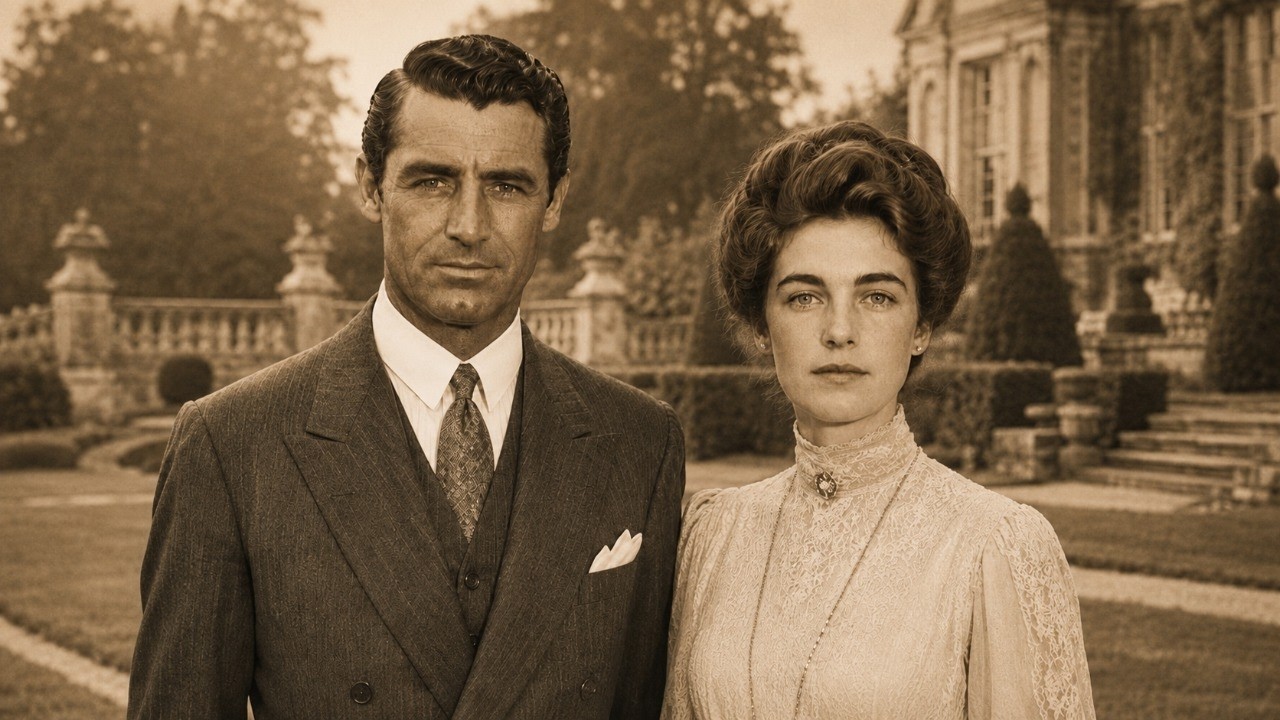
Her story spans from a debutante ball during the Great Depression to a hotel room she barely ever left. Over five decades, she married seven times. She had one son and lived long enough to bury him. The press called her the “Poor Little Rich Girl”—at first, jokingly.
The deeper story begins with a four-year-old girl opening a door by herself in a New York hotel room in the spring of 1917. The Hutton family occupied a suite at the Plaza Hotel, as families did for months at a time, complete with servants. That spring, young Barbara pushed open a door that had been closed to her all morning. No one told her why.
A governess simply told her to wait. Children rarely obey when told to wait. She entered her mother’s room and found her there. What happened in the next hour left no record.
A doctor was called, then a coroner, then came the silence that settles over a hotel suite when staff are discreetly told not to say anything. No one sat with the four-year-old to explain what she had seen. The official record attributed the death to mastoiditis, an untreated ear infection that spread and eventually stopped her mother’s heart. It was a plausible diagnosis—and, for the family paying the hotel bill, a merciful one.
For decades, that was the only published story. But another account quietly circulated within the family for 60 years and never entirely disappeared. According to this version, Edna Woolworth Hutton had taken something stronger than medicine that week, and the coroner, for reasons no one left in writing, decided an autopsy was unnecessary. Neither version has ever been established as fact, and likely never will be.
Only one thing is certain: a four-year-old girl lost her mother that morning and was surrounded by silence about what happened, a silence that outlived everyone who had been in that hotel room. To understand what Barbara lost, one must understand what her mother had lost long before that morning. Edna Woolworth Hutton was the daughter of Frank Woolworth, the man who built an empire from five-and-ten-cent stores. By the time Edna came of age, there were over 1,000 Woolworth stores across the country.
Her husband, Franklin Hutton, was a Wall Street stockbroker celebrated for his confidence in managing other people’s money but largely absent from his home. By nearly every surviving account, he was a talented businessman and an indifferent father who spent more time at his club or with another woman than at home. According to Edna’s own account, she did not simply endure. Alone in a marriage built on money rather than care, she found comfort with a family friend named Bud—a nickname that would reappear a generation later in the family of a future American First Lady.
None of this made a happy home. It made a home where a child learned early that the safest thing was to stay silent and watch. Franklin Hutton did not remain a widower for long. Months after the funeral, he remarried a woman named Irene, who came into the home as a stranger and remained exactly that.
Barbara was not sent away, but neither was she kept close in any meaningful sense. She moved among relatives, from an aunt’s house to a cousin’s nursery. She ended up with a changing series of governesses and boarding schools—first Hewitt School in New York, then Miss Porter’s in Connecticut, the kind of place where influential American young women were quietly prepared to become wives. Her only source of stability during those years was her cousin Jimmy Donahue, another Woolworth grandchild, who would spend his adult life chasing the same emptiness she did, though in his own reckless way.
By early adolescence, Barbara had filled notebooks with poems. Her relatives found them strange to read, not because they were badly written but because of how much sadness a wealthy, seemingly well-cared-for girl had found in the world. In 1924, her grandmother died and left her $26 million. Barbara Hutton was 12 years old.
She was already one of the richest girls in America, and by then almost no one remained to tell her so personally. Her fortune became public in the most literal way on the night of December 22, 1930, when she celebrated her 18th birthday at the Ritz-Carlton in New York. Four orchestras played in rotation so the music never once stopped. Two hundred waiters served 1,000 seven-course dinners to guests who had never known a day of hunger.
Every guest who walked through the door that night received a small velvet box containing unmounted diamonds, emeralds, and sapphires, simply as a party favor. Maurice Chevalier arrived dressed as Santa Claus and sang Christmas carols to a ballroom full of people who would never need their gifts. The flowers alone were said to have cost more than most of the guests’ household servants earned in a full year. That was the night “Bobbie” became Barbara Hutton, the debutante, the magic queen, the society girl of the Western world.
“Bobbie” was the name her family used for the shy, watchful child. “Barbara Hutton” was the name the newspapers would use for the rest of her life. No one in that ballroom, for all their diamonds, seemed to realize they were witnessing the birth of the second name at the expense of the first. Outside the Ritz-Carlton that same week, breadlines stretched for blocks.
The press noticed the contrast long before Barbara’s family did, and the criticism that followed was so harsh it became a genuine scandal for the family name. What happened next says much about the home she had grown up in. No one asked the 18-year-old at the center of the storm how she felt about any of it. Instead, they asked how to stop the story from appearing in the press.
A few days later, they sent her to Europe to let the scandal subside, as her family put it. This time, she was treated as a business problem to be managed rather than a grieving daughter, which she still was in a sense. She stood at the railing watching New York fade behind her. At 18, unimaginably wealthy, motherless, and now, for the first time in her life, genuinely famous.
She did not yet know the price she would pay for that last part. In Europe, the trip itself became a kind of second debut. By the time she reached Paris, she had immersed herself in a world of titled friendships, late dinners, and society columns written in three languages. It was a life that asked nothing of her except that she remain interesting, something she learned to do at 18.
In Paris, within fewer than three years, she would meet the first of the seven men who wanted to marry her. Most wanted the fortune more than the woman attached to it. As time went on, that became almost forgivable. The one who wanted to possess her absolutely would do her the most damage, taking her name, her security, and nearly her very sense of who she was.
In the winter of 1930, as she crossed the Atlantic alone, she had not yet met him. She married the wrong man first, as if wanting to get rid of that mistake as quickly as possible. Prince Alexis Mdivani was a Georgian aristocrat who coveted women’s money and little else. His family had made a small career of marrying wealthy foreigners.
In that sense, Barbara was just the next stop. Her father provided a million-dollar dowry for the wedding, held in a Russian Orthodox church in Paris in the summer of 1933. Two years and several million dollars later, that marriage ended. Over time, it proved to be the least harmful of her seven.
She met her next husband while still married to the first. It happened in Karlsbad in the summer of 1934, a resort town where European aristocracy went to rest and sometimes to steal other men’s wives. He was named Kurt Haugwitz-Reventlow, a Danish count 12 years her senior, with a title generations old and almost no fortune to match Barbara’s. Barbara divorced Mdivani in the spring of 1935.
She married Reventlow the next day, as if the gap between one husband and another had become something she feared. There was no time for a proper wedding. No 600 guests, no Ritz ballroom. Only a courthouse, a new title, and a count who proved far more dangerous than the prince he replaced.
Together they decided to build something permanent. At the edge of Regent’s Park in London, they demolished a fire-damaged Georgian villa that had stood there since the 1820s. In its place rose a new red-brick Georgian palace with 35 rooms and private gardens—the second largest private garden in London after the grounds of Buckingham Palace itself. They called it Winfield House, after Barbara’s grandfather.
Their son Lance was born within those walls in February 1936. The birth was so difficult it nearly killed her. For a short time afterward, it seemed the fortress she had built might hold. It did not hold for long.
By the time Lance was two, the couple who built Winfield House were besieged inside it. An American magazine described the situation without much sympathy, reporting that the countess and her small child were holed up at Winfield House, surrounded by doctors, lawyers, bankers, and armed guards. The house built to hold a family had, just two years after completion, become a house that needed defending. Even the walls could not keep out what was genuinely wrong inside.
When reporters cornered the count outside a London hotel that same season, he did not bother to deny that something was wrong. He simply hissed through his teeth, “I detest journalists. ”
That same year, at her husband’s urging, Barbara gave up something unrelated to money. She renounced her American citizenship.
The documents cited taxes as the reason, and on paper that was true enough. The public did not see it that way. Walter Winchell described her on the radio as the most scandalous creature in society. The New York Times called her simply contemptible.
The anger went beyond society columns. In the two days following her departure for Europe, three Woolworth stores in New York closed their doors, unable to absorb the backlash. It was said another 36 stores were about to follow. Company saleswomen sent a telegram to the ship she was traveling on, urging her to issue an order to management to give fair wages to the thousands then living on meager pay.
Barbara did not reply. Years would pass before anyone thought to ask what exactly a woman gives up to keep the peace in a house like that. None of it—not the public humiliation, not the mounting bills, not even a two-year-old crying at the end of the hall—was what finally landed her in a hospital bed. That came at her husband’s own hands.
The beating was serious enough to put her in the hospital and to send Reventlow briefly to a jail cell. It was damaging enough that even a marriage built on money and titles could not keep it entirely out of the papers. She had married a count hoping to find the security a title was supposed to provide. What she found instead, behind the doors of the house she had paid to build, was closer to imprisonment.
There were guards at the gate to keep the press away. There was no one at all to protect her from the man already inside. Something else quietly began in that house, alongside the bruises. At first to help her sleep, then just to help her cope, she began taking Seconal, a barbiturate prescribed easily in those years to upper-class women who complained of their nerves.
One way or another, it would stay with her for the rest of her life. So would the eating problems that accompanied it. No one around her had a proper name for that yet, and few thought to ask why a woman with everything she could wish for had quietly stopped wanting food. By the spring of 1938, the marriage was over in every meaningful sense.
The price of Reventlow’s departure was steep. By some accounts, he had received one and a half million dollars at the wedding. He received a similar amount at the divorce, and he did not leave quietly regarding their son either. The court eventually ordered that custody of Lance be shared as he grew up, with the child to move to his mother’s care once he reached school age.
Reventlow had other plans. Instead of handing Lance over on time, he simply sent the child to Canada, beyond the reach of the courts that had ordered otherwise. A small child was moved across the border like a piece of luggage that had conveniently gone missing. It took another year and another round of lawyers before Barbara got her son back for good.
She kept the house, and she kept custody of Lance. And yet, in the end, keeping him meant something very close to what her own parents had once meant by that word. The child born in that house barely remembered living there as part of a family. The governesses reappeared, and the boarding schools returned.
Here was a mother again, loving her son from a safe distance, because it was the only way of loving she had ever learned. Winfield House remained standing with its 35 rooms built for a family that no longer lived together. It would take a different kind of war, a few years later, to decide what would finally happen to that house. Then came a marriage that surprised everyone without exception, including the newspapers that had spent a decade convinced they knew her whole story.
This time, the man had no noble title, and he did not need one. By 1942, half of America already knew his face. In 1942, he was one of the most famous men in the English-speaking world. When Barbara Hutton first met him three years earlier, he was just another passenger on a ship crossing from New York to England.
He was traveling, as he always did away from the camera, under the name his studio had given him: Cary Grant. Between the count and the actor, there had been a series of secondary relationships. One was a brief affair with the pilot and reserved industrialist Howard Hughes, conducted fittingly in a London hotel while Europe waited for a war it could already sense coming. By the surviving evidence, it was an unhappy episode for both.
None of it would matter much in the end. By the time the war actually began, Barbara had settled in California, donated her private yacht to the British Royal Navy, and begun fundraising for the Free French forces, using her name and her reputation. It was one of the few uses of her fame that, for once, cost her something other than privacy and asked nothing in return. It was in Hollywood, at a wartime charity dinner, that she and Grant met again.
He needed nothing from her—not her money, not her name, not rescue from a badly failing marriage. That alone made him something new among the men she had known until then. It was also something new for six-year-old Lance. Unlike the previous stepfather, Grant genuinely seemed to want the child close.
The two became so close that Grant remained part of Lance’s life for years after the marriage itself ended. They married on July 8, 1942, at her agent’s home above Lake Arrowhead, in a ceremony small enough to fit in one room. The press, with its usual restraint, had a new nickname for the couple by the next morning: Cash and Cary. For his part, Grant had signed a prenuptial agreement before the wedding, renouncing any claim to Barbara’s fortune in the event of a future divorce.
It was the first time after three marriages that a husband asked nothing of her in writing, and the columnists who covered the wedding treated the prenup with nearly as much importance as the ceremony itself. For a while, by the accounts of those who knew them together, it even seemed to work. They rented a house in the desert outside Palm Springs, going there whenever the studio and the war allowed, away from the columnists who could not resist joking about their names. Grant, for his part, did not appreciate the joking much.
“I may not have married for very rational reasons,” he once said about marriage in general, “but money was never one of them. ” “The trouble was never her,” Grant said years later about their marriage. “People simply can’t separate Barbara from her money and act like fools around her. ” In its own way, that was the kindest thing any of her husbands ever said about her publicly.
He acknowledged something no one else had bothered to: the problem was never Barbara Hutton herself. The problem was everything the world insisted on seeing instead of her every time she entered a room. It had taken three husbands and a dead mother for someone in her life to dare say that out loud. By then, she had spent most of her adult life defined by a fortune she had not earned, unable to escape its weight no matter how much money she spent.
The marriage lasted three years and, unusually for her, ended without a single public accusation from either side. What separated them in the end was mundane compared to everything before. His career kept him working hours she could not share, and the sedative Barbara had first turned to under Reventlow’s roof had by then become a near-permanent presence in her life. None of these things caused scandal; they just created distance.
They began to drift apart and then allowed things to end. By all accounts, they kept genuine affection for each other for the rest of their lives. On paper, this should have been the marriage that finally meant something. The only husband who never wanted her money was leaving without taking anything from it.
And yet it was almost exactly at this time that a completely different story about her past finally came into clear focus. It had nothing to do with Cary Grant. It would take a biographer decades to fully reconstruct what had really happened in that earlier marriage. He worked backward through court files, tax records, and documents no one had thought to connect at the time.
What he discovered changed the interpretation of the whole story. For years, the official version of 1937 was simple enough to fit in a newspaper headline. Barbara Hutton renounced her American citizenship at her second husband’s request for reasons of tax efficiency, and paid a heavy price in public opinion. That part was never in dispute.
What took longer to emerge, reconstructed later from legal documents and estate records, was exactly which taxes Reventlow had been so eager to avoid. It was not primarily about Barbara’s living expenses. It was not about taxes on her income or the ordinary annual cost of being one of the richest women in the world. It was the tax that would be levied on her entire fortune in the event of her death.
American citizenship would have made that tax much larger. Danish citizenship would not. Simply put, during the same years Kurt Haugwitz-Reventlow was abusing his wife so badly that she was hospitalized and he was arrested, he had also arranged, separately and quietly, other matters. In the event of her simply dying, he would have received more than he otherwise would have.
The sums were not trivial. In the early 1930s, her fortune was in the tens of millions of dollars, a number that made even a small difference in inheritance tax worth arranging on paper years in advance. No newspaper at the time connected the events. They were too busy running Walter Winchell’s headline about her patriotism to dig into the small print and ask why her husband had wanted those documents signed in the first place.
There is no evidence he intended to do something worse than what he actually did, but knowing it completely changes how that marriage is interpreted. He was not merely a man who controlled a wealthy woman in life. He was a man who had already calculated how much her death might be worth to him. And he had put those calculations in writing before the court.
During those same years he was also beating her, Barbara Hutton would spend the rest of her life marrying, building, and giving things away. It is not an exaggeration to say she spent her life searching for one thing in particular. Those calculations would never have included the one thing she was looking for: someone who wanted her to stay alive for reasons having nothing at all to do with money. She never found that person in any of the four husbands she was still to meet, however hard she tried in her own way.
She kept looking. And yet, for a while, she came close to finding something similar—not in a man, but in two houses, built years apart, on two different continents, for two entirely different reasons. She saw the first of those houses again in the autumn of 1946, a year after the war in Europe had finally ended. She had not set foot in Winfield House since before Pearl Harbor, during the last months of calm before the war engulfed everything.
What she found there after five years was not the mansion she remembered. RAF officers had used the grounds for much of the war for a barrage balloon unit. The men stationed there had even named their football team “Barbara’s Boys” as a joke. The floors were buckled, the windows smashed, and bare wires hung from ceilings that had once held grand chandeliers.
She walked through the 35 ruined rooms of her house, and by all accounts she shed not a single tear over any of it. What she did instead was pick up the telephone. That same week she called her lawyer in New York. She told him she wanted to give the house to the United States government, to restore it and use it as the residence of the American ambassador to Britain.
In the letter formally accepting her offer, the gift was described as most generous and patriotic. The letter bore the signature of President Harry Truman himself. The sale price when the paperwork was finally completed was one dollar. By any ordinary standard, it was an extraordinary gift.
It was also, if one examined the previous decade of her life, an act entirely in character. Every man who had shared a home with Barbara Hutton had ended up taking something from her: money, her name, part of her security, and once, without her even knowing at the time, part of her hope of living, buried among a lawyer’s papers. Giving away Winfield House cost her nothing comparable in importance to any of those things. There was no lawyer arguing over the terms, no husband demanding a settlement, no court deciding who got what.
It meant that this time, at least, no one was taking anything from her. For the first time in her life, she was the one choosing precisely what she would lose, and to whom, and under what terms. They may have been small comforts, but they were also comforts she had never been allowed in any of her marriages. By then, she had married twice more and would marry twice again before it was over.
In 1947 came Prince Igor Troubetzkoy, a Russian émigré and racing driver. Within less than a year of the wedding, he had introduced Barbara’s 12-year-old son to the world of motor racing. It was a gift that would have consequences far greater than anyone realized at the time. That marriage lasted four years.
In 1953 came Porfirio Rubirosa, a Dominican diplomat whose reputation as a world-famous womanizer preceded him across continents. Shortly before, he had been married to another American heiress, Doris Duke, whose fortune he had also managed to spend a large portion of. He raced cars, played polo, and was, by the standards of that era, one of the most photographed men in the world. Her friends joked, not altogether kindly, that Barbara had finally found a husband capable of spending money faster than she could.
The marriage lasted only six months before the two, in an unusual mutual agreement, simply decided to end it. Two years later, for the first time, she married an old friend rather than a stranger. He was named Baron Gottfried von Cramm, a German tennis champion once ranked among the world’s best, whom she had known socially for decades. This time, she hoped that simply being truly known might be enough.
That marriage lasted four years before it too ended quietly. No scandals, no courts, just the slow drift that had become familiar to her by then. It was like a room she kept returning to, always finding it empty in exactly the same way. Her seventh and final husband came in 1964.
Prince Pierre Raymond d’Uzès, for whom she bought a title herself and built him a palace to match—a Japanese-style home costing two million dollars in the hills outside Mexico City, which she called “El Maul. ” It was inspired by an imperial concubine’s house in Kyoto, with a sand garden and a small theater. It overlooked a nearby volcano, just as the original house once overlooked Mount Fuji. That marriage lasted two years.
In fewer than three decades, her home “El Maul” would be sold and turned into a hotel. A 163-room hotel, rented every night to strangers, in a palace she had built for a man who remained with her only 24 months. In one of her private memoirs, according to the biography that later drew on it, she described her life as having inherited everything except what she truly wanted. Seven husbands over five decades.
A prince, a count, an actor, another prince, a playboy, a baron, and a final prince bought outright because none of the real ones had worked. At some point, amid all of it, she had also re-cut a 40-carat diamond. The magnificent “Pasha” diamond, once owned by an Egyptian ruler, had been hers for years. After every divorce, she had it re-cut, rounder, smaller, entirely her own.
The jewelers who worked with her later said she seemed to enjoy the process itself more than wearing the stone once it was done. Perhaps it was the only kind of transformation in her life she could truly control from beginning to end. Unlike a marriage, a diamond cannot decide halfway through being cut that it would rather become something else. By the early 1960s, the fortune that had once made her the richest woman in the world was quietly shrinking.
Some went to obscure charities and friends, and husbands who were leaving her life. Some disappeared simply into the hands of an old lawyer, whose management of her affairs would, over time, raise more questions than anyone thought to ask. Then came taxes and legal settlements and the crippling cost of maintaining a lifestyle designed for a much larger fortune, taking their steady toll. She had spent her entire life being generous with people who mostly did not deserve it, beginning with the husbands who had married her precisely for that reason.
By the time someone clearly recognized the pattern, the fortune that had once been in the hundreds of millions had shrunk to a fraction of that. Very little was left to be careful about. It was a slow drain rather than one dramatic loss, and as it turned out, the slow drain was far harder for those around her to see as a reason for concern. By then, there was one matter unresolved, and it had nothing to do with husbands or houses.
The boy Prince Igor Troubetzkoy had introduced to the world of motor racing years earlier had become a young man who lived for one thing only: speed. By then, Lance had built a life almost entirely of his own. Two marriages, a career in racing and car building that briefly gave him fame in the sport, and a home in California he adored. In the summer of 1972, he was 36.
He had remarried and achieved success. He was looking for land in Colorado for a ski resort he wanted to build. He was also about to board a small plane with three other men for a flight that was supposed to take only the afternoon. The plane crashed into a ravine outside Aspen after being caught in a thunderstorm the young pilot lacked the experience to navigate.
He tried to turn back instead of continuing into the bad weather, banking his small single-engine aircraft toward what he thought was clear sky, but the plane stalled at low altitude over rocks and there was not enough height to recover. It slammed violently into a narrow canyon, and all four men aboard were dead before anyone could reach the wreckage. Lance Reventlow was 36 years old. By then, he had flown thousands of hours and was fully instrument-rated.
He had the kind of experience that made his friends consider him one of the most cautious pilots they knew. He was looking for land to build a ski resort, another house in a life that was, in its own way, full of houses. In the end, his body was identified by the initials embroidered on his shirt collar. Barbara Hutton did not want to go identify him in person.
At first, she even refused to allow the body to be released for burial, as if holding on to the paperwork might allow her to hold on to something else too. It was Cary Grant who quietly returned to her life to help her. He had only been married to her for three years, three decades earlier, and had no legal right to any of this. And yet he showed up.
He helped arrange the funeral she could not bear to arrange herself. He made the calls she could not make. He sat in rooms she could not bear to enter. By all accounts, Grant was himself shattered by the young man’s death, a grief entirely his own that had nothing to do with a marriage that had ended decades before.
It was a final, silent gesture from the only husband who, in all the years she knew him, never asked her for anything at all. In the end, it was Cheryl, Lance’s wife, who received permission to arrange the funeral. Barbara did not attend the memorial service. Friends who saw her in the months that followed said she could not fully accept that he was gone.
She sometimes spoke of him in the present tense. She made plans assuming he would be there. She asked about him on ordinary evenings, as if he had stepped out briefly and would call sooner or later. In her privacy, she blamed herself.
She told at least one person that if she had been a better mother, he might still be alive. These were calculations no more meaningful than the ones Reventlow had made decades earlier about Barbara’s own death. The difference this time was that she directed all of that calculation against herself, and there was no one left who could convince her otherwise. There is a symmetry here that no biographer needed to invent and no narrator needs to embellish.
A four-year-old child once opened the door of a hotel suite and lost a mother she had barely had the chance to know. Fifty-five years later, a 59-year-old woman lost the only person who, by everyone’s testimony, she had loved without conditions or calculations: her only son. Both losses came, each in its own way, without warning, and left her for a time unable to believe that the person in question was really gone. Titles and fortune could never buy an answer, neither restoring his life nor granting her the smallest peace during that first unbearable year.
For a time afterward, there was simply nothing left to say about any of it. Even the newspapers, for once in her life, left her alone. She lived seven more years, most of it alone. The woman who had once been photographed at every important party in three countries retreated almost entirely from public life.
Old friends called less often, or stopped calling altogether. There seemed nothing left to say to someone who had lost the only relationship in her life that had never been about her money. By then, most of the houses were gone too—sold, given away, or simply abandoned, in the way people abandon things they no longer have the strength to keep. She spent her final years mainly in a single suite at the Beverly Wilshire Hotel in Beverly Hills.
In the end, one room for a woman who had once given away a 35-room London mansion without hesitation. She had also built the Mexican palace for a marriage that barely lasted two years. She lived on cigarettes and Coca-Cola and rarely left the suite. What remained of her once-famous jewels was sold, piece by piece, discreetly, to pay bills that never stopped arriving.
In the end, the Pasha diamond was also sold. That jewel she had re-cut after every divorce, as if reshaping herself at the same time, ended up sold to a buyer she would never know. Those who visited her during those final years said they barely recognized the woman in the old photographs. She was terribly thin, a friend later said, the designer Oleg Cassini.
She was gone. Her spirit had faded. The life had gone out of her. By then, years of illness, treatment, and pain had exacted a physical price equal to the emotional one.
On May 11, 1979, Barbara Woolworth Hutton died of a heart attack in that hotel suite. She was 66. According to one of her biographers, her bank account at the time held only about $3,500. Just 16 people attended her farewell.
Those exact figures should be treated with caution. They rest on a single account, not three. But no one who has studied her final years has found real reason to doubt the overall picture they paint. The newspapers that had covered every debut, every marriage, and every divorce settlement for nearly 50 years also reported her death.
This time, however, the news ran briefly, a few paragraphs on an inside page of the same editions that had once put her photo on the front page for the price of an evening gown. The woman who could once not leave a hotel without her name attached to a headline died at last in near-total silence. In the end, she had given away two of the best houses ever built for her—one to a foreign government, and the other, over time, to a hotel chain. She had built each in the hope that it would contain something permanent.
What she never seemed to learn, through seven marriages, two houses, and a son she loved more than all of those things, was that the people she sheltered left anyway. Some left by choice, taking a settlement and a headline with them. One left by death in a steep canyon, aboard a plane he had no reason to believe he would not walk away from. It all came down to the same simple, unchangeable fact.
No fortune on earth had ever been large enough to change that. A house, no matter how many rooms, cannot force someone who does not want to stay to remain. Her body was taken to New York, where she was buried in the Gould family mausoleum at Woodlawn Cemetery in the Bronx. It was a modest granite building by the standards of the wealth it represented, built decades before for the five-and-dime magnate and the family he left behind.
It was not far, by coincidence, from the grandfather whose five-cent coins had paid for everything from the start—the houses, the diamonds, the husbands, and all that vast, glittering weight of being, for much of her life, the richest woman anyone had heard of. And beneath all of it, for most of that same life, she had been one of the loneliest. Winfield House still stands in Regent’s Park, with its 35 rooms exactly as she left them. American ambassadors have lived there for nearly 70 years.
Presidents have slept under its roof. Recently, a television crew rebuilt its rooms down to the last detail of wallpaper for a streaming series about diplomatic life, using the name “Winfield,” which most viewers assume belongs to no one in particular. Almost none of them know it was once someone’s home, let alone hers. The house she gave away survived all the marriages it was meant to fill.
It survived the war that nearly destroyed it, the government that accepted it, and the woman who built it and then allowed it to go. What she kept for herself in the end fit in a single hotel room, and did not survive long after her either. Almost nothing that was truly hers alone survived the way that house did. Not the marriages, not most of the jewelry, not the fortune that once made her the richest woman in the world.
The building outlived the person who built it. In the end, perhaps that is the simplest way to describe what her whole life came to. She was reckless with money and generous with it almost at the same time. She was careless with husbands, and nearly every one of them cost her something real.
She remained famous for 60 years, for reasons mostly unrelated to anything she truly chose. There is still no conclusive answer to what happened in that suite at the Plaza Hotel in the spring of 1917. The mastoiditis diagnosis remains officially on record. The other version, passed quietly through her family for 60 years, was never proven but never entirely disappeared either.
Barbara Hutton spent the rest of her life collecting husbands, houses, and jewels, each one re-cut, rebuilt, or renamed to fit the person she was trying to become next. As far as anyone has established, she never said publicly exactly what she saw when she opened that door. Also surviving are some of the poetry notebooks Barbara filled during adolescence, preserved in the same archives her biographer later used to reconstruct everything else. The person who finally read them noticed the same small set of themes recurring across nearly fifty years of writing: money, loneliness, and the vast distance between them that never closed.
It was as if she had spent her entire adult life finishing one long poem, a poem she had already begun as a wealthy, lonely teenager, with words growing stronger but never quite complete. The Scarborough race cars Lance built in the late 1950s are still remembered in some circles as among the fastest American machines of their era. They are small, stubborn proof that at least one thing he built with his own hands also survived, though it never reached the history books the way his mother’s houses did. The world remembers her now, if it remembers her at all, mainly because of a headline written when she was 18: “Poor Little Rich Girl.
” At the time, the headline was meant as a joke about a party that cost too much during a harsh winter. It is also worth noting what lay behind that headline. A four-year-old who found her mother, a 12-year-old who inherited more money than she could spend in a lifetime, a 66-year-old who died with little of that fortune left. Sixteen people at her funeral, and a house in London still standing, still lit, still occupied by people who never knew her name.
She was buried within walking distance of her grandfather, whose five-and-ten-cent store fortune had begun it all, in a mausoleum with his family name carved over the door. It is the same name, Woolworth, which once hung over more than a thousand storefronts across the country, and now appears on very few things by comparison. Her own name appears on no building still standing in any city on either continent. The London house now bears a different name than her own, and yet everyone who lives there continues to call it by that name, without quite knowing why.
“Winfield. ” Historians of the house itself usually describe the donation in one respectful sentence, followed immediately by three paragraphs about architecture. It is easy to overlook the woman in the footnote to her own gift, and all the easier because she, in her strange way, seemed to have arranged it exactly like that.
Somewhere in London tonight, in the house she gave away, someone else’s lights are on.