A country physician named Jarvis Whitlock wrote down an account in the autumn of 1934, at a small hospital on the Oregon coast, from a dying man named Malachi Renfrew, the former keeper of Cape Wit Marsh Light for 22 years. Renfrew, who was 61, had left the light in April 1933, and the light was decommissioned that September. He had taken a room in the town of Hollow, furthest from the sea, and had refused food and visitors by the time he was hospitalized in October 1934. Renfrew had come to the Cape in 1912 with his wife, Adeline, who died in the influenza of 1918.
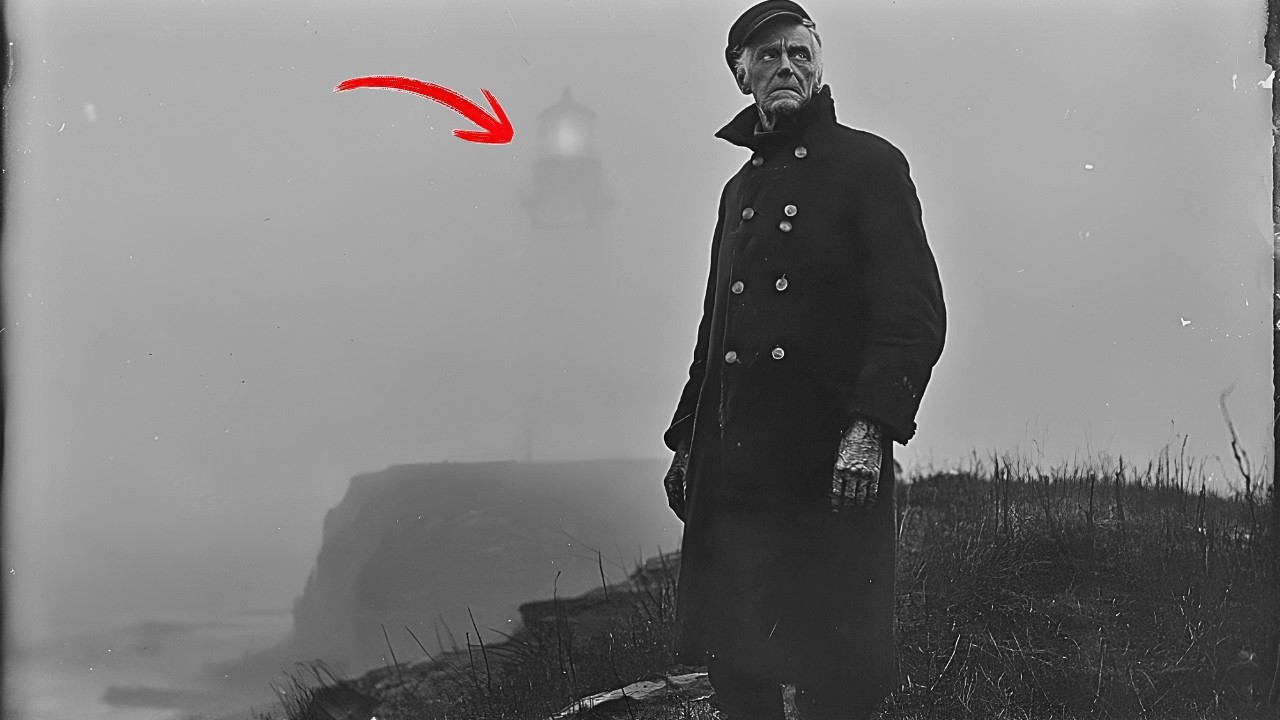
He was alone at the light for two years afterward. He told Whitlock that in October 1919, in a thick fog, he saw a light in the north where no ship could be, and then a second light closer to the tower, on land. The incident repeated in various forms over the following years. In 1922, an assistant keeper named Wilhelm Broadmore arrived.
In October of that year, Broadmore told Renfrew he had seen a man walking on top of the fog, wearing a keeper’s coat, with no face on the side he could see. Broadmore left shortly after and disappeared from a boarding house in Astoria the following April. In the winter of 1922, Renfrew found a tin box in the boat house containing notebooks, including one kept by a previous keeper, Absalom Veer. According to the records, Veer had resigned in October 1898 and was never seen again.
Veer’s notebook described a fog that walked, a silent fog, a figure on the fog that turned a face to him, and a knock at the door that came twice each night. His last entry was the 4th of October, 1898, and he disappeared two weeks later. In October 1929, the fog came and stayed for 11 days. The lamp mechanism stopped at 10:02 in the morning, and when Renfrew went up to the lamp room, he found the mechanism was fine.
He climbed to the gallery and saw a man walking on top of the fog, wearing his own coat and hat, using his walk. Renfrew understood that the figure was practicing wearing his clothes, and that it wanted him to step off the gallery into the fog. He went back down, put out the lamp for the first time in his tenure, and locked himself in the office. He heard two firm knocks at the outside door, and then at the inside door, and then at the window.
He did not answer. Then the knocking began at the office door in his own voice, calling his name. He did not answer. The voice also spoke to him in the voice of his dead wife, Adeline, saying, “It is only me.
” He began saying her name aloud, which he had not done since her death, and counted 487 times before the knocking stopped. The fog lifted three days later, and the light was found cold. The lamp was lit by others for a time, but Renfrew never went up in a fog again and never lit the lamp in a fog again. He stayed at the Cape for four more years.
In April 1933, he wrote his letter of resignation. He said to Whitlock in the hospital that he had believed leaving would be enough, but that he had been wrong. In his room in Hollow, he still heard two knocks at his door on some nights and his own voice from the other side. He died at 10:03 in the morning of the 18th of October, 1934.
After his death, Whitlock found in the hallway a faint smell of salt and two small, precise scratches on the tile floor at about the height of a man’s chest. The Cape Wit Marsh light was decommissioned in 1938. The tower is still standing.
Fishermen in Hollow say the lamp room sometimes has a faint light in it on foggy nights, but they do not go near it, and they say the light is not the color a lamp would be.