In 1861, Washington, D. C. , was a wide-open city. With the Civil War underway, the nation’s capital became crowded with bawdy houses catering to every class and price range, a situation that drew the attention of reformers, military officials, and even the Secret Service.
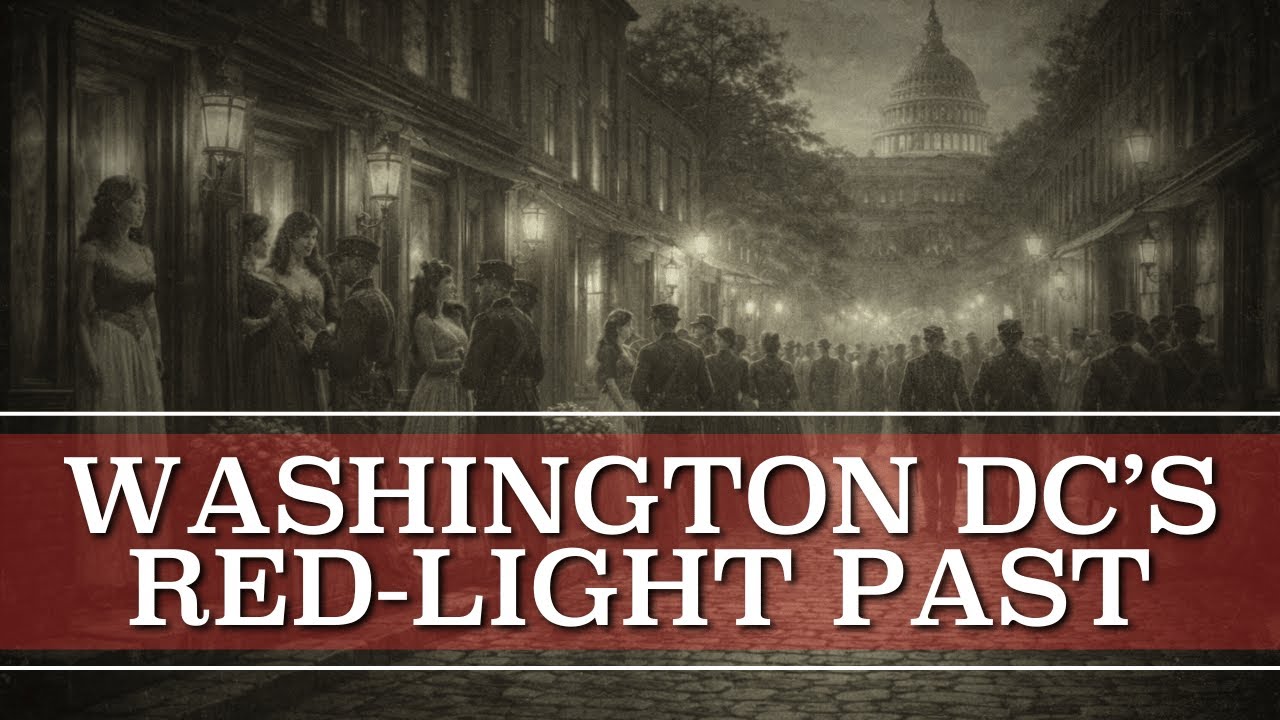
That year, a New York physician named Dr. William Sanger conducted a notable survey of prostitutes while practicing at the Venereal Disease Hospital on Blackwell’s Island. He persuaded about 2,000 women in the profession to complete a questionnaire. His findings showed that 88% of those surveyed were under 30 years old, and 40% were under 20.
Most, he concluded, died of venereal disease or alcoholism within four years of entering the trade. Sanger also found that 62% of the women were foreign-born, with 57% of that group from Ireland, 20% from Germany, and 8% from England. He estimated that one out of every 250 immigrants became a prostitute. About 30% of the women he surveyed had a child, and nearly all of those children died before reaching school age.
At the time, Sanger estimated New York City had roughly 7,900 prostitutes among its 1. 2 million residents. That figure did not go unnoticed. Bishop Matthew Simpson raised the issue before his congregation, asking whether they were aware that the city had more prostitutes than Methodists.
Washington, D. C. , in 1861 had a population of about 61,000. Most of the Civil War-era bawdy houses were concentrated within what is now a federal triangle occupied by the Customs Service, the IRS, and the Justice Department buildings.
A stretch of about 13 blocks contained low saloons, brothels, and hideouts for pimps, thieves, and pickpockets. Where the National Museums of History, Natural History, and the National Gallery now stand, an open sewer known as the Washington Canal ran through the area. Most streets in the capital were unpaved. The district between present-day Constitution and Pennsylvania Avenues was called by various names—Laos Alley, Rum Row, and Murder Bay—and was home to gamblers, thieves, and prostitutes.
As in society at large, there were classes among the prostitutes. The poorest worked in Murder Bay. Younger and more attractive women were found in Marble Alley, between Pennsylvania and Missouri Avenues. Almost all the brothels sold illegal liquor, and their names were colorful, including Fort Sumter, the Ironclad, Headquarters USA, the Devil’s Own, the Wolf’s Den, the Cottage by the Sea, Number 10 Marble Alley, the Haystack, the Blue Goose, Madam Wilton’s Private Residence for Ladies, and Madam Russell’s Bake Oven.
By 1862, the number of houses had grown to about 450. By 1863, the city had an estimated 5,000 prostitutes, with half working in the Georgetown-Alexandria area. The Provost Guard listed 73 houses along with their addresses and conducted raids on them. One Union commander made a notable effort to control the situation: Joseph Hooker.
A West Point graduate from the class of 1837, Hooker was known to Mexican women during the Mexican War as “El Capitan Hermoso. ” Despite the popular legend, there is no evidence that the term “hooker” originated from his name. The word had been used as early as 1845. Hooker attempted to localize the problem by herding many of the women into the Murder Bay area, which then became known as “Hooker’s Division” or simply “the Division.
” That district remained in existence until 1914, when Congress intervened and had it demolished. The federal district itself also tried to respond. Washington formed a police department in 1861, with 150 men assigned to patrol 230 miles of streets and 77 miles of alleys at a rate of $1. 31 a day.
They received help from the U. S. Military Provost Guard and even the newly created Secret Service. Because prostitutes were seen as contributing not only to moral decline but also to military decay, Lafayette Baker of the Secret Service and others devised a plan.
The women, referred to as “Cyprians” in reference to Cyprus, a center of worship for Aphrodite, were regarded as one of the two most fervent groups of secessionists in Washington. The other group, interestingly, was the Episcopalians. Officials believed they could not act against the Episcopalians, but they conspired to deal with the women. Many were rounded up and sent south to the Confederacy.
Three months after one such shipment, however, a few of the women were returned with a note reading, “Sir, I send back to you two strumpets. ”