In January 1990, in Brooklyn, New York, police found 25-year-old Louis Tuzzio slumped over the wheel of a stolen Chevrolet at the corner of L and East Fourth Street. He had been shot multiple times in the head. Tuzzio was not a made member of the mob. He was an associate of the Bonanno crime family, one of hundreds of young men in Brooklyn who ran errands, took orders, and waited for the day someone important would tell them they belonged.
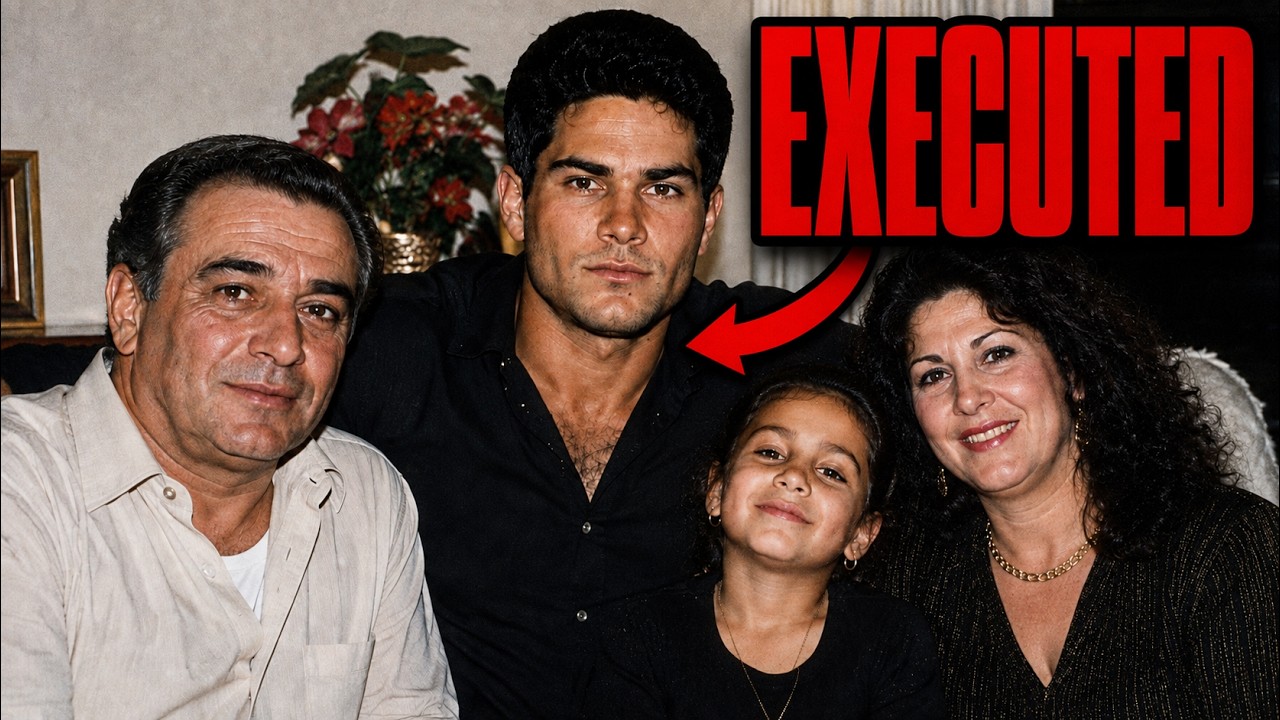
That day had finally come. He had been told he was going to a meeting where he would be proposed for membership. The men who told him that were the same ones who killed him. Tuzzio was not killed for stealing, for talking to the government, or for crossing the wrong man.
He was killed because he had done exactly what was asked of him. Weeks earlier, he had taken part in one of the most sought-after murders in America: the killing of a man that every police department, every federal agency, and every crime family in New York wanted gone. The hit succeeded, but it went wrong in one crucial way. The man sitting next to the target in the driver’s seat was someone no one expected—a young man whose father was not just a soldier in the Gambino family but a close associate of John Gotti.
The bullets did not discriminate. The young man was hit and nearly died. When John Gotti learned what had happened, he did not ask for an apology. He demanded bodies.
Gotti was the boss of an entirely different family and had no authority over those men. He demanded it anyway, and the Bonanno family gave him one. To understand why a 25-year-old was killed in a stolen car simply for following orders, you have to go back nearly a year to a dark road in Staten Island. On February 28, 1989, Everett Hatcher, a 46-year-old special agent with the Drug Enforcement Administration, was working undercover.
He had spent months building a false life, posing as a drug buyer, gaining trust slowly through meetings and deals. His target was Costabile “Gus” Farace, a Bonanno associate and a muscular drug dealer from Staten Island with a violent history. Farace was not a strategist or a boss; he was a gangster with a supply line. That night, Hatcher met Farace in a secluded spot near the West Shore Expressway, without backup close enough to help.
Something raised Farace’s suspicions, though exactly what remains unknown. There is no recording, no witness who gave a full account, and no confession explaining what happened. What is known is that Gus Farace shot Everett Hatcher three times in the head. Hatcher died in his car, found by agents who had lost radio contact.
It was the first murder of a DEA agent in New York City in 17 years. Whatever Farace thought he had done that night, he had declared war on his own world. American organized crime had an unwritten rule: do not kill federal agents. Not for any moral reason, but because of what follows.
What followed was the most intense law enforcement response the New York underworld had seen in years. Farace was placed on the FBI’s Ten Most Wanted list, but the pressure was not on him alone—he was hiding. It fell on everyone connected to him. Social clubs were watched, known associates were pulled in, and surveillance was placed on men who had nothing to do with drugs and had never met Everett Hatcher.
Criminal networks that had operated quietly for decades were suddenly under federal scrutiny. Agents made clear what would end it: the surrender of Farace. Every gang in the city understood the arrangement. No one would be left alone until he was dead.
The decision was not complicated. The Bonanno family had sponsored Farace. He was their problem, and its leadership agreed he had to be killed. Salvatore Vitale and Joseph Massino, who would later cooperate with the government and describe how such decisions were made, were part of the structure that approved it.
The order was given, and someone had to carry it out. That is where Louie Tuzzio enters the story. He was an ambitious young associate from Brooklyn, known in the Bath Beach and Bensonhurst crews. He was not yet a made man, but he was close.
His brother Nicholas was in the same world. The Tuzzios were not influential; they were the layer beneath influence, which in the mob is a much larger and far more expendable group. For a young associate, a task like this was not a burden but a once-in-a-lifetime opportunity. To understand why, you have to understand what becoming a made member meant to someone in Louie Tuzzio’s position.
An associate could work for a crime family his entire adult life without crossing that line. He could make money for them, take charges for them, and serve prison time for them, remaining forever useful and replaceable. But becoming a made member changed everything. It meant no one could touch him without permission from the head of the family.
It meant his disputes were settled by a captain rather than settled himself. It meant a percentage of everything moving through his territory in Brooklyn carried his name. For a 25-year-old from that neighborhood, it was the only promotion he had ever been offered. Membership rolls had been closed for long stretches, leaving men to wait years for a chance that might never come.
The offer was simple: the most wanted man in the United States. A hit the entire organization needed to ease the pressure on every family in the city. There was no faster way to earn his badge. Louis Tuzzio said yes.
He was not alone. According to the federal case that eventually resulted, the team included James Galione, known as Jimmy Frogs, and Mario Gallo. Tuzzio’s brother Nicholas was also part of it. Farace was found on November 17, 1989, in Bensonhurst, Brooklyn.
He had been hiding for nearly nine months, moving between apartments and safe houses. The people harboring him were the same ones who had decided to kill him—a difference Gus Farace did not realize until it was too late. At 11:08 that night, a 911 call reported gunfire. Farace was inside a car.
According to accounts, a van pulled up alongside, and the men inside opened fire. Approximately nine bullets struck the vehicle. Farace was hit in the head, neck, back, and leg, and died at the scene. The killing closely mirrored what Farace had done to Everett Hatcher: a man in a car, ambushed by someone whose presence was supposed to be safe, shot before he could register what was happening.
The hit worked. The pressure lifted. Every crew in New York breathed a sigh of relief. Then someone looked at the other man in that car.
Gus Farace had not been alone. A second man, Joseph Sclafani, had also been shot and miraculously survived. According to one account, he was so badly wounded that he had taken off his shoe. Joseph Sclafani’s father was Augustus Sclafani, known as Gus Boy, a Gambino soldier who was personally close to John Gotti and part of the inner circle Gotti trusted completely.
The Bonanno family, in a mission that benefited all families in New York, had shot the son of one of John Gotti’s men. There is an important detail most accounts of this story overlook. Gotti had never wanted Farace killed in the first place. His objection was not emotional but strategic.
Killing Farace was, in effect, a public admission. It told the government that the mob knew where he was, that it could reach him, and that it controlled him. It admitted the organization’s power at the very moment it was trying to appear powerless. Gotti lost that argument.
The hit was carried out despite his objection, and now its flawed version had put one of his men’s sons in the hospital. This gave John Gotti something he prized: leverage. He demanded the Bonanno family kill everyone involved in the hit—every member of the team. The significance of the demand must be understood.
Gotti was the boss of the Gambino family. He had no authority over Bonanno associates. The Bonanno family had its own leadership and its own authority. But 1989 was the peak of John Gotti’s power.
He was the most famous gangster in the world. He had beaten case after case. He was an untouchable boss accustomed to getting concessions. The Bonannos were in a weak position.
They had been kicked off the Commission years earlier after an FBI agent infiltrated their ranks and were still rebuilding their standing. They could not afford a war with the Gambinos over a dead associate. The negotiation was not about right and wrong; it was about the price of peace. Gotti asked for the whole team but settled for one.
The man who decided who would be chosen was Anthony Spero, known as the Old Man. Spero had significant influence over the Bonanno family in Bath Beach and Bensonhurst and was effectively running the family from the top. He was from an older generation. He raised pigeons on the roof of his social club building.
He did not seek attention; he worked the neighborhood. Spero had spent decades studying this kind of problem, and the equation before him was simple: one associate against peace with the most powerful family in the city. He ordered the killing of Louis Tuzzio. The hardest part of this story is how the Bonanno family did it.
They did not simply push Tuzzio off the street; they used the one thing he valued most in the world against him. Daniel Mongelli, known as Dirty Danny, was in charge of the betrayal. Mongelli approached Tuzzio and told him he was going to a meeting—the important kind where a young associate is proposed for membership. Louis Tuzzio believed it.
Why wouldn’t he? He had just carried out the most important killing the family had ordered in years. In his understanding of how things worked, he had earned it. He had done the job no one else wanted and taken the risk.
Now it was time for the reward. On January 3, 1990, he was found dead in a stolen car at the intersection of L and East Fourth Street in Brooklyn, shot repeatedly in the head. According to the federal case, Daniel Mongelli was the lookout. Louis Tuzzio was 25 years old.
The story of what happened afterward stretched across two more decades, and almost no one escaped punishment. Nicholas Tuzzio watched his brother be killed by the same organization that had ordered the mission they carried out together. Whatever loyalty he had felt dissolved. After his brother’s death and the loss of his protection, Nicholas eventually turned and cooperated with the government.
James Galione and Mario Gallo found protection elsewhere—they were taken in by the Lucchese family. That is a striking detail in itself: two shooters whose own family had started sacrificing their team were absorbed by a completely different family. It bought them time, not safety. In October 1996, they were arrested.
On September 17, 1997, James Galione and Mario Gallo pleaded guilty in court to killing Gus Farace. Galione was sentenced to 22 years; Gallo was sentenced to 15. Anthony Spero, the Old Man with the pigeon coops who ran a family in Brooklyn from a rooftop, also ended up running. On April 5, 2001, he was convicted of racketeering.
The case against him included ordering the murders of three people: Vincent Bickelman, a thief who made the mistake of robbing Spero’s daughter; Paul Gulino, a young Bath Avenue street gang leader; and Louis Tuzzio. The case was mostly built on circumstantial evidence. What ultimately doomed Spero was the same thing that doomed most of the figures in this story: the men who worked for him decided to testify rather than take responsibility. Spero went to prison and died there in 2008.
Daniel Mongelli pleaded guilty in 2004 and was sentenced to 24 years. He was released in 2020 after contracting COVID-19 in prison. A journalist later contacted Louis Tuzzio’s mother about the case. Thirty years later, she said she felt no sympathy for the man who had lured her son to that meeting.
Joseph D’Amico, a Gambino associate present on the night Everett Hatcher was killed, remained a fugitive for nearly twenty years. He was arrested in 2008, convicted in 2010, and sentenced to life in prison. As for John Gotti, the man who demanded a body and got one, he was convicted in 1992 based on the testimony of his underboss. He died in a federal prison hospital in 2002.
Consider what that demand achieved. Gotti did not know Louis Tuzzio and certainly could not have described him. Tuzzio was not a rival, a threat, a witness, or a thief. He was a 25-year-old associate given a task by his superiors and ordered to carry it out.
He was killed because a stray bullet hit the son of a man Gotti was fond of, in a murder Gotti had opposed, carried out by a family that could not refuse his request. That is the entire equation. No betrayal, no treachery. A bill presented by a boss from another organization, paid by the young man least able to refuse.
It is also worth noting how the mob handled the two murders at the center of this story. Gus Farace killed a federal agent, and the organization killed him for it—not for the murder itself but for the consequences. Farace was killed because of the pressure, and once things calmed down, the matter was considered closed. Louie Tuzzio helped end that pressure.
He solved the problem, and for that, he was given the same punishment as the man who created it. This is the true value of the promise at the heart of that institution. Young men were told that if they took risks, kept silent, and did what was required, the organization would take care of them. Louis Tuzzio did all of it.
He took the biggest risk, kept silent, and did exactly what the family asked. Then his leaders handed him over to a boss of another family to settle a debt he had no part in creating, and they put him in that car with the promise of the one thing he had pursued his whole life. Here is the final detail worth holding onto. Louis Tuzzio did not die scared.
He did not die running. He went to that meeting believing he had finally made it, believing the men waiting for him would tell him he was one of them. In a sense, they told him something true. His work had been noticed at the highest levels.
Word of what he had done reached the most powerful man in the American mob. That was the problem.