For nearly two centuries, the story of the Alamo has centered on the bravery of its defenders. But a sole survivor’s account, kept out of mainstream retellings for 187 years, describes the battle’s final hours as a brutal slaughter rather than a noble last stand. Joe, the enslaved manservant of Colonel William Barrett Travis, was the only adult male on the Texian side to walk away alive. His testimony, preserved through interviews conducted after the battle, offers a raw, firsthand look at the violence and its immediate aftermath—details that contradict the polished version of events taught in classrooms for generations.
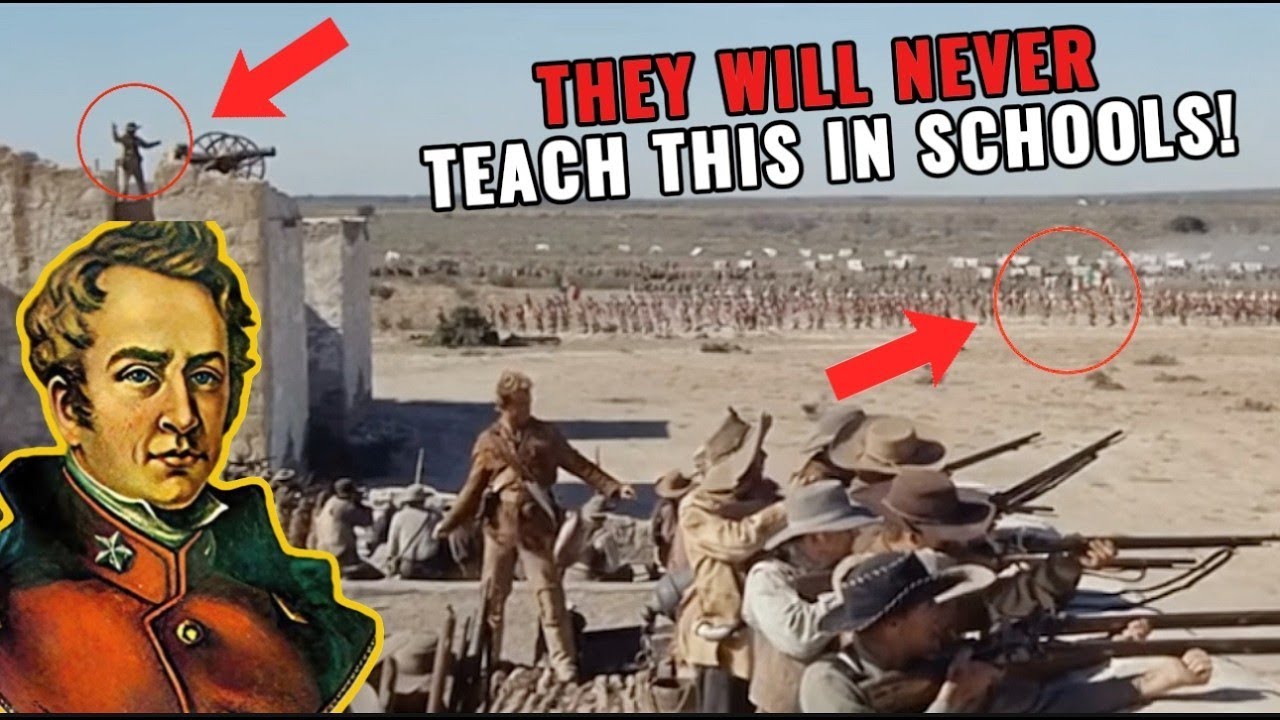
According to Joe’s account, the Mexican assault on March 6, 1836, came with terrifying speed and silence. The defenders, exhausted by days of constant watch and hard labor, were asleep when the attack began. It was Colonel Travis’s sharp yell that broke the quiet, not an alarm from the lookouts outside the fort. Travis rushed to the wall, gun in hand, urging his men to meet the enemy.
Joe followed and fired his own weapon, but within moments of the first exchange, Travis fell, badly wounded. He propped himself against the inner wall, bleeding into the dirt, still refusing to abandon the fight. Joe himself took cover in a supply room, firing through a slot as the Mexican forces overwhelmed the walls. The first two ladder assaults were repelled, he said, but on the third attempt, the attackers poured into the courtyard.
What followed, in his words, was simple and savage slaughter—close-quarters combat with musket butts, knives, and pistols fired at point-blank range. The most dramatic detail in Joe’s telling concerns Travis’s final act. Wounded and leaning on the blood-soaked ground, Travis was still gripping his sword when a Mexican general, identified in the account as General Morris, approached. The general struck at him, but Travis blocked the blow and drove his own blade into the general’s belly.
Both men fell and died tangled together. Joe also described the deaths of other legendary figures. Jim Bowie, who was reportedly sick in a room, was slashed almost beyond recognition when the Mexican soldiers found him. Davy Crockett and a small group of his companions were discovered in a pile, surrounded by the bodies of about two dozen Mexican soldiers—evidence, Joe said, of their ferocious resistance.
The civilian survivors, including the women and enslaved people inside the fort, were mostly spared. Joe said only one woman died, struck by a stray bullet as she ran past the cannons. Officers later called for any Blacks to come forward, and Joe stepped out, shouting, “Here’s one. ” Two soldiers rushed at him, one firing a musket that tore into his side and another stabbing him with a bayonet.
He believed he was finished until a captain intervened and ordered them to stop. After the fighting ended, Joe was taken to Béxar and held for days. During that time, he was forced to witness the aftermath of the battle. Mexican soldiers stacked the bodies of the fallen defenders into a large mound, poured oil over them, and set them ablaze.
Joe said the smoke twisted black against the sky and carried a smell that clung to his clothes for days. Some of the soldiers laughed as they fed the fire with broken wood, while others made the sign of the cross and looked away. Joe was also brought before General Antonio López de Santa Anna himself. In a dark room, the general questioned him about Texas—how many fighters the rebels had gathered and whether more American troops were coming.
When Joe said he knew nothing, Santa Anna dismissed it with a cold threat. He claimed to have enough forces to raise his banner in Washington, a statement Joe interpreted as dark bravado. Joe also offered observations about the Mexican army’s size. One captor boasted of 8,000 men, but Joe doubted that number.
The ground the army occupied, he noted, was full of ditches and thorny brush, which could hardly hold half that many. Santa Anna’s treatment of Joe remains a puzzle. He saved Joe’s life during the initial attack, then nearly had him killed moments later when two soldiers shot and bayoneted him. Joe survived, but why he was spared—and why Travis’s final act was later erased from official records—are questions that continue to fuel debate.
The fires that consumed the defenders’ bodies burned out long ago, but the questions Joe’s account raised never did. His testimony remains one of the only surviving eyewitness accounts of the Alamo’s final hours, and it stands as a reminder that history’s winners often control which stories survive.