Hollywood remembers the flapper as a symbol of liberation: short hair, a fringed dress, a cigarette, the Charleston. What the screen leaves out is what was being sold to her body at the same time. Cigarettes instead of sweets. Binders that flattened her chest. Skin lighteners with no ingredient label. Weight-loss pills bought at the drugstore. Cosmetics were not regulated in the United States until 1938. These are the parts of the story that period films rarely show.
Cigarettes were marketed to women as a way to control weight. In 1928, the American Tobacco Company paid for space in fashion magazines and on street posters to repeat one line: reach for a Lucky instead of a sweet. The ad showed a slim woman in profile, and behind her the shadow of a fuller face, what she would become if she ate dessert.
Another ad from the same brand featured a number: 20,679 doctors said the cigarette was less irritating to the throat. The survey had been paid for by the manufacturer itself. The candy industry complained, and the complaint reached the Federal Trade Commission. In 1930, the company agreed to remove the comparison from its ad copy.
The debate was about candy and tobacco competing for the same money. No one asked what the smoke was doing to the lungs of the person buying it. The flapper body became a selling point before it became a medical issue.
The legend says women in the 1920s threw away their corsets and took a deep breath. The catalog tells a different story. Open the 1927 Sears Roebuck catalog and there it is: bandeaux, bust binders, smooth girdles, a full page, prices in dollars, mail delivery.
The Boyish Form Company of Chicago advertised the bust confiner in magazines, sold on the exact promise in its name: to give a woman a boyish figure. In England, Symington made the side-lacer, which tightened from the sides until the bust disappeared. It arrived by mail at the farm in the same catalog that sold plows and stoves.
The straight dress of the decade did not fit a body with curves. Something had to make the curves disappear, and it was not the dress. The old corset pushed up and in. The new garment flattened down. The design changed, the name changed, the advertising changed, but the woman was still inside a device, paying for it in installments. She did not take off the corset. She traded it for another device with a different name.
In 1918, a Los Angeles doctor, Lulu Hunt Peters, published a book called Diet and Health with Key to the Calories. It became one of the biggest bestsellers of the following decade, with around 2 million copies and a column syndicated in newspapers across the country. It was the first diet book to make the US bestseller lists.
Ten years later came the Hollywood 18-Day Diet, pushed by magazines and studio publicity departments with actresses' names printed alongside it. The 1906 Food and Drugs Act dealt with labels on bottles and cans. A book was neither food nor medicine, so no federal agency read those pages before they went to print.
What reached the average woman did not go through any doctor. It went through the editor, the print run, and the newsstand. What she read there became the rule at home. It was a book with a print run, and nobody had to approve anything.
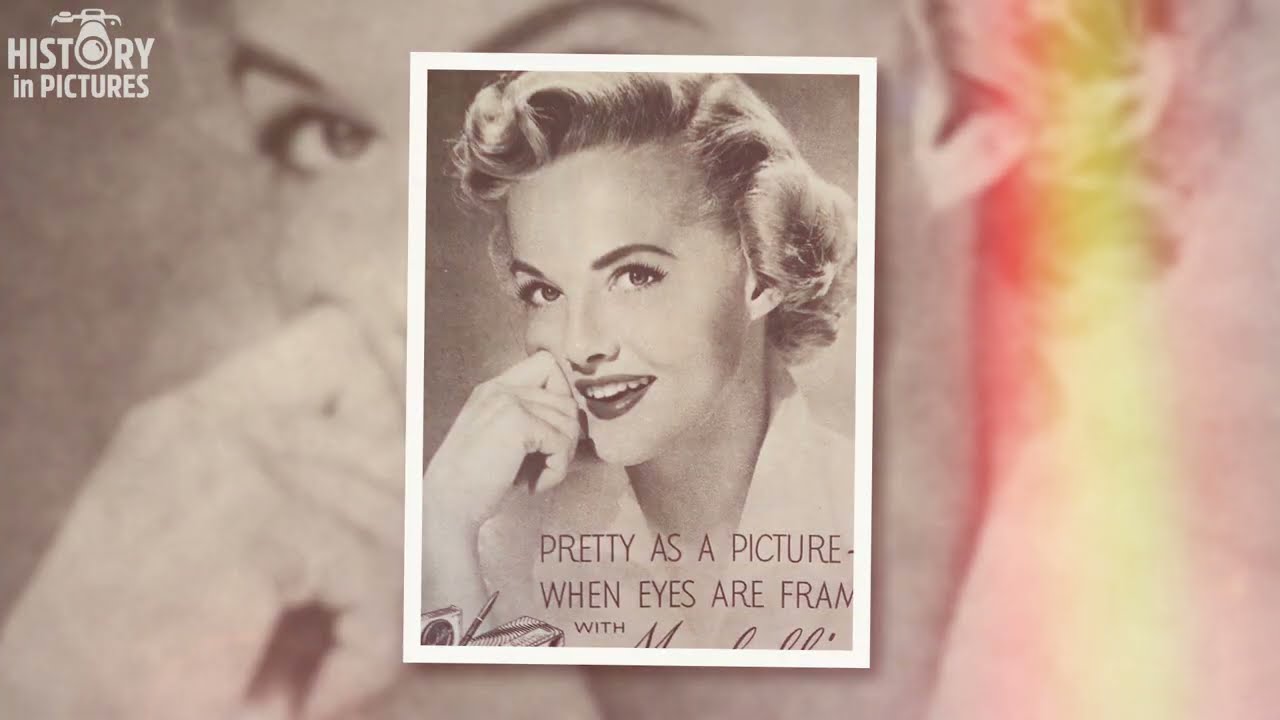
In 1920, lipstick stopped being a luxury item. Mass production brought the price down, and mail-order catalogs delivered face powder, mascara, and eyelash dye straight to the mailbox of any farm in the country. Maybelline ads promised more expressive eyes for 10 cents. By the end of the decade, Americans were spending hundreds of millions of dollars a year on these products.
What almost no one realized was that no federal law covered cosmetics. The 1906 Food and Drugs Act did not use the word even once. Manufacturers could mix whatever they wanted and sell it as beauty.
In 1933, the federal agency set up an exhibit in Washington that reporters nicknamed the American Chamber of Horrors. In one of the display cases was a portrait of a woman who had been blinded by an eyelash dye she bought at a salon. The product was still on store shelves. It was not until 1938 that Congress passed a law that finally included cosmetics. The market existed for 18 years before the rules did.
In the 1920s, weight loss became an over-the-counter product. The bestselling pill in the country was called Marmola, made by the Raladam Company of Detroit. Ads in women's magazines promised the fashionable body without dieting or exercise. All you had to do was take it.
What was inside was desiccated thyroid extract, and no prescription was needed to buy it. The American Medical Association had already been cataloging the product in its files on patent medicines. In 1929, the Federal Trade Commission filed a case. It went all the way to the Supreme Court, and in 1931, in FTC v. Raladam Co., the commission lost.
The law at the time required proof of harm to a competitor, not to the woman taking it. The drug stayed on store shelves. It was not until 1938, with the Wheeler-Lea Act, that the government gained the power to act in the interest of consumer health. It was sold over the counter for nearly 20 years. You could buy it at the drugstore without a prescription and without anyone checking what was inside.
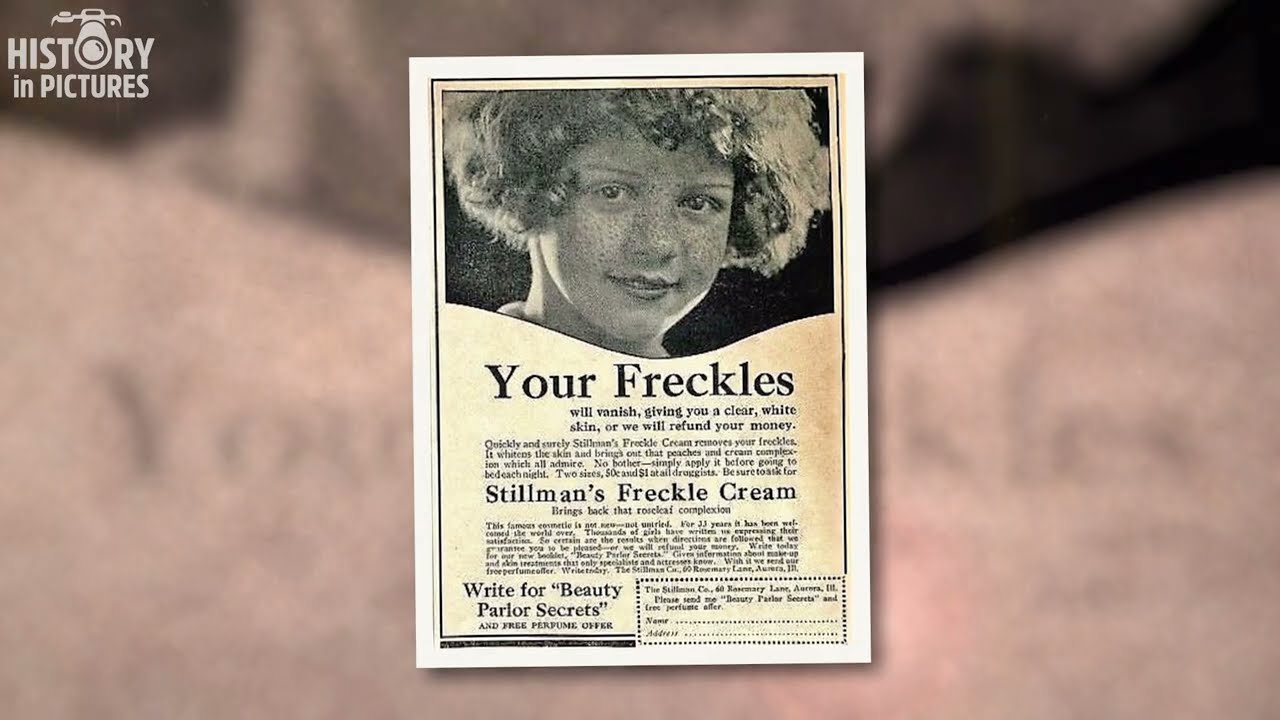
Open a magazine from 1925 and the beauty page is selling a promise: lighter skin in just a few weeks. This is not some hidden pamphlet. It is a paid ad with a price, a coupon, and an address to order by mail. Stillman's Freckle Cream came out of Aurora, Illinois, for 50 cents a jar and appeared in nationally circulated women's magazines.
What the ad did not say was what was inside. The formula contained a mercury compound, and there was no law requiring the company to disclose it. The 1906 Food and Drugs Act simply did not cover cosmetics. It was not until 1938, with the Food, Drug, and Cosmetic Act, that the federal government gained authority over what went into a jar of cream.
During that 32-year gap, the American Medical Association filed complaint after complaint in its investigation office. Women reported injuries to their faces from the product they had bought to make themselves beautiful. It is all right there in the magazine, with the price and the address to order by mail.
In 1920, the country had about 5,000 beauty salons. Ten years later, the census of business counted more than 40,000. No one called it an industry at the time, but that is exactly what it was. The money came first from short hair. The bob haircut meant going back to the salon every three weeks.
Barbers argued at conventions over whether they should serve women. Supplier catalogs from the time sold permanent wave machines like factory equipment: wires, rods, timers. Modern Beauty Shop Magazine, launched in 1927, ran ads offering financing to anyone who wanted to open their own shop.
Then came the structure. The National Hairdressers Association organized in the 1920s. Schools charged tuition. States began requiring cosmetology licenses, with exams and training hours written into law. It was the first major American business built by women for women, with contracts and a paycheck. It was not vanity. It became an industry with training, licensing, and a union.
In 1924, cutting your hair could cost you your paycheck. Salons sold short hair as a matter of hygiene. Catalogs for permanent wave machines and ads for women's barber shops called long hair a buildup of dirt and promised a modern, clean woman ready for the office.
That same woman would get to work and find another document waiting for her: the company's code of conduct, which described short hair as improper. School board minutes record female teachers being fired over their haircuts. Department stores and telephone exchanges documented warnings about appearance on paper with a date and signature.
Some women refused to accept it. They took their cases to the union and to court, and the debate moved out of fashion and into labor law. Could an employer control a female employee's body outside working hours? The records show the country deciding that case by case. She cut her hair and lost her job, and it went to court.
In 1923, a group chaired by Lou Henry Hoover, the future first lady, approved a platform on women's sports in the United States. The document exists. The women's division of the National Amateur Athletic Federation supported playing for fun and opposed high-level competition for girls and young women.
The reason they gave was not moral. It was medical. Physical education magazines published articles claiming that intense exercise wore down the nervous system and could harm a woman's ability to have children. Frederick Rand Rogers, head of physical education for the state of New York, wrote an article in 1929 asking whether young women should go to the Olympics. His answer was no.
A year earlier in Amsterdam, women ran the 800 meters for the first time. Newspapers described athletes collapsing on the track. The event was removed from the Olympic program and did not return until 1960, 32 years gone because of a two-minute race. They used medicine to tell her where she was not allowed to run.
In 1924, a New York newspaper, the Daily Mirror, launched a contest to find the ugliest girl in the city. The prize was not money. It was facial surgery paid for by the newspaper. That same decade, a doctor named Henry Junius Schireson was selling the same service in full-page ads right alongside offers for dentures and correspondence courses.
He was not board certified in plastic surgery because that certification did not exist yet in the United States. The specialty board was not created until 1937. Until then, anyone with a state medical license could open an office and call themselves a beauty surgeon. The American Medical Association opened a file on him in its investigation office. The file grew thicker with clippings from his own ads. Schireson lost his license in one state and kept operating in another. None of this happened in the shadows. It was advertised in the newspaper just like any other service.
In 1920, the US census counted more than 1 million women working in offices: typists, telephone operators, bookkeepers. It was the new job of the decade, and it was packaged as freedom. Underwood and Remington ads showed the short-haired young woman sitting at a typewriter, smiling, earning her own paycheck.
What the ad did not show was the workday. Eight to nine hours sitting down. The same finger movement repeated thousands of times a day, with no wrist support and no scheduled breaks. Women started showing up at doctors' offices with pain in their forearms, numbness, hands that would lock up in the middle of a shift.
The condition had already been described. In 1908, a British government commission investigated what was known as telegraphist's cramp. But in 1920s America, the diagnosis a typist got was different: nerves, temperament, female weakness. The problem was her body, never the desk. The new job came with a new kind of pain, and nobody had a name for it.
The telephone operator had her body timed. In 1925, a young woman sat at her station, strapped on her headset, and spent her entire shift being measured. A bulletin from the Women's Bureau of the Department of Labor describes the system. Supervisors recorded how many seconds it took her to answer, how long the connection lasted, and how much time she spent away from her station. Bathroom breaks went on the sheet.
Bell's ads sold it as progress: clean, respectable work for a respectable young woman. The photo showed rows of women smiling in front of the switchboard. The training manual had another side to it: fixed posture, straight back, standardized voice, face forward. Her body became part of the equipment, and equipment does not rest.
That is where individual performance metrics were born. Before electronic time cards, before productivity trackers, there was a 20-year-old woman with a stopwatch on her back. She was measured in seconds in 1925.
In January 1921, Good Housekeeping magazine published an ad from the Cellucotton Products Company. The product was Kotex, made from the same dressing material used in World War I field hospitals. It was the first time it had appeared in print. And then came the problem. No woman wanted to ask for it out loud at the counter, where the clerk was almost always a man.
The solution came from the manufacturer itself and is documented in ads from the time. Stores began leaving the boxes stacked on the counter wrapped in plain paper, with a small coin box beside them. The customer left the money, picked up the package, and walked out. No one said a word. The Montgomery Ward catalog did the same by mail, with unmarked packaging.
In 1926, Albert Lasker's agency took over the campaign, and the term sanitary napkin entered the printed vocabulary, a phrase created specifically so people would not have to say what it was. They created a way to buy it without having to say the product's name.
In 1900, almost every American was born at home. By the 1920s, that had flipped in big cities. In New York, more than half of all births were already taking place in hospitals. It was sold as progress. In 1920, Dr. Joseph DeLee published an article in the American Journal of Obstetrics and Gynecology arguing that normal childbirth was inherently dangerous and that intervention should be routine.
Magazines repeated the message. Hospitals were clean and modern. Ads for twilight sleep promised childbirth with no memory of the pain. But the numbers did not follow. The Children's Bureau, a federal agency, had been tracking this since 1917. America's maternal mortality rate remained among the worst in the industrialized world throughout the decade.
In 1933, the New York Academy of Medicine reviewed every childbirth-related death in the city from 1930 to 1932 and concluded that most of them could have been prevented. The real decline came later, with antisepsis, blood transfusions, and antibiotics by the end of the 1930s. The place changed before the medicine did.
In 1929, a housewife was convicted in a federal court in New York. The crime: putting an envelope in the mail. Mary Ware Dennett wrote a pamphlet to explain reproduction to her own children. Teachers asked for copies. She mailed them out.
The Comstock Act of 1873 was still in effect during the flapper era and classified information about contraception as obscene material, in the same category as pornography. The case is there in black and white: United States v. Dennett, a $300 fine. The conviction was not overturned until 1930, when an appeals court threw it out.
During those same weeks, magazines were selling that woman full-page ads for feminine hygiene. The catalog could travel through the mail as long as nobody said what the thing actually was. The short-haired young woman could dance all night. She could not receive a letter explaining her own body. It was not just forbidden to do it. It was forbidden to explain it in a letter.
In 1929, Christine Frederick published a book with a title that gave the whole thing away: Selling Mrs. Consumer. It was not a guide for housewives. It was a guide for people who wanted to get into their wallets. The math making the rounds in trade magazines was simple. Most of the money spent inside an American household passed through a woman's hands: soap, refrigerator, car, cigarettes.
She decided. It was not a compliment. It was a market map. Meeting minutes from the J. Walter Thompson agency, still preserved today in the Duke University archives, show advertisers talking about it with the cold logic of engineers. By 1928, American Tobacco was already selling cigarettes to women as a way to control their weight.
Her body became advertising space. The short-haired young woman on the poster was not there because of freedom. She was there because she sold more soap, silk stockings, cigarettes. They figured out that she was the one making the buying decisions, and they changed everything.
The radio came into the home and brought advertising with it. In 1920, KDKA in Pittsburgh made the country's first commercial broadcast. Ten years later, the US Census asked for the first time whether a household had a radio. About 12 million homes said yes.
Before that, advertising had to wait for a woman to leave the house. Now it came to her, and it came at a set time. Agencies bought morning airtime, which was cheaper than evening airtime, because they knew who was listening. In 1926, the Department of Agriculture put Aunt Sammy on the air, a housewife who did not exist, with lines written by federal employees. Washburn Crosby was already doing the same thing with Betty Crocker, who was also made up.
In 1928, American Tobacco brought to the radio the line telling women to light a cigarette instead of having a sweet. In 1930, the Federal Trade Commission forced the company to stop making the claim. The voice teaching her how to iron clothes was being paid to sell her own body back to her.
On August 26, 1920, Secretary of State Bainbridge Colby signed the document that made the 19th Amendment official. Millions of women became voters overnight. The political parties did not know what to do with them. They created women's divisions and gave them positions with no real decision-making power.
But other people were already at work. The J. Walter Thompson agency had maintained a women's editorial department since 1918, headed by Helen Lansdowne Resor, with one mission: to write ads that spoke to women. Printers' Ink magazine kept telling advertisers that women made most household purchasing decisions. That was the pitch for selling ad space.
In 1929, Christine Frederick published Selling Mrs. Consumer, a manual that treated the American woman as territory to be conquered. The flapper was not invited to the ballot box first. She was invited to the storefront. The market discovered the female voter before politicians did.
Almost none of this shows up in period movies. Hollywood tells the story of the decade through the dance hall, but the paper record tells a different story. The 1930 census lists more than 10 million women employed in the United States. Most of them were in factories, stores, and offices, not at parties.
The Women's Bureau, created within the Department of Labor in 1920, published bulletin after bulletin on these women's hours, wages, and working conditions. None of those bulletins ever became a script. What also got left out: the 1928 lawsuit by radium dial workers in New Jersey against United States Radium, the exhibit the FDA brought to Congress in 1933 with photographs of women blinded by eyelash dye sold in drugstores, and the hearings that only in 1938 produced the federal food, drug, and cosmetic law.
None of that makes for a dance scene. So it stayed in the archives while the bangs stayed on the screen. Movies kept the bangs and threw out the rest.
Look at the 1920 census number. For the first time, more Americans lived in cities than in the countryside, but just barely: 51 percent. And the definition of a city was any place with 12,500 residents. It was not New York. It was a small town with one main street.
The 1930 census tells the rest of the story. About 10.7 million women worked for wages. The largest share were in domestic service, cooking, washing, taking care of other people's children. Then came textile factories, office work, and farm work.
The young woman with short hair, a knee-length dress, and money to spend at dance halls showed up in the tables as a thin line: typist, telephone operator, department store sales clerk, single, big city. The Sears catalog sent the same short dress to a farm in Kansas and an apartment in Chicago. That does not mean the whole country was living that way. Selling the clothes is easy. Living the life in the ads is something else. She existed. There just were not many women like her.