Heinrich Himmler, head of the SS and one of the most powerful men in Nazi Germany, is often remembered through the lens of Allied propaganda as a failed chicken farmer. The label was designed to make him seem incompetent and weak. In reality, Himmler was intensely evil, but he was far from stupid.
He joined the Nazi Party in 1923 and took part in Hitler’s failed Beer Hall Putsch later that year. While he was never part of Hitler’s inner circle, he rose quickly through the ranks. He was a true believer in Hitler’s racial ideology, a brilliant organizer, and utterly ruthless.
Himmler controlled the Waffen-SS, the Gestapo, the concentration camp system, and many of the economic engines of the Reich. But he also had a darker, more mystical ambition. He wanted to create a holy site for the Nazi movement, a place of power that would anchor his vision of a German master race.
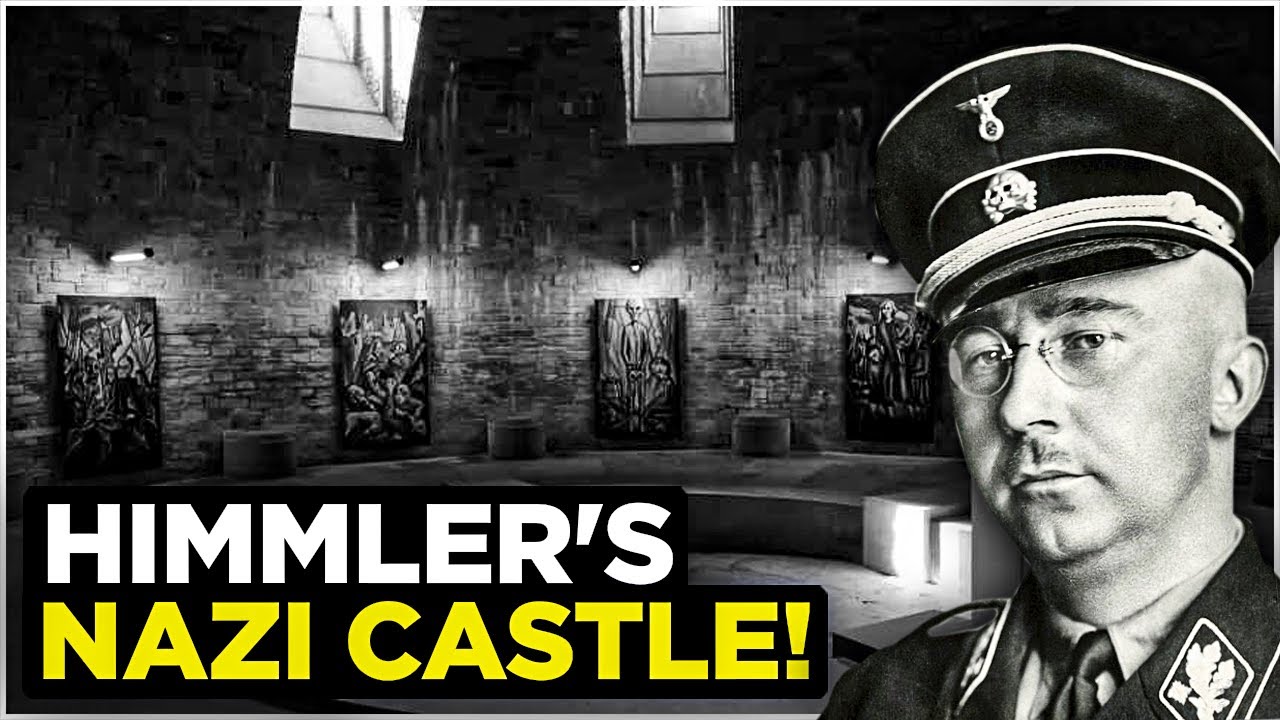
That place was Wewelsburg Castle, located south of the city of Paderborn. In 1933, Himmler told the local district leaders he wanted the castle. They agreed to a 100-year lease for one Reich mark per year. Today, the castle is a youth hostel, but its history is far darker.
Himmler was fascinated by the mystical and secret religious orders of the past, including the Jesuits and the Freemasons. He believed in a fringe theory that the German people descended from ancient Aryans who once lived on the lost island of Atlantis. He also believed that the ancestors of the Jewish people were responsible for the destruction of Atlantis.
To pursue these ideas, Himmler founded a branch of the SS called the Ahnenerbe, or the Heritage of the Ancestors. He wanted a place that vibrated with the spiritual power of the sun, the earth, and the pure German race. Wewelsberg was that place.

Even Adolf Hitler was reportedly uncomfortable around Himmler. Hitler subscribed to the idea of a German master race, but he found Himmler’s obsession with mysticism excessive. Hitler called his ideas nonsense and often made excuses to leave when Himmler began speaking about them.
Despite this, Himmler poured resources into restoring and expanding the castle. The work was done by slave laborers, many of them concentration camp prisoners. A camp called Niederhagen was built nearby to house them. Nearly 4,000 prisoners passed through it, and almost 1,300 died there. Some were shot, while others died from disease, typhus, or accidents.
The castle was decorated with swastikas, SS runes, and the Black Sun symbol. The Black Sun is a mystical symbol featuring 12 backward-facing SS-style runes. Himmler believed the number 12 held great significance, linking it to the months of the year, the disciples of Jesus, and the knights of King Arthur’s Round Table.

Inside the castle, Himmler built the Obergruppenführersaal, a circular hall surrounded by 12 pillars. Each pillar depicted a hero of the Round Table. The Black Sun was set into the floor, and high-ranking SS officers took their oaths there.
There was also a crypt dedicated to King Heinrich I, an early medieval German king. Himmler believed he was the reincarnation of this king. The crypt was meant to hold the rings of fallen SS men, and rumors suggest over 11,000 rings are buried somewhere nearby.
The castle’s walls were decorated with scenes from Richard Wagner’s operas Lohengrin and Parsifal, which are tied to the legend of King Arthur. Himmler believed Arthur was one of the last pure Aryans descended from Atlantis. Hitler, who worshipped Wagner, never visited Wewelsburg.
As American troops advanced in March 1945, Himmler ordered the castle destroyed. He rarely visited it himself. After the war, rebuilding began, and many Nazi symbols were removed. A museum and memorial to the victims of the Nazis was created on the site.
Today, the museum and the youth hostel remain open to visitors. The castle stands as a reminder of the dark, mystical ambitions of one of history’s most feared men.