On November 6th, 1895, Consuelo Vanderbilt walked down the aisle of St. Thomas Church in New York weeping so violently that her mother feared she might collapse before reaching the altar. The 18-year-old heiress, worth roughly $2. 5 million at the time, was marrying Charles Spencer Churchill, the ninth Duke of Marlborough.
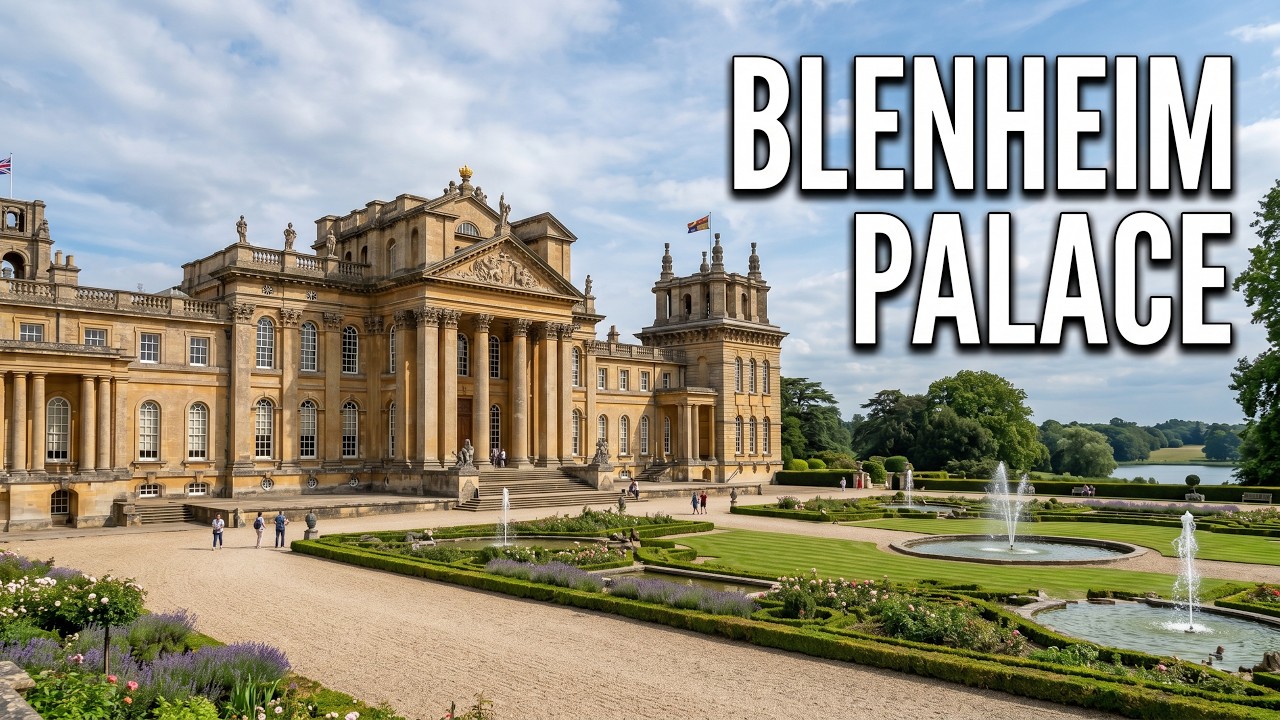
He needed her fortune to save his crumbling family palace. She needed nothing from him. The wedding was not a romantic union but a financial transaction dressed in white silk. It would save Blenheim Palace, one of England’s grandest estates, but at a devastating cost to the woman who paid for it.
By 1890, America’s wealthiest families had conquered industry and finance but could not buy the aristocratic pedigree that old European bloodlines provided. British aristocrats, meanwhile, were struggling under agricultural depression, inheritance taxes, and the enormous costs of maintaining country estates. The solution was a marriage market where American money married British titles. Between 1870 and 1890, nine American heiresses married into British aristocracy, transferring over $40 million across the Atlantic.
That figure would more than quintuple over the next two decades. These were negotiated contracts with lawyers on both sides, treating the bride’s fortune as the primary asset being acquired. Consuelo Vanderbilt was raised for this purpose from childhood. Her mother, Alva Vanderbilt, controlled a personal fortune of $70 million and understood the system perfectly.
Every detail of Consuelo’s upbringing was calculated: language lessons, deportment training, chaperoned balls where titled Europeans happened to be visiting. She was being prepared for sale, not for life. At 17, Consuelo fell in love with Winthrop Rutherford, a young man from an old New York family. He was handsome, educated, and from the right social class, but he carried no title.
Alva discovered the romance and responded with surgical precision, removing Consuelo from society and orchestrating a European tour designed to introduce her to titled men. Alva found the perfect candidate in Charles Spencer Churchill, 23 years old, heir to Blenheim Palace, and utterly broke. The ninth Duke had inherited debts totaling £300,000, roughly $36 million in modern terms. Blenheim’s roof was failing, the heating system was collapsing, and the estate generated no income.
He needed an immediate infusion of American capital. The settlement negotiations began in June 1895. Alva agreed to transfer $2. 5 million in New York Central Railroad stock to a trust controlled by the Duke.
The income would cover operational costs at Blenheim and service existing debts. In exchange, the Duke would marry Consuelo, produce heirs, and grant her the title of Duchess of Marlborough. The stock would only revert to Consuelo’s control after she produced male heirs. She was not present for these discussions.
Consuelo continued to resist. She wrote letters to Rutherford that were intercepted. She pleaded with her mother. Alva escalated to threats, claiming that the stress of defiance was affecting her health.
She consulted physicians who diagnosed her with a serious heart condition and began staging episodes of chest pain whenever Consuelo was present. The message was explicit: if Consuelo refused the marriage, her mother would die. In late October, less than two weeks before the wedding, Consuelo made a final attempt to escape. She wrote to Rutherford begging him to take her away.
The letter was intercepted and brought directly to Alva. Consuelo was confined to her bedroom for five days, with guards posted outside the door. Correspondence was forbidden. Visitors were denied.
Alva sent word to Rutherford that the marriage would proceed. He backed down, choosing his family’s future over Consuelo’s freedom. The Duke arrived in New York three days before the wedding. During one private conversation, he told Consuelo what to expect: the honeymoon voyage to England, her presentation to British society, her duty to produce heirs.
When she asked if he loved her, he looked genuinely confused. Love was not a relevant category for aristocratic marriages. The wedding was attended by 2,000 guests. The church was decorated with white roses and orchids.
Consuelo sobbed audibly as she walked down the aisle while her mother gripped her arm so tightly that bruises would appear later. The guests pretended not to notice. The Duke offered no comfort. When the minister pronounced them married, the church erupted in polite applause.
They left for England that evening. On the third night of the voyage, the Duke explained that they would maintain separate bedrooms, meeting only when conception of an heir was the goal. He was particularly fond of a woman named Gladys Deacon, an American expatriate who shared his aesthetic sensibilities. Consuelo understood immediately that her husband had a mistress waiting.
Blenheim Palace consumed her fortune the way it consumed everything. The roof above the east wing required complete replacement, costing £100,000. The electrical system needed to be installed throughout the palace. The state rooms demanded redecorating.
The Duke oversaw every detail personally but granted Consuelo no voice in how her money was spent. She was expected to appear at breakfast each morning in full formal dress, then change outfits for lunch, tea, and dinner. Between meals, she was largely ignored. The isolation was crushing.
British law granted husbands complete control over their wives’ property and movements. She could not leave, could not access her own money, and could not return to America without his permission. In 1897, she gave birth to their first son, John, heir to the dukedom. A second son, Ivor, followed in 1900.
Two male heirs secured the succession and completed Consuelo’s primary obligation. The Duke began spending more time away from the palace. In 1902, she discovered that Gladys Deacon was now his acknowledged mistress, visiting Blenheim regularly and sitting at Consuelo’s dinner table. The Duke made no effort to hide his preference.
By 1905, the major restoration work was complete. Blenheim Palace gleamed with renewed grandeur. Consuelo had purchased that privilege and was learning what it cost to maintain. In 1908, Consuelo told the Duke she wanted a separation.
He refused immediately. Under British law, children belonged to their father. If she left, she would lose access to her sons. She was trapped by her children the way she had been trapped by her mother’s manufactured heart condition.
She remained at Blenheim but stopped pretending to be happy. Photographs from this period show a woman with a blank face, going through motions without joy. The separation negotiations began in 1913 but were delayed by World War I. Consuelo threw herself into war work, running field hospitals in France.
The Duke remained at Blenheim, positioning himself as a patriotic aristocrat. When negotiations resumed after the war, the Duke’s opening demand was staggering. He would grant legal separation only if she established a new trust of £100,000, roughly $12 million in modern terms, that would permanently fund Blenheim’s maintenance forever. Consuelo agreed.
The separation was formalized in 1921. She left Blenheim Palace for the final time, walking out of the building she had saved with money she had never controlled. But separation was not divorce. She needed an annulment, a legal declaration that the marriage had never been valid.
In 1926, the Catholic Church granted it, determining that the marriage had been contracted under duress. The annulment document spelled out the coercion in detail: Alva’s faked heart condition, the five days of confinement, the interception of Consuelo’s correspondence, the Duke’s admission that he had married for financial rescue. In 1927, Consuelo remarried. Her second husband was Jacques Balsan, a French aviator and industrialist.
He had money of his own and married her because he loved her. At 50 years old, Consuelo experienced what marriage was supposed to be. She spent the following years funding hospitals in France and supporting educational programs for poor children. In 1952, at 75, she published her memoir, “The Glitter and the Gold,” telling her story with the controlled rage of someone who had waited decades to speak freely.
The memoir caused scandal in both America and Britain. Women who had lived through similar experiences wrote her letters saying thank you for telling the truth. Consuelo Vanderbilt died in 1964 at 87 years old. She had outlived the Duke by 30 years.
Today, one million visitors tour Blenheim Palace annually, and almost none of them know who paid to save it. Tour guides mention Winston Churchill, born at Blenheim in 1874. They describe the first Duke’s military victories. They discuss the palace’s designation as a UNESCO World Heritage Site.
They do not discuss Consuelo Vanderbilt. Her portrait hangs in the Green Writing Room, painted in 1896. Tour groups walk past it quickly. The restoration work she financed continues to protect the building.
Between 2000 and 2010 alone, £3 million were spent on roof repairs using income from the perpetual trust established when Consuelo bought her freedom. The ninth Duke died in 1934 and was buried at Blenheim with full aristocratic ceremony. His obituaries praised his stewardship of the palace. They mentioned his first marriage to an American heiress who brought substantial wealth to the estate but did not mention the coercion.
The current Duke inherited Blenheim in 2014 and continues the work of preservation. The estate operates as a tourist attraction and event venue. Underneath the modern business operations runs the original trust. Consuelo’s money, invested over a century ago, still generates income that flows into Blenheim’s accounts.
Vanderbilt money still pays for Churchill preservation. Between 1870 and 1914, over 500 American heiresses married European aristocrats in transactions that transferred approximately $220 million across the Atlantic. Each marriage followed the same pattern: an impoverished aristocrat needed capital, an ambitious American family needed social legitimacy, and a daughter became the medium of exchange. Blenheim Palace stands today because this system worked exactly as designed.
An American fortune was identified, a duchess title was offered, the money was transferred, and the palace was saved. That the duchess spent decades in misery was unfortunate but irrelevant to the transaction’s success. Every great house hides a human cost in its foundation. At Blenheim Palace, an 18-year-old girl named Consuelo Vanderbilt paid with her freedom, her happiness, and 25 years of her life.
The building she saved stands today as both architectural masterpiece and monument to institutionalized cruelty. The palace survived. The question remains whether that survival justified what was demanded to achieve it.