The afternoon of June 25, 1876, did not end with the roar of gunfire. In the hills above the Little Bighorn River, the final moments of George Armstrong Custer's five cavalry companies were marked by a strange and heavy silence. Historians estimate the most intense phase of the battle lasted between fifteen minutes and an hour, but when it was over, a profound quiet settled over the Montana landscape. It was a silence that spread faster than the noise of battle, and it lingered much longer.
The exact time of the final charge is unknown, as there were no survivors to look at a watch. What is known is that the silence that followed was not empty. It was filled with the weight of what had just occurred. In the valley below, the massive Sioux and Cheyenne camps stretched for miles, home to an estimated seven to ten thousand people. Over five hundred warriors had joined the fight that day, first against Marcus Reno's companies and then against Custer's attack from the north.
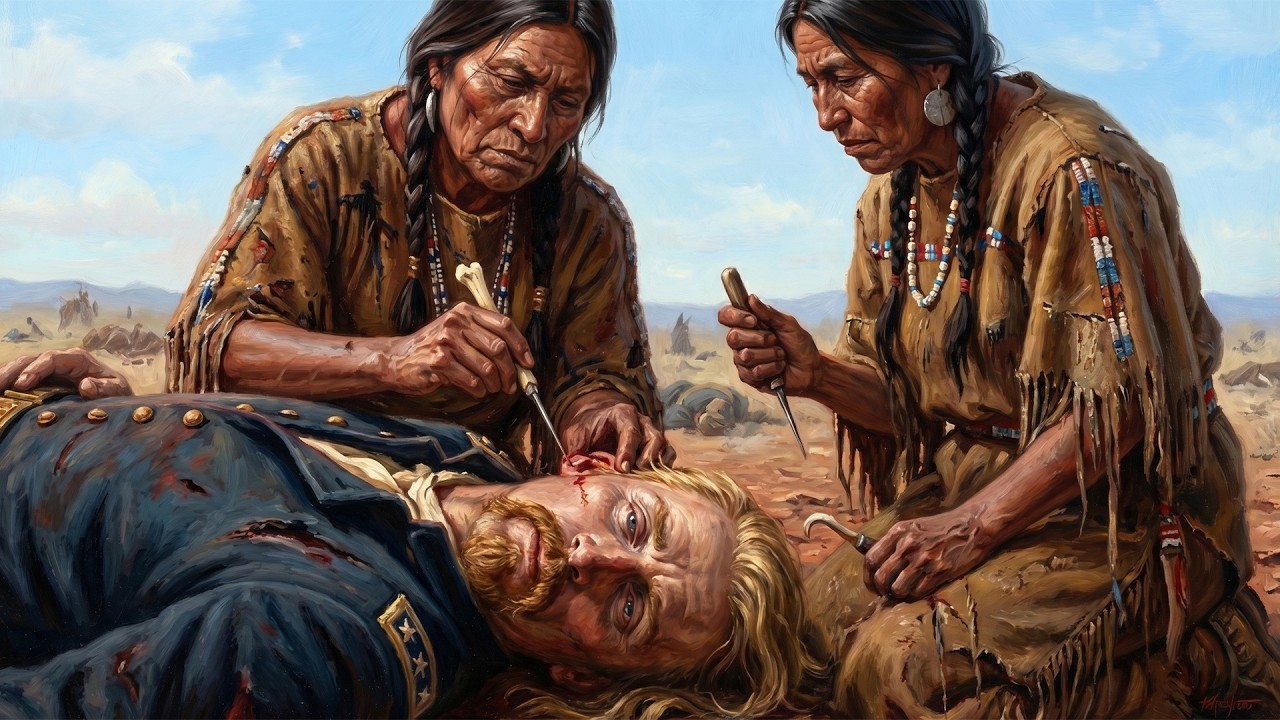
As the smoke began to clear, the warriors on the hills were still riding the wave of adrenaline from their victory. But for the women, the mothers, and the wives in the camp below, the silence was a question that slowly turned into a grim reality. In Lakota and Cheyenne tradition, it was the women who went to the battlefield to search for their own dead. What they found on the path leading to Last Stand Hill turned their search into something far more complex.
The bodies of Custer's men were not concentrated in a single location. Archaeological studies, including extensive surface surveys after a 1983 forest fire, have mapped the chaotic dispersion of the final moments. The men lay scattered across the hillside, their frozen expressions telling a story they could no longer speak. Under the scorching July sun, time began to work on the 210 men of the 7th Cavalry, and the smell of blood and decay soon filled the hot air.

The roots of this violence ran deep. The Fort Laramie Treaty of 1868 had promised the Black Hills to the Sioux forever, but the discovery of gold changed everything. Custer's 1874 expedition announced the gold deposits to the public, breaking the promise and setting the stage for war. This day, this 25th of June, was the explosion of years of tension and broken agreements.
Among the bodies, the women searched. They moved slowly through the carnage, looking for their husbands, brothers, and sons. But they were also looking for one man in particular. Custer, known to the Lakota and Cheyenne as "Long Hair," was the focus of a specific and deliberate ritual. When they found his body on the northern slope of Last Stand Hill, the pace of the search slowed.

Custer's body was different from the others. He had not been scalped, and he had only two bullet wounds, one below his left chest and one on his left temple. His face was not peaceful but was etched with the terror of his final moments. The truly horrifying detail, however, was the needle holes. Cheyenne women, using ordinary bone sewing tools, had pierced Custer's ears with fine needles. It was a conscious, targeted ritualistic act.
The message was clear to those who understood the oral traditions. It was a warning repeated from the past, a reminder that Custer had been told not to attack Cheyenne lands. The thought was that if he would not listen in this world, perhaps he would hear better in the afterlife. The act was not born of simple anger but from a deep, complex emotion that mixed a curse with a strange hope for understanding.
The soldiers who came to bury the dead two days later were paralyzed by what they found. The faces of most men were so brutally mutilated that they could not be identified. When they found Custer, the burial detail experienced a profound psychological collapse. The official reports were kept superficial, with phrases like "died heroically" written into the records. The truth was hastily buried in shallow graves, but the memory of that day was carried in the oral histories of the native tribes.
The silence that fell over Little Bighorn that night was not the silence of peace. It was the silence of closure, a permanent end to a story written in blood and arrogance. The message Custer was meant to hear echoed not only in his ears but through history, a secret that the true owners of the land kept in their memories, carried on a dark and ceaseless wind.