In 1982, an 18-year-old Long Island girl with a famous name told the press she wanted to be famous. The daughter of a 10-goal polo star and a Boston debutante turned style icon, she had godparents who were the Duke and Duchess of Windsor. Her family fortune came from Pittsburgh steel, and her childhood guests included Andy Warhol, Truman Capote, and Mick Jagger. What made her irresistible to gossip columnists was that she was doing something old society had always kept hidden: she was actively seeking celebrity.
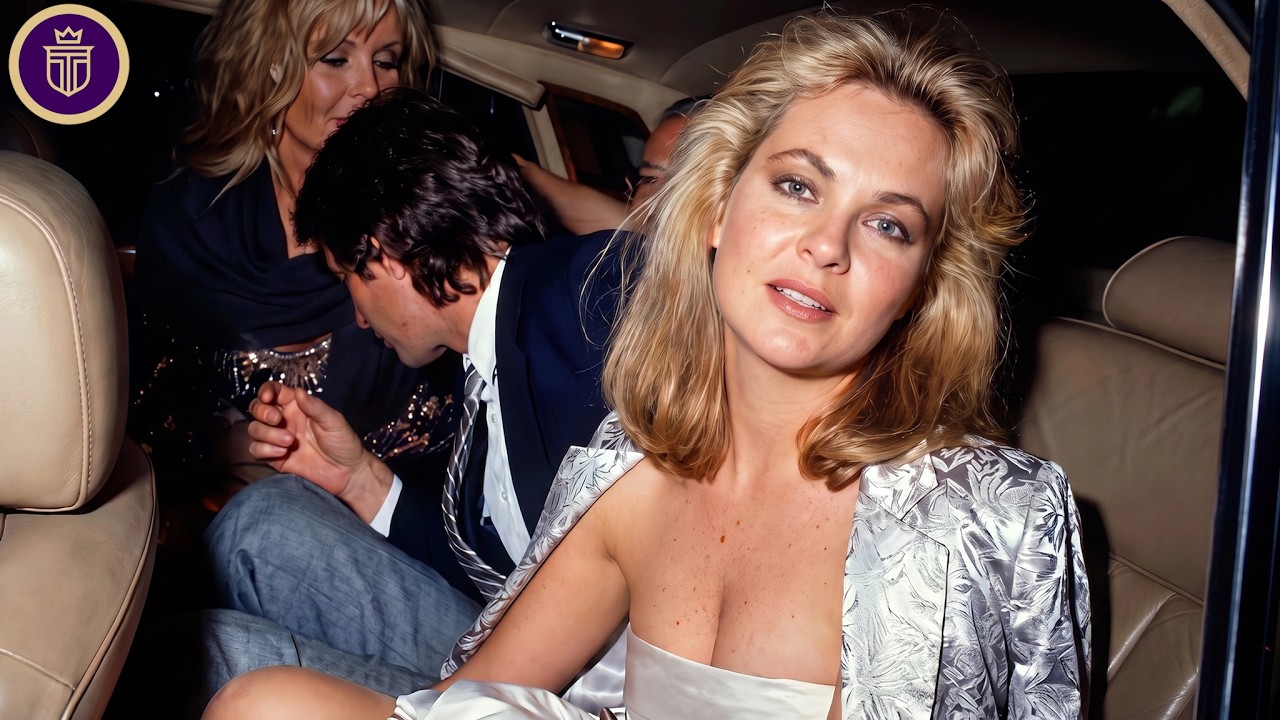
The girl was Cornelia Guest, born on Thanksgiving Day 1963, six days after President Kennedy was assassinated. Her mother, C. Z. Guest, was already over 40.
Cornelia grew up at Templeton, a 28-room estate in Old Westbury, Long Island, where elephant tusks hung in the entrance hall, shot by her father. She was taught to curtsy to her godparents before she could read, and she woke at 5:30 every morning to care for her horses. Her great-grandfather, Henry Phipps Jr. , had grown up next to Andrew Carnegie and became the second-largest shareholder in Carnegie Steel.
When the company was sold to U. S. Steel in the early 1900s, Phipps received $48 million and quietly created the Bessemer Trust purely to preserve his wealth for his heirs. That trust lived on long after everyone involved had died, ensuring generations of his family never had to worry about money.
Cornelia’s father, Winston Frederick Churchill Guest, was the grandson of the 7th Duke of Marlborough and a cousin of Sir Winston Churchill. His wife, C. Z. , was born Lucy Douglas Cochrane in Boston, rejected a suitable marriage, posed nude for Diego Rivera in Mexico, and appeared in the Ziegfeld Follies.
She achieved international fame as a best-dressed woman, photographed by Cecil Beaton, painted by Dalí and Warhol, and included among Truman Capote’s “swans. ” She once told her daughter that to be a lady, you must remain silent as a tomb. At 15, Cornelia left boarding school and moved to Manhattan to pursue performing arts, studying at the Professional Children’s School. She was protected by older artists: Warhol, whom she had known since childhood, and fashion designer Halston, who taught her to walk in heels and scolded her for living alone in the city.
She remembered them as the people who protected her, not the ones who launched her. At 18, she made her formal debut during the 1981–82 season. One New York ball alone presented 77 girls. Her own debut party was held under a tent at Templeton for about 250 guests, and her birthday celebration drew Doris Duke, Warhol, Cheryl Tiegs, and a friend of Nancy Reagan’s.
Columnist Eugenia Sheppard gave her a title no committee had awarded: “Debutante of the Year. ”
She openly said she wanted to act, which no debutante had ever done publicly. She posed for a magazine with her hands covering her bare chest, sang rock at a Times Square club called Xenon, and was called a “material girl” by the press. Writers described her as frivolous and spoiled.
She later acknowledged many moments were misread but said she would overcome the coverage because she had a very strong will. In 1986, when she was 22, she used her fame to write a comic guide called “The Debutante’s Guide to Life,” describing it as the closing chapter of her debutante life. She said she wanted to move forward and build a career. Then she moved to Los Angeles to become an actress, but her first role lasted one day: producers of “Falcon Crest” sent her home, deciding she was too young for the part.
For more than two decades, a serious acting career did not happen. When her mother fell ill in the early 2000s, Cornelia read extensively about how farm animals were treated and became fully vegan. After C. Z.
died in November 2003, Cornelia stopped riding horses, a break from the animal that had defined her entire life. She lived alone in the 28-room house her mother had decorated, then began planning parties for friends, and in 2009 she founded Cornelia Guest Events, a catering business offering plant-based menus. She followed with a vegan fashion line made entirely without leather or fur, sold at Bloomingdale’s, and in 2012 published a vegan cookbook titled “Simple Pleasures. ” Templeton was listed for $20 million in 2008, just as the real estate market collapsed.
It sold in 2012 for $5. 8 million, less than a third of the original asking price. The contents were auctioned, and the house was demolished afterward, ending her family’s 90-year presence in Old Westbury. In 2015, she bought a farm in Ankram in the Hudson Valley, specifically to rescue animals.
In 2016, she founded Artemis Farm Rescue, which saves horses and dwarf donkeys, animals often destined for slaughter. She said the property was for rescued horses, dogs, birds, and anything her cats brought home. She has since reported rescuing more than 100 horses. In January 2020, she left New York for Dallas, moving the entire rescued herd about 1,500 miles because the animals needed more space.
Her farm now houses dogs, cats, two donkeys, six dwarf horses, one full-size horse, chickens, chicks, and a tortoise. She has also spoken out against the federal rounding up of wild horses with helicopters. Her acting career quietly came back. In 2017, David Lynch cast her in “Twin Peaks,” and she appeared in “American Horror Story.
” In 2024, Paul Schrader directed her in “Oh, Canada,” opposite Richard Gere and Uma Thurman, which premiered at Cannes. She said working with Schrader was incredible, and she still gets great joy when she learns she has been cast in something. Now in her sixties, she still lives by her mother’s rules: she writes handwritten thank-you notes, wears white on the tennis court, and wears a hat because her mother told her hundreds of times to do so. She has only one boundary, her private life, which she has guarded for 40 years.
Marriage and children were never something she wanted; independence was her goal. She never disappeared from public life, only changed its pace. She attends charity events and, last fall, closed a New York fashion show wearing the final look, 40 years after first meeting that designer with her mother. The girl who was crowned by a columnist has spent four decades proving that a name is just a starting point.
Her great-grandfather built the machines that made her family’s idle life possible; the granddaughter dismantled that life’s last landmarks. The elephant tusks are gone, the 28 rooms are divided, and the small horses now graze in Texas.