In the autumn of 1986, an elderly man traveled halfway around the world to sit in an office in Beijing, across from a university professor rumored to be his son. He was the husband of the Queen of England. The moment cameras captured them together, a 40-year-old rumor stirred back to life.
Prince Philip had long described the professor’s mother as merely a friend, a girl he had known since he was three years old, when both families were in exile, without money or a homeland. Yet he paid for her son’s education at his own old school. He was godfather to her children. He attended her wedding as a boy of seventeen.
This is the story of a friendship the palace could never quite explain. And the story of a son who spent his life saying the one thing no one wanted to hear.
### Two Children Without a Homeland
Before he was a prince of anything found on a map, he was a small boy in a rented apartment in Paris, and she was the older girl who welcomed him. Both were children of the same catastrophe.
In the early 20th century, Europe’s royal families were falling one by one, and the Greek royal family fell with them. Philip was born on June 10, 1921, on the island of Corfu, a prince of Greece and Denmark by blood, owning none of the wealth. He was barely a year old when everything collapsed. His uncle, King Constantine I, lost his throne. His father, Prince Andrew, was tried and exiled. The family fled.
The story that followed Philip ever since says the infant was smuggled out of Greece in a cradle made from a fruit crate. Whether the crate story is fact or legend, its essence is true. He began life as contraband from a country that no longer wanted his name.
The Voufounis family knew the same path. They were Greek royalists, driven out when the tide turned against the monarchy. Helen’s grandfather had been a wealthy man before. Exile emptied his pockets. He was remembered as a cotton magnate who lost the world he had built.
Both families ended up in the same France, among the same scattered community of Greek and Russian exiles who filled the cheap suburbs of Paris in the 1920s, clinging to traditions they could no longer afford. They knew each other the way exiles know each other. They shared what little they had.
Helen was born on July 3, 1917, in Marseille, making her about three years older than Philip. According to the account she told for the rest of her life, they met when she was six and he was three. The math of that friendship was simple. She was a confident, older girl in a bustling house full of visitors. He was a serious boy who had already lost his homeland before he could walk, with a mother about to drift away from him and a father drifting south toward the sun of the Riviera, leaving his upbringing to relatives and schools.
In the Voufounis home, he found something he found almost nowhere else. He found a family that was simply happy to see him. That fact lies beneath everything that followed, because everything that followed was disputed.
Philip’s childhood was not stable. His mother, Princess Alice, suffered a severe nervous breakdown and was placed in a sanatorium while he was still a boy. His four sisters married German princes and drifted into their own lives across borders. His father drifted away. Philip was passed between noble relatives who loved him unevenly, moved often from France to England to Germany and back, a boy with a title and no address.
In the midst of this wandering, the Voufounis family was a fixed point. Helen was the older girl at its center. The world would later look at the adult prince’s loyalty to this woman and see only one explanation, the oldest and most scandalous one. But the child carried out of his country in a box, whose mother faded into illness and whose father vanished into pleasure, does not forget the home that kept a place for him. He clings to it. He clings to the people in it.
Of all the people in it, Helen was closest to his age, the clever older girl who allowed the strange little prince to accompany her.
### The Boy Who Stood at Her Wedding
When Helen married in 1938, the young man given the place of honor beside her was seventeen years old, with no permanent place to call home. By the late 1930s, the two exiled children had grown into a young woman and a teenage boy, and their friendship had not weakened.
Helen, just past twenty, was ready to marry an Englishman named William Kirby. When the wedding came, Philip had a central role. Accounts differ on exactly what he did. Some say the seventeen-year-old prince was best man. Others say he gave the bride away, standing in for her father who was not present. Either way, the meaning is astonishing. A girl marrying in England chose, for the most intimate role of her wedding day, the boy she had grown up with in exile, and he came and stood beside her.
In 1938, Philip was still just a schoolboy, moving between relatives, shaped by the harsh discipline of Gordonstoun on the far northern coast of Scotland. He had no money of his own, no stable home. Helen was still years away from television screens and nightclubs, just a young refugee marrying into English life. Neither had power. Neither had fame. All they had was each other, and they had survived Paris together.
When she needed someone to stand beside her at the altar, the natural choice, the choice that felt like family, was Philip. This tells us how old their friendship was, and how deep, and how strange. A bride surrounds herself on her wedding day with the people most important to her, and choosing who stands directly beside her is never an accident.
Helen had an entire English life opening before her, a new husband, his family, his country. Yet in the place of honor, she went back and chose that refugee boy from Paris. It was her way of saying that no matter how circumstances changed, he would remain her family.
Philip made the journey to stand beside her, a schoolboy with no money and no fixed address, because that is simply what one does for people who once took one in.
Her marriage to William Kirby did not last long. Helen’s life, like Philip’s, was about to be swept into a larger current. Clouds gathered over Europe again, and within a year, the continent that had made them refugees would fight a war that would reshape everything a second time.
The war separated them, as it separated everyone. Philip went to sea. He joined the Royal Navy and served with real distinction during the battles. A young officer who finally had a role that suited him, a deck to stand on, a duty to perform. For a boy who had never had a homeland, the navy became something like one.
Helen’s war took a different, more complicated shape. She remarried, this time to a Frenchman named Marcel Boisot, an officer who served with the Free French forces that gathered around General de Gaulle after the fall of France. Marcel, according to surviving records, was a man of daring. As a young trainee pilot without enough flight hours, he answered de Gaulle’s call by flying a training aircraft from Morocco to Gibraltar without navigation equipment or maps, relying on the coastline and his own courage to reach the free side of the war. He was a man who risked his life for a cause.
Marcel Boisot’s story matters here because the world would later try hard to forget him. In the romantic version of this story, the version the newspapers preferred, Helen’s husband becomes a shadow, just a name on a certificate, a convenient absence. The truth is that he was a real man with real courage, who married Helen and fathered her children. The weight of the coming rumors depended entirely on making him disappear. But the records do not allow him to disappear so easily.
Through it all, the friendship with Philip endured. War is the great separator. It ends friendships with distance, with death, with the simple erosion of years apart. But it did not end this one. When the guns fell silent and Europe began its slow work of counting its dead and rebuilding its cities, Philip and Helen were still standing, bound by that thing that had joined them since Paris.
He was about to undergo the most extraordinary transformation any man of his generation might know, from a stateless exile to the husband of the future Queen of England. She was about to become famous in her own right on those strange new screens beginning to glow in British living rooms.
### A Prince from Her Past
After the war, Helen became one of the first faces Britain saw on television, and everyone knew who her childhood friend was. The Britain that emerged from the war was gray, rationed, and exhausted. Into that grayness came television, still new, a small flickering miracle in the corner of the few homes that owned a set.
One of the faces that appeared through it belonged to Hélène Cordet. Starting in 1947, she presented a program called Café Continental, which brought a flavor of European cabaret and glamour into British living rooms every week. For a country exhausted by austerity, she was something strange and warm, a woman with a French accent and effortless elegance, presenting a world of evening gowns, music, and gaiety that most of her viewers could only dream of.
The program ran until 1955. During those years, she was a star, by the modest standards of early television. She did not stop at the screen. Hélène made a name for herself in London nightlife as well. By the mid-1950s, she was running a club bearing her name. In 1961, she helped open the Saddle Room in Park Lane. It was considered the first real discotheque in London, where she presided as hostess over the capital’s elite and rebellious.
She had turned exile into elegance. The refugee child from the suburbs of Paris had become a woman who could fill a room with the best-dressed, most famous people, a hostess whose smile was part of the entertainment. At the heart of it all, unspoken but not entirely hidden, was a thread that made her more than an entertainer. Everyone knew who her friend was. It was known that the glamorous Hélène Cordet, face of Café Continental and hostess of the Saddle Room, had grown up beside the Duke of Edinburgh, the Queen’s husband.
That knowledge gave her a halo no publicist could buy. She had built it all from nothing. Born in Marseille in 1917 to a family whose wealth had already evaporated. Raised in the simple exile life of Paris in the 1920s. Married and divorced, married again, lived through the war. By the 1950s, she was at the heart of British light entertainment. A familiar face in every home for nearly a decade, owner of her own club, hostess at another, a fixture of London nights.
Few women of noble birth who looked down their noses at a nightclub hostess had traveled half the distance she had traveled to get where she was.
### Children of the War Years
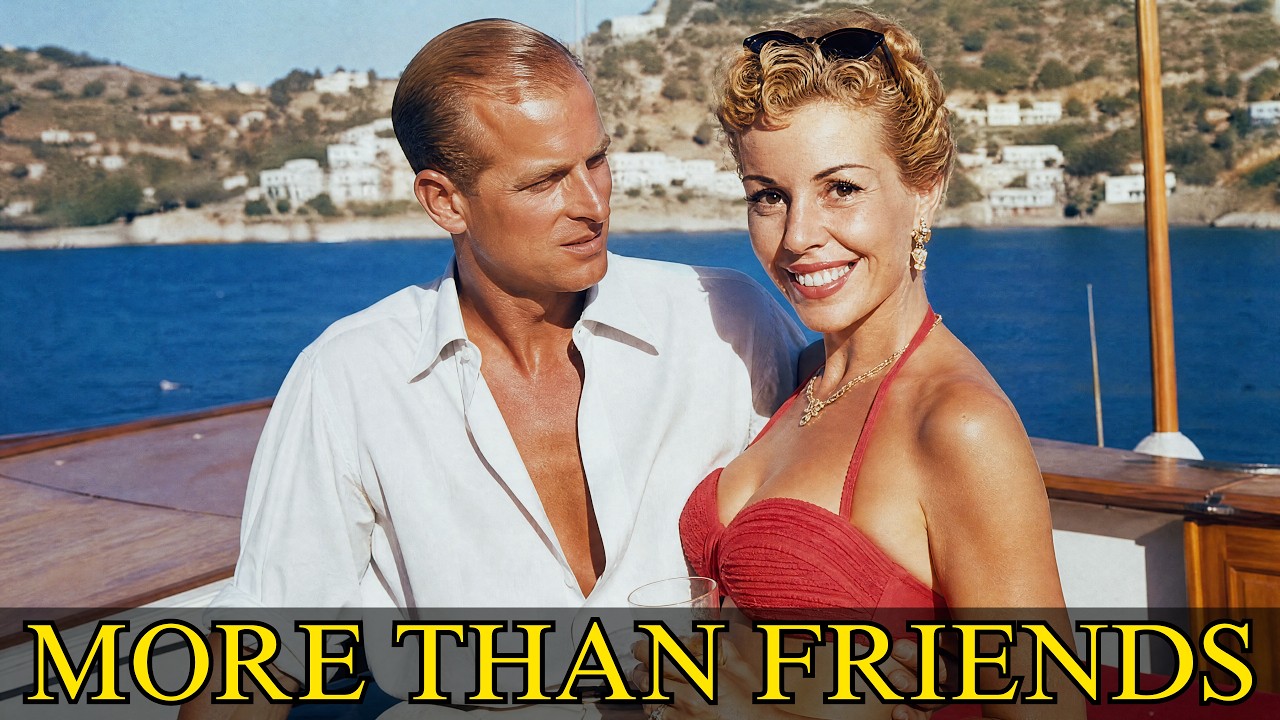
Between 1943 and 1945, Hélène gave birth to two children, and one of them would remain the subject of whispers his entire life. Max Boisot was born on November 11, 1943, in Maidenhead, Berkshire, in the middle of the war. A sister followed on February 8, 1945. She was born in Ruscombe, in the same English county, and named Louise, though the world would later know her by her mother’s stage name as pop singer Louise Cordet.
Their father, in all official records, was Marcel Boisot, Hélène’s second husband, the Free French pilot. That should have been the whole story. A woman married a man and had two children by him in the ordinary way families are formed. But these were not ordinary years. And this was not an ordinary family.
The war pulled Marcel away, as it did so many men in military service that kept him abroad, away from the daily life of his children. Postings distributed the marriage across continents, and into the space left by his absence, quietly and without fanfare, Philip stepped. He became godfather to Louise, Hélène’s daughter, a matter clearly documented, and according to several accounts, godfather to the boy as well. He paid attention to both children in ways that went beyond the polite duties usually performed by a godfather. He was involved in their lives regularly, for years.
Here we must be careful in telling the story, because here the rumor was born, and a rumor is a fragile and dangerous thing to handle. What is documented is Philip’s sincere and unusual interest in these children. What is not documented, and never has been, is any evidence at all that he was anything more to Max than a loyal family friend. The two things sit side by side and should not be confused.
The interest was real. The scandalous explanation for it was never proven, and every serious account treats it as speculation and nothing more. Yet one can feel how the speculation began, because the shape of it invited it. Here was a woman with two small children and a husband kept away by the war. Here was a prince about to marry the heir to the British throne, who gathered these children under his wing with a warmth that looked, to a suspicious eye, like more than friendship.
The timeline complicates the simple version, as timelines usually do. Max was born in 1943, named with the name chosen by the man his mother married. According to writer Christopher Wilson, Marcel Boisot did not formally acknowledge paternity of the children until shortly before Hélène’s memoirs appeared. That small delay was exactly the kind of detail that fed the whispers instead of settling them. A gap in the paperwork, a husband abroad, a prince nearby, a mother who never said the truth. It was enough. It was always destined to be enough.
By the end of the war, an extraordinary group had gathered around this small boy. A mother of exiled Greek blood, born in 1917, on her way to television fame. A father of French blood who had flown a small training aircraft across the sea to join a free army. And a godfather who would, within a few years, become the second most important man in the United Kingdom. Three countries, three lives shaped by upheaval, all converging on a child born in Maidenhead in the middle of a war.
No wonder the world could not leave him alone. He was born into the heart of a story before he could speak a single word about it.
### The Prince’s Own School
When the boy reached school age, the bills were sent to the Duke of Edinburgh, and the school was that harsh one on the Scottish coast that had shaped Philip himself. Of all the facts in this story, this is the one that has kept the rumor alive ever since.
Max Boisot was educated at Gordonstoun, a rigorous boarding school on the Moray coast in northern Scotland. It was founded by the German educator Kurt Hahn on a philosophy of cold water, strenuous exercise, and character-building through hardship. It was the school that shaped Philip himself as a boy, the place that took the wandering, stateless prince and gave him strength. When Hélène’s son went there, the fees, according to every account passed down, were paid by the Duke of Edinburgh.
It is difficult to overstate the weight of this. It is one thing for a prince to stand as godfather to a friend’s child, or to remember a birthday, or to offer a kind word. It is quite another for a married royal, the husband of the reigning Queen, to draw on his own money and pay year after year for another man’s son to attend the same school that made him. It is a gesture of extraordinary investment. It says, this boy matters to me, and it was directed at a boy about whose paternity the world was already beginning to whisper.
To the suspicious mind, the school was a confession wrapped in a gift. The whispers wondered: why would a man send another man’s son to his own old school at his own expense, unless the boy was secretly his son? Why choose Gordonstoun of all the schools in Britain, the place so deeply marked by Philip’s history, unless he wished, consciously or not, to shape the boy in his own image? The choice looked less like charity and more like a father quietly claiming his son, in the only way a hidden father could.
But if you look at the same fact from another angle, you find a different story, one that requires fairness to be heard. Philip was a boy without family and without anchor, and Gordonstoun gave him that. The school did for him what his broken family could not. It took him in, tested him, and turned him into someone of substance. For a man saved by a place, that place becomes a kind of salvation, not just an ordinary school. When the son of his dearest friend, that woman who gave him a family when he had none, needed an education, was it not natural to give that boy the same gift that had once saved him?
He would have done the same whether the boy was his blood or not, because giving was the way Philip understood love. He had been rescued. And he passed that rescue on to others. Both explanations fit the same fact, and that is the tragedy at the heart of the story. The school fees are either evidence of a secret, or evidence of a loyalty so deep the world cannot believe it. No document settles it. There is only the fact itself, standing in the middle of the story like a closed door, with crowds on either side, each certain it knows what lies behind.
### The Door Closed on Coronation Day
On the greatest day of the new reign, the glamorous old friend of the Queen’s husband was quietly left off the list. Everything changed for Philip within five years. In 1947, he married Princess Elizabeth, heir to the British throne, and became Duke of Edinburgh. In 1952, her father died, and she became Queen. On June 2, 1953, she was crowned in Westminster Abbey before the eyes of the world in the first coronation of the television age.
Millions gathered around those small flickering screens that had once shown them Hélène Cordet. Philip, the boy carried out of Greece in a fruit crate, stood in the Abbey to watch his wife crowned Queen. It was an extraordinary ascent. Beyond imagination. And it changed what his old friendships were allowed to be.
For the coronation, invitations were among the most precious things in the kingdom. To be inside the Abbey that day meant you were someone of importance to the new reign. And Hélène Cordet, the Duke of Edinburgh’s oldest friend, the woman who had known him longer than almost any living person, was quietly left off, according to several accounts. The courtiers who managed these matters, the gray men whose only goal was protecting the dignity of the Crown, did not want to see the Duke’s glamorous nightclub-hostess friend in the sacred center of the new monarchy. So the door was gently closed, without fuss.
Hélène’s way of responding to that insult says everything about her pride. She did not complain. She made no accusation. Instead, she let everyone believe she had simply overslept, and missed the greatest formal occasion of the century. It is a wonderful form of self-protection, that little lie. A woman who refuses to admit she was excluded from the coronation. She says casually that she slept through the event, as if the crowning of a Queen were an appointment one might casually forget.
The oversleeping story was a shield. It turned a wound into a joke, and allowed her to keep her dignity before a world that had just told her she did not belong. But the meaning beneath the joke was serious, and she must have felt it. The friendship could continue. Philip would keep paying school fees, remain a godfather, care for her children. But it must not be seen as a matter of state. The relationship could live in the shadows. It could not attend the Abbey.
The palace drew a line, and the line ran directly between the two halves of Philip’s life, the wandering exile who loved this family, and the consort who must now belong entirely to the Crown. Hélène was placed, gently and firmly, on the wrong side of that line.
The 1953 coronation was different from any before it, because for the first time, the whole world could watch. Cameras were allowed into the Abbey, and vast crowds gathered around televisions in Britain and beyond to see the young Queen crowned. Many bought or rented their first set for the occasion. The same medium that had made Hélène Cordet a familiar face in every home now turned its unblinking eye on the monarchy itself. And a monarchy under that kind of light could not risk who appeared in the heart of that sacred day.
Every face in the congregation was a small statement about who belonged to the new reign. The courtiers decided Hélène’s face gave the wrong impression. The men who made that decision were the quiet guardians of the palace, the private secretaries and court officials whose only goal was protecting the dignity of the Crown from anything that might tarnish it. They were very good at their work, and much of their work was managing appearances. A glamorous nightclub hostess with a close and ambiguous relationship to the Queen’s husband, and a son already on the tongues of gossip, was exactly the kind of appearance they found to prevent.
So they did what such men always do. They did not forbid, accuse, or explain anything. They quietly removed a name from a list so that no one would have to admit the decision had been made. There is a cruelty in it that should not be softened. This was the boy she had grown up with, the boy she had chosen to stand beside her at her wedding, the man who was godfather to her children and paid for her son’s schooling. On the most important day of his life, they did not want her in the room.
The same closeness that made her exclusion necessary was a closeness that had lasted a lifetime. The palace was closing its doors on a particular kind of family member because the family was the wrong kind, and had become a risk. And why a risk? Because of the whispers. By 1953, the question about Philip’s relationship with Hélène and her son was spreading. A monarchy now living under the constant gaze of the television age could not afford to have that question photographed at the coronation.
The palace understood something the young exiles could never have grasped. In the new world of mass attention, private friendship was no longer private. It was a headline waiting to happen. And the surest way to prevent that headline was to keep that woman out of the picture.
### The Bachelor World They Buried
Before the Crown, Philip had a raucous London world of clubs and glamorous friends, and it became something to hide. A woman like Hélène Cordet terrified the palace for a reason buried in the Philip who existed before he became the Queen’s husband. He was not always that stiff, dutiful consort we see in newsreels. As a young naval officer in the years around his marriage, he moved through a louder, freer London than was ever presented to the public.
There was, among other things, the Thursday Club, a gathering of men who met for lunch, drink, and free conversation, enjoying the company of a bohemian and theatrical set far from the stiff world of the court. It was a witty, unbuttoned society, exactly the kind of company a lively young man might seek before a throne loomed in his future. In that world, a woman like Hélène Cordet was not a scandal. She was a natural part of the scene, a charming, intelligent European hostess running nightclubs and knowing everyone, exactly the kind of person who populated the London Philip knew as a bachelor.
His friendship with her, whatever its precise nature, fit seamlessly into a life full of clubs, late nights, and interesting people. It was said there was a thread connecting Philip’s social world to the London nightspots Hélène frequented. The same circle of names appeared in the same smart places. In that milieu, the old friendship between the young officer and the cabaret star raised no eyebrows at all.
Then he married the future Queen, and that entire world became a liability. Everything charming in a naval officer became dangerous in the Queen’s husband. The clubs, the bohemian friends, the glamorous women, all of it had to be quietly folded away because the monarchy the young Elizabeth represented was built on an image of spotless respectability. The Crown could not appear to be keeping company with nightclubs and cabarets.
And so Philip’s past was managed, arranged, hidden where necessary. The Thursday Club faded from view. The London Philip had known as a bachelor was tucked away from sight. And the friendships belonging to that world, chief among them Hélène, became things conducted away from the light. But a life cannot be entirely buried. It can only be pushed beneath the surface, where it continues to breathe.
Philip did not abandon Hélène when he married. He kept paying, kept caring, kept being godfather to her children. The friendship simply moved into the shadows the palace created for it. And a friendship in the shadows between a prince and a glamorous woman with an unexplained son is the raw material from which scandals are made. By hiding it, the palace made it more suspicious rather than less. Secrecy is the soil in which rumors grow. The mere attempt to keep Hélène out of sight made people wonder what was worth hiding.
There was an additional reason for the palace to watch Philip’s old world with anxiety, and it lay in Philip himself. He had come to the throne’s side as an outsider, a penniless foreign prince with sisters married in Germany and a childhood spent nowhere in particular. A prince of foreign origins, sisters married into Germany, a past belonging to no single country, now sat at the heart of the British Crown. The consort in that exposed position could afford no loose threads. Every friendship hinting at dissolution, foreignness, or ambiguity had to be erased, because Philip, of all people, was not allowed the ordinary mess of a personal past. The novelty of his position at the center of the Crown made his old loyalties more dangerous, not less.
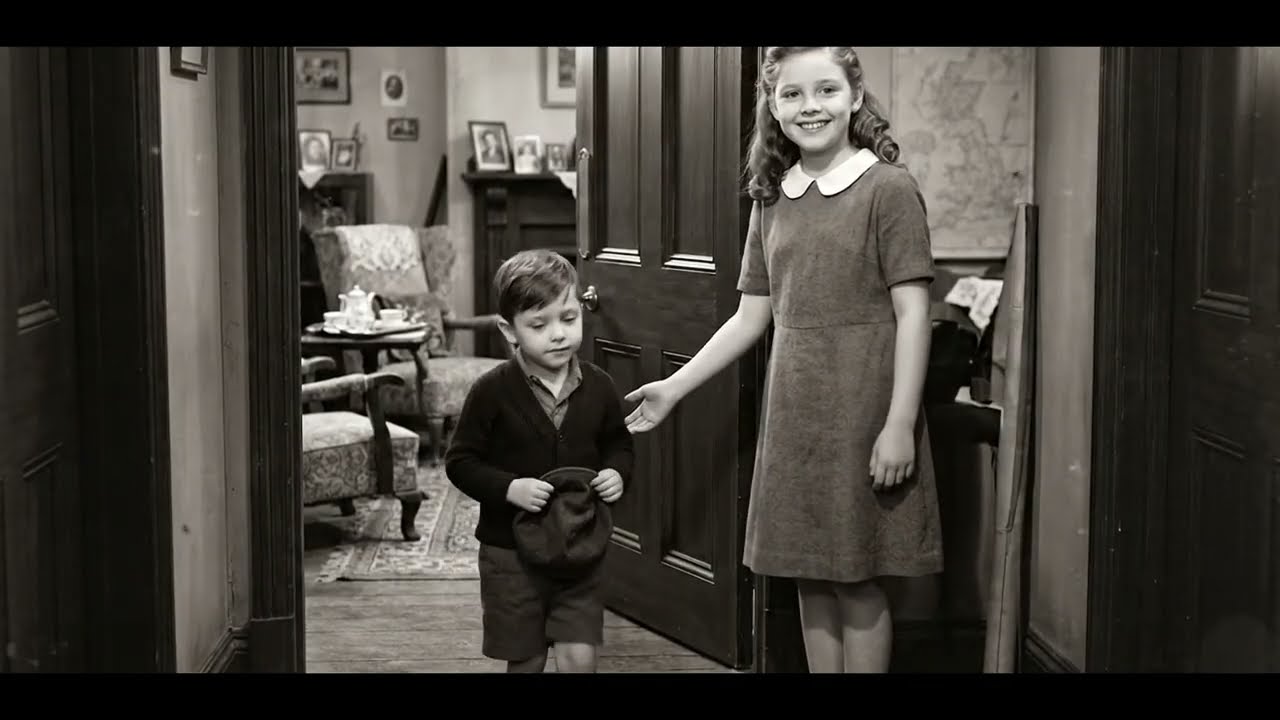
The rumor about Hélène and her son did not appear in bold headlines at the time. It stayed beneath the surface, where the palace always prefers such things to stay. It lived instead in the hidden world of gossip, in knowing whispers at dinner tables, in things that everyone who mattered seemed to have heard and no one dared print. This made it, if anything, more powerful. A rumor that cannot be answered publicly because it is never mentioned publicly is a rumor that cannot be killed.
The irony was profound. The palace’s caution was meant to protect Philip. Instead, it achieved the opposite. By treating the friendship as something to hide, the court confirmed in the minds of everyone who noticed that it was something worth hiding. A friendship managed in public would have bored the tongues wagging within a season. A friendship in the shadows kept them fascinated for decades. The guardians of the Crown, by their very over-caution, built the cage of suspicion they were trying to avoid.
Throughout the 1950s and into the 1960s, the whispers continued to spread. They traveled through elite gossip, through knowing aides who claimed to understand the truth of things. Everyone who mattered seemed to have heard some version of it. The Duke of Edinburgh, this woman, and her son at Gordonstoun on the Duke’s money, with the husband suspiciously abroad. The story assembled itself from real facts and false assumptions, and hardened, as such stories do, into common knowledge before anyone had proven anything.
The friendship had lasted more than 30 years by this point, from a Paris apartment in the 1920s to the studied silence of the 1950s. It had survived a world war and a coronation, and its reward, despite all that endurance, was to become a scandal that could never be denied away. The more Philip’s men buried the bachelor world, the more that buried thing glowed in the dark. A relationship of three decades of loyalty had become a rumor the palace could neither confirm nor deny.
Then Hélène did the one thing guaranteed to pour oil on the fire. After a life in which she let others whisper, she picked up a pen and wrote her own story. She called it Born Bewildered. Instead of ending the speculation, her book threw the door wide open.
### The Book That Settled Nothing
In 1961, she wrote her life story, and every hint she dropped sold a thousand extra copies. Born Bewildered appeared in 1961, the same year Hélène helped open the Saddle Room at the height of her fame. The memoir was a natural step for a woman who had lived a colorful life and understood the value of her own story. And the most valuable thing in that story, the golden thread running through her entire life, was Philip.
Her readers knew it. Her publishers knew it. And Hélène, that clever woman who had built her career on understanding what the public wanted, knew it better than anyone. This was her chance to end the rumor once and for all. One simple sentence would have done it. A clear, direct statement that Philip was just a friend, had always been just a friend, and that Marcel Boisot was the father of her children, would have ended the matter in a single line.
But she did not write that sentence. Instead, she wrote around the subject, hinting and concealing, dropping innuendo where a denial should have been, leaving the reader feeling a secret existed without naming it. She teased her readers, and teasing from the woman at the heart of the mystery was worth more in the story than any accusation from an outsider.
Philip’s biographer, John Parker, saw exactly what she had done and said so without mercy. He judged that Hélène’s autobiography, far from damping down the hints, fueled them, adding dryly that this helped increase her book sales. Parker said the way she wrote and spoke about Philip was quite sufficient to start a story of considerable dimensions. It is a damning assessment, because it accuses her not of carelessness but of deliberate calculation. In Parker’s reading, Hélène realized that ambiguity was her fortune, and protected that ambiguity because ambiguity was profitable.
A denial would have been honest. But it would also have been worthless. So she kept the door ajar, and the draft that came through it sold books. The memoir in 1961 was a matter of considerable importance. Books still carried a weight and permanence that fleeting gossip did not. A woman writing her life between two covers was seeking to control her own story. Readers had an insatiable hunger for the private lives of the royal family, a hunger the public record satisfied only sparingly. Here was a woman who had known the Duke of Edinburgh before he became a public figure, offering to lift the curtain a little.
Publishers understood exactly what they had. The value of Born Bewildered lay in the presence of the prince, and in the tantalizing possibility that she might finally say something explicit. But what she gave them instead was the shape of a secret without its substance. She wrote warmly of Philip, dwelt on closeness, left the reader feeling something was unsaid, and then declined to say it. It was, if Parker was right, a lesson in the commerce of suggestion. A denial ends the story and kills its usefulness. A hint keeps the story open forever, and an open story sells.
Every reader who finished the last page still wondering was a reader who would tell a friend, and every friend was another sale. The ambiguity was the commodity, and Hélène, whatever her private reasons, did nothing to spoil the trade. No one can now say whether that judgment is entirely fair. There is another reading, a kinder one, no less plausible. Perhaps she withheld the explicit denial not out of greed, but out of something more complex, loyalty to Philip, a wish to protect a friendship from the crudeness of public statement, and a haughty refusal to dignify gossip by answering it. Perhaps she left the question open because closing it would have felt like betraying something private between them. No woman is obliged to offer her heart whole to the newspapers. Silence may be as much a mark of dignity as a strategy.
But the result, whatever the motive, was the same. The book did not settle the rumor. It inflamed it. Every ambiguous paragraph became evidence. Every gap where a denial should have been became proof of a secret. Readers closed Born Bewildered more certain than ever that Hélène Cordet was hiding a royal father. Because the one person who could have said otherwise chose, across an entire book, not to.
Writer Christopher Wilson, who documented the story long afterward, picked up a small human detail from Hélène’s later years that says more than any headline. Wilson mentioned that on at least one occasion, she was seen in a fury while watching Philip on television. An old woman alone before a screen, watching the boy she had grown up beside, now gray, aristocratic, and impossibly distant, moving through his official life before the cameras, and feeling something stir in her that the long years had not extinguished. Whatever was between them, it was not something trivial. The heat was real, even if its name was never fixed.
By the time the book had done its work, the rumor was no longer just a whisper among the elite. It had become a fixed feature of the public landscape, something people simply knew, or thought they knew, about the Duke of Edinburgh, the cabaret star, and the boy at Gordonstoun. And the boy was no longer a boy. He had become a man, and he had to decide how to deal with a story his mother had refused to close. His answer would be the opposite of hers. Where she hinted, he denied. Where she profited, he refused.
### The Son Who Rejected the Story
The boy grew into a man who could have traded on those whispers for the rest of his life, but instead spent his life denying them. Max Boisot could have been a professional secret son. The role was available for him to take. A word in the right ear, a meaningful smile, a refusal to deny that turned into a career, and he could have lived his entire life on the possibility that royal blood ran in his veins. Doors would have opened. The world is endlessly interested in a man who might be a prince’s hidden child. He had, in that rumor, an inheritance more marketable than money. But he wanted none of it.
Instead, Max built his life on the only foundation a rumor cannot touch, his own mind. Educated at Gordonstoun, the school the Duke paid for, he went further than anyone whispering about his origins might have expected. He studied architecture at Cambridge University. He crossed the Atlantic to study city planning at MIT. He earned a doctorate from Imperial College London. He worked as an architect, then turned to management science and ideas, eventually becoming one of the most original thinkers of his generation on how organizations retain and use knowledge. He served as director and dean of a leading business school in Beijing. He became a professor at a prestigious school in Barcelona, held fellowships at Oxford, Cambridge, and one of the major American business schools. His book on knowledge as an asset won a major prize as the best strategy book of its year.
That career was a wall built brick by brick, patiently, between him and the whispers. Every degree, every post, every book was a way of declaring himself as someone who did difficult work and mastered it. Because he was not interested in being anyone’s rumor material, he chose the most difficult, driest, most rigorous fields he could find. The kind of work where names mean nothing, and only the quality of thought survives. In the world of ideas, there are no godfathers. The only thing that matters is whether the argument is sound.
Max spent his life in that world, and flourished in it on his own merits, under his own name, the name of Marcel Boisot’s son. But a wall built against a rumor remains shaped by the rumor it blocks. Something happens to a child who grows up as the subject of other people’s gossip. From his earliest years, Max was not simply himself. He was a question adults asked over his head. The boy who might be the prince’s son, examined for resemblance, discussed in whispers at parties he was too young to attend. Every kindness the Duke showed him, kindness that a lonely boy might have welcomed, was wrapped in a hint that spoiled it. He could not accept the school, the godfather’s care, the attention, without the world interpreting those gifts as evidence against his mother and father. Generosity and slander came in the same package. He had to take them together, or not at all.
The field Max carved out for himself was demanding and unglamorous. The study of how organizations gather what they know, protect it, and share it. He built a way of thinking about information and knowledge that other scholars still draw upon. His book on knowledge as an asset was judged the best strategy book of its year. This was work as far from court gossip as a mind could travel. Plain, rigorous, indifferent to lineage. In a seminar room, no one cares who one’s father might have been. All they care about is whether one’s argument survives a strong objection. Max chose to live where only argument and evidence count, and there he made himself unbeatable.
There is a quiet heroism in the way he handled it. He did not rage publicly. He did not, for most of his life, give that story the honor of a response. He simply continued being Max Boisot, architect and scholar, husband and father, a man of substance in a real profession. His refusal to exploit those whispers was in itself a statement that lasted for decades, that those whispers were beneath him. He never confirmed them because they were untrue, and he refused to spend his life denying them, because denying a thing endlessly means keeping it alive. He chose instead to bury it under achievement, to make his real life so solid that the rumor seemed flimsy beside it.
There is a loneliness to that kind of life. A life of a man forced to prove himself twice. Once for his profession like anyone else, and once against a story he did not choose and could not entirely escape. Max carried both burdens, and by every account of those who knew him, complained about neither. He simply worked and let his work speak for him, trusting that a serious life would eventually weigh more than a rumor.
For a long time, that strategy worked. A scholar’s life kept him far from gossip columns and inside seminar rooms, away from a world that cared who his father was. He built his reputation in universities and business schools across three continents, a serious man among serious people. The whispers followed at a distance, but could not catch him in the quiet rooms where he did his work. Then the Duke of Edinburgh, with good intentions, did the one thing that would drag the whole story back into daylight, and force the son who had spent his life avoiding it to speak at last.
In the autumn of 1986, Philip came to Beijing. He came to visit Max, and the cameras came with him.
### The Duke Who Flew to Beijing
In October 1986, an elderly man boarded a plane to China to visit the professor the papers called his secret son. By the mid-1980s, Max Boisot was living and working in Beijing, a prominent figure at a leading business school created to bring European management ideas to a China just beginning to open to the world. It was hard, pioneering work, exactly the kind of serious task Max had built his life around, and it had taken him as far from London gossip columns as any man could get.
In October 1986, Prince Philip toured China as part of a state visit, the first ever made by a British Queen and her husband to the People’s Republic of China. While there, the Duke of Edinburgh went to see Max. In the simplest terms, the gesture seems deeply kind. An elderly man of sixty-five, nearing the end of his public life, traveling to the other side of the earth, in the midst of a protocol-heavy state visit, finding time to visit the son of his oldest friend, a woman he had known since childhood. It is the act of a man honoring a lifelong bond. It is Philip at sixty-five doing exactly what he did at three, at seventeen, at thirty. Staying close to this family, showing up for them, refusing to let the years or the distance or the Crown loosen the tie. Whatever it meant, it was loyalty.
But nothing Philip ever did for Hélène or her children was interpreted simply, and this could not be either. For the world press, a royal visit to the alleged secret son was a gift beyond price. Here was the Duke of Edinburgh in the flesh, sitting with the very man around whom the rumors had swirled for forty years. The picture told the story the papers wanted before a single word was written. The Duke visits the mysterious professor. Old scandal, new photo. The story that had smoldered since the war burst into full flame, burning louder than ever because there was new footage to hang it on.
The visit did not happen in a vacuum. 1986 saw the first ever visit by a reigning British monarch to the People’s Republic of China, a major diplomatic event as the two countries felt their way toward each other. The Queen and her husband traveled across the country with the full trappings of a formal occasion, officials, banquets, and the world’s press in attendance. Max, for his part, was helping build something genuinely new, a school to bring Western management thought to a China just beginning to open its economy. He had reached the far edge of his profession in a country no British gossip columnist could find on a map. He must have felt, at last, safe from that old story. He was wrong. The story had a longer reach than any distance.
Wherever the Duke of Edinburgh went, the world’s cameras went with him, and when the Duke deviated from the grand design of the state visit to call on an obscure professor, the cameras wondered why. The answer they liked best was the oldest one. A single photograph of the two men together did more to revive the rumor than a decade of gossip could. It placed the alleged father and the alleged son in the same frame at last, and allowed the world to draw the line between them that no document ever had.
Here is the terrible engine at the heart of this whole history. The thing that makes it a tragedy rather than merely a scandal. Every act of loyalty Philip performed was also, inevitably, an act that deepened the rumor. The school fees said he cared, and the world heard a confession. The godfathering said he cared, and the world heard a claim. Now the visit to Beijing said he cared, and the world heard the loudest confession yet. He could not show his devotion without feeding the lie about the nature of that devotion. Kindness and cruelty were the same gesture. To love this family publicly was to hand the papers their story anew. And Philip, in his faithfulness, kept handing it to them, year after year, decade after decade, into old age.
For a man of Philip’s age and position, the trip to that office was no small thing. He was in his mid-sixties, moving through the exhausting schedule of a state visit, where officials and diplomats counted every hour. Carving time out of that for a private visit to the son of a childhood friend required deliberate effort and a measure of quiet courage, knowing, as he surely knew, what the papers would do with it. He chose to make the visit anyway. There is no sign that Philip ever allowed the rumor to change his behavior. And there is something admirable in that stubbornness. A more cautious man, a man more concerned with his image than his friends, would have dropped Hélène and her children the moment the whispers began. He would have cut the connection, paid the school fees anonymously, stepped back, protected himself. Philip did the opposite. He kept showing up, in person, before the cameras, as if daring the world to make of it what it would.
Perhaps he was simply too proud to hide. Perhaps he refused on principle to abandon people he loved because small minds drew large conclusions. Either way, he flew to Beijing and sat with Max, and allowed himself to be photographed doing it. For Max, the visit was a disaster dressed as an honor. The old scandal, which he had spent his adult life trying to outrun, caught up with him on the other side of the planet and knocked on his office door in the person of the Duke of Edinburgh himself. He could not refuse to see his mother’s oldest friend, and he could not stop the world from reading meanings into the meeting. He was forty-two years old, a respected scholar in a serious post, and once again, as he had been as a child, reduced to a question asked over his head.
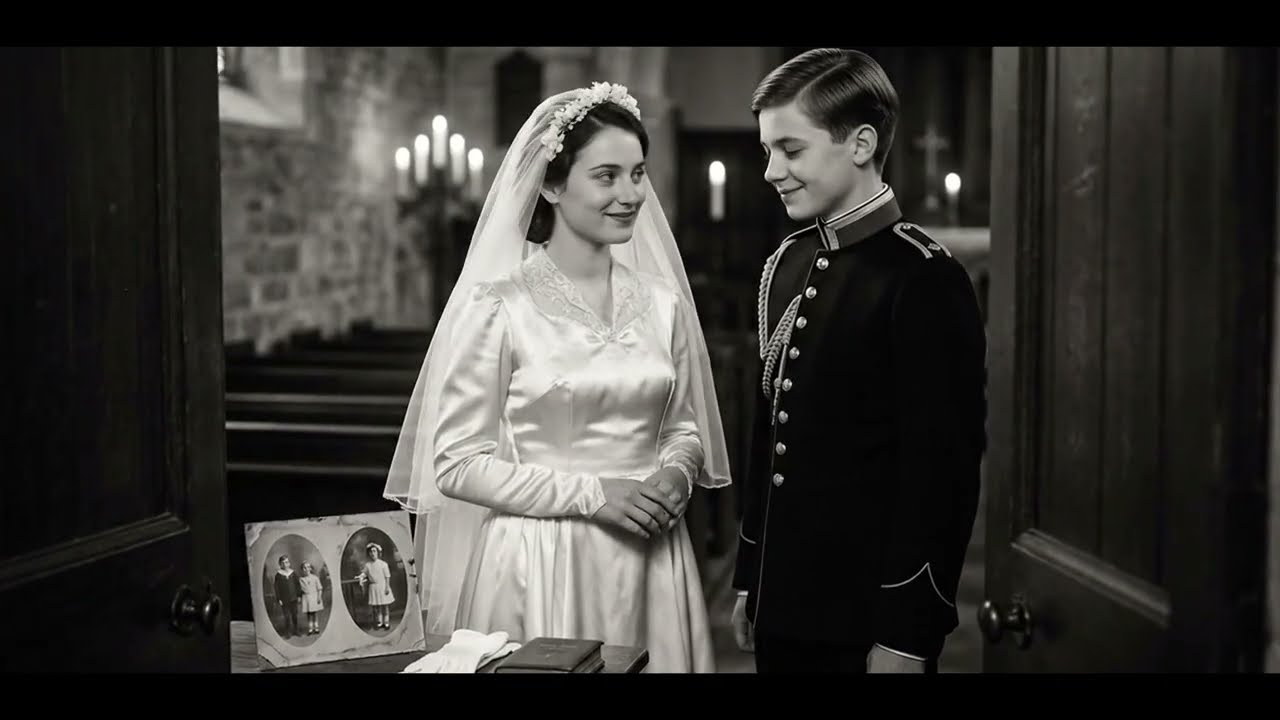
This time, finally, he would answer it. Pushed beyond his long patience, Max Boisot did the thing he had avoided all his life. He spoke.
### My Real Father Lives in Paris
Finally pushed past patience, the son said the simplest words he had, and still the world preferred to hear a secret. His statement, made in the wake of the Beijing visit, was as direct and clear as forty years of gossip had been murky. Max said, “I have heard these rumors all my life. But they are ridiculous. My real father lives in Paris, and it is stupid to say otherwise. It all comes back to their childhood friendship, and there is nothing more to it.”
Those words are the moral center of the entire story. They carry no cleverness, no evasion, none of his mother’s controversial evasiveness. Just a man tired of a lie, telling the truth as plainly as it can be told. My real father lives in Paris. Marcel Boisot, the Free French pilot, the man who flew a small training aircraft across the sea to join a free army. The husband and father whom the romantic version of the story had tried to erase was alive, was in Paris, and was, as his son insisted, exactly what he had always been. All that vast rumor, Max was saying, rested on nothing more than the fact that his mother and a prince had been childhood friends. Nothing more. And yet the world kept waiting for a secret.
That was the cruelty Max collided with. He said the clearest thing a man can say about his father, and it was not enough. A plain truth cannot compete with a beautiful rumor. The story of the secret royal son was simply better as a story than the story of a French pilot in Paris. It had a prince. It had a palace, a cover-up, a hidden birth. Against that, the son’s own flat denial looked like a confession, as if he protested precisely because it was true. The rumor had set a trap in which every denial became evidence. The more firmly Max said no, the more knowingly the world nodded.
It cost him a great deal to say it at all. All his life, Max had refused to feed the story by engaging with it. His entire strategy was silence and achievement, a wall of work between him and the whisper. To speak meant abandoning that strategy, stepping into the very gossip he despised and wrestling with it publicly. He did it because Philip’s visit left him no choice. The Duke, by his very kindness, forced the son to defend, before the world’s press, the ordinary, unglamorous truth of his own paternity. There is something unbearable in that. A man should not have to hold a press conference to insist that his father is his father. Max did it, and his doing it was a defeat even as it was an act of courage.
The exact words matter, and so does what they defend. My real father lives in Paris. He named a living man in a real city and stood by him. Whatever truth lay buried under sixty years of speculation, the son’s own testimony, given clearly and at real cost, is that Marcel Boisot was his father and Philip was his mother’s friend. That testimony deserves at least the weight the world was eager to give the rumor. The person best placed to know, the person most harmed, looked the story in the eye and called it ridiculous.
The trap Max fell into was ancient and nearly perfect. Countless people have been caught in a rumor with no way out. Silence is read as concealment. Denial is read as protest too fierce to be sincere. There is no statement a suspected man can make that a determined believer cannot fold into the theory. If Max said nothing, the world would say he was guarding the secret. Because he spoke, the world said he was guarding it more cleverly. The rumor was immune to every possible answer, the mark of a rumor that had ceased to be a question and become a kind of faith.
There was a personal price to speaking that the papers never counted. To answer the story, Max had to stand in the very mud he had spent his life refusing to enter. He had to say his father’s name to journalists, to publicly affirm the most private, simplest fact any man possesses, the identity of the man who raised him. No one should have to do that. A son’s paternity is not a press release. But the Duke’s kindness left him no other door. And so he stood, a mature, successful man, defending Marcel Boisot before a world that would have preferred him to be a prince’s secret son, because that makes a better story.
Here the two ways of telling this tale collide most violently. To believers in the secret, Max’s denial is simply what a loyal, discreet son would say, a man protecting his mother, the Crown, and his own dignity. Saying the necessary thing rather than the true thing. To believers in the innocent friendship, Max’s denial is the truth spoken by the only person who knows it, and the world’s refusal to accept it is the whole scandal. The proof that the world prefers a glamorous lie to an ordinary truth. No document settles the dispute. There is only a man in Beijing, setting aside his papers, saying his father lived in Paris, and a world watching, barely believing him.
Max returned to his work, to his students, his ideas, his difficult books, carrying the rumor with him because a rumor like that does not die from one honest sentence. It follows one to the grave and beyond. But he had said his piece at last. He had defended Marcel Boisot and the simple picture of his life. The two people at the heart of it all, his mother and the prince, would carry the unanswerable question to the end of their long lives, and take it with them when they left.
### The Woman Who Never Spoke
Hélène Cordet carried the ambiguity to the end, and the space between yes and no was the most valuable thing she owned. She lived a long life, and she never closed the door on the question. In her later years, the woman who had been a familiar face in early television and queen of London’s first discotheque gradually slipped out of the spotlight toward a quieter old age. Born in Marseille in 1917, daughter of the century’s upheavals, she died on April 30, 1996, in Switzerland, aged seventy-eight. The cause of death was not publicly announced. She left the world as she had lived in it, on her own terms, keeping her opinions to herself, secretive to the end about the things that mattered most.
And the thing that mattered most, the thing the world had wanted from her for half a century, she never gave. She never confirmed the rumor. She never fully denied it. Through her memoirs, a lifetime of interviews, and countless opportunities to speak plainly, she kept the door ajar and let the wind blow through. Whether that silence was calculation, loyalty, or simple pride, it was hers, and she kept it. The space between yes and no was the one possession no creditor could seize and no scandal could tarnish, and she guarded it to the grave.
By the time she died, the world that made her had largely faded. The Café Continental audience had dispersed long ago. The bright nights of the Saddle Room were over, and the elegant London where she had presided as hostess had given way to other fashions and other faces. Hélène outlived her fame, as celebrities often do, and retreated into quiet retirement abroad, far from the screens and the nightclubs. This exile, who had made herself a household name in Britain, ended her days abroad again, in Switzerland. The wheel of her life turned, in the end, back toward the rootlessness with which it began.
Even at the end, she kept the one card she had never played. She could have died with a confession or a denial, but she chose neither. That refusal was the final expression of a lifelong habit. The habit of keeping the question open, leaving the world guessing. Whether it came from loyalty, vanity, or a truth too fine to be revealed, it made her, in death as in life, the keeper of the story’s most important secret. She knew what Philip had meant to her over seventy years, better than any biographer, and she carried that knowledge with her, whole and unshared, to a Swiss grave.
There is a case against her, and it should not be hidden. Her silence had a price, and that price fell on Max. Every year she refused to say plainly that Philip was her friend and Marcel was her son’s father, the rumor grew heavier on the boy’s shoulders. A mother who wished only to protect her child could have ended his ordeal with one sentence. She never spoke that sentence. Perhaps she could not bring herself to reduce the great love of her life, whatever its true nature, to a blunt denial for the papers. Perhaps the ambiguity had become so much a part of her identity that erasing it felt like erasing herself. Or perhaps she simply loved the attention the question brought her and could not give it up.
But there is a kinder explanation too, and it deserves to be heard. Perhaps Hélène kept silent because the truth was exactly what her son said, an old, close friendship and nothing more, and she found it beneath her to answer a sordid charge with a formal denial. To deny the rumor was, in a sense, to admit it was worth denying. A proud woman might refuse on principle to give gossip the dignity of a response, and might decide that the friendship was too precious, too private, to be defended in a press statement. The silence, in this reading, was a refusal to let the world’s dirty curiosity touch the purest thing in her life. The boy from the borrowed Paris apartment who grew up to be a prince, and who remained, through everything, just a friend.
Whatever the truth, she took it with her in 1996. The only witness who had known Philip the longest, who had known him since he was three years old, closed her eyes on the secret, if there was a secret, and said nothing. She was the last living bridge to the boy she had first known in Paris, the only soul who could speak of him from the beginning, and she let that knowledge go to the grave with her. And so the question passed to the next generation, to the son who denied it, the daughter who lived quietly beside it, and the long life of a story that would not die.
### The Answer He Chose
When Max died, the papers rushed to the rumor, and the records answered with the life he had actually built. Max Boisot died on September 7, 2011, of cancer, aged sixty-seven. When he died, the obituaries faced a choice. The same choice the world had faced all his life. They could remember him as a rumor, as the prince he might have been, as the secret royal son. Or they could remember him as the man he had actually made himself. The best of them chose the man, because in the end there was simply too much real achievement to ignore.
The wall of work he had built against the whispers had become a monument in its own right. His life had clear contours. Educated at Gordonstoun, then Cambridge, then MIT, then Imperial College London. Worked as an architect, then a researcher, then director and dean of a leading business school in Beijing during the years China began opening to Western ideas. Professor in Barcelona with fellowships at Oxford, Cambridge, and a prestigious American business school, and author of books that shaped the entire field’s understanding of knowledge and institutions. One of those books won the prize for best strategy book of its year. It is the record of a man defined by his mind, which is exactly what Max had spent his life insisting he was.
That was the answer he chose, and he made it with his whole being. When the world asked him, in effect, for sixty-seven years, who he really was, because it wanted him to be a scandal, Max answered with degrees, posts, ideas, students, and books. He answered with the name of Marcel Boisot, which he carried with honor across three continents of hard work. He could not stop the rumor from surviving him, and it has survived, resurfacing every time the old story is told. But he denied it the only victory that would have carried real value. He never allowed it to become part of his identity. He was a scholar who happened to be the subject of whispers, and his intellectual output outlived those whispers.
There is a particular cruelty in how the rumor clung to him even after death, looking for the prince at the very moment his personal achievements deserved the light. The man who might have been a duke’s son is always, to a certain kind of writer, more interesting than a man who reshaped an entire field of thought. But the weight of his achievements was too heavy to ignore. Dean in Beijing, professor in Barcelona, fellowships at Oxford, Cambridge, and one of America’s great business schools, an award-winning book. Decades of students who went on because of his ideas. Set that beside a whisper about his birth, and the whisper suddenly looks small, mere chatter trying to stick to a life it did not make and cannot claim.
That was the quiet judgment of the record. The rumor wanted Max to matter because of who his father might have been. His life answered that he mattered because of what he accomplished. It is the difference between borrowed importance and earned importance. And Max spent sixty-seven years insisting, with every degree and every book, on the second kind. The son of Marcel Boisot owed his standing to no palace. He built it, brick by brick, in rooms where a royal title could buy him nothing at all.
His sister Louise chose a lighter path and outshone the rumors in her own way. Born Louise Boisot in 1945, she became pop singer Louise Cordet. In 1962, her record reached number thirteen in the British charts, and took her on tour with the biggest names of the era, sharing stages with the Beatles and Roy Orbison at the moment popular music was reshaping the world. Louise was Philip’s goddaughter, a matter clearly documented, and she carried that connection simply. A girl with a hit record and a famous godfather, living her own life in her own decade. In time, her son Alexi Murdoch also became a singer. The thread of music continued to a third generation, far from the rumor that once threatened to define the family.
A hit record, a professorship, a grandson with a guitar. Against all that life, the old question about one boy’s father begins to look very small. That is the quiet triumph worth honoring in the end. The rumors wanted to reduce these people to a single dirty question. They refused the reduction. Max became a thinker of substance. Louise became a singer with a hit and a family. Marcel Boisot remained, for his son, simply a father. They lived full, varied lives, and outgrew the whisper simply by being larger than it. The rumor was small. Their lives were large. And in the end, the large is what remains when the whisper finally fades.
### The Friend the World Would Not Believe
In the end, the scandal was never that a prince fathered a son. It was that the world could not let a prince be simply a loyal friend. Let us return one last time to that office in Beijing in the autumn of 1986. An old man of sixty-five, husband of the Queen of England, sitting across a desk from a professor of forty-two, the son of the woman he had loved, in one way or another, since they were children in exile. The cameras take the pictures, the rumors roar, and the old man who crossed half the world to be there simply continues doing what he had done for six decades. He shows up for this family. He always had.
That photograph carries the whole meaning of the story for anyone brave enough to read it clearly. Philip was a boy with no country, no stable home, a mother lost to illness, a father lost to pleasure. The Voufounis family took that boy in and gave him a sense of belonging. At the heart of that family was a clever older girl named Hélène. For the rest of his life, he repaid that debt in the only ways he knew. By being present at her wedding, by being godfather to her children, by paying for her son’s education at the school that saved him, by crossing the world in old age to sit in an office in Beijing. In almost any other life, these would be recognized as the acts of a loyal friend. But because he wore the Crown, they had to be read as the acts of a hidden father.
The world could not imagine that royal loyalty might be exactly what it appeared to be. That is the toll the Crown exacts. And it is the truth this story leaves behind. Monarchy turns even private virtues into public suspicions. A man deprived of family in childhood tried to honor the family that saved him. For his loyalty, he received a lifetime of hurtful hints. And those hints fell heaviest on an innocent boy, who never asked to be born into the heart of a royal mystery, and who spent his whole life telling a world that did not want to listen that his father lived in Paris.
Philip could bear it. But the boy should never have had to. The people with nothing to hide are the ones who paid the price. That is the toll the Crown exacts from the lives that come near it. It has been paid many times, by many people, whose only crime was standing close to the throne. Monarchy requires a flawless facade. And a flawless facade cannot tolerate ambiguity. It cannot tolerate a glamorous friend, an unexplained kindness, a son who does not fit the pattern. So the ambiguity is resolved in the public mind in the darkest way, because the darkest way is the most entertaining. A prince is not allowed the ordinary human luxury of a complicated friendship. Everything he touches is read as scandal, and that reading becomes the permanent record.
Hélène paid the toll with her exclusion from the Abbey and a life lived as a half-true rumor. Max paid it with a childhood spent as the subject of other people’s gossip and an adulthood spent denying a story he never asked to star in. Even Philip paid it in his own way, guilty of remaining loyal to the family that once sheltered a homeless boy. Three people bound by an old, thin bond, each charged a heavy price by an institution that could not imagine royal kindness being simply kindness.
So which was it? A cover-up, or a kindness the world refused to believe? The honest answer is that no one alive today can prove it either way. There are no documented letters settling the matter. Whatever the legends, there is only a paper trail of devotion, fees, a godfather relationship, a wedding, a long flight to Beijing, and the flat denial of the one man who knew the truth. The records can be read as a form of secrecy. They can be read as a form of loyalty too deep for a cynical age to believe. They hold both, and leave the choice to you.
Hélène took her silence to her grave in Switzerland. Philip carried the friendship to the end of his long life, faithful to it until the last. And Max, pressed by the undying rumor again in his final years, gave the world the same simple answer he had always given. The answer that is the truest thing anyone in this story ever said about it. He insisted there was nothing more to it. A childhood friendship. Just a friend. And a world that could not, and would not, believe him.