For 44 years, the disappearance and death of Janet May and Gabriella Guerin on an Italian mountain was officially treated as a tragic accident. In November 2024, a prosecutor in Macerata reopened the case as a double murder investigation, summoning the last man who warned the women not to climb that mountain in the first place. Janet May, widely known by her former married name Rothschild, had been divorced from the banking dynasty for nine years when she vanished. Yet the name that opened doors for a hairdresser’s daughter from Kent became the gravitational center of every theory about how she died, pulling in Sardinian kidnappers, encrypted telegrams, a murdered antiques dealer, a dead Vatican banker, and even an alleged conspiracy against the Holy See.
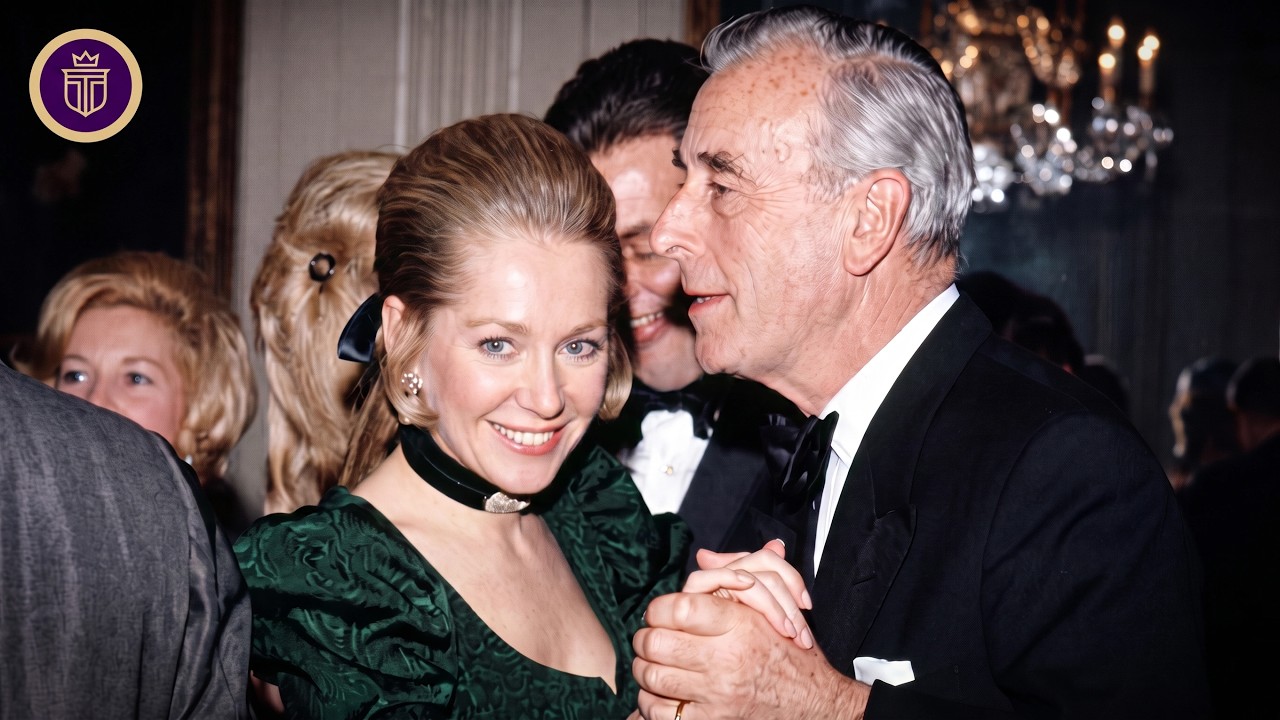
The facts are simple. Janet Bishop married Sir Evelyn de Rothschild in 1966 and divorced him in 1971. By the time she disappeared in 1980, she had remarried years earlier and was legally Mrs. Stephen May.
Despite this, she continued using the Rothschild name on her passport and hotel registrations after the divorce, a habit that seemed harmless then but which later theories clung to as evidence rather than convenience. The second woman in the story is Gabriella Guerin, an Italian who was Janet’s friend, assistant, and interpreter, and who died beside her. Guerin was an independent person in her own right, not merely a footnote to the Rothschild name, though she spent four decades being treated exactly that way. The correction matters because these errors are not innocent.
When the story is told as a tragedy, it asks for sympathy and ends. When told as a mystery, it demands suspects, and suspects must come from somewhere. The moment the Rothschild name entered the case, that somewhere became limitless, and Sardinian kidnappers, Vatican bankers, and mafia killers appeared as if summoned by the six letters of the family name. What that speculation machine obscured for four decades is the quieter, sadder truth: two real women died on a mountain, and their deaths belonged to actual people who had mothers, children, and full private lives.
Janet Dorothy Jeanette Bishop was born on January 3, 1940, on the Isle of Sheppey in Kent. Her father, a Royal Air Force sergeant specializing in bomb disposal, was killed in 1940 while attempting to defuse a German device during the Blitz, months after her birth. Her mother Susan, a hairdresser, was left to raise Janet alone amid wartime grief and rationing. By the time Janet was four, her mother made the painful decision to send her to a Catholic convent boarding school in Sittingbourne, Kent.
Former classmates later remembered her as an energetic, social child despite the distance from her mother. She played netball, took piano lessons, and left a strong impression on those who knew her. At the convent, Janet found ballet and dance. She had little patience for formal education, but the convent taught her something no classroom could: the habit of appearing calm under scrutiny and acting as though she belonged somewhere she was not born to belong.
By her teenage years, she had blossomed into a striking young woman with blonde hair and blue eyes. At sixteen, she left school and bet her future on beauty and poise rather than qualifications. It worked immediately. Her photographs appeared in Vogue.
She appeared in television commercials. She had a recurring presenting role on the ITV quiz show “Spot the Tune. ”
By 1961, in her early twenties, Janet had abandoned her modest Kent roots for a permanent address in Bryanston Square, Marylebone, one of those cream-stuccoed London squares where a certain class of quietly affluent people live. She was transitioning from modeling toward buying, selling, and arranging beautiful antique furniture.
This choice tells you something important about the woman she intended to become. Modeling and television depend on youth, and youth ends. The antiques trade depends on knowledge and nerve, on knowing what something is worth and keeping your composure while saying so. On September 30, 1966, in Arlington, Virginia, Janet Bishop married Sir Evelyn Robert Adrian de Rothschild, becoming part of a family whose name had been synonymous with money for two centuries.
Evelyn was her senior by about ten years and was widely regarded as one of the most eligible bachelors in European high society. The gulf between their worlds was vast, and rumors in London inevitably spread that the young model was only after Rothschild money. A close friend of the couple rejected the fortune-hunter story outright, describing it as a love match, not a money match. According to several accounts, Janet was the first woman Evelyn had ever proposed to.
The wedding was held in Virginia, partly because of Evelyn’s American childhood years. It placed Janet inside a world of grand houses and even grander acquaintances overnight, moving among figures like Imelda Marcos and Henry Ford II. At the top of these residences was Ascott House, a Tudor revival mansion on nearly 4,400 acres in Buckinghamshire. By the time Janet arrived as a young bride, Evelyn’s parents had gifted the house to the National Trust in 1949, though the family retained private use of parts of the estate.
In this household, described memorably as an army of servants, cooks, and domestic staff, Janet began withdrawing from the modeling career that had made her name, becoming noticeably more private as the years passed. The marriage lasted about five years and ended in divorce in 1971. This is where the idea that Janet Bishop was a fortune hunter completely collapses. Any woman who married one of the richest men on earth and wanted to punish him or secure her future had every legal tool to do so.
Janet did the opposite. The settlement she received was modest, and at her insistence: 25,000 pounds sterling for Evelyn to invest on her behalf, plus a house in Chelsea on Cheyne Row. She walked away from Rothschild wealth toward something closer to comfortable independence than vast fortune, and she chose that arrangement herself. The exact reasons for the separation were never publicly stated, and both parties handled the divorce with remarkable grace and mutual respect that lasted throughout their lives.
The former couple remained on very friendly terms afterward, and Evelyn continued to speak well of his former wife. He allowed her to keep using the Rothschild name even after the divorce, which she carried in her passport and hotel registrations for the rest of her life. According to Italian reports, Janet’s own assets grew over the following years. By the time she disappeared in 1980, she had remarried and built a new life.
The second chapter of that life centered on a friendship that conspiracy theories never once mentioned. Gabriella Guerin was born on September 27, 1941, in the small town of Ronchi in the Friuli Venezia Giulia region of northeastern Italy. She entered the Rothschild circle as a cook in the household, one of the domestic staff whose work made family life comfortable. The two women were close in age and found something in each other they never expected across that class divide.
Over the years, Guerin became far more than a kitchen employee to Janet. She became her secretary, her interpreter, and the person who managed the practical machinery of a life lived partly in Italy. The bond deepened enough that Janet later became godmother to Guerin’s children after Guerin returned to Italy, married, and started her own family. The friendship surviving the end of the Rothschild marriage and continuing through Janet’s years as Mrs.
May tells you it belonged to the two women themselves, not the house that first brought them together. After the divorce, Janet rebuilt her professional life around antiques and interiors, buying in Italy and selling in England, moving between two countries and two languages. Guerin was the person who made that trade possible. She spoke the language Janet did not master, negotiated with dealers and craftsmen Janet could not have negotiated with alone.
When Guerin climbed into that black Peugeot on the afternoon of November 29, 1980, she was not merely a footnote in someone else’s story. She was a working mother whose own story ended on that same mountain. There is a compelling forensic reason to insist on her full humanity. Her identity was not confirmed by DNA until 2006, through the work of Professor Franco Maria Vanzi at the University of Camerino.
For 24 years, the question of exactly who died beside Janet remained technically open. In 1975, Janet met Stephen May and married him within a year. May was a serious man with a serious job. He served as personnel director for the John Lewis Partnership, the British department store chain.
He was not a financier, not an aristocrat, not a man of vast wealth. His marriage to Janet was the one she was in when the story took a dark turn, a fact almost always omitted from sensational headlines. Together, the couple did what a certain kind of comfortable English couple did in the 1970s: they bought a piece of old Italy and devoted their energy to restoring it. They found a farmhouse near Sarnano in the village of Cessapalombo, in the Marche region, a building around 300 years old in the foothills of the Sibillini Mountains.
Janet, with her decorator’s eye and love of beautiful old things, took charge of the renovation. Guerin, with her fluent Italian and competence, was the natural person to be at her side, handling translation between the English owner and the Italian workers. The women went to Sarnano in late November 1980 to check on that work, just as they had many times before. Knowing how the story ends tempts us to see the farmhouse as a trap, but that reading runs against what it looked like at the time: a happy project built on the taste and independence Janet had spent her life cultivating.
What happened on the last day of her life does not look like the actions of a woman going about an ordinary afternoon. The sequence of events of Saturday, November 29, 1980, has been pieced together almost entirely from scattered accounts of witnesses who met the women that day. Even decades later, it remains full of strange, unexplained gaps. At one o’clock in the afternoon, Janet met her architect Nazareno Felici for a drink and to discuss progress on the farmhouse.
During the conversation, she showed him a door she liked for the cottage she was renovating. Then, without explaining why, she asked him to accompany her and Guerin on a sightseeing drive through the Sibillini Mountains later that evening. Felici refused, telling her plainly that he was busy, that it was late with snow expected in the evening, and explicitly warning her not to go. The warning was as clear as any warning could be.
She ignored it completely. She then missed a two o’clock appointment with the former owner of the farmhouse, something witnesses later described as strikingly out of character for a woman known for punctuality and reliability. Something had already changed in the course of her afternoon, though no one at the time could say what. Around four in the afternoon, she was inside a building materials shop on the outskirts of Sarnano when she received a telephone call.
She spoke in English throughout the call and was visibly agitated when she hung up. When she and Guerin left the shop, a worker there noticed them stopping near a parked red car, speaking with its unknown driver, then following that car toward the town center. From this point, the timeline becomes genuinely confusing, with conflicting witness sightings that investigators have never fully reconciled. Some placed the women near their hotel around five o’clock and again in the main square around seven in the evening, suggesting they may have briefly returned to town before setting out again.
Separately, the owner of Hotel Sibilla, near the Sassotetto ski resort high in the mountains, reported seeing the two women accompanied by a man as they drove in heavy snowfall. Another driver returning from the mountains that same evening recalled passing a man in a distinctive white coat standing by the roadside as if waiting for someone, positioned near the location where Janet’s car was later found. Whatever the precise sequence of stops, meetings, and unidentified companions that evening, Janet and Guerin eventually set off in their black Peugeot 104 Siena, license plate number 216603, toward the high village of Sassotetto, and got caught in a snowstorm that lasted through the following day. They never returned to their hotel.
No identifiable person ever saw them alive again. The detail the headlines always ignore is the seven o’clock sighting. A woman seen heading down toward town after dark, hours after setting out, was a woman who seemingly survived the mountain and was on her way home. Something diverted them from that safe path and sent them back up into the mountains between that glimpse in the square and the discovery of the abandoned car above.
The storm came that night. They were never seen alive after it. But the arrival of a storm is different from the storm being what killed them. The next morning, with concern growing after the strange conversation the previous day, Felici called the hotel to check whether the women had checked in there, learned they had not, and raised the alarm.
A helicopter, ground teams, and police dogs were dispatched immediately. But by then, snow had covered the mountains overnight with a fresh layer nearly three meters deep, and the initial search yielded nothing at all. After 17 days, with the snow partially melted, a hiker walking in the area accidentally struck the snow-covered roof of a car with the tip of his walking stick, revealing the Peugeot almost buried in a snowdrift at an elevation of about 900 meters. Everything about the car’s condition deepened the mystery rather than solving it.
The car was locked and parked neatly on the side of the road rather than having skidded off it. It was in fully working order, with no sign of a struggle either inside the cabin or on the surrounding ground. A woolen scarf was found folded inside the locked car, a detail that seemed completely incompatible with the theory of two women fleeing on foot into a snowstorm. Anyone sensible caught in such conditions would have taken every warm item available before leaving.
The women’s snow boots were also found inside the car, meaning if they did leave on foot, they did so in ordinary driving shoes, unsuited to a mountain journey in deep snow. On December 20, tracking dogs led the search party, after being allowed to smell the car and its contents, to an abandoned stone hut not far from where the Peugeot was found, a modest structure used by local shepherds as a summer shelter. Inside, researchers found the charred remains of a fire lit with broken pieces of the hut’s wooden furniture, smashed and burned for warmth by people who had nothing else, along with several dirty, used dishes. The scene was physical evidence that the women, at some point after leaving the car, took shelter in a stranger’s empty hut and tried to survive.
Within about a year, a new investigating magistrate in Camerino, Alessandro Iacoponi, moved to reopen the case after a fresh forensic examination revealed something the original investigation had entirely missed. Clear traces of soil were found still stuck under the Peugeot’s tires. Investigators considered this detail completely incompatible with a car that simply got stuck in deep snow during a snowstorm. The physical evidence led Iacoponi to conclude the car had been deliberately maneuvered at some point after the women arrived and left in a controlled parking position on the side of the road rather than skidding in panic as the original theory assumed.
As one longtime Sarnano resident who spent years researching the case later put it: “No sane person would choose to drive up into remote mountains after dark in worsening weather, just as snow starts falling. ” “Something else brought them to that road, and something else left the car locked and carefully parked at the roadside with their warmest clothes still folded inside. ”
For 14 months, the fate of Janet Bishop and Gabriella Guerin remained an open wound for their families and an unsolved puzzle for Italian authorities. On January 27, 1982, hunters walking through woods near Poddalla, close to Lake Fiastra and the hermitage of San Liberato, found the remains of two women and personal belongings scattered over an area of about 200 meters.
The discovery site was about five kilometers from where the Peugeot was found, a distance investigators later calculated to be practically impossible for two women to cover on foot through three meters of snow wearing stockings and ordinary shoes. “I kept hoping until the last moment that they would be found alive,” Janet’s mother told journalists when the news reached her. By the time the remains were found, they had severely deteriorated after more than a year of exposure to the elements. Wild animals, most likely the wild boars the region is famous for, had badly damaged the skeletons, and some bones were missing entirely, leaving the forensic picture frustratingly incomplete.
The autopsy concluded the women died at or near the site where their remains were found, not near the car, and estimated their deaths occurred likely about a month after their disappearance, not directly during the November snowstorm. No conclusive signs of violent death were found, though investigators cautioned this was not decisive evidence given the scarcity of intact bone material. In contrast, the Carabinieri scientific unit initially suggested something entirely different: that the bodies had been moved after death, a conclusion drawn from the absence of decomposition fluids one would expect to find in soil where a corpse had rested from the start. Two branches of the same investigation, examining the same remains, disagreed on whether the women died where they were found.
That disagreement was never resolved. Janet’s identity was confirmed through dental records, with her English dentist sending records to Italy for matching. Guerin’s identity was not officially confirmed by DNA until 2006, a quarter of a century later. Then came the single detail that tormented the case more than any other forensic finding.
The women’s wristwatches had stopped on different days, a week apart, and yet both watches had frozen at exactly the same time: 6:54. For investigators and journalists who studied the evidence, this seemingly impossible coincidence strongly suggested someone had deliberately reset or tampered with one of the watches to stage the crime scene after the fact. If the watches had kept running on living wrists, the women had survived for more than a week after disappearing, possible much longer, alone on that mountain in the depths of winter. In December 1982, Iacoponi officially opened a murder file and ordered a new autopsy on Guerin’s body, though Janet had by then been returned to Britain and cremated, making re-examination impossible.
By January 1982, Stephen May, who had traveled to Italy within days of the disappearance and spent the Christmas season pressing police for answers, had already offered a 28,000-dollar reward for information. Police in Camerino responded just four days later with a straightforward explanation of death by hypothermia, a conclusion May refused to accept and which became substantially harder to defend when the watch evidence emerged. Theories followed in rapid succession. The first strange turn came within a week of Stephen May arriving in Italy, when a telegram addressed to Janet arrived at the hotel where she had been staying, containing five words: “I am waiting for you.
” Investigators traced its source to an address in Rome that police had already linked, through a separate telegram, to a robbery at a Christie’s auction house branch in Piazza Navona, a robbery that occurred the very next day after Janet and Guerin disappeared. That earlier telegram reportedly indicated to Christie’s headquarters where the stolen goods were located. This link excited the investigation and fueled early suspicions that Janet, who had long attended Christie’s auctions thanks to her Rothschild-era social connections, was somehow involved in the robbery. Tabloid headlines in the weeks following the disappearance had already pointed toward public anxiety, with The Telegraph running a story headlined “Mystery of Missing Women Deepens as Italian Snows Melt.
” Officials eventually determined the telegram was a hoax and the Christie’s connection a coincidence, but not before it consumed months of investigative effort and shaped the public narrative around the case. On November 7, 1982, Sunday Times journalists Gita Serena and Dalbert Hallenstein published a 20-page report concluding that Janet and Guerin were victims of a contract kidnapping. Serena brought prior relevant experience, having covered the case of Ralph Shields, a businessman kidnapped in Sardinia because his kidnappers mistakenly believed his surname was Rothschild. The journalists concluded that Janet, who still carried the Rothschild name on her passport out of convenience, may have fallen victim to similar mistaken targeting, citing the stopped watches as evidence that a kidnapper had staged the scene.
The most obvious weakness in the theory was one the journalists never resolved. Evelyn de Rothschild stated categorically that he never received any ransom demand for his former wife. From that first theory, the case branched into darker territory. A Rome antiques dealer and drug trafficker named Sergio Vaccari was found murdered in his Holland Park apartment in September 1982, stabbed 15 times, and Janet’s name was rumored to appear in his diaries.
Photos of goods stolen in the Christie’s robbery were said to have been found in Vaccari’s safe, and Vaccari was linked in some accounts to Roberto Calvi, the financier known as “God’s Banker,” found hanged under Blackfriars Bridge in June of the same year. When asked about the alleged connection, a senior Scotland Yard investigator said plainly: “There is not one piece of evidence that Mrs. May ever knew Vaccari. ”
In 2013, a photographer named Marco Foni Assetti, already known as a witness claiming knowledge of several Rome disappearance cases, including that of Emanuela Orlandi, the daughter of a Vatican employee, claimed a mysterious network considered recruiting Janet for a blackmail scheme targeting the Vatican.
The group was said to be looking for high-status women who moved in circles between Italian diplomacy and Vatican City. But he insisted the plan never reached contact, writing that Janet was never approached and that her disappearance had nothing to do with their activities at all. By September 25, 1989, an investigating magistrate formally overturned the original death ruling of hypothermia, concluding instead that both deaths were a double murder by unknown means and unknown perpetrators. The crux of this ruling was pure geographic impossibility: forensic experts calculated that the distance of about nine kilometers between the car and the bodies was farther than two women could have walked through that depth of snow and wind.
Months later, another magistrate reviewing the same file concluded that while murder was plausible, murder could not be proven to the standard required to bring charges against any specific person, with no identified suspect or remaining lead to follow. File number 27361980 was formally filed in Italy’s archive of unsolved criminal cases. For the women’s families, especially Stephen May, who spent years funding investigative journalism and pressing authorities for answers, the outcome was bitter disappointment: official acknowledgment that his wife had likely been murdered, combined with an admission that the Italian justice system had no realistic path to identifying who was responsible. The file lay dormant for the next 35 years, occasionally stirred by journalism and true-crime programs that could never let it rest.
That long hibernation ended in November 2024 when Italian crime magazine presented an episode titled “The Baroness’s Mystery” and revealed that the prosecutor in Macerata, Giovanni Fabrizio Narbone, had quietly begun reopening the file. “We have reviewed all the records to identify any indications of inconsistencies, and we believe there is a chance to get to the truth,” Narbone told the Italian news agency ANSA, adding that the answer might have nothing to do with the presumed international scenarios but remains there in Sarnano where it all happened. As part of the renewed investigation, prosecutors arranged hearings for more than 20 witnesses, focusing especially on elderly local residents who might still remember details of the women’s final hours. A retired general, Carlo Felice Cursetti, who was a lead investigator in the original case and was 77 years old in 2024, offered his own precise assessment of why the case deserved reconsideration: “There are many unclear investigative elements that do not fit with the hypothesis that their deaths were due to the cold.
This is the enigma. ”
One Sarnano resident told The Telegraph simply: “No one here ever believed it was an accident or bad luck. After 40 years, there is something else. ”
Filmmaker Alessandro Gassmann, who grew up in Macerata and produced a documentary about the case, expressed its impact more directly: “People talk about Janet May as if it was a case that happened yesterday.
She is a legend. ”
Back in England, Daily Mail journalist Richard Kay visited Stephen May at his home, finding the man in his nineties on his way to a tennis lesson. May declined to comment directly, but sources close to him described decades of kidnapping, Vatican, and mafia theories as ridiculous and unfounded. Kay himself offered a judgment that seemed to sum up more than four decades of speculation: “None of them made much sense then, and they don’t make much sense now.
It is a mystery and I think it will remain a mystery. ”
The name that opened every door in Janet Bishop’s life has so far kept every door to the truth about her death firmly shut.