The final guests did not depart the Plaza Hotel’s Grand Ballroom until four in the morning, their laughter and the clinking of champagne glasses fading into the cold November air of New York City. For Truman Capote, the man who had orchestrated the most meticulously curated social gathering of the 20th century, the triumph was absolute. He had summoned the titans of Hollywood, Washington, and European royalty to a masked ball that would be remembered for decades, a singular moment of cultural dominance that cemented his status as the most powerful social arbiter in America.
Yet, within a decade, the architect of this “Party of the Century” would be a pariah, his greatest friendships severed by his own hand, his literary career in ruins, and his life spiraling into a public and tragic decline. The same genius for observation that created a masterpiece of nonfiction would ultimately destroy him, proving that the line between chronicling high society and betraying it is perilously thin.
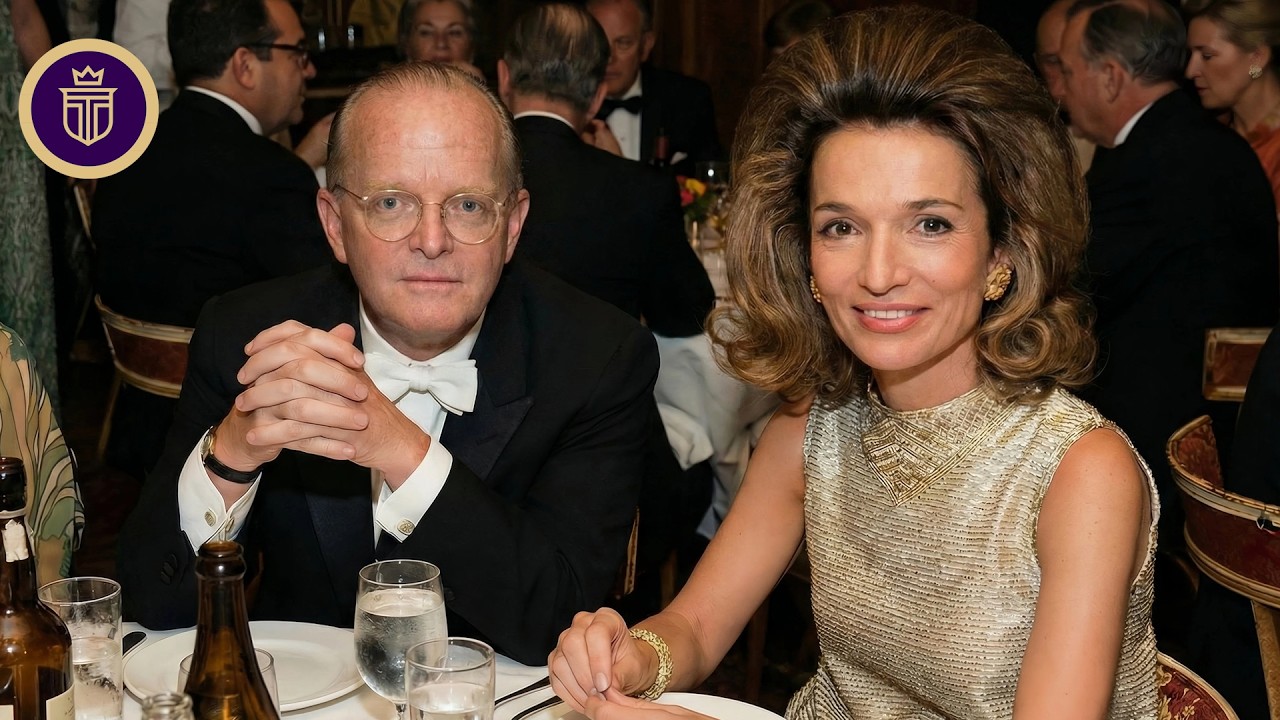 The evening of November 28, 1966, was the culmination of months of obsessive planning. Capote, a 42-year-old literary phenomenon standing just five feet three inches tall, had carried a black-and-white notebook since July, meticulously adding and deleting names to construct what he called “the most balanced social event of the century.” The guest list was a testament to his power, a carefully calibrated mix of political power, cinematic glamour, and old-money aristocracy.
He invited Frank Sinatra and Mia Farrow, Norman Mailer, Lauren Bacall, and Henry Fonda. He secured the presence of the Duke and Duchess of Windsor, whose faded royalty still commanded a room’s attention, and McGeorge Bundy, the former National Security Advisor. He even invited the Plaza’s own doorman, a deliberate act of social leveling that underscored his control over the evening’s narrative.
The dress code was absolute: black or white, with masks required until midnight. The masks were not mere costumes but a structural element of the event, forcing guests to interact without the usual social shortcuts of recognition, creating a temporary, intoxicating illusion of equality within the gilded confines of the ballroom.
The party was the apex of Capote’s social ascent, a performance of belonging so convincing that the “swans”—the beautiful, wealthy, and powerful women who had become his confidantes and entrée into the upper echelons of society—believed he was one of them. For fifteen years, he had cultivated these relationships with a singular intensity. There was Babe Paley, the wife of CBS founder William S.
Paley, whose impeccable taste and quiet suffering made her his most beloved friend. There was Slim Keith, the sharp-witted California beauty married to a British banker. Gloria Guinness, the Mexican-born socialite who had climbed from poverty to marry into one of Europe’s great fortunes.
Lee Radziwill, the younger sister of Jacqueline Kennedy, forever seeking her own spotlight. These women, accustomed to being admired but never truly seen, found in Capote a listener who asked questions, remembered everything, and offered the rare gift of genuine attention. They shared their secrets, their humiliations, and their most private thoughts, believing their confidences were safe with the man who had become their trusted repository.
It was a fatal miscalculation, for Capote, the abandoned child from Monroeville, Alabama, was always a writer first, and to a writer, a story is the ultimate currency.
The seeds of his destruction were sown long before the champagne was poured at the Plaza. In November 1959, Capote read a brief newspaper article about the brutal murder of the Clutter family in Holcomb, Kansas. He traveled there with his childhood friend, Harper Lee, whose practical nature and Alabama roots helped him gain access to the closed community.
Over six years, he conducted hundreds of interviews, amassing over 150 pages of notes, and developed a complex, unsettling relationship with the killers, particularly Perry Smith, a damaged man with whom Capote formed a bond that blurred the lines between professional interest and personal obsession. The resulting book, “In Cold Blood,” published in January 1966, was a literary sensation, a “nonfiction novel” that achieved unprecedented sales and critical acclaim. It made Capote a celebrity of a magnitude rarely afforded to serious writers, a figure whose every move was news.
 The book was his masterpiece, but it also revealed his method: he was willing to get close to people, to mine their pain and their secrets, and to present them to the world in a narrative he controlled. The swans, who had provided him with the material for his planned magnum opus, “Answered Prayers,” would be the next subjects of his ruthless observation.
The fall began with a single chapter published in Esquire magazine in November 1975, titled “La Côte Basque 1965.” It was a thinly veiled, maliciously accurate portrait of the very women who had opened their homes and hearts to him. The story, narrated by a character clearly based on Capote himself, featured a character named Lady Ina Coolbirth, an obvious stand-in for Slim Keith, who gossips with a woman named Ann Hopkins, a transparent version of Ann Woodward, the socialite who had shot and killed her husband in 1955.
The chapter also included a character named Sidney Dillon, a powerful media mogul married to a woman named Cleo, who were unmistakably William and Babe Paley. The story detailed Dillon’s infidelity with the wife of a governor, a specific humiliation Babe had confided to Capote in the strictest confidence. New York society reacted with a mixture of shock, horror, and a dawning realization that the man they had welcomed into their most private spaces had been taking notes all along.
The betrayal was absolute. Gloria Vanderbilt declared she would spit in his face. Ann Woodward, living in exile in Paris, read the story and ingested cyanide, dying in her apartment on October 9, 1975.
The mother of her late husband, Elsie Woodward, reportedly said, “She shot my son, and Truman has just killed her.” The sentence was a brutal and accurate summation of the power of Capote’s pen.
The consequences were immediate and devastating. Babe Paley, the woman he loved most, never spoke to him again. Slim Keith consulted a lawyer about a defamation suit before simply ceasing to answer his calls.
Gloria Guinness withdrew with a finality that suggested she had been waiting for a reason. Marila Agnelli, the most reserved of the swans, simply became unavailable. The social infrastructure that had supported Capote for fifteen years—the invitations, the homes, the long lunches, the phone calls—collapsed into a void of silence.
He had bet everything on the belief that his friends were too foolish to recognize themselves in his fiction, but they recognized themselves immediately. He had traded the most valuable currency he possessed—their trust—for a chapter of a novel he would never finish. He was, overnight, transformed from the most entertaining man in the room to a pariah, a “Judas in tweed.”
 The party was over, and the host was left alone in the wreckage of his own creation.
In the years that followed, Capote’s decline was as public and dramatic as his ascent had been. He drank heavily, abused prescription pills, and appeared on talk shows in states that alarmed his friends and embarrassed his hosts. His long-term partner, Jack Dunphy, remained technically in his life but was practically absent, a reasonable response to Capote’s unraveling.
He continued to claim that “Answered Prayers” was nearly complete, but the manuscript was nowhere near finished. He had received a million-dollar advance from Random House, but the book that would have required him to betray his friends again was a project he could not complete and could not abandon. The performance of Truman Capote, the brilliant raconteur, was failing in real-time before an audience that was unsure whether it was watching a tragedy or something else.
He was arrested for drunk driving, entered rehab, and left to drink again. The wit was still there, flashing occasionally, but it was surrounded by a growing fog of despair and self-destruction. On August 25, 1984, Capote died in Bel Air, California, at the home of Joanne Carson, the second wife of Johnny Carson.
He was 59 years old. The official cause of death was liver disease complicated by phlebitis and multiple drugs in his system. He died in a bed that was not his own, in a city that was not his home, cared for by a friend who had remained loyal when so many others had not.
The manuscript for “Answered Prayers” was never found, and the question of whether it was destroyed, lost, or simply never completed beyond the Esquire chapters remains unanswered.
The swans, however, lived on, carrying the memory of the friendship and the betrayal through the rest of their lives. Babe Paley died of lung cancer on July 2, 1978, at the age of 63. She had not spoken to Capote since the publication of “La Côte Basque,” and he was not invited to her funeral.
Slim Keith published her memoirs in 1990, containing the most precise description of the friendship’s nature, recalling a phone call where Capote told her he was exaggerating his personality to make people laugh with him, not at him. She had replied, “No, no, we love you.” Decades later, she left the exchange in her memoirs without comment, the gap between what she said then and what she knew later speaking volumes.
 Pamela Harriman, the most politically influential of the swans, did not publicly address her potential portrayal in the story. Instead, she reinvented herself as the most effective Democratic fundraiser in America, amassing millions for the party, and was eventually appointed U. S.
Ambassador to France by President Bill Clinton in 1993. She died in 1997, having outlived the 𝒔𝒄𝒂𝓃𝒹𝒶𝓁 and redefined her legacy. Lee Radziwill lived until February 15, 2019, outliving her sister, her son, and most of her contemporaries.
Gloria Guinness died in 1980, just five years after the publication, having lived long enough to know exactly what Capote had done but without the benefit of time to soften the blow. C. Z.
Guest retreated to her gardens, becoming a celebrated horticulturist. Marila Agnelli, the most European and private of the swans, died on February 3, 2019, just twelve days before Lee Radziwill. The last two original swans left the world in the same month, more than half a century after the masked ball at the Plaza, as if the story had finally decided it was time for an ending.
The story of Truman Capote and his swans has proven to be as enduring as the party itself. It has been dramatized in films and television series, most notably in the 2024 FX series “Feud: Capote vs. The Swans,” starring Tom Hollander as Capote and Naomi Watts as Babe Paley.
These adaptations, while sometimes taking liberties with the historical record, have confirmed that the story retains its power to fascinate. The image of the Grand Ballroom in November 1966, 540 guests in black and white and masks, remains a potent symbol of a world at its peak, a world that was about to change irrevocably. The small man with the notebook, who planned everything and brought that specific room together at that specific moment, achieved his ultimate goal: he was in the room, a master of the universe he had so desperately wanted to join.
But the cost was everything he had built. He chose the writer over the friend, and the writer never finished the book. The party was the last perfect thing he ever did, a brilliant, glittering monument to a success that would, in the end, destroy him.
The guests departed, the masks came off, and the silence that followed was the only true legacy of the man who had once been the most famous writer in America.