The Battle of the Little Bighorn remains one of the most studied and debated conflicts of the American Indian Wars. The treatment of the dead left on that Montana battlefield reveals a great deal about the attitudes of the era toward life, death, and the respect afforded to fallen soldiers.
In 1876, the Great Plains was a region of intense hostility. The Plains Indians, including the Lakota, Cheyenne, and other tribes, were formidable opponents. Known for their exceptional horsemanship and fighting prowess, they posed a significant obstacle to American expansion, even with relatively small war bands armed with bows and tomahawks.
The Treaty of Fort Laramie in 1851 was intended to bring stability. It defined tribal boundaries and guaranteed safe passage for American travelers on the Oregon Trail. However, the discovery of gold on Indian territories led to a flood of settlers trespassing on the land, and American officials did little to stop them.
This tension eventually erupted into Red Cloud’s War in 1866. The conflict lasted two years and resulted in the deaths of 200 American soldiers and civilians, along with an undetermined number of Native Americans. The second Treaty of Fort Laramie ended the war, but it was violated almost immediately by gold miners.
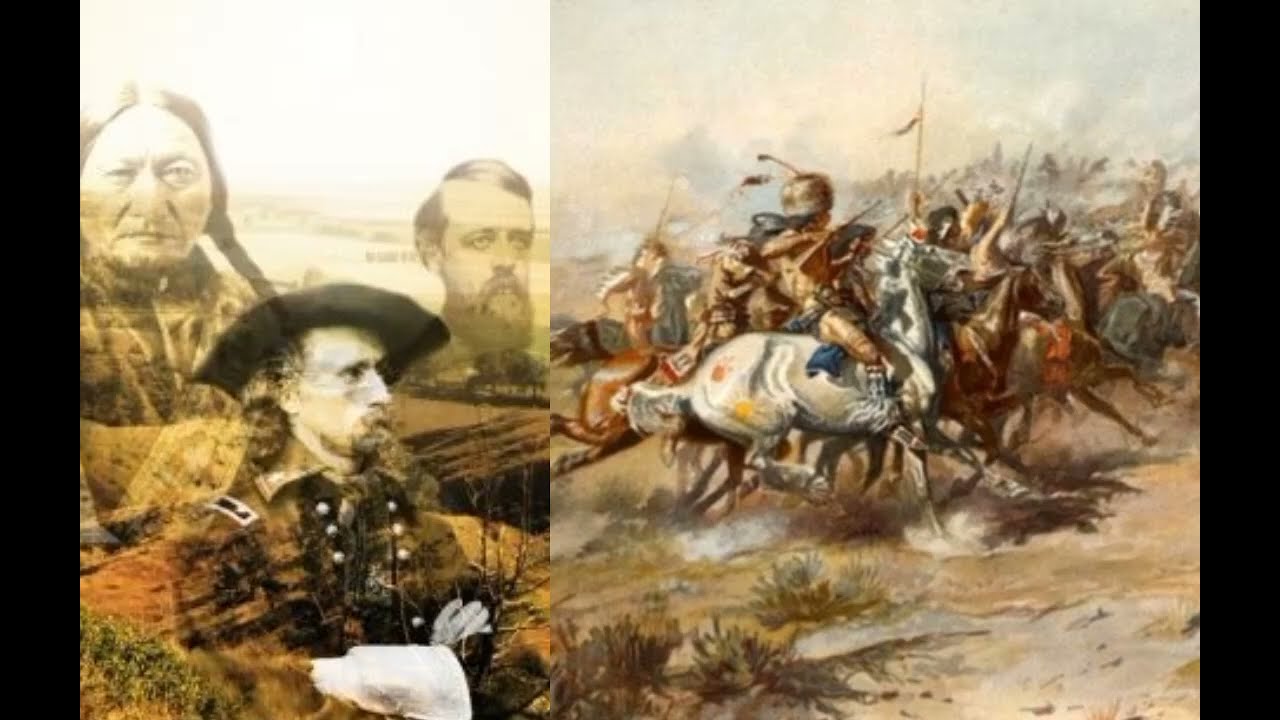
The U.S. government began pressuring the Lakota to cede their rights to the Black Hills, a resource-rich region. Lakota leaders Sitting Bull and Crazy Horse advocated for armed resistance. Many tribes that had previously been reluctant to fight joined them, tired of unfulfilled promises from the Americans.
On June 25, 1876, General George Armstrong Custer and his men discovered a large Native camp near the Little Bighorn River. Custer divided his 700 men into three divisions. One charged the village directly, one blocked an escape route to the south, and Custer led the third in an attack from the north.
American intelligence had estimated the camp held no more than 800 fighters. In reality, there were around 2,000, many of them armed with superior repeating rifles. Custer and his 210 men were quickly surrounded and cut off. The battle lasted barely more than an hour, ending in the complete destruction of Custer’s command on what is now known as Last Stand Hill.
Because no man survived, the exact details of the fight remain unknown. Native oral accounts were often contradictory. A Crow scout named Ashishishe later provided a vague account, stating that Custer attacked the village directly but was forced back to the hill where he and his men perished.
Two days later, the other American squads discovered the aftermath. The Native warriors had already left, taking most of their dead with them. Only the 210 American casualties remained on the battlefield. Captain Frederick Benteen, leader of one of the other divisions, concluded from the scene that it had been a panic and a rout.
The American remains had been stripped of clothing and practical belongings. Many soldiers had their trigger fingers amputated, a practice rooted in the belief that one takes their body into the afterlife. To prevent Custer from reproducing, an arrow was placed in his genitalia. Knitting needles were pushed into his ears because he would not listen.
The dead were hurriedly interred in shallow graves while the campaign was still ongoing. With few digging tools available, many graves were only a few shovel-fulls of soil deep. Custer’s burial was the most distinguished, marked with stakes driven into the dirt. He had been shot in the heart, and a head wound was likely inflicted after death.
For over a year, families and friends of the fallen officers pressed the military to retrieve the bodies. Lieutenant General Sheridan and General Sherman advocated for the return of the dead, and approval was eventually granted. Soldiers arrived at the battlefield on July 2nd and began the grim task of recovering remains.
The site was covered in decomposing carcasses that had been consumed by predators. Sticks were used to mark the last resting places until all men were accounted for. The officers’ remains were gathered and placed in coffins for reinterment at a nearby Army fort. However, the enlisted men were too numerous to evacuate, and their corpses were left in place, marked with stakes and buried in more appropriate graves.
Sheridan and his men left confident that all had been buried honorably. But the Montana wet season soon arrived. The loose, dusty earth was washed away by rainstorms, exposing the bones to the elements and predators once more. A photograph taken by John Fouch revealed the area covered with bones again.
The Lakota and Cheyenne had achieved a spectacular but temporary victory. The American public united behind Custer, who was immortalized as a valiant hero of the Civil War. A massive, overwhelming Army was brought in to crush any further resistance.
Within a year, most Native warriors surrendered, unwilling to continue fighting after American forces took over their lands and hunting areas. The United States took the Black Hills without paying compensation. The region was overrun with gold miners and produced enormous wealth, with wagon loads of gold valued at $300,000 or more frequently transported by treasure coaches.