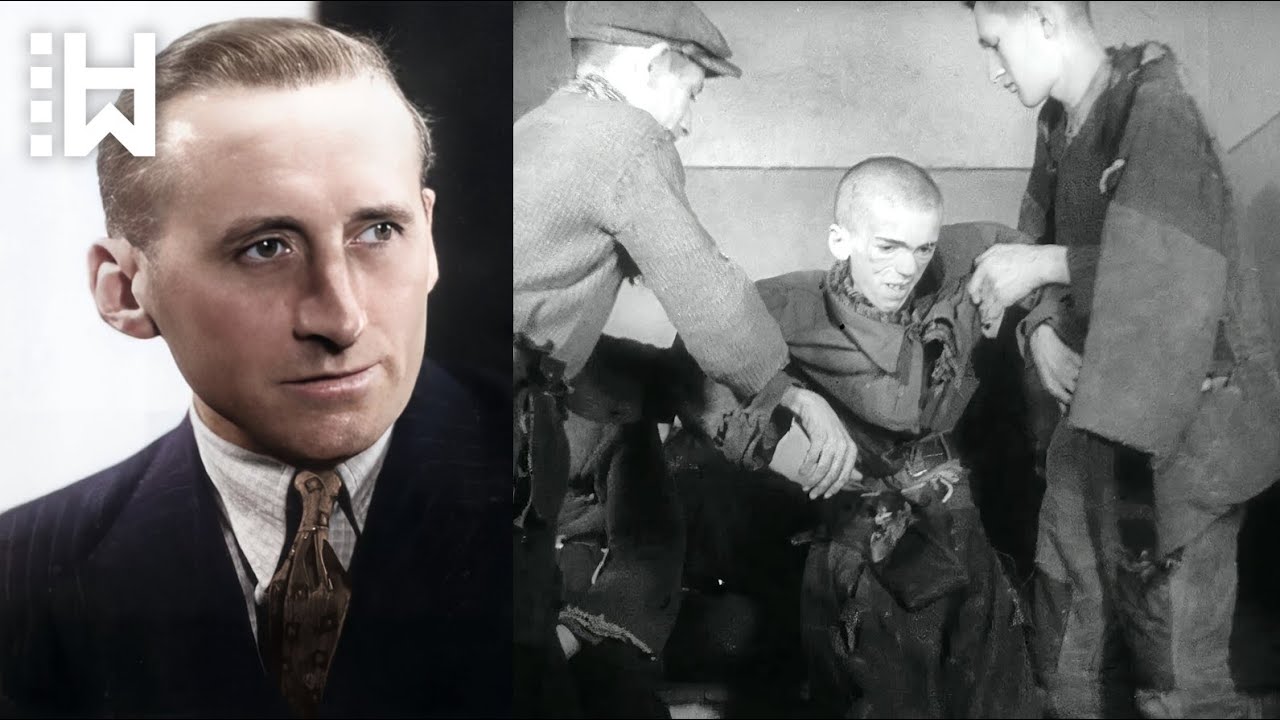
August Miete arrived at Treblinka extermination camp in mid-1942 as part of Operation Reinhard, the Nazi plan to murder nearly two million Jews in occupied Poland. He was assigned to oversee the camp’s fake infirmary, known as the Lazarett. Dressed as a medic, he would shoot sick and weak prisoners at the edge of a burning pit. Jewish prisoners called him Malach Hamoves, Yiddish for the angel of death.
Miete was born on November 1, 1908, in Westerkappeln, then part of the German Empire. He was a miller’s son and learned the trade after finishing elementary school. He married and had three children. In 1940, he joined the Nazi Party and sought advice about becoming a settler in the East.
His local agricultural chamber recommended him for work at the Grafeneck Euthanasia Center. Miete soon became involved in the T4 program, the systematic murder of institutionalized patients with disabilities. He later worked as a stoker at the Hadamar killing center, where he removed corpses from gas chambers, broke out gold teeth, and burned bodies.
The T4 program used carbon monoxide gas in chambers disguised as showers. Staff sent urns with ashes to relatives along with fake death certificates. The program claimed 250,000 lives and continued until the last days of the war. In June 1942, Miete was transferred to occupied Poland to take part in Operation Reinhard.
Treblinka was built in the summer of 1942 and became the third killing center in the operation. Deportations came mainly from the Warsaw and Radom districts. The camp processed incoming trains with brutal efficiency: victims were told they had reached a transit camp where they had to undress and hand over valuables. A path known as the tube led them naked to gas chambers labeled as showers.
A large diesel engine pumped carbon monoxide exhaust into the sealed chambers. Within about 25 minutes, all inside were dead, though the bodies often remained standing because of the crowding. The gas chambers were operated by Trawniki guards, collaborators from prisoner-of-war camps who drove victims inside with clubs and whips. At times, when no new transports were expected, guards sealed victims inside the chambers to die by suffocation over two days.

Victims too weak or ill to walk to the gas chambers were told they would receive medical attention. Members of the Sonderkommando carried them to the Lazarett, an area fenced with barbed wire and marked with a Red Cross flag. Behind a screen, victims saw a deep pit filled with burning bodies. Miete shot them in the back of the neck, often after forcing them to undress. He called the act “curing each one with a single pill.”
Miete was known for his sadism)Skip this Miete’s cruelty extended beyond the Lazarett. He supervised the selection square for forced labor and would walk among prisoners, checking their fitness. Those he judged too weak or sick were taken to the pit and shot. He beat prisoners who carried money or foodched for any reason to send prisoners to their deaths. He also visited the living barracks and the hospital room, removing the sick and shooting them.
At his trial, Miete described his actions plainly. He said the ill, crippled, and wounded were brought to the pit, where he shot them in the neck with a 9-mm pistol. The number killed from each transport varied from two or three to more than twenty, including men, women, and children.

Miete was also present after a prisoner named Myer Berliner attacked and killed an SS officer. Berliner and two others were beaten to death, ten more inmates were shot on the deputy commander’s orders, and up to one hundred prisoners were killed the next day in retaliation. Miete would also execute prisoners injured by camp commandant Kurt Franz, whether from beatings or attacks by Franz’s Saint Bernard dog.
After Treblinka closed in November 1943, Miete was transferred to Trieste and later Udine in Italy. There, he confiscated and administered Jewish property and was occasionally used against partisans. After the war, American forces captured him, but he was released near Munich in 1945.
Miete worked in the family farming business until 1950, then as a managing director of a savings and loan association in West Germany. He was arrested in May 1960. In September 1965, at the first Treblinka trial, he was charged with joint murder of at least 300,000 people and personally murdering at least nine people in documented incidents. He was found guilty and sentenced to life imprisonment.
In February 1985, Miete was conditionally released from prison. He retired to a house in Osnabrück, West Germany, which he had bought with money stolen from Jewish prisoners at Treblinka. He died there on August 9, 1987, at age 78.