When William Randolph Hearst died in August 1951, the woman who had shared his life for three decades was asleep in the house they called home. By the time she woke, his sons had already removed his body and left her behind. She was not invited to the funeral. Marion Davies had saved Hearst’s empire with her own money years earlier.
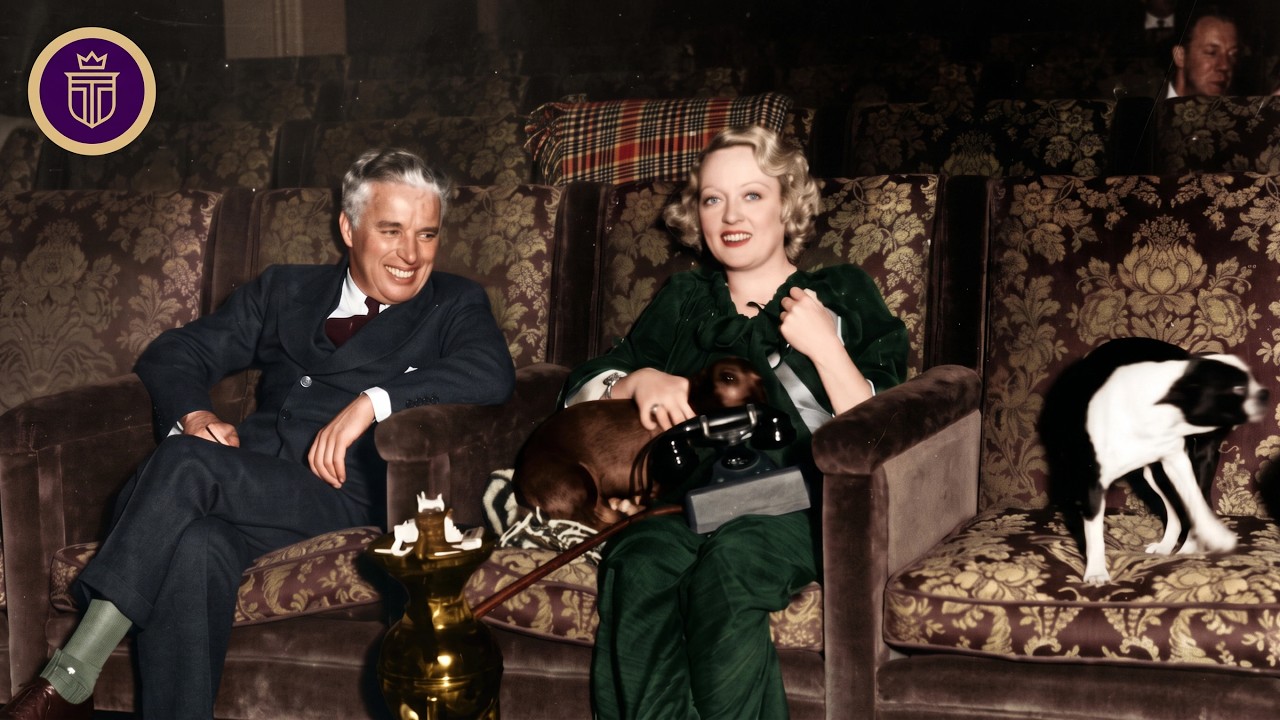
She sold her jewelry, liquidated her stocks, and handed him one million dollars of her own earnings, with no conditions attached. The man she had supported through financial ruin was carried out of her home before she could say goodbye. The relationship between Davies and Hearst began in 1916, when she was a chorus girl with the Ziegfeld Follies and he was a married newspaper magnate more than three decades her senior. Hearst was married to Millicent, who refused to grant him a divorce throughout their lives together.
Davies accepted her position as his companion, never his legal wife. Born Marion Cecilia Douras in Brooklyn in 1897, Davies struggled with a severe stutter throughout her childhood. Her classmates mocked her, and school became an ordeal. She found escape in dance and silent film, where the absence of spoken dialogue allowed her to sidestep the disability that plagued her in everyday conversation.
Hearst built an entire media apparatus around her career. He created Cosmopolitan Productions specifically to produce her films, poured an estimated seven million dollars into promoting her, and used his newspapers and newsreels to push her name into every corner of American life. Over time, the relentless publicity backfired as audiences grew weary of seeing her name everywhere. Despite the narrative that would later define her, Davies was a genuine box-office draw in her own right.
Between 1922 and 1924, exhibitors voted her the top female box-office attraction in the country. Her period drama “When Knighthood Was in Flower” became the first million-dollar production in film history to turn a real profit. Her true talent, however, was comedy. Critics and historians such as Kevin Brownlow later identified her as perhaps the finest screen comedienne of the silent era.
She excelled in films like “The Patsy” and “Show People,” both released in 1928 under director King Vidor, where her impressionist skills and timing drew genuine laughs. Hearst, however, insisted on lavish historical dramas and controlled her roles. He reportedly vetoed attractive leading men, limited kissing scenes, rewrote scripts, and blocked her from opportunities at other studios. Parts that might have strengthened her career went instead to actresses like Norma Shearer, while Davies stayed within the confines of Hearst’s vision.
Hearst built Davies an oceanfront mansion in Santa Monica, designed by the same architect, Julia Morgan, who created his famous castle San Simeon. The home had more than a hundred rooms, dozens of bathrooms, and a marble pool crossed by a Venetian bridge. It cost around seven million dollars, a colossal sum for its time. The empire Hearst had spent his life building was in serious trouble by the late 1930s.
His debts were estimated at roughly 126 million dollars. In 1938, a receiver was appointed to restructure his holdings, and Hearst was forced to sell assets, including artwork from his Welsh castle, St. Donat’s. In the middle of that collapse, Davies stepped forward with an act that stunned those who knew of it.
She sold her jewelry, cashed in her stocks and bonds, and gave him a million dollars of her own money. Some sources describe it as a gift presented by check; Britannica records it as a loan. Either way, the money was hers, and the crisis was real. She also encouraged newspaper publisher Cissy Patterson to lend Hearst an additional million dollars.
At the time, Davies had already retired from acting, choosing to focus entirely on the man she loved. Her last film, “Ever Since Eve,” was released in 1937. In 1941, Orson Welles released “Citizen Kane,” a film widely understood to be based on Hearst. Audiences assumed that the character of Susan Alexander, an untalented singer forced on the public by a powerful media mogul, was a portrait of Davies.
It was a devastating and inaccurate caricature that stuck to her reputation for decades. Welles eventually corrected the record. In his introduction to Davies’ posthumous memoir, “The Times We Had,” published in 1975, he wrote that Davies would have become a star even without Hearst, and argued that the film was not about them at all. He called their story a true love story and said Davies was never less than a princess.
Herman Mankiewicz, the screenwriter of “Citizen Kane,” also came to regret the association. His grandson later said Mankiewicz’s deepest regret was that the world equated Davies with Susan Alexander Kane. The men who made the film publicly corrected the false impression, but the image proved more durable than the fix. Even as she endured the public mischaracterization, Davies faced private struggles.
She developed a serious dependence on alcohol during the late 1930s and into the 1940s. Friends described her as still warm and generous, caring for Hearst as he aged and his world shrank. Their grand parties gave way to quieter years in a Beverly Hills home that would be their final residence together. The uncertainty surrounding Davies’ personal history includes a long-running claim that her niece, Patricia Lake, was actually her biological daughter with Hearst.
Britannica lists the parentage as fact, but the evidence is disputed. Lake was born in 1919, and Davies did not travel to Europe until 1922. A Hearst Castle spokesperson dismissed the story as an old rumor, while biographers have suggested Lake’s mother may have been Davies’ sister. The claim remains unresolved.
Hearst died on August 14, 1951, at age 88. Davies had kept vigil by his bedside in his final days. When she woke after his death, his sons had already removed his body. She later told a nurse she had considered going to church that morning but stayed home alone instead.
Hearst’s funeral was held at Grace Cathedral in San Francisco, with about 1,500 mourners in attendance. Millicent, the wife who had refused to grant a divorce, walked in the place reserved for the widow. Davies was not there. TCM states plainly that she was simply not invited.
The inheritance was transferred with the same speed as the body. Within about twenty minutes of Hearst’s death, executives took control of the company and told remaining staff that they now worked for new management. Delivery of Hearst’s newspapers to Davies’ door simply stopped, a small but telling sign that the account had been closed. On October 30, 1951, Davies sold 170,000 shares of Hearst stock to Millicent for one dollar.
The following day, she married sea captain Horace G. Brown in Las Vegas. The marriage brought her little happiness. When Brown once admitted, “I am a monster,” Davies replied wearily, “I accepted him again.
I don’t know why. ”
Davies’ generosity extended far beyond the man she loved. During the 1920s, she donated more than a million dollars to children’s charities. In 1952, she allocated about 1.
9 million dollars to establish a children’s clinic at UCLA, which later grew into the Mattel Children’s Hospital. The Marion Davies Foundation continued quietly supporting charitable work. She was also a sharper businesswoman than her reputation allowed. Her real estate holdings included the Desert Inn in Palm Springs and several buildings in Manhattan, including one that carried her family’s real name, the Douras Building.
Her health declined in her final years. She suffered a minor stroke in 1956. In 1959, a tumor discovered in her jaw turned out to be cancer. She died on September 22, 1961, at age 64, in Hollywood, where she was buried in Hollywood Forever Cemetery.
More than two hundred mourners attended her funeral. Reassessment of her career began with critics and historians who actually watched her films. Pauline Kael wrote about her, and Kevin Brownlow championed the comedienne hidden behind the costume dramas. In 2020, Amanda Seyfried portrayed Davies in “Mank,” earning an Academy Award nomination for a performance that presented her as the intelligent, loyal, witty woman her contemporaries described.
Marion Davies loved a man she could never marry, saved his empire with the earnings from her own talent, and was repaid with a film that stole her name and a family that removed her from the story while she slept. She was erased twice, once through fiction and once through silence. The slow correction of both erasures has restored the two things she always deserved: recognition of her generosity and recognition of her gift.